
10 beautiful Italian words to add to your vocabulary immediately

Coffee cup with a heart made of foam

Let’s face it. Everybody loves the sound of the Italian language. That’s why we at Coffee Break Languages have decided to bring you 10 beautiful Italian words that sound great (and are really useful).

After all, there is a charming melodic aspect to it that is absolutely undeniable. How can we resist its postalveolar affricates, its dental fricatives and, most of all, its sensual “r’s”?

Keep reading to find some unique Italian words to add to your vocabulary!

1. Dai!

You may be familiar with this one if you’ve overheard Italians talking to each other. It has nothing to do with the verb dare – meaningto give” – and it cannot be easily translated. Dai can be used to encourage someone to do or not to do something, much in the same way English speakers say “go on” or “come on”. It can also convey a sense of astonishment, meaning “are you serious?” or “really?”.

It’s definitely one of the unique Italian words, with several possible meanings, which can only be understood from the context. Did one of your Italian friends say Non ce la faccio to you? Just reply back with dai! Is someone doing something to annoy you? Tell them to stop with dai! Did you just hear the latest gossip and you cannot believe it? Express your surprise with dai! 

2. Abbiocco

Have you ever eaten so much that you were unable to move and the only thing you wanted to do was take a nap? If so, then you know what l’abbiocco is. It is the drowsiness you feel after a hearty meal: a feeling with which Italians are rather familiar. There is also a verb to describe this feeling: abbioccarsi.

A translation in English might be “food coma”, but this is a much more dramatic term than abbiocco. This one deserves a place in the list of beautiful Italian words because of its sound. 

The double “b” and double “c” convey perfectly the idea of being full and sleepy after a Sunday roast or a big bowl of pasta. Italians love this food-induced state and usually use it to relax and take a break from the everyday rush, enjoying the abbiocco as much as they can!

3. Mozzafiato
mozzafiato image

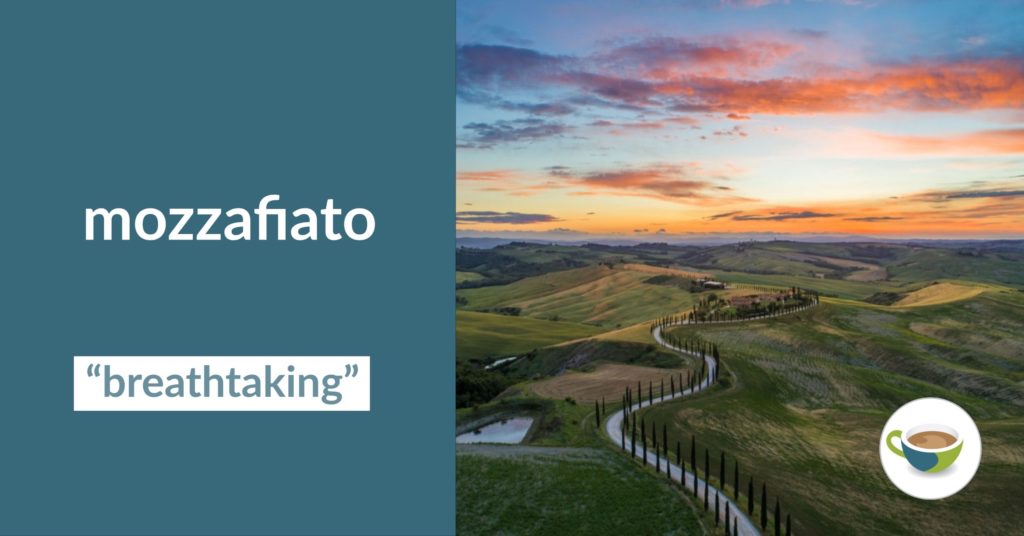
This word comes from mozzare, meaning ‘to cut off’, and fiato, meaning ‘breath’. A view, a piece of art, a show, a journey and even a person can be mozzafiato. It means that something is so strikingly beautiful that it makes us stop breathing, just as the word suggests. 

It can be translated in English as “breathtaking” or “riveting”. However, the image of cutting off one’s air feels more sudden and extreme than the simple act of “taking”, and somehow, more appropriate for a country like Italy, where “breath-chopping” beauty can be seen everywhere..

That is why it definitely deserves a place amongst beautiful Italian words!

4. Invasato

If you are thinking that this word means being stuck in a vase, you’re not quite in the right area. L’invasato is someone who experiences strong feelings, such as uncontrollable emotions or passions – so strong that they take over their minds! This is one of the beautiful Italian words that comes from the Middle Ages, when people believed that demons invaded and possessed the bodies of certain individuals.

That’s why today, invasato means someone who is being taken over by fear, jealousy or anger, as well as by creativity, enthusiasm or passion.

5. Menefreghismo 

When you hear an Italian say me ne frego, it means that they could not care less about something. From this expression, we get the term menefreghismo which stands for a thoughtless indifference towards what is happening outside of one’s personal space. It is the kind of attitude we usually have during our summer holidays when enjoying the sun and the heat is our most important priority.

If, on one hand, il menefreghismo could be a good quality, on the other, the term is not always considered to be positive. Sometimes it is used to address the callousness or the selfishness of an uninterested friend. So, be aware of the context if you are called a menefreghista!

6. Crepitio
crepitio image

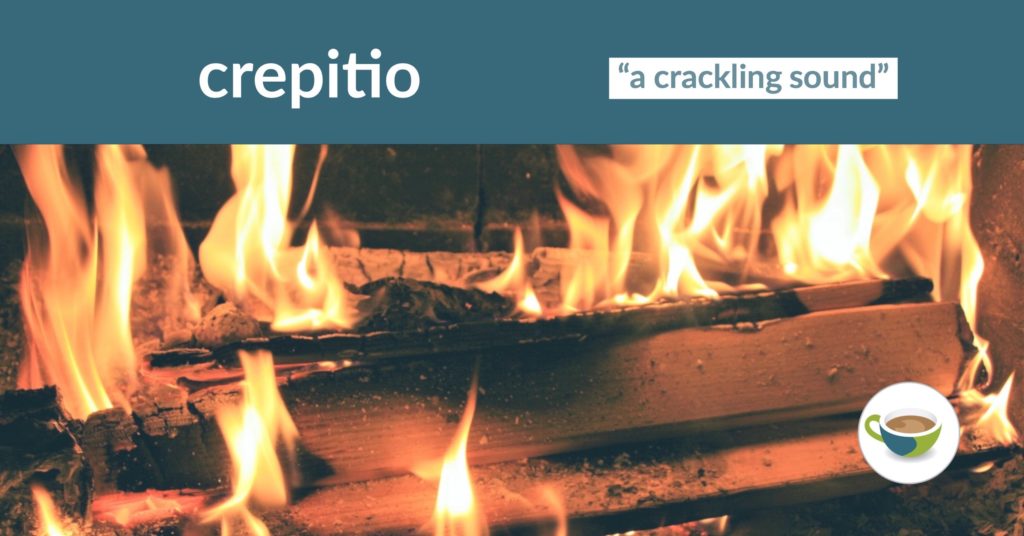
The rustling of leaves, the crackling of fire, the pattering of rain. There is one of beautiful Italian words that can describe these sounds: il crepitio. Try to pronounce this word and repeat it several times. Doesn’t it emulate the burning of logs in the fireplace or the tapping of raindrops on the window?

You can also use the verb crepitare to describe the making of these pleasing and relaxing sounds. It is a very evocative word that, despite its harsh “kr” phoneme, can bring back memories of outdoor naps, cosy nights-in and autumn afternoons.

7. Struggimento 

How would you describe that feeling of yearning and torment that you experience when you argue with your significant other? Italians call it lo struggimento, a combination of gut-churning misery and desire, usually associated with one’s love life. 

It is not necessarily a negative feeling; many poets – like Dante Alighieri, Petrarch and Giacomo Leopardi – found inspiration in their struggimento, another of beautiful Italian words.

Repeat this word in your head. Savour the harsh sound of its consonants. Now, can you understand what we are talking about here?

8. Boh! 

In the list of interesting Italian words, this short expression deserves a spot. Well, you may not even notice it in a conversation, but it is a key expression of current Italian. Boh means “who knows?” or simply “I don’t know” and it is always accompanied by a dramatic shrug of the shoulders and a furrowed brow. 

A non-native speaker should pay attention to the context, where boh! appears, though it’s quite easy to deduce its meaning since it usually appears in response to something.

Boh is an onomatopoeic expression that conveys doubt, indifference or unwillingness to talk about something. Similar expressions are bah and mah, both of which convey an idea of uncertainty.

Is that clear enough? Don’t answer boh! (or maybe do…)

9. Sfizio
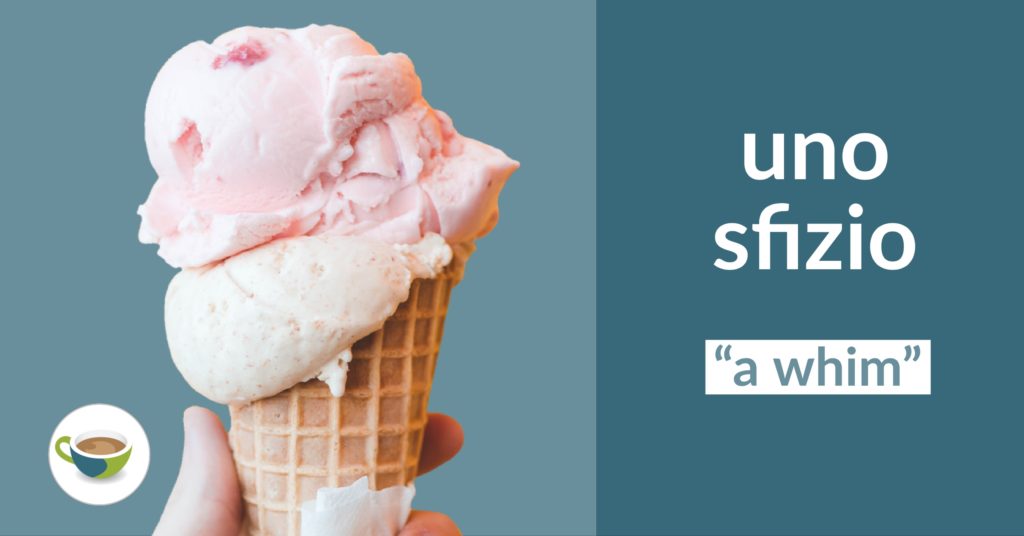
sfizio image

If you are a big shopper, you may know what we are talking about here. Do you know when you feel the urge to buy something you shouldn’t buy, but you buy it anyway? That’s what Italians call uno sfizio, meaning a whim or fancy. 

Having gelato after dinner or bagging that pizza-shaped hat are actions that Italians would describe as togliersi lo sfizio, meaning “to satisfy one’s whim”. But, it’s not simply that! There is always a fun side to it, something between being ashamed and feeling right about it, enjoying it.

Sfizio: the tongue sizzles and fizzles. It sounds great and is definitely one of the most beautiful Italian words (especially if involves food)!

10. Procione

This may not be the most useful word, but it feels great on your tongue. It is a wonderful combination of the harsh “pr” sound and the sweet “tʃ” phoneme. Also, the fact that procione is the name of a cute animal made us include this word in our list.

We’re talking about a nocturnal animal, best known in North America, that is usually portrayed in movies and TV series as stealing food from a wheelie bin. Can you guess it? It’s a racoon. Although this mammal is not very common in Italy, its name sounds incredibly cute in Italian.

There is also another name for the racoon in Italian: l’orsetto lavatore (the washing little bear). We hope that you’ve enjoyed reading our article about beautiful Italian words. 

Learning a language is a challenge, but it can be an enjoyable challenge. Try to find the words that please your ears and repeat them; they will help you improve your pronunciation. Languages are meant to be spoken, so remember to savour their sounds!

Why not see some of these beautiful Italian words in use? Check out our list of Italian movies for learners right now!
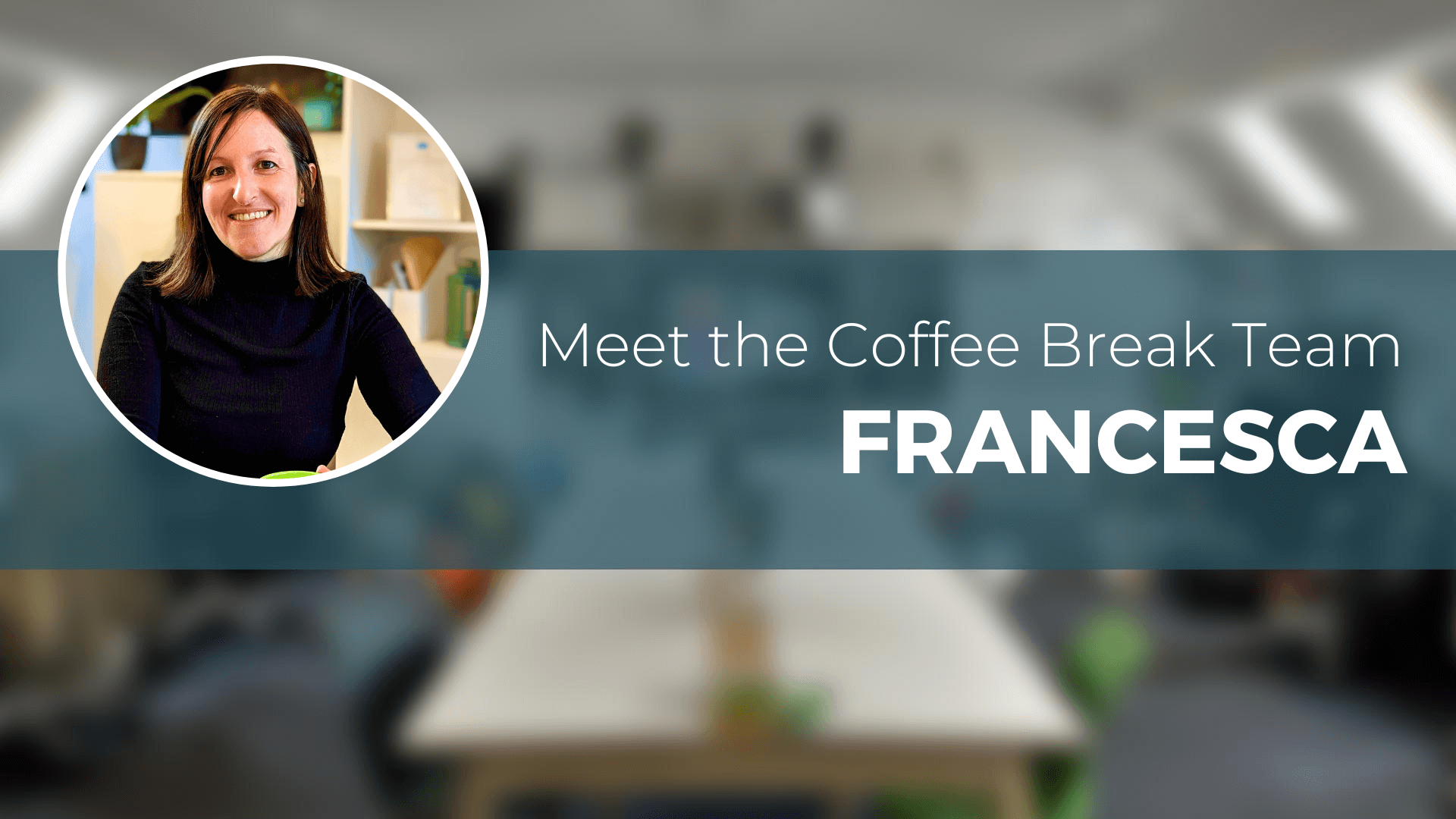

Meet the team: Francesca

Francesca imageCiao, I’m Francesca and I’m one of the Coffee Break Italian podcast co-hosts. I joined Radio Lingua in 2014 when I witnessed the birth of Coffee Break Italian and since then I have been involved in so many other exciting projects! I have also been teaching Italian for more than a decade at university in beautiful Scotland. I’m so lucky to have jobs I’m very passionate about!

What is your role in Coffee Break?

My role is varied as I am not only the Italian voice you hear in the podcast, but I also deal with the design of course outlines and content. In other words, I’m responsible for deciding which grammar points, vocabulary and communicative aspects are included in each episode of Coffee Break Italian. I also contribute to the creation of all Italian content for CBTV and, when possible, join the Coffee Break team at events where we get to know our listeners in person.

Francesca and Pierre-Benoît at the Language Show in London

What experience have you had speaking and learning other languages?

I started learning English in Italy when I was about 11 and it was love at first sight! I think it provided me with a different way of looking at the world, so I decided that I would never abandon it! When it came to choosing my secondary school, I opted for Liceo Linguistico where, amongst other subjects and English, I learned French, German and Latin. I then studied English and Russian at the University of Trieste, where I specialised in Translation and Interpreting. As part of my degree I was lucky enough to have the opportunity to spend some time abroad: I did my Erasmus year near London and I took part in an exchange programme at the Moscow State Linguistic University. I must say that my love for foreign languages includes my own beautiful native Italian which I have been teaching for years after obtaining a Masters in Teaching Italian as a Foreign Language (DITALS) from the University of Siena. I taught Italian in Kyiv for a year and I have been teaching Italian in Scotland since 2009. I never tire of learning new things about languages and I try to keep actively using the languages I know, including the recently added Spanish and my dialect, Piedmontese!

Francesca in Ukraine

What are your favourite memories of working with Coffee Break?

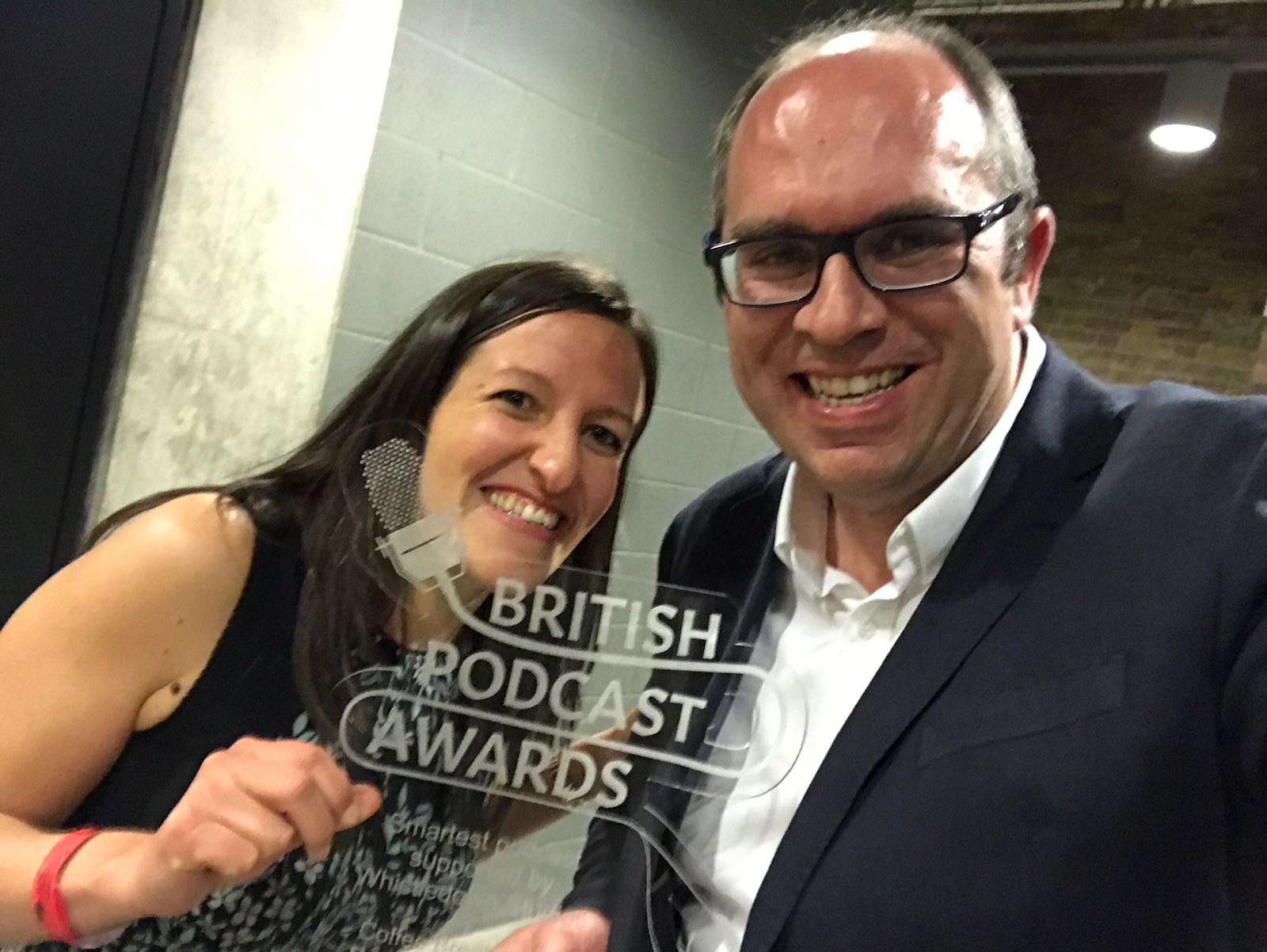
I have so many nice memories with the lovely people at Coffee Break Languages, but two in particular are very dear to me. The first one dates back to April 2016 when Mark, Katie and I were at Lake Maggiore filming and recording the last ten episodes of Season 1 of Coffee Break Italian. One day we decided to visit Pettinengo, the mountain village where I grew up and where all my family still live. We went around interviewing the locals (the pharmacist, the barista, the owner of the only grocery shop), chatting with familiar faces and visiting my parents. It was very emotional being back home and listening to the tales from the past that everyone had to tell. Despite being away from Pettinengo for so long, on that occasion I felt I belonged there and I could never thank Mark enough for giving me such a privileged way to rediscover my roots! The other special memory is in 2017 when Coffee Break Italian won the British Podcast Award for the category ‘Smartest podcast’! Mark and I attended the event in London and I still remember those never ending seconds prior to the announcement being made! Che emozione!

Interviewing native speakers on the shores of Lake Orta

Where would your ideal coffee break be, and with whom?

My ideal coffee break is very simple but very special to me. It’s sitting under the wisteria tree on the terrace back at home in Italy chatting with family and friends in the long summer evenings.

What’s your best language-learning tip?

Language learning must be a pleasure and it only happens when you are enjoying it and you are highly motivated. My tip is try not to be afraid of making mistakes and accept them as part of the learning process. Once you have overcome that barrier, things will get easier. Grab every single opportunity to speak and do something with that language. Don’t leave it in the grammar book! Learning by doing is the best way to put all those hours of study into practice.

Francesca and Mark winning the British Podcast Award for Coffee Break Italian

Quick-fire round

  • Favourite language: English
  • Favourite word/phrases in that language: I have a full list of words and phrases which I love in English. Here are three of my favourite ones:
    • Bob’s your uncle!
    • Whatever!
    • Glaikit (in Scottish!)
  • Favourite film: Pane e Tulipani
  • Favourite TV show: any cooking programme!
  • Favourite book: La casa de los espíritus by Isabel Allende
  • Favourite singer: Belle and Sebastian
  • Favourite destination: I don’t have a favourite destination, but that magic of abandoning mainland to reach Venice by train is unbeatable

Do you have a message for the Coffee Break community?

If you are reading this page it’s because, like me, you are also a language enthusiast. It’s great to see that the world is not monolingual and hopefully more multilingual people will contribute to making this planet a better place where we can all learn from one another and understand each other better!

CBG 2.24 | Wovor fürchtest du dich?

In this episode you’ll learn to use reflexive verbs in German. In addition to being able to talk about “washing yourself” and “scratching yourself” (among other things!), you’ll also learn to talk about looking forward to things, relaxing, deciding, catching a cold, getting annoyed, remembering things and complaining! Reflexive verbs are hugely important and this lesson will equip you with everything you need to know!

Practice makes perfect: 1-on-1 lessons with italki

Since 2006 we’ve been providing language courses for learners around the world and we believe that Coffee Break provides the perfect solution for learners starting out with a language, or building their comprehension skills to take their learning further. Through Coffee Break French, German, Spanish, Italian and Chinese, you can build a solid understanding of the language and learn to use it in a wide variety of situations. However, one area we can’t help you with directly is with your speaking skills, and that’s why we’ve teamed up with italki, a leading provider of 1-on-1 language teachers and native speakers with whom you can practise what you’ve learned on Coffee Break.

italki offers lessons and practise sessions from the comfort of your own home. You can connect with hundreds of teachers and native speakers of your chosen language and schedule a live 1 on 1 session to put into practice the language you’re learning in your Coffee Break course.

How does it work?

Scheduling an italki lesson couldn’t be easier.

  1. Browse the italki profiles of professional teachers and tutors and select a teacher based on their experience and reviews from other learners. Many teachers and tutors offer a trial session so that you can decide if they’re a good match for you.
  2. Choose a time and date which suits you for your live lesson.
  3. Connect with your chosen teacher at the appointed time via Skype or other video chat software.

Watch the video below for more information on italki.


Why do we recommend italki?

Learning a language is about both “receptive skills”, or “input”, where you learn to understand the written and the spoken language. The Coffee Break lessons will help you develop your understanding, your knowledge of grammar and the patterns of the language, and your ability to use the language yourself. It’s also about “productive skills”, or “output”, where you’re “producing” the language by talking and writing it. Through our lessons and particularly our bonus audio materials, we help you to train yourself on knowing the right word or phrase to use at the right time. The missing element is getting the all-important feedback on whether what you are saying is, in fact, right. That’s where a friendly native speaker or teacher comes in, and that’s why we’ve partnered with italki.

A special offer for Coffee Break learners

We’ve also been able to put in place a special offer for Coffee Break learners: when you purchase your first live lesson with a teacher or native speaker on italki, you’ll receive a voucher for $10USD in italki credits. Please note that this offer is only available for new italki users.

Coffee Break language courses provide you with the best language training on the planet, and italki connects you with the best teachers and native speakers to practise what you’ve learned!

CBI 2.23 | Cosa facevi quando ti ho telefonato?

In this lesson we’re focusing on combining the Perfect and the Imperfect which together allow us to tell stories in the past. You’ll consolidate what you already know about each of the tenses and you’ll recognise certain words and expressions which trigger the Perfect or the Imperfect. Francesca also has some mystery Italian personalities for us to identify in the Caffè Culturale.

Introducing the Coffee Break Reading Club

Here at Coffee Break Languages, we’ve been very busy putting together a brand new course in response to the Coffee Break community’s requests for more reading content. We’re delighted to launch the Reading Club today in French, German, Italian and Spanish!

The Coffee Break Reading Club has been designed to help intermediate learners build their vocabulary and comprehension skills, while learning about many aspects of culture of the countries and areas where the languages are spoken. There are texts on sporting activities, cultural events, tourist attractions, customs and traditions, and many more topics.

How does it work?

It couldn’t be easier to take part in this new course: we simply send you an email every week for the next year. If you can put aside 10-15 minutes – the perfect coffee break! – once a week, then you’re well on your way to improving your comprehension skills in the language you’re learning.

The basic version of the Reading Club is absolutely free: you can sign up and we’ll send you the weekly texts. If you prefer, there’s also a premium version of the Reading Club. If you’d like vocabulary lists, a comprehension exercise, and the exclusive audio version of the texts where you can listen to a native speaker reading the text at a normal speaking speed and a slower version, then you can access the premium version of the Reading Club.

Interested? Read on!

It’s really easy to access both the free version and the premium version of the Coffee Break Reading Club. Simply click on the links below:

We’re sure that you’ll enjoy building your reading skills with the Coffee Break Reading Club.

¡Es intraducible! Our 10 favourite untranslatable words in Spanish

Spanish colourful ceramic plates placed side by sideSpanish colourful ceramic plates placed side by side

Have you ever learned a new word in a different language and wondered how on earth you would translate it into English? Have you then started to doubt your translation skills, thinking that you no longer even know your language very well? Well… fear not! There are a lot of untranslatable words in Spanish. 

Often, the reason for a word’s ‘untranslatable-ness’ is rooted in the cultural differences between the speakers of each language, as some cultural concepts which exist in the Spanish-speaking world simply don’t exist in the English-speaking world.

In this article, we’re focusing on untranslatable words in Spanish – words which can’t be translated easily into English, although some of them do have direct equivalents in other languages, such as French or Italian. All of the words on the list are used relatively frequently in conversation, so listen out for them next time you’re practising your Spanish. 

You might even come across some of them in an episode of Coffee Break Spanish! ¿Estamos listos? ¡Vamos!

1) Estrenar

Are you familiar with the feeling when you’ve bought a new outfit and can’t wait to wear it? Well, fashion-conscious Spanish speakers have a single word to perfectly describe the 11-word English equivalent of “to wear a new item of clothing for the first time”: estrenar.

  • Meaning: To wear something for the first time / to use something for the first time.
  • In context: Esta noche voy a estrenar el vestido azul que compré ayer.
  • Translation: I’m going to wear the blue dress I bought yesterday for the first time tonight.

2) Tapear

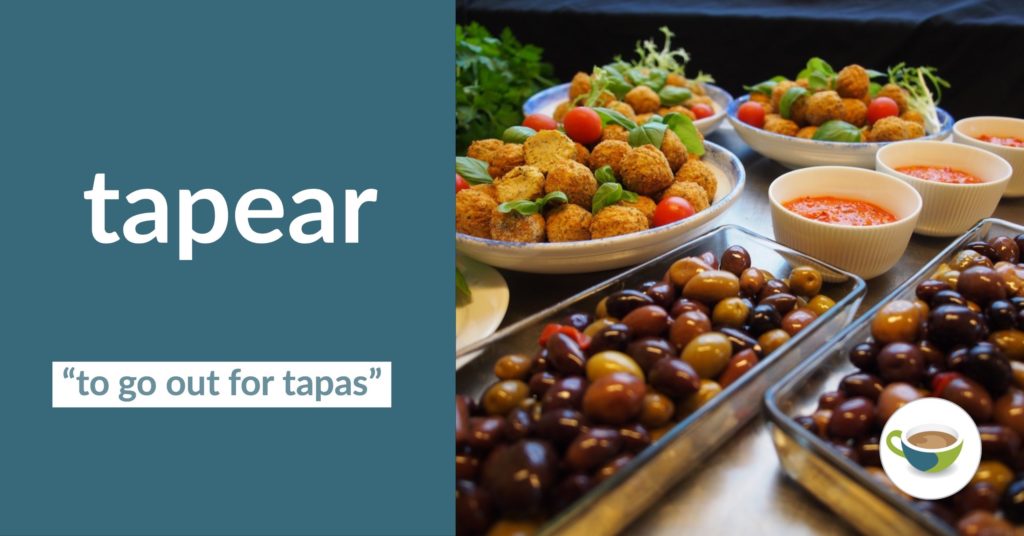
tapear - to go out for tapas

Everyone who has visited Spain will be familiar with the concept of going out for tapas and this is the theme of one of the untranslatable words in Spanish. While in English we say “to go out for tapas” or simply “to have tapas”, in Spain it’s more common to hear the phrase ir de tapas – literally, “to go of tapas”. 

For example: vamos de tapas con José y Lucía esta noche. However, if this phrase is too much of a mouthful (excuse the pun), the Spanish have a verb to describe the activity of going out to eat tapas: tapear.

  • Meaning: To eat tapas, often with the idea of moving from bar to bar
  • In context: Este bar es uno de los mejores para tapear en Granada.
  • Translation: This bar is one of the best bars to go out for tapas in Granada.

Related topic: 8 ‘Digestable’ Spanish Idioms For Your Delectation

3) Quincena

Although this is one of the untranslatable words in Spanish, it does have a direct equivalent in French (quinzaine) and Portuguese (quinzena), the closest word we have in English is “fortnight” or “two weeks”. 

  • Meaning: A period of 15 days, sometimes used in reference to the working calendar, as people are often paid bi-monthly in Spain. It is commonly used to talk about the first or the second half of a particular month.
  • Context: En la primera quincena de julio llega la feria al pueblo.
  • Translation: The festival comes to town in the first fortnight of July.

4) Friolero/friolento

Are you one of those people who always seems to be shivering while everyone around you is complaining about the heat and opening all the windows in the house? Another two untranslatable words in Spanish are friolero/a and friolento/a, used to describe those who feel the cold more than others.

  • Meaning: Somebody who feels the cold very easily.
  • In context: Javi es muy friolero, prefiere el verano al invierno.
  • Translation: Javi really feels the cold; he prefers summer to winter.

5) Puente

puente - a long weekend

You may have come across the literal meaning of the word puente before (bridge), but puente is also used in another very common context, making the list of untranslatable words in Spanish.

  • Meaning: A special type of long weekend, when a holiday falls on a Thursday or a Tuesday so you only need to take one extra day off work to turn it into a four-day weekend, thus “bridging” the gap from Thursday to Monday, for example.
  • In context: ¿Qué haces el puente de Mayo? Yo me quedo en casa, las vacaciones son para descansar.
  • Translation: What are you doing during the long weekend in May? I’m staying at home, the holidays are for relaxing.

6) Soler

Out of all of the untranslatable words in Spanish on this list, soler is probably the most commonly used in everyday conversational Spanish. To describe habitual actions in English, we tend to use the structure “subject + usually + verb (infinitive)”, but in Spanish, we use the structure “soler (conjugated) + secondary verb (infinitive)”. 

Take a look at the example below to get your head around this unusual grammatical structure.

  • Meaning: To usually do something / to do something habitually / to tend to do something
  • In context: Suelo ir de vacaciones en junio.
  • Translation: I usually go to the beach in June.

7) Tocayo/tocaya

This is one of the untranslatable words in Spanish that will come in useful for those of you who have a common first name!

  • Meaning: Somebody who has the same name as you / your ‘name-twin’, or namesake.
  • In context: Me confundes con otra Elena, es mi tocaya.
  • Translation: You’re getting me mixed up with the other Elena, we have the same name.

8) Entrecejo

Ever wondered what that little space in between your eyebrows is called? No? Well, this one is another word of untranslatable words in Spanish, as they have a word to describe it!

  • Meaning: The space between one’s eyebrows.
  • In context: Pablo tiene muchas arrugas en el entrecejo.
  • Translation: Pablo has lots of wrinkles between his eyebrows.

9) Almorzar

El almuerzo is a light snack eaten between breakfast and lunch, and almorzar is its verb form. Some people think of el almuerzo as “lunch”, but when you consider that the main meal in the middle of the day in Spain rarely starts before 2:30 or 3:00, you’ll understand the need for almuerzo.

  • Meaning: Similar to ‘elevenses’ in the U.K.
  • In context: Almuerzo cada día sobre las 11 de la mañana. 
  • Translation: I have a snack every day at about 11am.

10) Sobremesa

sobremesa - after-dinner chit-chat

This may be one of the most well-known untranslatable words in Spanish on our list, as it refers to an inherent aspect of Spanish culture: the act of taking the time to sit around the table after a meal, talking to the people you’ve shared it with and enjoying each other’s company.

  • Meaning: The after-dinner chit-chat people share whilst still sitting at the table. It can also literally mean “tablecloth”.
  • In context: Mientras los padres hacen sobremesa, los niños juegan en el parque de juegos.
  • Translation: While the parents take some time to chat at the table after eating, the children play in the playground.

We hope these Spanish untranslatable words will help you on your way to sounding more comfortable in the conversation! Remember that these words may vary from country to country in the Spanish-speaking world, so it’s always a good idea to read up on a country before visiting, just to ensure you’re saying the right thing!

If you want to keep on improving your Spanish, how about watching some films for Spanish learners? They can help you familiarise yourself with some nuances of pronunciation and even see some of these words used in context! 

¡Hasta la próxima!

CBF-ER 1.05 | Sur la Moyenne Corniche

In this episode Mark is travelling from Nice to Monaco, along one of Europe’s most impressive roads, la Moyenne Corniche. Clinging to the cliffs with sheer drops to the sparkling waters of the Mediterranean on one side, this road travels through Villefranche-sur-Mer, Èze, Cap d’Ail, Beausoleil and on to Monaco. As you join Mark en route, you’ll listen to a series of informative conversations he has with people visiting the region and working there.

Listen to the lesson

The audio lesson is free, as are all the main audio lessons of En Route avec Coffee Break French. Use the audio player above to listen to the lesson, or subscribe in Apple Podcasts to receive this lesson and all future lessons automatically. If you can’t see the player above, click here to access the lesson.

Accessing the Premium Version

thumb-cbf-enroute-season1
In the full course of En Route you’ll get access to every episode as it’s released. The premium version includes additional materials which will help you move forward more effectively with your French studies:

  • transcripts: read every word of French included in the conversations;
  • vocabulary lists: in addition to the transcripts, we’ll provide vocabulary lists to help you understand everything that’s said;
  • bonus audio materials: where an edited version of an interview is included in the main lesson, we’ll provide the full recording in the course to allow you to develop your comprehension skills further;
  • exclusive video content: in addition to recording interviews in the south of France, the Coffee Break Team also filmed some video content and this video material is included in the course. Please note that these are not video versions of the interviews.

The En Route course can be accessed on the Coffee Break Academy.

Subscribe links

Subscribe on Apple Podcasts | RSS Feed | Purchase full course

CBG 2.23 | Hilfst du deinen Kindern bei ihren Hausaufgaben?

We’ve already covered the topic of family in Coffee Break German, but in this lesson you’ll learn how to talk about your extended family, and deal with possessive pronouns in the nominative, accusative and dative cases. Is it mein, meine, meinen, meinem or meiner? By the end of this lesson, you’ll know!

Is Hungarian a hard language to learn? 5 reasons why learning Hungarian is “csodálatos” (wonderful!)

Hungarian city landscape

Hungarian is spoken by roughly 14 million people in eastern Europe. It’s the official language, of course, in Hungary, and it’s also spoken in parts of Romania, Slovakia and other bordering countries. But is Hungarian a hard language to learn?

You may have heard that Hungarian is one of the toughest languages to tackle. Let’s explore whether that reputation is deserved—and why it’s still worth your time, as even just a little language can go a long way. 

Is Hungarian a hard language to learn?

If the question is whether Hungarian is a hard language to learn or not, some will say that this can be one of the most challenging languages for English speakers to learn. Unlike many European languages, the language isn’t part of the Indo-European family.

Instead, it belongs to the Uralic languages group, which means its grammar, vocabulary, and structure are very different from the Romance and Germanic languages, with which many learners are more familiar. For instance, Hungarian relies heavily on agglutination – a method of forming words and grammatical structures by adding prefixes, suffixes, and infixes to root words, which can make the language feel a bit overwhelming. 

So, yes, Hungarian is a hard language to learn for English speakers due to its differences in grammar and vocabulary. However, it’s also highly logical, phonetic, and rich in culture, making it an incredibly rewarding challenge.

5 reasons learning Hungarian is csodálatos and worth it!

Now you know why Hungarian is a hard language to learn, or at least considered… But are you ready to find out why this unique language offers a rewarding and wonderful challenge for learners?  

Check it out!

1. Beauty from within

Most people will find the sound of Italian or Spanish very melodious, whether they understand the language or not. Hungarian, even though it sounds nice to begin with, is a language that gets increasingly beautiful the more you learn. 

There are countless puns and twists in the Hungarian language, not only in poetry and idioms but also in everyday speech. Very often, these defy translation and are guaranteed to entertain any language learner.

2. A logical language

Every language has its own system, its own “logic”. When you learn a new language, it’s not just about the words, it’s also about understanding that logic. Learning a language based on a different logic helps you better understand how your own language works. 

Hungarian grammar is very different from English grammar. In Hungarian grammar, words are linked together through the way they sound, which also gives the language a great flow and melody. Although Hungarian is a hard language to learn, the grammar itself is mostly logical and once you manage to get your head around it, it becomes second nature.

3. Overcoming the challenge

If you’re the type of person who likes a challenge and to do something entirely new, learning Hungarian is a wonderful option. The great news is, many aspects of the language are easier than you may think. 

For example, the alphabet is mostly phonetic, which means that once you learn how to pronounce each letter, you’re good to go. There’s even more good news: you only have to learn three tenses (past, present, future) and wait for it … there is no gender!

4. A helping hand with the language

It goes without saying that Hungarians are a very friendly and welcoming people, but if they find out you’re learning their language, they will be even more delighted and eager to help you embark on this adventure. While English is spoken in larger cities, a knowledge of Hungarian, even just a few words, can make a great difference, allowing you to meet people, make friends and learn more Hungarian.

5. A cultural wonder

From Aggtelek’s magnificent limestone caves to the lively shores of Lake Balaton, the largest lake in Central Europe, from the fascinating Hortobágy National Park to one of the most beautiful European cities, Hungary’s capital, Budapest, Hungary has countless wonders to see. However, experiencing Hungary is so much more than the tourist attractions. Hungarian culture is one of the richest and most well-preserved in all of Europe. 

Catching a performance and táncház (lit. dance house) of Hungarian folk dances, as well as trying traditional food like the töltött káposzta or a proper pörkölt (stew), are essentials on a trip to Hungary. But most of all, they are going to make you fall in love with Hungary and leave you with a desire to learn Hungarian.

Speaking of which, now that you know why it’s csodálatos learning Hungarian, if you want to take your first steps in getting to know this wonderful language, One Minute Hungarian is the place to start. While it won’t make you fluent in the language, if you follow each lesson and learn all the words and phrases covered, you will be well on your way to interacting with native Hungarian speakers. 

If you’d like to continue discovering the beauty of other languages, why not check out the article we’ve prepared, featuring a few charming words in Italian? Read now!


CBC 1.22 | Parts of the body and dealing with illnesses in Chinese

When you’re travelling things don’t always go according to plan and you may have to visit a doctor or pharmacist. In this lesson you’ll learn the words for various parts of the body in Chinese, and to explain that you’re feeling unwell. By the end of this episode you’ll be able to explain to a doctor or pharmacist which part of your body is sore and if you have any other symptoms.

Meet the team: Andrea

Andrea

My name is Andrea and it’s my job to teach Mark German in the second series of Coffee Break German. I knew about Coffee Break for a few years before I joined the Radio Lingua team in 2016. I am a qualified language teacher, translator and interpreter, but I started out in a completely different career when I did a degree in hotel and restaurant management in my early 20s. When I am not recording Coffee Break German, I will probably be at The Language Hub C.I.C., a social enterprise offering language classes to children and adults. In my free time, I enjoy hillwalking, eating good food and spending time with my family.

What is your role in Coffee Break?

I work with Mark on the Coffee Break German lessons. While Mark writes the content of the lessons, I help to come up with the examples for each lesson. Mark really is learning in each episode – I can’t let him see everything beforehand! Together we work out the best way to explain grammar points, rules and any tricky language or pronunciation.

What experience have you had speaking and learning other languages?

At school in Switzerland, I studied French, English and Italian in primary and secondary school. It was easy to practise French and Italian, as Switzerland has a French and an Italian-speaking part, which I visited occasionally. Later, I spent some time in Scotland to learn better English and I spent a few months in Spain to learn Spanish. Having studied at universities in Italy and Scotland, these two languages have become languages I feel quite confident in. I also studied some Farsi (Persian) and some British Sign Language as an attempt to keep my brain active. Both languages posed challenges I had not experienced before. Now, I work with people from all around the world and can keep my language skills active on a daily basis, which is brilliant.

What are your favourite memories of working with Coffee Break?

I love recording Coffee Break with Mark. Although we try to be very efficient, we still manage to fit in a few laughs. And I enjoy our chats over lunch time.

Where would your ideal coffee break be, and with whom?

My ideal coffee break would be on top of a Swiss mountain on a sunny day. I would not even need anybody else to be there. Maybe my mum’s dog Cooper.


What’s your best language-learning tip?

Just talk to people. Don’t worry about sounding silly or making a mistake. Everyone will applaud your efforts. Also, why not watch some DVDs in the language you want to learn? You can get well-known TV series that have been dubbed. As you already know the content, you may find it quite easy to follow, even though you don’t understand every word. Or you could get films and series that are originally in the language you want to learn and then switch on the subtitles.

Quick-fire round 

Favourite language 

 Italian

Favourite word/phrase in the language 

Schadenfreude (what else?)

Favourite film / TV show / Book / singer?

I have to admit that I love Star Trek and I have seen all episodes and films!

Favourite destination

 Iceland

Andrea visiting Gullfoss in Iceland

Do you have a message for the Coffee Break Community?

Thank you for listening to the lessons. I hope you enjoy your language learning experience and will soon have the possibility to put your skills to the test on a holiday or a business trip.


CBI 2.22 | Preparavo la cena quando Luca è arrivato

We’ve now learned both the Perfect Tense and the Imperfect Tense in Italian, but when do you use which tense? ​In this episode of Coffee Break Italian we’ll be talking about “thtooms” and “dum-de-dum-de-dums”. This is Mark’s method of explaining how you can combine the Perfect Tense and the Imperfect Tense in one sentence to talk about what was happening when something else happened. You’ll also learn an alternative translation of the Imperfect which involves beaches at sunset!

Is Chinese hard to learn? 2 aspects that prove that learning the language is easier than you think!

Chinese landscape showing the Great Wall of China and mountain in the background

Have you ever wished you could speak Chinese but been put off by the difficulty? We often hear people, particularly in the West, say ‘Chinese is the most difficult language in the world’. But is Chinese hard to learn, or is it simply a matter of perspective? 

People are often put off by the seemingly complicated characters, the unfamiliar sounds, and the speed at which native speakers appear to speak. But is it simply the fear of the unknown that is holding you back? We’re going to take a look at what are reported to be the two most daunting aspects of Chinese: characters and pronunciation. You’ll see that, when broken down, these aspects are a lot easier to learn than you might think!

Is Chinese hard to learn? The logic behind Chinese characters

Your first experience with a foreign language may likely be a language such as French, German or Spanish, which uses a Latin script, just like English. Therefore, when you see a phrase like 三个中国人, the unfamiliar appearance of the script itself may initially seem unfathomable! 

How will you know how to pronounce it? How can you learn a language with no alphabet? How can you remember all those characters? Well, let’s see why Chinese is not so hard to learn, as its characters are a lot more logical than they may appear.

Pictograms and Ideograms

Some of the oldest characters, and the first Chinese characters you may learn, are pictograms. In simple terms, this means that you are simply drawing a picture of the thing itself to write the word. Take these words:

  • means tree. Can you visualise it?
  • 林 lín means woods. (represented by 2 trees)
  • 森 sēn means forest. (represented by 3 trees)

By remembering one pictogram, you now have three new words! Compare to French:

  • un arbre  
  • un bois
  • une forêt

You would have to learn these words individually and learn how to spell them. If spelling isn’t your forte, Chinese is the language for you!

Many characters are also ideograms: they represent not something physical like a tree, but an idea. For example, the characters 一 yī, 二 èr, and 三 sān are abstract representations of the numbers one, two and three.

Radicals and compounds

Chinese can be hard to learn, but the good news is that abstract ideas are often represented through radicals. A radical is a small part of the character which tells you something about the meaning of the word. For example, the radical (meaning mouth) is often featured in characters which relate to eating.

Unlike basic characters such as or 一, most characters are compounds. Compound characters are made up of components with different language functions. There are three functions:

  1. Meaning – there are 214 radicals in Chinese, which can tell us something about the meaning of a character, such as: it’s made of wood, it’s related to water, it’s tall. Once you’ve learned some words which contain these radicals, it will get much easier to guess the meaning of a word by looking at the character. For example, most body parts contain the radical , like these: 腰 yāo (waist), 腿 tuĭ (leg), 脚 jiăo (foot).
  2. Pronunciation – Once you know a few characters, you can often guess the pronunciation of a word because the characters have similar elements. For example, take 爸 bā meaning father and 把 bă meaning to hold. Both contain the component, which tells you that it is pronounced ba.
  3. Distinctive particle – A character may also contain an “empty component” which has the sole function of distinguishing it from other characters.

If you are wondering, ‘is Chinese hard to learn?’, you’ll be glad to know that characters are the hardest part! Yet, hopefully, now you can see that it’s not all squiggly lines and pictures: the system is logical when you get used to it.

Remember our phrase from earlier? 三个中国人, perhaps it is a little less daunting now. It actually means three Chinese people.

  • 三 sān is an ideogram; it means three.
  • 个 ge is a measure word, which often follows numbers. This character is really useful. If you see it, you know that something is being counted.
  • 中 zhōng means middle. As you can see, it is a rectangle with a line down the middle, so it is super easy to remember!
  • 国 guó means country. It is a compound character made up of 囗 wéi, a radical indicating enclosure and 玉 yù, a component which represents the Emperor. Therefore, this character represents a country or nation, defined by an enclosed area which is ruled or governed. Pretty cool right? For historical reasons, China is known as 中国 Zhōngguó, the middle kingdom. Most country names contain the character 国 guó e.g. 英国 Yīngguó (United Kingdom), 法国Făguó (France), 美国 Mĕiguó (United States of America).
  • 人 rén means people. Thus, 中国人Zhōngguórén means Chinese person.

In English, you can’t say I am a middle country person. You must use a completely new word, Chinese, to express the concept. 

Understanding radicals and compound characters shows that the system is more logical than you might think. So, is Chinese hard to learn? Once you recognise these patterns, you’ll see it’s not as daunting as it first appears – Chinese is great for minimising the new words you have to learn!

Pronunciation panic

Another key factor in deciding whether ‘Is Chinese hard to learn?’ is its pronunciation. You may have heard that Chinese is a tonal language, and this can put a lot of people off. This just means that two words may have the same pronunciation, but they are spoken at a different pitch. 

While tonal languages may seem intimidating at first, this feature actually simplifies communication over time. After all, these pitch patterns can take a while to get used to, but native speakers are often very patient and will mostly understand you even if you don’t get the tones quite right. Thankfully, Mandarin has only 4 tones, compared to several other Asian languages with many more, such as Cantonese or Thai. Compared to several European languages, Chinese has a lot less sound variation.  

Here are two lovely aspects of Chinese pronunciation:

Stress 

You don’t have to stress about stress! Compare these three sentences:

  • English: English isn’t easy.
  • Spanish: Inglés no es fácil.
  • Chinese:      (Yīng wén bù róng yì)

We’ve put the stressed syllables in bold. Did you notice that the Spanish sentence had two accented words? If you’ve studied Spanish, you’ll know that if a word doesn’t follow Spanish stress patterns, it needs an accent. 

Each Chinese syllable is given equal stress, so stress patterns are one less thing to memorise! In fact, most Chinese words have only one syllable anyway – no need to worry about getting tongue-tied pronouncing long words! Each syllable is made up of initials and finals (word beginnings and word endings), and once you learn these sounds, you will be able to pronounce any initial and final combination, proving that Chinese is not that hard to learn!

Spelling 

Throughout this article, we’ve been using Chinese characters combined with words written in the “English” alphabet or, to give it its proper name, the Latin alphabet. This method of writing Chinese in the Latin alphabet is called pinyin. 

Pinyin can help beginners with pronunciation before they have mastered the characters. Pinyin also uses four different “accents” representing the language’s tones, so this helps you know how to pronounce each word. 

And the great news is that once you’ve learned all the sounds of pinyin, there are no pronunciation exceptions!  For example, the words liáng, biáng, jiáng all have the same finals, therefore, they will always be pronounced the same. Compare this to English words like rough, though, and through. Despite appearing to have the same endings, you must learn a different pronunciation for each one!

So, is Chinese hard to learn? Like any other language, Chinese has its challenges. But if characters and pronunciation are the hardest parts, maybe Chinese isn’t the hardest language in the world after all. Chinese is very simple to learn after the initial hurdles. 

The hardest part is getting started! And talking of getting started, we have the perfect method to help you learn Chinese: with Coffee Break Chinese, you can take your first steps in the language. Now you know it’s far from “the most difficult language in the world”, there’s nothing stopping you!

CBG 2.22 | Mein Vater wohnte lange in einem kleinen Dorf

So far in Coffee Break German we’ve learned to use haben, sein and some modal verbs in the Präteritum. In this lesson Andrea and Mark look at other verbs in the Präteritum which are not used commonly in spoken German, but you’ll find them in any story you read. You’ll also learn about some irregular verbs in this tense, including kommen and gehen, and Julia is on hand to tell us about two very famous German writers: Goethe and Schiller.

Meet the team: Kristina

My name’s Kristina and I’m Coffee Break’s Operations and HR Manager. I first started working at the company as an intern in October 2016, during my final year of university. After graduating in June 2017, with a Masters in International Business and Modern Languages, I started working full time in our Glasgow office.

What is your role in Coffee Break?

My role is quite varied as I am responsible for coordinating projects and the production of content as well as the work and roles of team members. Within the HR side of my role, some of my responsibilities include: recruiting new team members; organising employee learning and development opportunities; reviewing policies & procedures; and running our health & wellbeing programme. I am also involved in elements of marketing, strategic planning and identifying new initiatives to streamline and grow the business.

Representing Coffee Break Languages at trade shows and events is always great fun as it gives me the chance to promote our courses while chatting to fellow language learners. It’s always nice to hear positive feedback from our customers all around the world.

Kristina with the team at the France Show in 2017

What experience have you had speaking and learning other languages?

I’ve always been aware of the value of foreign languages, thanks to having German grandparents and a mother who is a languages teacher. I thoroughly enjoyed studying French and Spanish at school, so, when I started university, I decided to pursue my dream of speaking a foreign language by combining my business degree with modern languages. I spent a summer working as an au pair in Nantes (France), followed by a year studying in Grenoble. I had such a great time abroad that I decided to extend the experience by spending the following summer working for a French campsite in Spain. Although French has always been my favourite language, I have also studied Spanish and Italian which was made easier thanks to my knowledge of French.

Now, in my role at Coffee Break Languages, I have the opportunity to use and develop both the business and language skills I developed at university. I’m also continually working on improving my Spanish and have taken up learning German with Coffee Break.

What are your favourite memories of working with Coffee Break?

A highlight for me was a work trip to Málaga, Spain with Mark and my colleague at the time, Flora. Not only did I have a great time adopting the role of ‘Production Assistant’, I was also lucky enough to see some beautiful parts of Spain I’d never visited before. Being involved in the various stages of production for this project was extremely satisfying and rewarding.

Kristina filming in the village of Frigiliana, Spain

Another memorable experience which I thoroughly enjoyed was going down to London on a number of occasions to attend the France Show. Representing the Coffee Break Languages team was a fantastic experience as it gave me a greater insight into the industry as well as the chance to immerse myself in all things French for the weekend!

Where would your ideal coffee break be, and with whom?

I think my ideal coffee break would be spent at a famous cafe in Cannes during the Cannes Film Festival. I’d love to speak to many of the famous film stars, including Bradley Cooper, as I believe he speaks fluent French!

What’s your best language-learning tip?

I have found that the best way to learn a language is to try to incorporate learning into your everyday life. Before my year abroad in France, I made a conscious effort to engage in French related activities as much as possible. For example, I used to listen to the French radio while exercising or cooking, and I regularly watched some of my favourite French YouTubers to familiarise myself with colloquial, everyday French.

Another useful tip is to change the language settings on your phone to the language you’re learning. I always have the language on my mobile set to French as I think it’s a great way of learning useful vocabulary without realising it – always a bonus!

When it comes to speaking the language, I remember my language exchange partner telling me that his favourite way of practising his Spanish was to have conversations with himself out loud in the language (in private of course!). Although this may seem silly, it’s a great way of getting your brain to think on the spot in the foreign language.

Quick-fire round

Favourite language

French

Favourite word/phrase in the language

C’est pas grave is such a simple but very common French phrase which always reminds me of the fantastic summer I spent working as an au pair in Nantes. I didn’t realise just how much it’s used in daily French until I heard how frequently my host family said it.

Favourite film

Les Choristes

Favourite TV show

Disparue

Favourite  singer

Belgian singer, Stromae

Favourite destination

I have been lucky enough to have had the chance to visit some beautiful parts of the world, so, I have a few favourite destinations. My favourite locations in France are:

• Côte d’Azur as I have great memories of family holidays in the South of France.
• French Alps as I loved skiing here at the weekends during my year abroad in Grenoble.

Any further thoughts?

It’s true that learning a language is a lot of hard work, but it is also very worthwhile and rewarding. Being able to speak a foreign language opens so many doors both personally and professionally, so it’s important to push yourself to step outside your comfort zone and not to be afraid to make mistakes as that’s how we learn and progress. Always remember, no matter what stage of life you are at, it is never too late to learn another language. Allez-y, foncez !


CBF-ER 1.04 | Aux Halles de Menton

It’s market day in Menton and Mark brings you a fantastic episode, full of new vocabulary, featuring interviews with various stall holders in the covered market in Menton. You’ll hear about fish, spices, olives, fruit and vegetables and much more.

Listen to the lesson

The audio lesson is free, as are all the main audio lessons of En Route avec Coffee Break French. Use the audio player above to listen to the lesson, or subscribe in Apple Podcasts to receive this lesson and all future lessons automatically. If you can’t see the player above, click here to access the lesson.

Accessing the Premium Version

thumb-cbf-enroute-season1
In the full course of En Route you’ll get access to every episode as it’s released. The premium version includes additional materials which will help you move forward more effectively with your French studies:

  • transcripts: read every word of French included in the conversations;
  • vocabulary lists: in addition to the transcripts, we’ll provide vocabulary lists to help you understand everything that’s said;
  • bonus audio materials: where an edited version of an interview is included in the main lesson, we’ll provide the full recording in the course to allow you to develop your comprehension skills further;
  • exclusive video content: in addition to recording interviews in the south of France, the Coffee Break Team also filmed some video content and this video material is included in the course. Please note that these are not video versions of the interviews.

The En Route course can be accessed on the Coffee Break Academy.

Subscribe links

Subscribe on Apple Podcasts | RSS Feed | Purchase full course

CBI 2.21 | C’era molta gente e non faceva troppo freddo

In this lesson we’re focusing on a new tense, the imperfect, which is used for descriptions and to talk about repeated actions in the past. It’s a very straightforward tense, and Francesca shares some great news about the Imperfect in this episode! As usual, there are lots of examples and Mark and Francesca will test Isla on her understanding by the end of the lesson.

Pasta names in Italian: how not to be an imposter with your pasta!

Various types of pasta

What better place to start building your Italian vocabulary than learning pasta names in Italian? Far from being just an ingredient kept at the back of the cupboard, pasta is a staple of Italian cuisine and culture, so cherished in Italy that wheat often has to be imported from other countries to keep up with Italians’ pasta-making demands! 

In this article, we have taken a couple of common pasta varieties and researched their names’ origins, which will help you find out more about the famous foodstuff. We hope you enjoy this delicious learning experience and that it takes you from “pasta imposter” to “pasta pro”! 

All that’s left to say now is let’s check out some pasta names in Italian and buon appetito!

The meaning behind pasta names in Italian

To get started, let’s have a look at the origin of the word pasta itself. The English word ‘pasta’ was, of course, adopted from Italian, in which pasta also means dough. Looking further back, the word also derives from the Greek word παστά (pasta), strangely meaning barley porridge.

Most pasta names in Italian are derived from their shapes, textures, or traditional preparation methods. Understanding these names can help you confidently order pasta at an Italian restaurant and impress your friends with your knowledge of authentic Italian food vocabulary.

1) Conchiglie

Picture: Jameson Fink (Creative Commons 2.0)

The first pasta on our list of pasta names in Italian is conchiglie. In English, a conch is a type of spiral-shaped seashell, and that’s exactly where the name for this shell-shaped pasta comes from. In Italian, the word for seashell is conchiglia.

This pasta is traditionally made from durum wheat and can be coloured with spinach, tomato or squid to produce green, red or black shades. There are many other pastas – like lumaconi – which have a similar shell-like form to conchiglie, and are large enough to be stuffed with delicious fillings and baked in the oven.

  • conchiglia (f) seashell
  • lumaconi (m/pl)  slugs / large snails

Hai fame? Hungry yet? Take a look at this delicious recipe featuring conchiglie. In this easy-to-follow recipe, the shell-shaped pasta is stuffed with buffalo mozzarella, fresh basil leaves and homemade tomato sauce – three pillars of Italian cuisine.

2) Farfalle

Picture: eltpics (Creative Commons 2.0)

Instantly recognisable as bow tie shapes, farfalle are a true crowd-pleaser. However, the translation has nothing to do with bow ties. Can you guess the meaning of the word farfalle? In Italian, una farfalla is a butterfly, and farfalle is plural.

Farfalle is best served with rich cheese or tomato-based sauces due to their large surface area, which takes on all of the flavours from the sauce. There is also a mini version of farfalle, called farfalline, often stirred into soups.

  • farfalle (f/pl) butterflies

We’ve found another mouth-watering recipe for you to try out: a healthy recipe which puts a slightly different spin on the classic pasta dish. Vorresti assaggiarlo tu? Perfect for summertime dinners or light lunches, this pasta salad can be whipped up in just half an hour!

3) Radiatori

Picture: Dave Prasad (Creative Commons 2.0)

The third pasta we’ve chosen to be a part of our list of pasta names in Italian, and perhaps the easiest to work out the etymology of, is radiatori. This ruffle-edged pasta is relatively new to the scene: introduced in the 1960s, radiatori are medium-sized pasta shapes which are a popular choice for casseroles and other baked dishes. 

The literal translation of radiatori is – unsurprisingly – radiators, which is exactly what this pasta looks like: little radiators!

  • radiatore (m) radiator

This third recipe is written in Italian, which will give you a chance to practise your food-related vocabulary while trying your hand at this mushroom and crunchy pancetta radiatori dish. Serve this with a good glug of extra virgin olive oil and you’ll be good to go!

4) Tagliatelle

Picture: Jason Hamner (Creative Commons 2.0)

This versatile pasta – often eaten with creamy or meaty sauces – is probably the most well-known on our list. But what is the origin of the word tagliatelle? Its name comes from a verb which translates as ‘to slice’ or ‘to cut’: tagliare. So, tagliatelle literally means ‘small slices’, perfectly describing the long strips of this ribbon-like pasta!

  • tagliare (vb) to cut / to slice
  • taglio (m) cut / slice

Although most would associate spaghetti with bolognese sauce, it is tagliatelle which most frequently accompanies an authentic bolognese sauce in Italy. Cosa aspetti?

5) Penne

Bowl of penne pasta

When you think of pasta names in Italian, this one is probably at the top of your list! The name penne comes from the Italian word for pen or quill because of its cylindrical shape and diagonal-cut ends.

This pasta is ideal for holding onto sauces, making it a great choice for creamy and tomato-based dishes like penne all’arrabbiata. A fun fact is that there are two main types of penne: 

  • penne lisce smooth penne
  • penne rigate ridged penne

The ridges help the sauce cling to the pasta better!

6) Bucatini

Bucatini pasta

Next, on our list of pasta names in Italian is bucatini. Imagine spaghetti but with a hole running through the centre… Well, that’s bucatini! The name comes from the Italian word buco, meaning hole.

Bucatini is famous for dishes like bucatini all’Amatriciana, a classic Roman pasta made with tomato, guanciale (cured pork cheek), and Pecorino Romano cheese.

7) Gnocchi

plate of Gnocchi with red sauce

Another famous preparation on our list of pasta names in Italian! The word gnocchi comes from the Italian word nocchio, meaning knot in wood or from nocca, meaning knuckle. This makes sense, given their small, rounded shape.

Unlike most pasta, gnocchi isn’t made from wheat flour alone. Instead, it is typically crafted from potatoes, flour, and eggs, creating a soft texture that goes well with rich sauces. There are several varieties of gnocchi across Italy, each with unique ingredients and preparation style. 

8) Rotelle

Picture: cookbookman (Creative Commons 2.0)

Taken from the word rotella, meaning little wheel or cogwheel, this pasta is often referred to as wagon wheel pasta in the U.S. Similar to the flower-shaped fiori pasta, the large surface area of rotelle, provided by their spokes, means that they take on extra flavour when added to any sauce! 

  • rotelle (f/pl) little wheels 
  • rotare (vb) to rotate
  • fiore (m) flower

To finish, we have another Italian recipe for you. Follow this step-by-step guide to create a tasty Italian sausage sauce—the perfect complement to this wagon wheel pasta.

We hope that you’ve enjoyed this article on pasta names in Italian and that it has reminded you that learning a language is not all about grammar books and memorising verb lists. There are countless interesting opportunities to incorporate language learning into everyday life, including at dinner time! 

Do you have a favourite pasta dish you’d like to share with your fellow Italian learners? If so, let us know in the comments below! And to keep having fun with your language learning, check out the blog post we prepared with suggestions to help you enjoy your journey each step of the way!