Knowing the basic airport terms in the language will make the journey smoother if you are travelling to a German-speaking country or even just on a layover flight. In this blog post, we will review some essential vocabulary for navigating an airport in German, giving you more confidence as you travel.
Remember to listen to the podcast episode, which focuses on useful vocabulary and phrases related to travel. You’ll gain insight into pronunciation and also interesting, fun facts from our cultural correspondent.
Airport in German: key vocabulary and phrases
If you speak a little German, we are sure that you would feel comfortable ordering a drink, presenting yourself and asking for directions. But when you are at the airport, you might feel a little bit more nervous to have basic interactions or even read the signs.
To help you with that, we have here some basic phrases that will help you navigate an airport in German. Check them out:
- der Flughafen the airport
- der Flug the flight
- das Gepäck the luggage
- der Reisepass the passport
- die Sicherheitskontrolle the security check
- das Terminal the terminal
- der Flugsteig the gate
- das Ticket the ticket
- der Abflug the departure
- die Ankunft the arrival
Knowing these basic words will make it easier to find your way around the airport. For example, when looking for the gate, you can ask, Wo ist der Flugsteig? Where is the gate?.
Now that you are familiar with this essential vocabulary, let’s have a look at some useful phrases:
- Ich möchte einchecken. I would like to check in.
- Wie lange dauert die Sicherheitskontrolle? How long is the security check?
- Wann geht mein Flug? When does my flight leave?
- Wo ist das Gepäckband? Where is the luggage carousel?
- Kann ich meinen Flug umbuchen? Can I reschedule my flight?
- Ich fliege nach Berlin. I’m flying to Berlin.
- Wir fliegen morgen früh. We’re flying early tomorrow.
Moreover, if you want to wish someone (or a group of people) a good journey, you could say Ich wünsche dir (euch) eine gute Reise.
Talking about your trip
With this vocabulary and essential phrases for navigating an airport in German, you can also start thinking about how to answer questions about your trip or talk about it in general. One phrase you might hear is Kennst du…?, which translates to Do you know…? It’s often used when people ask if you’re familiar with a city or landmark.
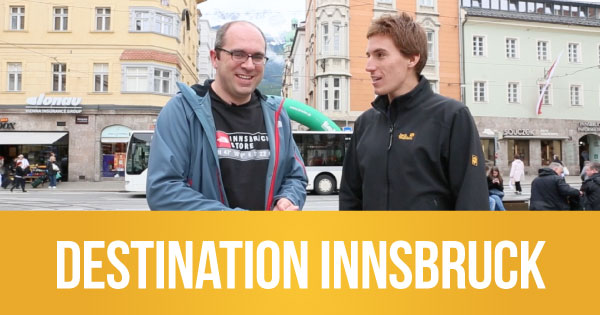
For instance, Kennst du das Goldene Dachl? means Do you know the Golden Roof?, a well-known tourist spot in Innsbruck. If you’ve visited before, you could respond with Ja, ich war letztes Jahr in Innsbruck. Yes, I was in Innsbruck last year and so on!
You could also say:
-
- Ich bin hier für fünf Tage. I’m here for five days.
- Ich freue mich auf meinen Aufenthalt. I’m looking forward to my stay.
- Ich freue mich, das Museum zu besuchen. I’m looking forward to visiting the museum.
Being familiar with this basic travelling vocabulary will make navigating der Flughafen much easier and give you the opportunity to talk about your trip. Whether you’re boarding a flight or going through security, being prepared with the right words and phrases will reduce stress and help you feel more at ease.
And, once you arrive in the German-speaking country, you might want to ask for information and directions at a help desk in German. Read the blog post we prepared to help you with that and be extra prepared for your next trip!