In lesson 01 of One Minute Polish you’ll be learning how to say “hello” and “goodbye”, two very important phrases for any conversation!
Download episode | Subscribe in iTunes | RSS Feed | Bonus Materials

In lesson 01 of One Minute Polish you’ll be learning how to say “hello” and “goodbye”, two very important phrases for any conversation!
Download episode | Subscribe in iTunes | RSS Feed | Bonus Materials
 Do you have a minute to spare? If so, then you can pick up a new language with our new podcast. Learn Polish in minutes with One Minute Polish. Join teacher Ania as she introduces the basics of Polish in ten weekly lessons of just a couple of minutes. One Minute Polish marks the first in a new series of language podcasts from the Radio Lingua Network and we look forward to producing further One Minute Languages programmes in the near future.
Listen below, download lesson one or subscribe for free in iTunes.
Learning how to talk about jobs in French is a crucial skill that will help you in both personal and professional contexts. Whether you’re discussing your career, asking about someone else’s profession in French, or describing different occupations, having a solid grasp of this vocabulary is essential.
In this article, we’ll explore common jobs in French, phrases to describe your profession, and how to ask others about their work.
Knowing the names of common professions in French will enable you to discuss various occupations. The starting point for describing your job is using the term “Je suis, which means “I am” in French.
With that in mind, here are some essential job terms to add to your vocabulary:
The term changes depending on gender: étudiant for males and étudiante for females.
The term is avocat for males and avocate for females.
This phrase is used to give personal information, often following a question about your profession: Alors moi, je suis professeur. Well, I am a teacher.
This phrase means I do not work and is used if you are currently unemployed or not working: Je ne travaille pas en ce moment. I am not working at the moment.

To engage in conversations about jobs in French, it’s important to know how to ask about someone else’s profession. Here are key questions:
This is the informal way to ask someone what their job is.
This is the formal version, used in professional or polite settings.
This informal question is commonly used to ask about someone’s profession, meaning What do you do for a living?
The formal version of this question.
Would you like to learn the pronunciation of these phrases? In episode 7 of Season 1 of the Coffee Break French podcast, you can get more insight into them and also learn other useful phrases. Listen to it now:
When discussing jobs in French, you’ll also need to describe your work environment. You can use Je travaille, which means I work in French and can be used to specify where you work.
Here are some useful phrases:
When talking about jobs in French, you might want to express your feelings about your work. Here are some phrases to do so:
Use this phrase to express that you enjoy your work.
If you are unhappy with your job, meaning ‘I do not like my job.’
By mastering these key phrases and vocabulary for talking about jobs in French, you’ll be well-equipped to discuss your profession in French. Whether you’re talking about your own career, asking about someone else’s job, or expressing your feelings about your work, these expressions will be invaluable.
Do you want to keep improving your French skills and talking in more detail about likes and dislikes? Then check the episode we prepared to teach you how to say ‘I love’ in French and much more!
Cześć. Mam na imię Ania – my name is Ania and welcome to One Minute Polish. In this podcast I’m going to be teaching you język polski, the Polish language. The great thing about this language course is that you’ll be learning all you need to know in 60 seconds! Yes, each one-minute language lesson will equip you with just enough Polish to help you get by in lots of situations either on holiday or on a business trip to Poland.
Our course will be starting very soon. In the meantime, for more information, you can visit our website on www.oneminutelanguages.com. Do widzenia!
Download episode | Subscribe in iTunes | RSS Feed | Bonus Materials
Mark and Kara from Coffee Break Spanish were down in Cardiff yesterday to pick up a coveted European Award for Languages, presented by Isabella Moore, CEO of CILT, the National Centre of Languages on behalf of the European Commission. Watch the video of the proceedings below.
Radio Lingua Director, Mark Pentleton, was interviewed during PodcampUK by Joe Dale for his Integrating ICT into the MFL Classroom podcast. The interview outlined Mark’s background and how he got into podcasting, and gives an insight into the model behind the Radio Lingua Network.
Listen below or download the mp3 file.
Learning a new language can be an exciting adventure, and mastering the basics is the first step. In this article and episode, we will continue the theme of family members and learn how to count from 1 to 10 in French.
Understanding these essentials will help you in everyday conversations and build a strong foundation for further learning. Let’s dive in and explore these key elements of the French language!
Having family members’ vocabulary in French is crucial for everyday conversations. Whether you are introducing your family or talking about them, these terms will come in handy.
Let’s check out some of these terms!
In French, maman means mom. This affectionate term is commonly used in everyday conversations and reflects warmth and familiarity. For example, you might say:
Similarly, le papa means dad. This term encapsulates paternal affection and authority. An example sentence would be:
To collectively address both parents, one would use parents in French. This term encompasses the roles of both the mother and father. For exampleÇ
Do you know how to say that in French if you have three children or two siblings? Numbers form the foundation of many aspects of life, from counting your family members to giving your phone number.
Learning how to count from 1 to 10 in French is an essential skill that will aid you in numerous situations. Let’s go through the numbers and their uses in daily conversations.
Let’s practice using family members and numbers from 1 to 10 in French in sentences:
Would you like to learn the pronunciation of these phrases? In episode 6 of Season 1 of the Coffee Break French podcast, you can get more insight into them and also learn other useful phrases. Listen to it now:
Now that you are familiar with how to count from 1 to 10 in French, more than talking about the number of family members, you can also give and ask for phone numbers.
Knowing how to ask for and give phone numbers is a practical skill that you’ll likely use often. Here are some essential phrases and examples to help you master this aspect of French communication.
This phrase, Quel est ton numéro de téléphone ? is the informal way to ask someone for their phone number. For instance, Quel est ton numéro de téléphone, s’il te plaît ? What is your phone number, please?

In formal contexts or when speaking to someone you don’t know well. An example sentence would be, Bonjour, quel est votre numéro de téléphone, s’il vous plaît ? Hello, what is your phone number, please?
To say my phone number, you would use mon numéro de téléphone. For example:
In France, phone numbers are 10 digits long and usually when French people spell their numbers, they do to 2 by 2, so the correct way would be:
By learning these essential family terms, numbers 1 to 10 in French, and useful phrases for exchanging phone numbers, you’ll be better equipped to engage in everyday conversations. Keep practising, and you’ll soon find yourself more comfortable and confident speaking French. Remember, language learning is a journey, and every new word brings you one step closer to fluency!
Do you want to keep improving your French skills and learn how to talk about your job? Then check out the episode we prepared, which will teach you how to say that and much more!
Understanding how to talk about family members in French is a fundamental part of learning the language. Whether you are introducing your family, talking about them, or simply learning new vocabulary, mastering these terms will help you engage in meaningful conversations.
In this article, we’ll explore key phrases and vocabulary related to family in French.
Let’s start with the basics. Here are the essential terms for family members in French:
Knowing how to use possessive adjectives is crucial when talking about your family in French. These adjectives change depending on the gender and number of the noun they precede.
For masculine nouns, use “mon”:
For feminine nouns, use “ma”:
For plural nouns, use “mes”:
Would you like to learn the pronunciation of these phrases? In episode 5 of Season 1 of the Coffee Break French podcast, you can get more insight into them and also learn other useful phrases. Listen to it now:
When introducing your family members, you can use these phrases to make a good impression:
This phrase is used to introduce someone:
This informal phrase is used to introduce someone to a friend or peer:
Use this formal phrase when introducing someone to a group or someone you don’t know well:
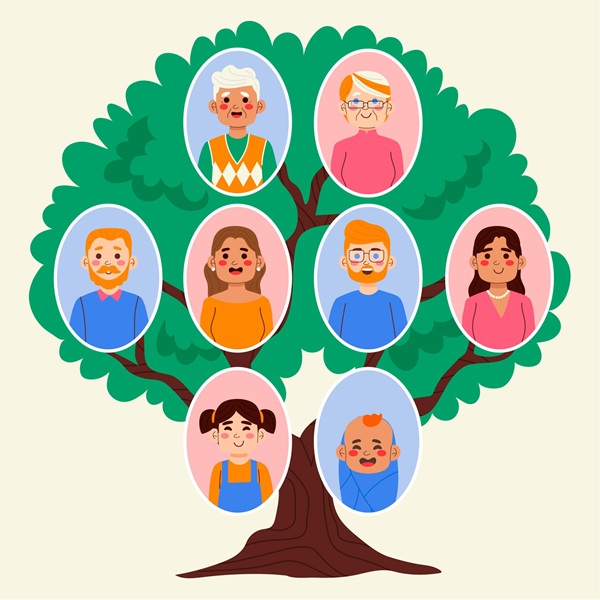
You can describe your family members using the following phrases:
Use this phrase to say the name of a male family member:
Use this phrase to say the name of a female family member:
Use this phrase to introduce multiple male or mixed-gender family members:
Use this phrase to introduce multiple female family members:
Putting everything together, here are some examples of how you might talk about your family members in French:
By mastering these essential phrases and vocabulary, you will be able to confidently talk about family members in French. These skills will help you engage in more personal and meaningful conversations.
Keep practising, and you’ll find yourself more comfortable and fluent when discussing your family in French. Remember, language learning is a journey, and every new word brings you one step closer to fluency.
Do you want to keep improving your French skills and learn more family members and numbers from 1 to 10? Then check the article we prepared to teach you how to say that and much more!