
What better place to start building your Italian vocabulary than learning pasta names in Italian? Far from being just an ingredient kept at the back of the cupboard, pasta is a staple of Italian cuisine and culture, so cherished in Italy that wheat often has to be imported from other countries to keep up with Italians’ pasta-making demands!
In this article, we have taken a couple of common pasta varieties and researched their names’ origins, which will help you find out more about the famous foodstuff. We hope you enjoy this delicious learning experience and that it takes you from “pasta imposter” to “pasta pro”!
All that’s left to say now is let’s check out some pasta names in Italian and buon appetito!
The meaning behind pasta names in Italian
To get started, let’s have a look at the origin of the word pasta itself. The English word ‘pasta’ was, of course, adopted from Italian, in which pasta also means dough. Looking further back, the word also derives from the Greek word παστά (pasta), strangely meaning barley porridge.
Most pasta names in Italian are derived from their shapes, textures, or traditional preparation methods. Understanding these names can help you confidently order pasta at an Italian restaurant and impress your friends with your knowledge of authentic Italian food vocabulary.
1) Conchiglie
 Picture: Jameson Fink (Creative Commons 2.0)
The first pasta on our list of pasta names in Italian is conchiglie. In English, a conch is a type of spiral-shaped seashell, and that’s exactly where the name for this shell-shaped pasta comes from. In Italian, the word for seashell is conchiglia.
This pasta is traditionally made from durum wheat and can be coloured with spinach, tomato or squid to produce green, red or black shades. There are many other pastas – like lumaconi – which have a similar shell-like form to conchiglie, and are large enough to be stuffed with delicious fillings and baked in the oven.
- conchiglia (f) seashell
- lumaconi (m/pl) slugs / large snails
Hai fame? Hungry yet? Take a look at this delicious recipe featuring conchiglie. In this easy-to-follow recipe, the shell-shaped pasta is stuffed with buffalo mozzarella, fresh basil leaves and homemade tomato sauce – three pillars of Italian cuisine.
2) Farfalle
 Picture: eltpics (Creative Commons 2.0)
Instantly recognisable as bow tie shapes, farfalle are a true crowd-pleaser. However, the translation has nothing to do with bow ties. Can you guess the meaning of the word farfalle? In Italian, una farfalla is a butterfly, and farfalle is plural.
Farfalle is best served with rich cheese or tomato-based sauces due to their large surface area, which takes on all of the flavours from the sauce. There is also a mini version of farfalle, called farfalline, often stirred into soups.
- farfalle (f/pl) butterflies
We’ve found another mouth-watering recipe for you to try out: a healthy recipe which puts a slightly different spin on the classic pasta dish. Vorresti assaggiarlo tu? Perfect for summertime dinners or light lunches, this pasta salad can be whipped up in just half an hour!
3) Radiatori
 Picture: Dave Prasad (Creative Commons 2.0)
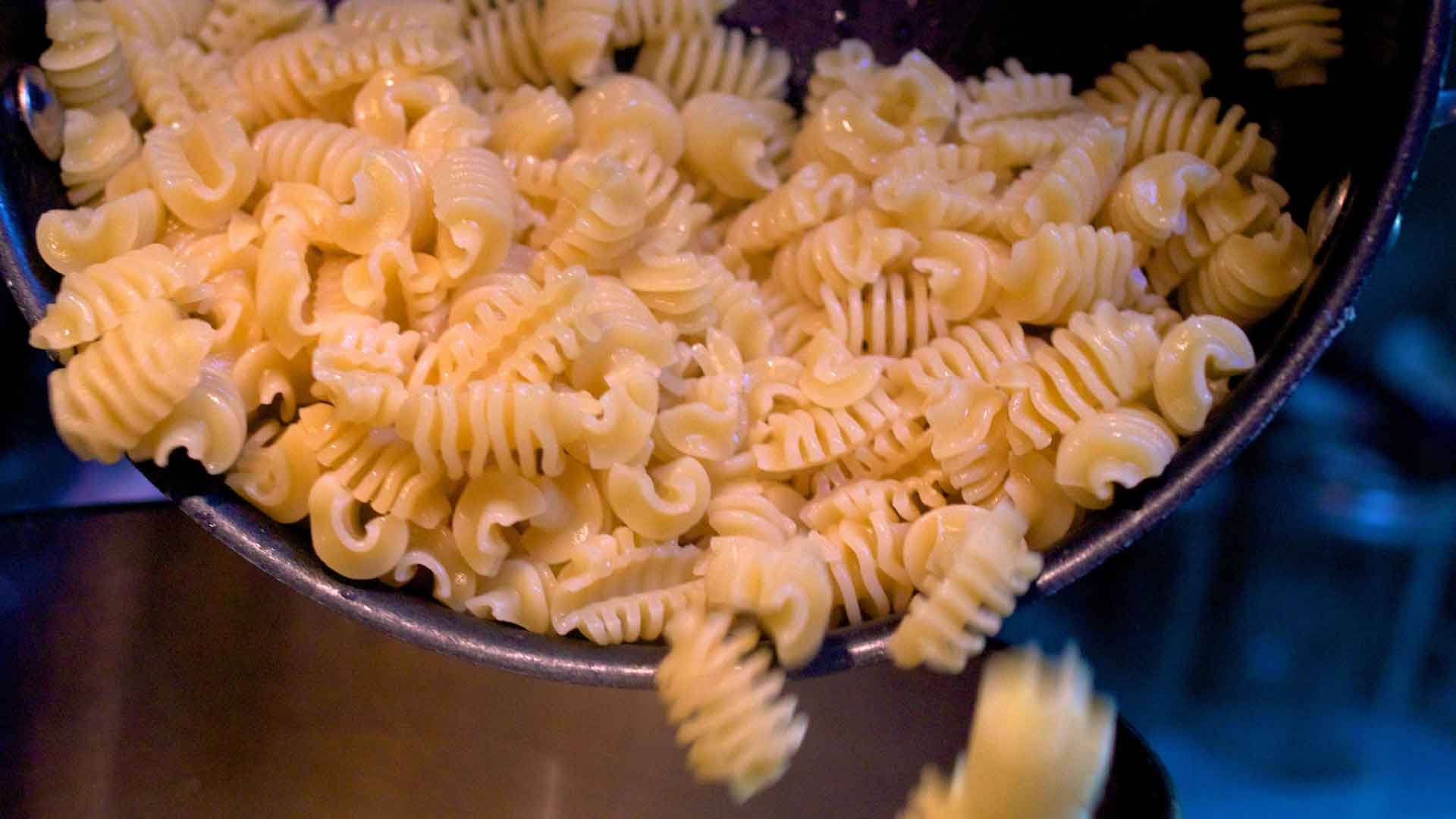
The third pasta we’ve chosen to be a part of our list of pasta names in Italian, and perhaps the easiest to work out the etymology of, is radiatori. This ruffle-edged pasta is relatively new to the scene: introduced in the 1960s, radiatori are medium-sized pasta shapes which are a popular choice for casseroles and other baked dishes.
The literal translation of radiatori is – unsurprisingly – radiators, which is exactly what this pasta looks like: little radiators!
- radiatore (m) radiator
This third recipe is written in Italian, which will give you a chance to practise your food-related vocabulary while trying your hand at this mushroom and crunchy pancetta radiatori dish. Serve this with a good glug of extra virgin olive oil and you’ll be good to go!
4) Tagliatelle
 Picture: Jason Hamner (Creative Commons 2.0)
This versatile pasta – often eaten with creamy or meaty sauces – is probably the most well-known on our list. But what is the origin of the word tagliatelle? Its name comes from a verb which translates as ‘to slice’ or ‘to cut’: tagliare. So, tagliatelle literally means ‘small slices’, perfectly describing the long strips of this ribbon-like pasta!
- tagliare (vb) to cut / to slice
- taglio (m) cut / slice
Although most would associate spaghetti with bolognese sauce, it is tagliatelle which most frequently accompanies an authentic bolognese sauce in Italy. Cosa aspetti?
5) Penne
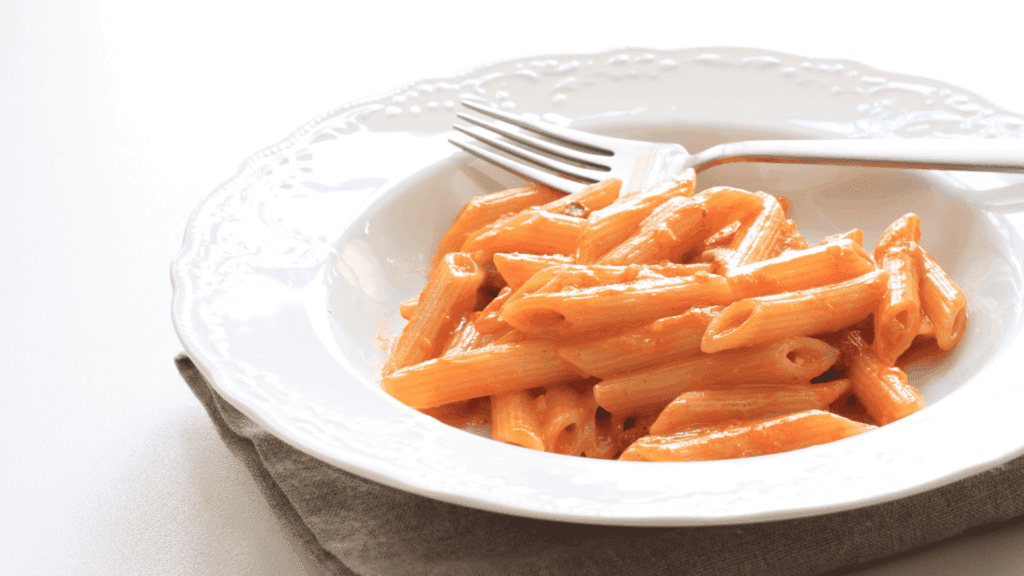
When you think of pasta names in Italian, this one is probably at the top of your list! The name penne comes from the Italian word for pen or quill because of its cylindrical shape and diagonal-cut ends.
This pasta is ideal for holding onto sauces, making it a great choice for creamy and tomato-based dishes like penne all’arrabbiata. A fun fact is that there are two main types of penne:
- penne lisce smooth penne
- penne rigate ridged penne
The ridges help the sauce cling to the pasta better!
6) Bucatini

Next, on our list of pasta names in Italian is bucatini. Imagine spaghetti but with a hole running through the centre… Well, that’s bucatini! The name comes from the Italian word buco, meaning hole.
Bucatini is famous for dishes like bucatini all’Amatriciana, a classic Roman pasta made with tomato, guanciale (cured pork cheek), and Pecorino Romano cheese.
7) Gnocchi
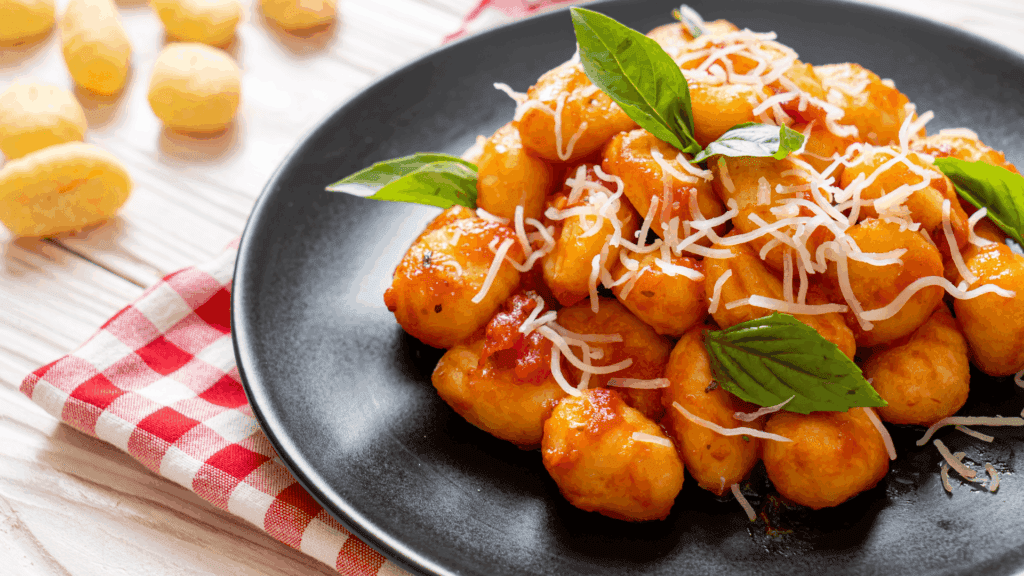
Another famous preparation on our list of pasta names in Italian! The word gnocchi comes from the Italian word nocchio, meaning knot in wood or from nocca, meaning knuckle. This makes sense, given their small, rounded shape.
Unlike most pasta, gnocchi isn’t made from wheat flour alone. Instead, it is typically crafted from potatoes, flour, and eggs, creating a soft texture that goes well with rich sauces. There are several varieties of gnocchi across Italy, each with unique ingredients and preparation style.
8) Rotelle
 Picture: cookbookman (Creative Commons 2.0)
Taken from the word rotella, meaning little wheel or cogwheel, this pasta is often referred to as wagon wheel pasta in the U.S. Similar to the flower-shaped fiori pasta, the large surface area of rotelle, provided by their spokes, means that they take on extra flavour when added to any sauce!
- rotelle (f/pl) little wheels
- rotare (vb) to rotate
- fiore (m) flower
To finish, we have another Italian recipe for you. Follow this step-by-step guide to create a tasty Italian sausage sauce—the perfect complement to this wagon wheel pasta.
We hope that you’ve enjoyed this article on pasta names in Italian and that it has reminded you that learning a language is not all about grammar books and memorising verb lists. There are countless interesting opportunities to incorporate language learning into everyday life, including at dinner time!
Do you have a favourite pasta dish you’d like to share with your fellow Italian learners? If so, let us know in the comments below! And to keep having fun with your language learning, check out the blog post we prepared with suggestions to help you enjoy your journey each step of the way!

3 thoughts on “Pasta names in Italian: how not to be an imposter with your pasta!”
I am gluten intolerant and cannot eat these amazing pasta shapes. However, I found quite a few restaurants in Italy served gluten free pasta. My favourite is Puttanesca, with olives, capers and anchovies, with of course, a wonderful home made tomato sauce and the inevitable Parmesan!
I love pasta…. my favourite is tagliatelle with proper slow cooked ragu…..
Adoro pasta, tutti tipi! Ma forse le lasagne è le mie preferite.