

It’s finally May and you know what that means… The Eurovision Song Contest is here!
The most eccentric singing competition returns to our screens and the Coffee Break Languages team could not be more excited. If you’re subscribed to our YouTube channel, you’ll know that music and languages are our greatest passions and Eurovision combines both in a spectacular three-night show.
What is the Eurovision Song Contest?, you might ask. It’s a celebration of music, language and culture throughout Europe. It was established in 1956 with “a desire to unite European countries through cross-border television broadcasts following World War 2”. Nowadays, many countries further afield participate in the show (we’re looking at you, Australia), making it a worldwide sensation. The show attracts around 180 million viewers from all over the world and many enjoy taking on the colours of a nation they have selected in their family sweepstake or even wearing costumes reminiscent of previous entrants. The more interaction with the TV event, the more fun you’ll have! Every year, spectators discover new foreign artists and get to understand how people make music in different parts of the world. Whether you’re a fan of pop music, rock and roll, techno or even metal, Eurovision will not disappoint you.
Although most of the entries are in English these days, the Eurovision Song Contest has a long history of promoting national languages and music genres. In my normal role here at Coffee Break, I work with the Italian team producing content and recording audio, but for one week only I’ve been designated the Coffee Break Eurovision coordinator! One of my tasks has been to compile a list of the best songs in French, German, Italian, Spanish and Swedish and – boy, oh boy! – that was a challenge.
I’ve counted the points and double-checked the scores so put your headphones on, get the wind machine going and wear your sparkliest outfit because we’re embarking on a Eurovision journey!
“Poupée de cire, poupée de son” – France Gall (Luxembourg)
“Poupée de cire, poupée de son” by France Gall is the Luxembourgish winning entry of 1965. With its swinging and catchy rhythm, the song is an example of the Yé-yé genre, a countercultural type of pop music that drew inspiration from British and American rock and roll as well as from la chanson française.
If at first glance the song may seem simple, a careful analysis of the lyrics reveals a much deeper meaning. In the first line of the song, the singer describes herself as a wax doll (poupée de cire) or a rag doll (poupée de son) who wears her heart on her sleeve through her music. The song tells the story of a teenage girl who wants to fall in love yet feels unprepared to experience love. She channels her emotions through her songs hoping that one day she’ll be able to live love in real life.
Seule, parfois je soupire
Je me dis “à quoi bon ?”
Chanter ainsi l’amour sans raison
Sans rien connaître des garçons
Je ne suis qu’une poupée de cire
Qu’une poupée de son
Sous le soleil de mes cheveux blonds
Poupée de cire, poupée de son
No wonder this song managed to win the contest! The music makes you want to dance and the lyrics provide us with some introspective teenage dilemma. Qu’en pensez-vous ?
“Swiss Lady” – Pepe Lienhard Band (Switzerland)
This is a weird one, in such a perfect Eurovision way. If you think this song is about a beautiful woman from the Swiss Alps, you’d be wrong. It’s actually about ein Alphorn, nicknamed “Swiss Lady”.
Er spielte Rock’n Roll, er spielte Dixieland
Und war bekannt als die “One-Man-Mountain Band”
Er sagte: “Durch sie allein ist die Welt voll Musik”
Sie gibt mir alles und vergisst mich nie
Sie ist meine Swiss Lady
Und ich ein Mann aus den Bergen
Und wer sie einmal gehört hat
Der kann mich sicher versteh’n
For those of us who don’t know what an alphorn is, it’s a wind instrument consisting of a wooden horn used by mountaineers in Switzerland and elsewhere in that region. It features in the song and it actually opens the performance. Other interesting musical elements include: die Piccoloflöte and, of course, Jodeln. What more could you want from a Swiss song? The staging and the red-and-white 70s outfits of the band make the song even more iconic. Nicht war?
Unfortunately, “Swiss Lady” only placed 6th in the Eurovision Song Contest of 1977 but it won the hearts of German-speaking and non-German-speaking people across Europe (the band in fact released an English version too). So much so that it remained the only Swiss entry to have reached number 1 in the Swiss charts until 2019. Trust me, it’s worth a listen!
“Nel blu, dipinto di blu (Volare)” – Domenico Modugno (Italy)
I’m sure many of you will have heard this song before. It’s arguably the most famous Italian song worldwide. It won the Sanremo Festival in 1958, but it came third at the Eurovision Song Contest of that same year. Da non credere!
As the first lines of the song reveal, “Nel blu, dipinto di blu” talks about a dream in which the singer is enchanted by the colour of the sky, which reminds him of the eyes of his beloved woman, and in a leap of euphoria and bliss he flies away.
Volare oh, oh
Cantare oh, oh
Nel blu degli occhi tuoi blu
Felice di stare quaggiù
E continuo a volare felice più in alto del sole
Ed ancora più su
Mentre il mondo pian piano scompare negli occhi tuoi blu
La tua voce è una musica dolce che suona per me
Many have covered the song throughout the years (among which Frank Sinatra, Luciano Pavarotti and Paul McCartney), but Domenico Modugno’s performance has never been topped. His facial expressions and the way he opens his arms reaching for the sky as he sings about flying … assolutamente inimitabile!
When Modugno first performed the song at the Sanremo Festival, he felt so elated by the music that he dared to open his arms. Since most Italian singers stayed completely still for the entirety of their act back then, this was perceived as a revolutionary moment in musical performance. So much so that the statue dedicated to Modugno in his hometown depicts him in this pose.
“Vivo cantando” – Salomé (Spain)
Four countries won the Eurovision Song Contest in 1969: France, the Netherlands, Spain and the UK. However, the Spanish entry, “Vivo cantando” by Salomé, wins the crown in my opinion.
The song is a rhythmic anthem to happiness and carefreeness. It’s an up-tempo love song from the perspective of a woman, who sings about the positive changes her relationship with her lover had on her. Now she’s so happy that she lives her life singing.
Desde que llegaste ya no vivo llorando
Vivo cantando, vivo soñando
Sólo quiero que me diga qué está pasando
Que estoy temblando de estar junto a ti
Apart from the catchy rhythm and chorus, the performance of the song is made even more memorable thanks to Salomé’s costume: a baby blue jumpsuit with beaded fringes. ¡Impresionante!
The singer decided to dance on the spot for certain parts of her song and, although dancing was prohibited by the contest rules at the time, she wasn’t penalised since the performers from Ireland and the UK had done the same on stage. Could you imagine a Eurovision performance with no choreography nowadays? ¡No me atrevo ni a imaginarlo!
“Fångad av en stormvind” – Carola (Sweden)
When it comes to Sweden in Eurovision, we think of winning songs such as “Waterloo” by ABBA, “Euphoria” by Loreen or “Heroes” by Måns Zelmerlöw. The Swedes really outdo themselves with every new winner. However, for this list I’ve turned to a song på svenska.
I’ve chosen “Fångad av en stormvind” by Carola, a 90s up-beat song about a love affair that overwhelms the singer like a storm at sea. It won the Eurovision Song Contest of 1991, held in Rome. Carola also recorded an English version of the song titled “Captured by a Lovestorm”.
The lyrics are brimming with poetic images in which passion is compared to gales as the singer is blown out of her safe harbour to join her lover on the high seas. Nothing can stop her on her journey into her lover’s arms.
Utan saknad lämnar jag min trygga hamn
Fri men ändå bunden till en öppen famn
Jag är fångad av en stormvind
Fast för dig
Ingenting kan hindra mig
När det blåser i mitt hjärta
Fångad av en stormvind
Natt och dag
Här finns bara du och jag
Och det ljus som himlen lämnat kvar
“Fångad av en stormvind” makes me want to get up and dance! Carola’s performance is incredible: she doesn’t miss a note with her powerful vocals and, on top of that, she dances with energy and enthusiasm. She takes every opportunity to look at the camera and connect with the viewers with her ever so enchanting eyes. Håller du inte med?
What do you think of our list? Do I get douze points from you?
I know, I could have included “Ne partez pas sans moi” by Celine Dion, or maybe “Soldi” by Mahmood, the Herreys with “Diggiloo Diggiley” but decisions had to be made.
If you have the opportunity, we hope you embrace the fun and joy that the Eurovision Song Contest embodies. When you hear the event’s theme tune (Charpentier’s Te Deum) strike up, sit back with your carefully prepared Eurovision treats, scorecard at the ready and let yourself be swept along. Watch the glamorous, multilingual hosts effortlessly cope with hours of live TV and the inevitable technical hitches of contacting 39 countries across the continent.
Which songs would you have picked for your own multilingual list? Let us know in the comments below. Thank you for reading and enjoy this year’s Eurovision Song Contest!
Football lingo: 10 terms from around the world that every fan should know

Football. Soccer. Whatever you call it, it’s the world’s most popular sport, uniting billions across continents. As a global game, it has a global language — or rather, languages. While the rules are universal, the terms used to describe actions on the pitch can differ significantly depending on where you are in the world, and that is why you need to know some football lingo.
This article will explore 10 terms from various countries, giving you a deeper understanding of the beautiful game. Are you ready to understand the difference between a golazo and a sukkerbold? Keep reading!
1. National Nicknames
Let’s start with the basics on your football lingo list: the national football teams’ nicknames. You may already know La Albiceleste (Argentina), Les Bleus (France) and La Furia Roja (Spain), but what about Les Aigles de Carthage (Tunisia), Vatreni (Croatia) Los Canaleros (Panama) or even Socceroos (Australia)?
Of course, we cannot forget to mention Canarinho (Brazil) – who has won the World Cup five times and has participated in every championship to date – and the traditional Gli Azzurri (Italy). Fans all over the world scream their nicknames when a goal is scored, so make sure to memorise these football lingo essentials.
2. Tiki-taka (Spanish)
We are sure you already know this word from our football lingo list, but in case you don’t, tiki-taka refers to a style of play that involves highly accurate short passing (pases y paredes) and guarantees retaining possession of the ball. More than that, tiki-taka is about patient build-up play and creating scoring opportunities through teamwork rather than long balls or individual brilliance.
While the term’s exact origins are debated, it gained widespread recognition during Barcelona’s dominant era under Pep Guardiola in the late 2000s and early 2010s, becoming synonymous with their mesmerising style of play.
3. Panenka (Czech)
From one technique to another, Panenka refers to a penalty kick in which the ball is gently chipped into the goal after the goalkeeper has dived to one side of the goal. Coined by Czech former footballer Antonín Panenka, this kick can be obtained by giving a subtle touch underneath the ball, causing it to rise and fall within the centre of the goal, thus deceiving the goalkeeper.
Italians also call this penalty kick cucchiaio. Francesco Totti, the historic captain of AS Roma, coined the term. Have you ever seen a Panenka live?
4. Zondagsschot (Dutch)
Sometimes, when you watch your favourite football team play – especially during a crucial match – you pray for them to score a miraculous goal. That’s what a Zondagsschot is!
Literally translated as Sunday shot, this footballing term refers to a shot that a player would almost surely miss but unbelievably goes in despite all previsions. We are sure that you have seen some Zondagsschot in your lifetime!
5. Pipoqueiro (Portuguese)
Imagine the tension of a penalty shootout. The stadium is silent, all eyes on the player stepping up to the spot. If that player falters, missing the crucial penalty, they might be labelled a pipoqueiro in Brazil.
The word pipoqueiro literally means popcorn man. It is a curious football lingo term for a player who doesn’t perform well in important games, like semi-finals or finals. A pipoqueiro is a player who cracks under pressure. Just like popcorn popping unpredictably, a pipoqueiro is seen as unreliable in high-stakes situations, unable to deliver when the team needs them most.
As you can imagine, nobody wants to be that player!
6. Enganche (Spanish)
In Argentina, the term enganche refers to the playmaker or attacking midfielder, a key player in the team’s offensive game. This position involves connecting different parts of the attack and often acts as the bridge between the defence and forwards.
Typically positioned centrally, the enganche influences the game by creating attacking plays and delivering precise passes that can lead to goals. This role is essential for maintaining the team’s rhythm and flow and ensuring that the attacking strategy stays strong throughout the match.
Example of this football lingo term in use:
- Riquelme was one of the greatest enganches of all time.
7. Sukkerbold (Danish)
From popcorn to sugar, here’s another word that associates food with football lingo. The Danish expression sukkerbold stands for an exceptional cross right at the target man. We are not really sure why the Danes call it a sugar ball, but it’s definitely sweet to see footballers play well.
8. Bouffer la feuille (French)
No football fan wants to witness this when their team is playing. Bouffer la Feuille is a French expression used when a player misses an easy goal and a potential victory. Literally meaning to fluff the sheet, it refers to the score sheet, which notes scored goals, the various cards dealt, and the participating players. The captain usually signs this document at the end of every match.
We are sure that si quelqu’un bouffe la feuille nobody will be happy (but if you think of it in French, you might be less angry about it).
9. Den sterbenden Schwan (German)
This football lingo word will make you laugh. Do you know what a diver is? It’s a player who takes flight in the opponent’s box too easily and dramatically. Germans describe this kind of player as a Schwalbe, a swallow, and if a player is too much of a diver, they will accuse him of playing den sterbenden Schwan, the dying swan.
Let’s face it: sometimes players can’t help but over-act as if they were playing in an opera when they dive. And it can be annoying. But, if you think of it as part of the famous Tchaikovsky’s ballet, you may enjoy their performance.
You may enjoy Die Lustigsten Schwalben der Welt…
10. Tólfan (Icelandic)
This football lingo term is one that became popular a couple of years ago when Iceland participated in the UEFA Euro 2016. This Nordic island made a name for itself during that championship thanks to its Tólfan, the 12th Man that is the Icelanders and their Viking chant. The supporters clapped and shouted HUH! in unison, starting off slow and gradually building the pace. It’s very intimidating for those playing against Iceland!
The Viking Thunder-Clap has accompanied the national team and many other teams around the world since then!
Football’s global appeal is undeniable, and its diverse lingo reflects the rich cultural tapestry of the sport. From Brazil’s pipoqueiro to Denmark’s sukkerbold, each term adds a unique flavour to how the game is understood and celebrated around the world.
Now that you’re familiar with football lingo, why not dive into another exciting sport: tennis? We’ve put together a blog post to help you learn all the essential French tennis terms, from the basics like tennis, to love and deuce!
10 beautiful Italian words to add to your vocabulary immediately
Let’s face it. Everybody loves the sound of the Italian language. That’s why we at Coffee Break Languages have decided to bring you 10 beautiful Italian words that sound great (and are really useful).
After all, there is a charming melodic aspect to it that is absolutely undeniable. How can we resist its postalveolar affricates, its dental fricatives and, most of all, its sensual “r’s”?
Keep reading to find some unique Italian words to add to your vocabulary!
1. Dai!
You may be familiar with this one if you’ve overheard Italians talking to each other. It has nothing to do with the verb dare – meaning “to give” – and it cannot be easily translated. Dai can be used to encourage someone to do or not to do something, much in the same way English speakers say “go on” or “come on”. It can also convey a sense of astonishment, meaning “are you serious?” or “really?”.
It’s definitely one of the unique Italian words, with several possible meanings, which can only be understood from the context. Did one of your Italian friends say Non ce la faccio to you? Just reply back with dai! Is someone doing something to annoy you? Tell them to stop with dai! Did you just hear the latest gossip and you cannot believe it? Express your surprise with dai!
2. Abbiocco
Have you ever eaten so much that you were unable to move and the only thing you wanted to do was take a nap? If so, then you know what l’abbiocco is. It is the drowsiness you feel after a hearty meal: a feeling with which Italians are rather familiar. There is also a verb to describe this feeling: abbioccarsi.
A translation in English might be “food coma”, but this is a much more dramatic term than abbiocco. This one deserves a place in the list of beautiful Italian words because of its sound.
The double “b” and double “c” convey perfectly the idea of being full and sleepy after a Sunday roast or a big bowl of pasta. Italians love this food-induced state and usually use it to relax and take a break from the everyday rush, enjoying the abbiocco as much as they can!
3. Mozzafiato
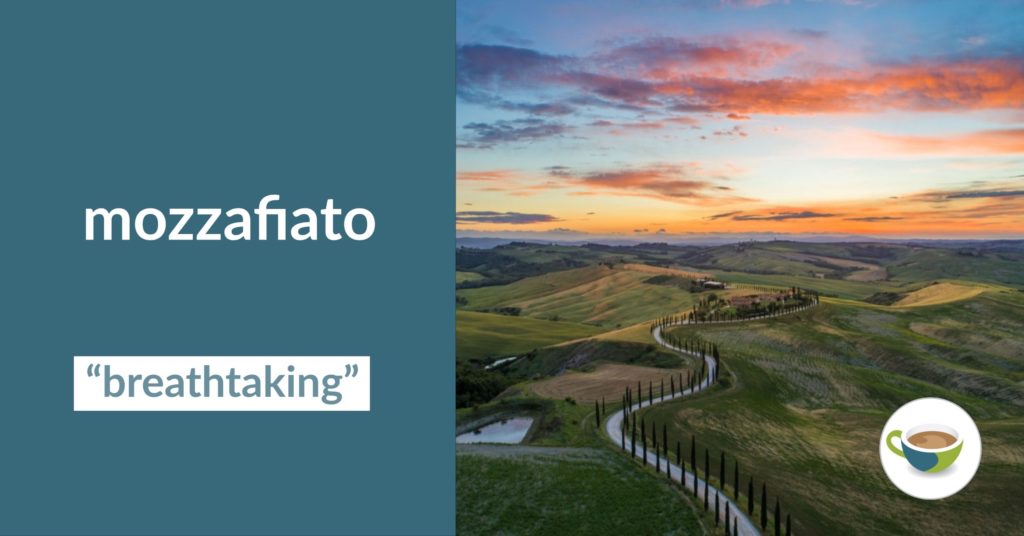
This word comes from mozzare, meaning ‘to cut off’, and fiato, meaning ‘breath’. A view, a piece of art, a show, a journey and even a person can be mozzafiato. It means that something is so strikingly beautiful that it makes us stop breathing, just as the word suggests.
It can be translated in English as “breathtaking” or “riveting”. However, the image of cutting off one’s air feels more sudden and extreme than the simple act of “taking”, and somehow, more appropriate for a country like Italy, where “breath-chopping” beauty can be seen everywhere..
That is why it definitely deserves a place amongst beautiful Italian words!
4. Invasato
If you are thinking that this word means being stuck in a vase, you’re not quite in the right area. L’invasato is someone who experiences strong feelings, such as uncontrollable emotions or passions – so strong that they take over their minds! This is one of the beautiful Italian words that comes from the Middle Ages, when people believed that demons invaded and possessed the bodies of certain individuals.
That’s why today, invasato means someone who is being taken over by fear, jealousy or anger, as well as by creativity, enthusiasm or passion.
5. Menefreghismo
When you hear an Italian say me ne frego, it means that they could not care less about something. From this expression, we get the term menefreghismo which stands for a thoughtless indifference towards what is happening outside of one’s personal space. It is the kind of attitude we usually have during our summer holidays when enjoying the sun and the heat is our most important priority.
If, on one hand, il menefreghismo could be a good quality, on the other, the term is not always considered to be positive. Sometimes it is used to address the callousness or the selfishness of an uninterested friend. So, be aware of the context if you are called a menefreghista!
6. Crepitio
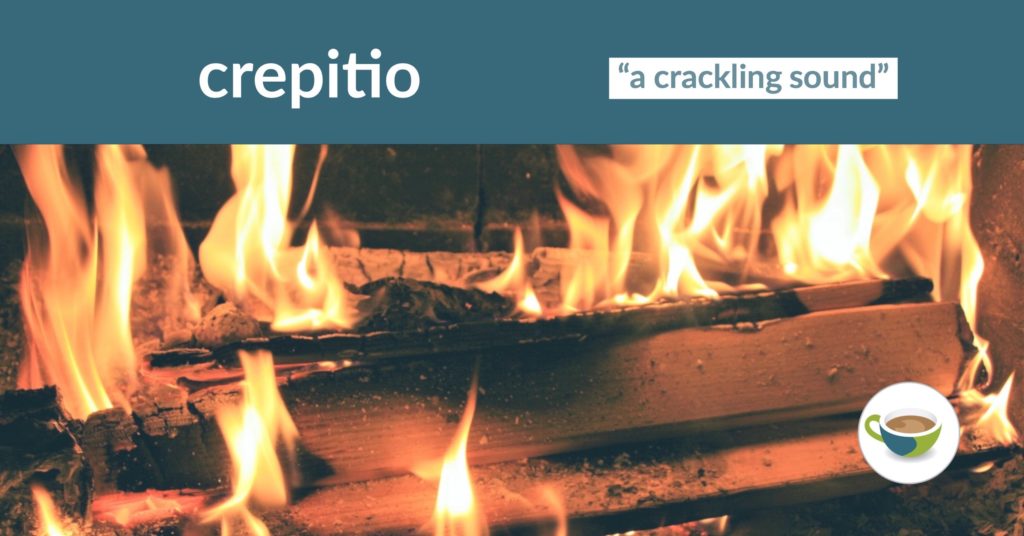
The rustling of leaves, the crackling of fire, the pattering of rain. There is one of beautiful Italian words that can describe these sounds: il crepitio. Try to pronounce this word and repeat it several times. Doesn’t it emulate the burning of logs in the fireplace or the tapping of raindrops on the window?
You can also use the verb crepitare to describe the making of these pleasing and relaxing sounds. It is a very evocative word that, despite its harsh “kr” phoneme, can bring back memories of outdoor naps, cosy nights-in and autumn afternoons.
7. Struggimento
How would you describe that feeling of yearning and torment that you experience when you argue with your significant other? Italians call it lo struggimento, a combination of gut-churning misery and desire, usually associated with one’s love life.
It is not necessarily a negative feeling; many poets – like Dante Alighieri, Petrarch and Giacomo Leopardi – found inspiration in their struggimento, another of beautiful Italian words.
Repeat this word in your head. Savour the harsh sound of its consonants. Now, can you understand what we are talking about here?
8. Boh!
In the list of interesting Italian words, this short expression deserves a spot. Well, you may not even notice it in a conversation, but it is a key expression of current Italian. Boh means “who knows?” or simply “I don’t know” and it is always accompanied by a dramatic shrug of the shoulders and a furrowed brow.
A non-native speaker should pay attention to the context, where boh! appears, though it’s quite easy to deduce its meaning since it usually appears in response to something.
Boh is an onomatopoeic expression that conveys doubt, indifference or unwillingness to talk about something. Similar expressions are bah and mah, both of which convey an idea of uncertainty.
Is that clear enough? Don’t answer boh! (or maybe do…)
9. Sfizio
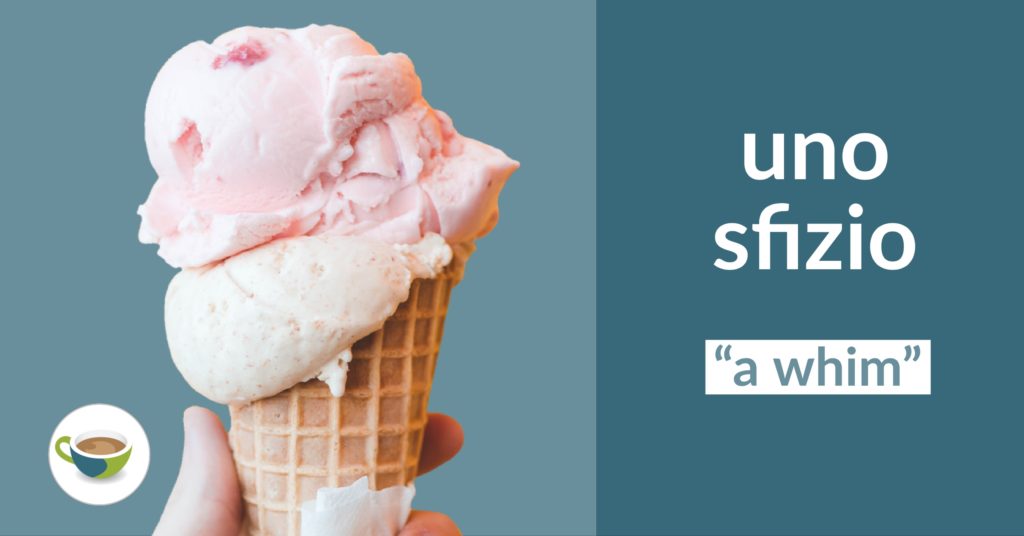
If you are a big shopper, you may know what we are talking about here. Do you know when you feel the urge to buy something you shouldn’t buy, but you buy it anyway? That’s what Italians call uno sfizio, meaning a whim or fancy.
Having gelato after dinner or bagging that pizza-shaped hat are actions that Italians would describe as togliersi lo sfizio, meaning “to satisfy one’s whim”. But, it’s not simply that! There is always a fun side to it, something between being ashamed and feeling right about it, enjoying it.
Sfizio: the tongue sizzles and fizzles. It sounds great and is definitely one of the most beautiful Italian words (especially if involves food)!
10. Procione
This may not be the most useful word, but it feels great on your tongue. It is a wonderful combination of the harsh “pr” sound and the sweet “tʃ” phoneme. Also, the fact that procione is the name of a cute animal made us include this word in our list.
We’re talking about a nocturnal animal, best known in North America, that is usually portrayed in movies and TV series as stealing food from a wheelie bin. Can you guess it? It’s a racoon. Although this mammal is not very common in Italy, its name sounds incredibly cute in Italian.
There is also another name for the racoon in Italian: l’orsetto lavatore (the washing little bear). We hope that you’ve enjoyed reading our article about beautiful Italian words.
Learning a language is a challenge, but it can be an enjoyable challenge. Try to find the words that please your ears and repeat them; they will help you improve your pronunciation. Languages are meant to be spoken, so remember to savour their sounds!
Why not see some of these beautiful Italian words in use? Check out our list of Italian movies for learners right now!