


It’s finally May and you know what that means… The Eurovision Song Contest is here!
The most eccentric singing competition returns to our screens and the Coffee Break Languages team could not be more excited. If you’re subscribed to our YouTube channel, you’ll know that music and languages are our greatest passions and Eurovision combines both in a spectacular three-night show.
What is the Eurovision Song Contest?, you might ask. It’s a celebration of music, language and culture throughout Europe. It was established in 1956 with “a desire to unite European countries through cross-border television broadcasts following World War 2”. Nowadays, many countries further afield participate in the show (we’re looking at you, Australia), making it a worldwide sensation. The show attracts around 180 million viewers from all over the world and many enjoy taking on the colours of a nation they have selected in their family sweepstake or even wearing costumes reminiscent of previous entrants. The more interaction with the TV event, the more fun you’ll have! Every year, spectators discover new foreign artists and get to understand how people make music in different parts of the world. Whether you’re a fan of pop music, rock and roll, techno or even metal, Eurovision will not disappoint you.
Although most of the entries are in English these days, the Eurovision Song Contest has a long history of promoting national languages and music genres. In my normal role here at Coffee Break, I work with the Italian team producing content and recording audio, but for one week only I’ve been designated the Coffee Break Eurovision coordinator! One of my tasks has been to compile a list of the best songs in French, German, Italian, Spanish and Swedish and – boy, oh boy! – that was a challenge.
I’ve counted the points and double-checked the scores so put your headphones on, get the wind machine going and wear your sparkliest outfit because we’re embarking on a Eurovision journey!
“Poupée de cire, poupée de son” – France Gall (Luxembourg)
“Poupée de cire, poupée de son” by France Gall is the Luxembourgish winning entry of 1965. With its swinging and catchy rhythm, the song is an example of the Yé-yé genre, a countercultural type of pop music that drew inspiration from British and American rock and roll as well as from la chanson française.
If at first glance the song may seem simple, a careful analysis of the lyrics reveals a much deeper meaning. In the first line of the song, the singer describes herself as a wax doll (poupée de cire) or a rag doll (poupée de son) who wears her heart on her sleeve through her music. The song tells the story of a teenage girl who wants to fall in love yet feels unprepared to experience love. She channels her emotions through her songs hoping that one day she’ll be able to live love in real life.
Seule, parfois je soupire
Je me dis “à quoi bon ?”
Chanter ainsi l’amour sans raison
Sans rien connaître des garçons
Je ne suis qu’une poupée de cire
Qu’une poupée de son
Sous le soleil de mes cheveux blonds
Poupée de cire, poupée de son
No wonder this song managed to win the contest! The music makes you want to dance and the lyrics provide us with some introspective teenage dilemma. Qu’en pensez-vous ?
“Swiss Lady” – Pepe Lienhard Band (Switzerland)
This is a weird one, in such a perfect Eurovision way. If you think this song is about a beautiful woman from the Swiss Alps, you’d be wrong. It’s actually about ein Alphorn, nicknamed “Swiss Lady”.
Er spielte Rock’n Roll, er spielte Dixieland
Und war bekannt als die “One-Man-Mountain Band”
Er sagte: “Durch sie allein ist die Welt voll Musik”
Sie gibt mir alles und vergisst mich nie
Sie ist meine Swiss Lady
Und ich ein Mann aus den Bergen
Und wer sie einmal gehört hat
Der kann mich sicher versteh’n
For those of us who don’t know what an alphorn is, it’s a wind instrument consisting of a wooden horn used by mountaineers in Switzerland and elsewhere in that region. It features in the song and it actually opens the performance. Other interesting musical elements include: die Piccoloflöte and, of course, Jodeln. What more could you want from a Swiss song? The staging and the red-and-white 70s outfits of the band make the song even more iconic. Nicht war?
Unfortunately, “Swiss Lady” only placed 6th in the Eurovision Song Contest of 1977 but it won the hearts of German-speaking and non-German-speaking people across Europe (the band in fact released an English version too). So much so that it remained the only Swiss entry to have reached number 1 in the Swiss charts until 2019. Trust me, it’s worth a listen!
“Nel blu, dipinto di blu (Volare)” – Domenico Modugno (Italy)
I’m sure many of you will have heard this song before. It’s arguably the most famous Italian song worldwide. It won the Sanremo Festival in 1958, but it came third at the Eurovision Song Contest of that same year. Da non credere!
As the first lines of the song reveal, “Nel blu, dipinto di blu” talks about a dream in which the singer is enchanted by the colour of the sky, which reminds him of the eyes of his beloved woman, and in a leap of euphoria and bliss he flies away.
Volare oh, oh
Cantare oh, oh
Nel blu degli occhi tuoi blu
Felice di stare quaggiù
E continuo a volare felice più in alto del sole
Ed ancora più su
Mentre il mondo pian piano scompare negli occhi tuoi blu
La tua voce è una musica dolce che suona per me
Many have covered the song throughout the years (among which Frank Sinatra, Luciano Pavarotti and Paul McCartney), but Domenico Modugno’s performance has never been topped. His facial expressions and the way he opens his arms reaching for the sky as he sings about flying … assolutamente inimitabile!
When Modugno first performed the song at the Sanremo Festival, he felt so elated by the music that he dared to open his arms. Since most Italian singers stayed completely still for the entirety of their act back then, this was perceived as a revolutionary moment in musical performance. So much so that the statue dedicated to Modugno in his hometown depicts him in this pose.
“Vivo cantando” – Salomé (Spain)
Four countries won the Eurovision Song Contest in 1969: France, the Netherlands, Spain and the UK. However, the Spanish entry, “Vivo cantando” by Salomé, wins the crown in my opinion.
The song is a rhythmic anthem to happiness and carefreeness. It’s an up-tempo love song from the perspective of a woman, who sings about the positive changes her relationship with her lover had on her. Now she’s so happy that she lives her life singing.
Desde que llegaste ya no vivo llorando
Vivo cantando, vivo soñando
Sólo quiero que me diga qué está pasando
Que estoy temblando de estar junto a ti
Apart from the catchy rhythm and chorus, the performance of the song is made even more memorable thanks to Salomé’s costume: a baby blue jumpsuit with beaded fringes. ¡Impresionante!
The singer decided to dance on the spot for certain parts of her song and, although dancing was prohibited by the contest rules at the time, she wasn’t penalised since the performers from Ireland and the UK had done the same on stage. Could you imagine a Eurovision performance with no choreography nowadays? ¡No me atrevo ni a imaginarlo!
“Fångad av en stormvind” – Carola (Sweden)
When it comes to Sweden in Eurovision, we think of winning songs such as “Waterloo” by ABBA, “Euphoria” by Loreen or “Heroes” by Måns Zelmerlöw. The Swedes really outdo themselves with every new winner. However, for this list I’ve turned to a song på svenska.
I’ve chosen “Fångad av en stormvind” by Carola, a 90s up-beat song about a love affair that overwhelms the singer like a storm at sea. It won the Eurovision Song Contest of 1991, held in Rome. Carola also recorded an English version of the song titled “Captured by a Lovestorm”.
The lyrics are brimming with poetic images in which passion is compared to gales as the singer is blown out of her safe harbour to join her lover on the high seas. Nothing can stop her on her journey into her lover’s arms.
Utan saknad lämnar jag min trygga hamn
Fri men ändå bunden till en öppen famn
Jag är fångad av en stormvind
Fast för dig
Ingenting kan hindra mig
När det blåser i mitt hjärta
Fångad av en stormvind
Natt och dag
Här finns bara du och jag
Och det ljus som himlen lämnat kvar
“Fångad av en stormvind” makes me want to get up and dance! Carola’s performance is incredible: she doesn’t miss a note with her powerful vocals and, on top of that, she dances with energy and enthusiasm. She takes every opportunity to look at the camera and connect with the viewers with her ever so enchanting eyes. Håller du inte med?
What do you think of our list? Do I get douze points from you?
I know, I could have included “Ne partez pas sans moi” by Celine Dion, or maybe “Soldi” by Mahmood, the Herreys with “Diggiloo Diggiley” but decisions had to be made.
If you have the opportunity, we hope you embrace the fun and joy that the Eurovision Song Contest embodies. When you hear the event’s theme tune (Charpentier’s Te Deum) strike up, sit back with your carefully prepared Eurovision treats, scorecard at the ready and let yourself be swept along. Watch the glamorous, multilingual hosts effortlessly cope with hours of live TV and the inevitable technical hitches of contacting 39 countries across the continent.
Which songs would you have picked for your own multilingual list? Let us know in the comments below. Thank you for reading and enjoy this year’s Eurovision Song Contest!
5 Films for Spanish Learners
¿Vemos una peli? Choosing a film to watch in the language you’re learning can be quite an overwhelming task. Certain foreign-language films may not be as well-known in your country as English-language films, so it’s often hard to know where to even start your search. To help you narrow down your list, we’ve come up with five films for Spanish learners. The films in these lists haven’t simply been selected because they are easy to understand for Spanish learners, but rather because they each bring something beneficial to the life of a Spanish learner. From interesting pieces of cultural knowledge and stunning scenery across the Spanish speaking world, to varied Spanish accents and beautiful storylines, these five films showcase the richness and variety of Spanish-language cinema.
Depending on your level as a learner, you can choose to watch these films with no subtitles, with Spanish subtitles, or with English subtitles, if these options are available to you. The films selected in this list were all released within the last two decades, meaning that they can all be found easily on either major steaming platforms, or on DVD. Whatever your viewing preferences, regularly immersing yourself in the Spanish language for an hour or two through films will do wonders for your Spanish skills: you’ll almost subconsciously pick up new vocabulary and grammatical structures while watching.
Now, before we get started, we’d like to teach you a quick language point. Did you notice the title of this blog article? The phrase de cine can mean ‘of the cinema’ or ‘to do with cinema’ but it can also mean ‘amazing’! So, for example, you can say lo pasé de cine en la playa, which would mean “I had an amazing time at the beach”. We hope your experience watching the films below is de cine! ¡Vamos a empezar! ¡Vamos a empezar!
1. Julieta (2016) – Pedro Almodóvar
No list of great Spanish films would be complete without including a film by the illustrious Spanish director, Pedro Almodóvar. Known for putting strong female leads in the spotlight of his films, Almodóvar’s 2016 drama Julieta is no different, while also displaying the director’s trademark mixture of melodrama and the use of bright colour. More subdued than Almodóvar classics like Mujeres al borde de un ataque de nervios and Todo sobre mi madre, this film follows a brokenhearted woman who attempts to re-establish her relationship with her estranged daughter. Spanish learners will benefit from the clear Castilian Spanish spoken by the titular character, Julieta, and will enjoy the glimpses of majestic Madrid, where she lives in the film.
2. No se aceptan devoluciones (2013) – Eugenio Derbez
The next film on our list is the Mexican comedy-drama No se aceptan devoluciones, which, despite the mixed critical response the film received upon its release, became the highest grossing Mexican film of all time! Set in Acapulco, Mexico, the plot follows partygoer and bachelor Valentín, whose life changes completely when a young daughter he didn’t know he had is left in his care (played by bilingual child actor Loreto Peralta). If you’re looking for something light and comedic, but with a heartwarming story at its core and an unexpected twist, this is the film for you. From a language point of view, this film is perfect for learners, as the Mexican Spanish dialogue is peppered with English lines, too. For anyone interested in the differences between the Spanish spoken in Spain, and the Spanish spoken in Mexico, try watching this film, followed by a film from Spain, and think about the differences you can spot in the use of the language.
3. Cien metros (2016) – Marcel Barrena
With the tagline rendirse no es una opción (giving up isn’t an option), this next film will inspire anyone who watches it. Based on a true story, Cien metros follows the life of Ramón who, after being diagnosed with Multiple Sclerosis in his 30’s, is told he won’t be able to walk 100 metres within a year. Ramón’s response to this news is to enter a gruelling IronMan competition, for which he prepares by following a training schedule set by his eccentric, bad-tempered father-in-law. Comparisons can be drawn with this film and the French film Intouchables, which became an instant classic thanks to its heartwarming storyline. Cien metros is sure to give a burst of motivation to any Spanish learner who may have hit a wall in their language-learning journey.
4. Nueve reinas (2000) – Fabián Bielinsky
Our next film recommendation is a modern classic of Argentinian cinema. Set against the bustling backdrop of central Buenos Aires, Nueve reinas tells the story of two con-artists who attempt to pull off a large-scale scam involving a set of famous stamps known as the Nueve reinas. This fast-paced thriller stars Ricardo Darín – one of Argentina’s most prolific and talented actors – as hard-edged swindler, Marcos. From a Spanish learner’s perspective, this film is perfect for those interested in listening to colloquial Spanish spoken with the distinctive Argentinian accent, which is showcased in this multi-award-winning film.
5. Coco (2017) – Lee Unkrich
We’re ending our list with a heartwarming film which offers up something for the whole family: Pixar’s Coco. While this film might not officially be a Spanish-language film, a full Spanish version of the film can be found on the Disney Plus platform in some countries. The 2017 animation is set in Mexico and is based around the country’s famous Day of the Dead celebrations. Following the story of 12-year-old Miguel, who accidentally finds himself in the Land of the Dead, the film weaves Spanish words and phrases into the English dialogue beautifully. If you’re a parent looking to teach your children a language, this film is a great introduction to the Spanish language. This said, whether you’re a child or an adult, and whether you watch the English or the Spanish version of this film, you’ll come away with more knowledge of the Spanish language, a fascination with this beautiful aspect of Mexican culture, and a smile on your face!
¡Y ya está! We hope you’ve enjoyed reading about these five films for Spanish learners, and that you feel inspired to watch more Spanish-language cinema. Have you seen any of these films before? Are there any other films that you would have included in this list? If so, leave a comment below and share your recommendations with your fellow learners!
Want to watch even more foreign-language films? Click here to see our film recommendations for French, German and Italian learners too!
Inspiration and motivation to learn a new language from the Tour de France

Every year, France plays host to one of the largest annual sporting events in the world: Le Tour de France. For 23 days, competitors cycle 2000 miles through 21 different stages, covering mountain ranges and coastal villages. With all of its twists, turns, rapid sprints and gruelling ascents, the event can serve as a powerful source of inspiration and motivation to learn a new skill. In this case, that skill could be a new language.
Whether you’re just starting out or you’re close to reaching your goals, learning a language is a lot like competing in a challenging race: you need the motivation to learn and the perseverance to overcome challenges. So, get on your bike and come along for the ride with us!
Motivation to learn: your prologue to success
It’s day one. You’re lined up at the start of the race and can’t wait to get going. Though your nerves are threatening to take over, you set your sights on your end goal as you wait for the sound of the starting pistol.
When you first start learning a language, it can feel a lot like the opening stage of the Tour de France, which is called the prologue. At this initial stage of learning a new language, it’s likely that you’ll feel that you’re advancing quickly with all of the new vocabulary you’re using each day. After all, this initial enthusiasm provides the perfect motivation to learn and sets the foundation for future success.
The most helpful thing you can do for yourself at this stage is to find a method or technique for learning a language which you enjoy. Whether it’s listening to podcasts, using apps, writing out colourful notes or going to language ‘tandems’ (pardon the pun!), you’ll be much more likely to reach that final ‘Champs-Elysées’ stage if you enjoy what you’re doing.
Building consistency: the flat stages of language learning
You are still filled with excitement and passion for the challenge you’ve taken on, but the further you advance, the more you realise how much is ahead of you. From here on, there’s no room for freewheeling.
After the initial rush of the prologue, language learning often moves into a steady, consistent phase. So far, you’ve been learning colours, numbers and days of the week, but to be able to advance further, it’s time to move up a gear and tackle grammar and more complicated learning points.
This is when it’s crucial to find the motivation to learn through practising your skills consistently. Make sure to keep enjoying what you’re doing and try to immerse yourself in the language as much as possible, as this helps maintain your motivation to learn. Try listening to the radio in your new language every day, watch TV shows with subtitles or attend evening classes to keep your ear tuned to the sounds of the language.
Think of this moment of your language learning path as the flat stages of the Tour, where the race is less dramatic, but no less essential to reaching the finish line.
Overcoming challenges: the mountain stages
Uh oh… You’ve hit the dreaded ‘wall’ and everything feels like an uphill climb that might never end. You’re at the back of the group; other people keep whizzing past you, and you can’t help but compare your progress to theirs. Make sure not to backpedal, you can do this!
Inevitably, every language learner faces obstacles. Anyone who has spent time learning a language will undoubtedly be familiar with ‘the wall’. This is when things start to feel more challenging than in the earlier stages.
As learning a new language isn’t something that can be done overnight, it’s only natural that there will be peaks, troughs and the odd plateau along the way. That is why this part of the journey is comparable to the mountainous stretches of the Tour, where every climb tests a cyclist’s endurance.
So, if you find yourself in a language-learning rut, why not try different activities and introduce some variety to your learning? Try something creative, like using sticky notes or flashcards to help you memorise vocabulary.
Changing your regular routine will stop things from becoming monotonous and will reinvigorate you, providing the motivation to learn and to get you to the next stage! Most importantly, as the saying goes, “if you fall off your bike, the best thing to do is get back on and keep pedalling”.
Confidence boost: time trial to the finish
The end is in sight, and it’s time to get your head down and perhaps even switch up a gear. Perhaps you are reminded of why you decided to take on this challenge in the first place, which gives a sudden burst of motivation. Although there are still some mountains to climb, your confidence is coming back and you’re racing along the route towards the finish line.
One of the biggest obstacles in any major challenge is the fear of making mistakes. In language learning, the most important thing to do at this stage is to think about how far you’ve come. When you have the opportunity to put what you’ve learned into practice, don’t be embarrassed; just go for it.
There’s an Italian expression, sbagliando s’impara, which means that it’s only by making mistakes that you actually learn. Once you have this breakthrough moment and realise that nobody will laugh if you get a word wrong, there will be no stopping you!
This is also the stage where you begin to feel comfortable in the language, and you’ll experience a renewed sense of motivation to learn. At this stage, your confidence grows, so enjoy the feeling of ‘freewheeling’ as you put your language learning into practice.
Celebrating achievements: the Champs-Elysées of language learning
Bravo ! You’ve won the yellow jersey! After countless ups, and just as many downs, you can be proud to say that you’ve accomplished what you set out to do at the beginning.
At this stage, it’s important to remember that reaching this level doesn’t necessarily mean that you will be mistaken for a native speaker, or that you won’t muddle up a verb conjugation now and again. What it does mean is that you can deal with a variety of different situations in the language you’re learning and that you are no longer afraid of making mistakes!
Your motivation to learn has carried you through challenges, and now you’re ready to celebrate your success. Bear in mind that language learning is a lifelong journey, not a race, and there is so much to enjoy en route. With some of the skills you’ve already picked up, you’ll be ready for the Giro d’Italia or the Vuelta d’España next!
Embracing the open road: what’s next?
Of course, it’s not just about the language: just as the cyclists who have completed the Tour de France will have built their stamina, developed their fitness, and hugely increased their mental focus, you will also have acquired a whole range of additional skills and attributes that go along with learning a language.
Whether it is developing confidence, boosting your memory, becoming more creative, widening your cultural awareness, or even making new friends, these benefits can fuel your motivation to learn!
So, which language are you going to learn next? No matter where you are on your language-learning path, remember that the motivation to learn comes from the whole journey!
Jeu, Set, Match! Essential tennis terms to add to your vocabulary!
The French Open – les Championnats Internationaux de France de Tennis – is an annual event which takes place at the Stade Roland-Garros in Paris. Since this is the only one of the four most prestigious tournaments in tennis, which is held in a country where English is not the official language, we thought we’d take a closer look at some essential tennis terms in French.
So, if you “let” us, we’d “love” to “serve” you up this “set” of fascinating discoveries! Of course, etymology is sometimes not an exact science in that some word origins are not 100% clear.
However, we’ve done our best to investigate the words below and we’re excited to share our findings, donc c’est parti!
1. Tennis
Let’s start with the name for “the sport of kings”. Back in 13th century France, a version of what would later become modern tennis was played in which players would hit the ball with the palm of their hand.
This game was called jeu de paume in French. In this game, before hitting a shot across to their opponent, it is thought that players would shout tenez (from the verb tenir, meaning “to hold”), to let them know the point was about to be played. Over the years, tenez evolved into tennis, giving the sport its name.

2. Let
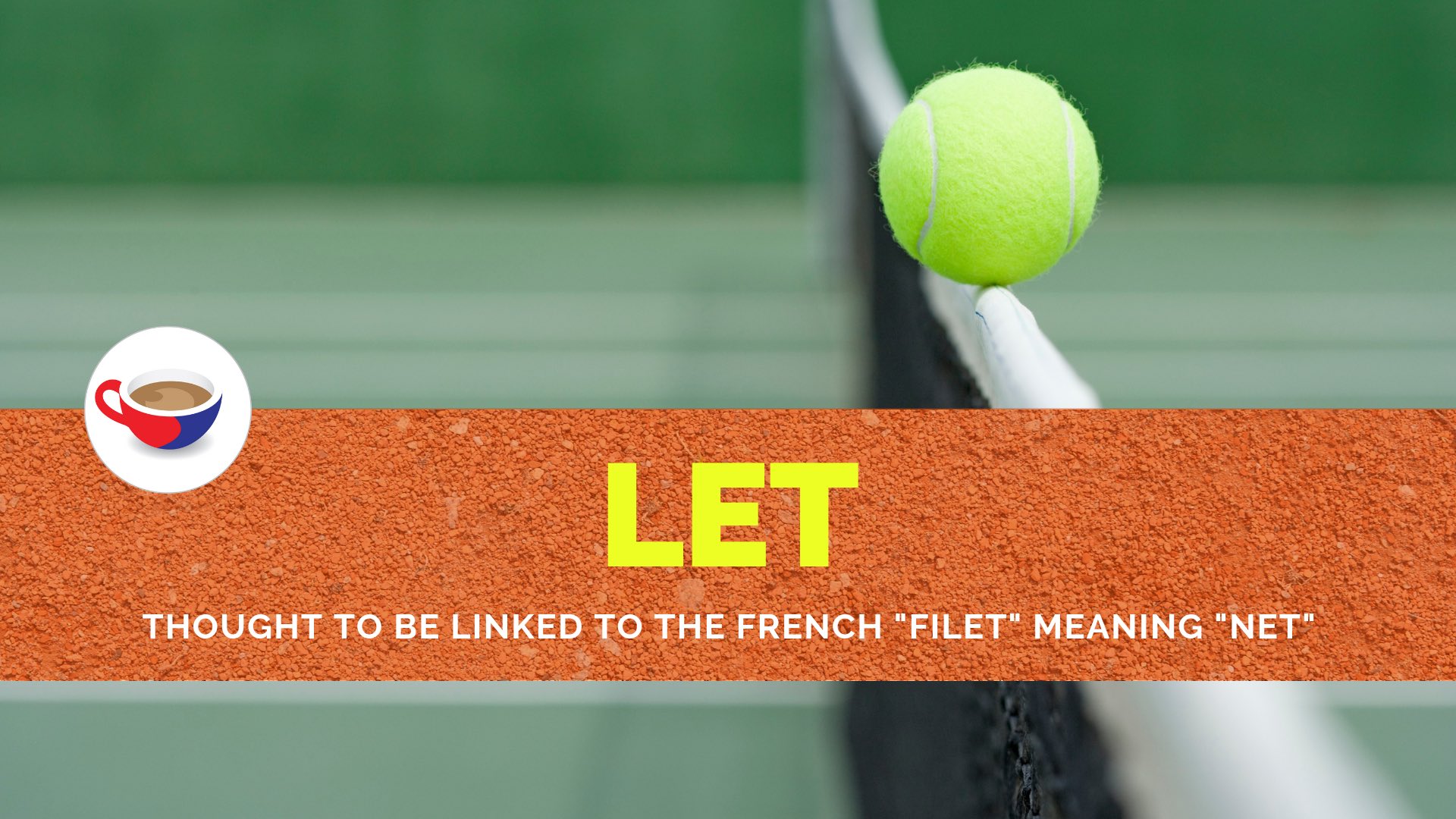
Now, let’s look at the first one of the essential tennis terms: let. This is always an exciting moment in the sport. During a player’s serve, when the ball strikes the net and topples over onto the opponent’s side of the court, the player is given the chance to retake their serve.
This is called a let and, due to the net’s starring role in this shot, let is thought to be a shortened version of the French word for net, filet.
3. Love
Next on the list of essential tennis terms is the term we use when a player has not yet scored any points in a tennis game. In English, we say “love”, but don’t be tempted to use amour, the French equivalent!
In French, you simply say zéro in this instance. But what is the origin of the word “love” in tennis? Believe it or not, it has something to do with the oval-like shape of the zero. Back when tennis was in its early stages in France, people thought that the zero looked like an egg, or an œuf.
If we add a definite article, this becomes l’œuf, and this is said to be where “love” comes from in the English scoring system.

4. Deuce
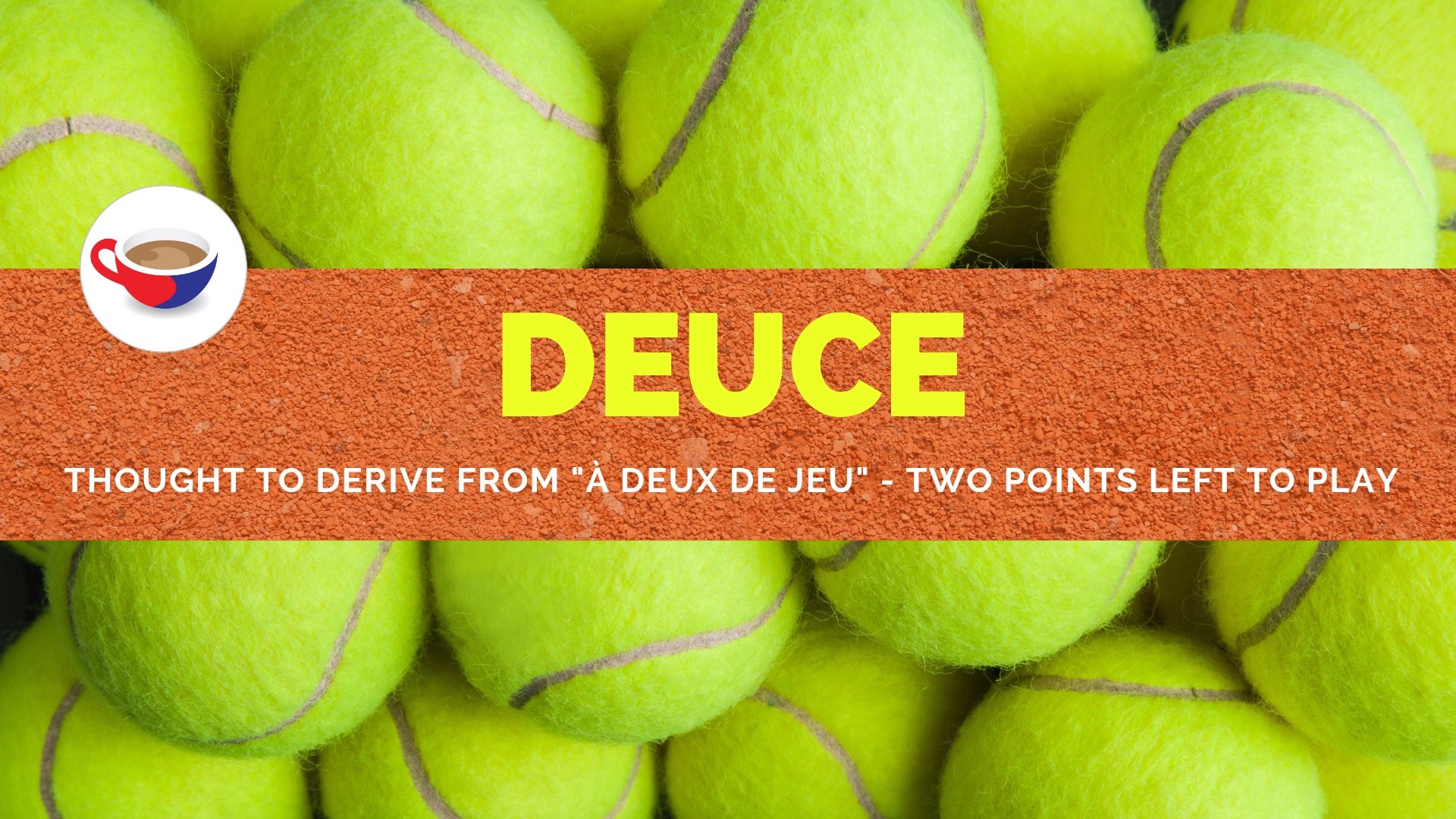
Our final word in the list of essential tennis terms is deuce, which is used when two players have 40 points each. There are a couple of theories as to the origin of the word deuce in French tennis, but one of the most likely is that it is derived from the phrase à deux de jeu, meaning “to be two points away from winning the game”.
It’s also possible that it came from the Old French word for two – deus – now deux in Modern French. Interestingly, “deuce” is not used in French: instead when the score reaches 40-40 this is called quarante-A.
If one player then gains the advantage by winning the next point but subsequently loses the following point, the score returns to 40-40. From then on “deuce” is referred to as égalité.
Learn more tennis terms
Now you are armed and know the meaning of some very important tennis terms, but if you want to check some more useful terms watch the Walk Talk and Learn episode which Mark filmed during his visit to the Roland Garros tournament:
We hope you’ve enjoyed this quick tour of the fascinating world of tennis terminology in French. Whether you’re a seasoned tennis fan or just getting started, understanding these terms can enhance your appreciation of the game and improve your language skills.
To help you even more, we’ve created a comprehensive Cheat Sheet with all these tennis terms and more. It’s a handy resource you can keep with you to reference anytime. Click the below to download your copy now:
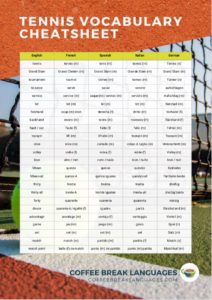
:
Spain Spanish vs Mexican Spanish: 6 curious differences

Just when you think you’re starting to get the hang of Spanish, you discover that there are many different varieties spoken all around the world, for example Spain Spanish vs Mexican Spanish. Cue a brief sense of despair at the thought of having to learn every different form of the language, followed by relief when you realise that this only makes the learning process more interesting and enjoyable!
In this article, we’re going to be looking at six differences in vocabulary, grammar and pronunciation between Spanish vs Mexican Spanish. As Mexico is the country with the highest number of Spanish speakers on the planet – around 121 million – we thought it would be a good place to start.
¡Vamos a empezar!
1) Describing something cool as being ‘so father’!
If you’ve been learning Castilian Spanish, or have ever visited Spain, it’s likely that you’ll have heard the exclamation ¡Qué guay! countless times, meaning ‘(that’s) so cool!’. In Mexico, the phrase ¡Qué padre! is used instead, which literally means ‘(that’s) so father!’.
Spain Spanish vs Mexican Spanish: check how this expression would sound like in context:
- Spain: ¿Vas al concierto de Shakira? ¡Qué guay! Are you going to the Shakira concert? That’s so cool!
- Mexico: ¡Qué padre está la ultima canción de Shakira! Shakira’s latest song is great!

2) Calling your friend your uncle
Next on our list of Spain Spanish vs Mexican Spanish differences, we have a funny one. If you have been learning Spanish for a while, you’ll probably recognise the words tío and tía, meaning ‘aunt’ and ‘uncle’. In Mexico, these words are used exclusively for this purpose. However, in Spain, they are also widely used to address friends.
For example:
- Mira a ese tío. Look at that guy.
- ¡Hola tía! ¿Qué tal? Hey girl! How’s it going?
In Mexico, it’s more common to hear various other words, such as mano or güey, used to mean ‘pal’ ‘man’, or ’buddy’.
3) Speaking ‘Spanglish’
If you think about Spain Spanish vs Mexican Spanish, it is obvious that Mexico sharing its northern border with the USA would have a strong American-English influence on its vocabulary, particularly in northern areas which border the USA.
Here are a few examples of some of these anglicisms:
Alquilar vs rentar
If you’ve ever been to Spain, you may have noticed signs saying se alquila on the outside of buildings. This means ‘for rent’, and is taken from the verb alquilar. In Mexico, alquilar is much less common and is replaced by the English-sounding verb rentar, so ‘for rent’ signs say se renta.
Comprobar vs checar
Another example is the verb for ‘to check’. In Mexico, checar or chequear, more anglicised verbs, are used instead of comprobar, which is used widely in Spain.
Other examples
There are several other examples in the language:
- Computer: computadora (Mexico) vs ordenador (Spain)
- Fridge: refrigerador (Mexico) vs nevera (Spain)
- Hobby: hobby (Mexico) vs pasatiempo (Spain)

4) Perfecto or indefinido?
Although you may have already been familiar with some of these differences in vocabulary, you may not have realised that there are also some subtle grammatical differences between Spain Spanish and Mexican Spanish.
In Spain, it is very common to use the pretérito perfecto (the perfect tense) when talking about recent past actions which are still related to the present.
- Example: ¿Qué has hecho hoy?
This is the most common way to ask someone in Spain ‘What have you done today?’. However, in Mexico, it is more common to say ‘Que hiciste hoy?’ using a different tense: the pretérito indefinido (the preterite tense)
But don’t worry – this grammatical difference between Spain Spanish vs Mexican Spanish is quite subtle, so you’d still be able to make yourself understood in both countries no matter which tenses you use.
5) It’s all about usted and ustedes
In Mexico, and indeed in some other Latin American countries, people tend to use the pronoun usted rather than the less formal tú, which is used in Spain. While usted is reserved for formal situations in Spain, in Mexico, it is used to address most people, including close friends, and is not seen as being quite as formal.
Because of this, the pronoun vosotros, the plural form of tú, isn’t as widely used in Mexico as it is in Spain.
- Spain: ¡Hola, chicos! ¿Cómo estáis?
- Mexico: ¡Hola, chicos! ¿Cómo están?
Note: In some Latin American countries, such as Argentina, the pronoun vos is used instead of, or alongside, the singular pronoun tú. Its use varies from country to country and, in some cases, the pronoun has a totally different conjugation to tú. Using this pronoun is known as el voseo.
6) Dropping the Spanish ‘lisp’
Undoubtedly, the most distinctive pronunciation difference between the Spain Spanish and Mexican Spanish is the ‘lisp’ sound heard in Spain. First of all, we need to clarify something here: the ‘lisp’ sound is not a lisp!
If it were a lisp, then every ‘s’ would become a ‘th’ and that doesn’t normally happen! To explain this further, it’s useful to look at the 3 different pronunciation conventions in Spain: el seseo, el ceceo and la distinción.
La distinción, is the most common pronunciation convention in Spain, and refers to the way in which the sounds ‘ci’, ’ce’ and ‘z’ are pronounced with a ‘th’ sound when followed by any vowel (the tongue sticks out between the teeth). The ’s’ sound is pronounced differently, meaning the words siento and ciento are pronounced differently.
In some parts of Spain, particularly in the Andalucía region and in parts of the Canary Islands, you may hear two other pronunciation conventions: ceceo and seseo. Without trying to overcomplicate things, the less common of these conventions is ceceo, where both the ’s’ and ‘z’ sounds in the words casa and caza are the same: both with the ‘th’ sound.
Much more common is the seseo pronunciation, where speakers also pronounce the words casa and caza in the same way, but they pronounce both the ‘s’ and ‘z’ with an ’s’ sound. And in addition to the south of Spain, this is the form most commonly associated with Latin America, and it brings us back round to Mexico where seseo is the norm.
Let’s take an example: ¡Qué cielo tan azul! What a blue sky! Now let’s see what it would sound like in Spain Spanish compared to Mexican Spanish:
- In most of Spain this would be pronounced: “¡Qué thielo tan athul!”
- In Mexico this would be pronounced: “¡Qué sielo tan asul!”
We hope that you’ve found this article muy padre! Now that you are aware of some differences between Spain Spanish vs Mexican Spanish, you will be able to begin to checar your use of different pronunciation, grammar and vocabulary when talking to people from different places.
If you are looking for more interesting and useful content about the Spanish language, make sure to subscribe to our newsletter!
Football lingo: 10 terms from around the world that every fan should know

Football. Soccer. Whatever you call it, it’s the world’s most popular sport, uniting billions across continents. As a global game, it has a global language — or rather, languages. While the rules are universal, the terms used to describe actions on the pitch can differ significantly depending on where you are in the world, and that is why you need to know some football lingo.
This article will explore 10 terms from various countries, giving you a deeper understanding of the beautiful game. Are you ready to understand the difference between a golazo and a sukkerbold? Keep reading!
1. National Nicknames
Let’s start with the basics on your football lingo list: the national football teams’ nicknames. You may already know La Albiceleste (Argentina), Les Bleus (France) and La Furia Roja (Spain), but what about Les Aigles de Carthage (Tunisia), Vatreni (Croatia) Los Canaleros (Panama) or even Socceroos (Australia)?
Of course, we cannot forget to mention Canarinho (Brazil) – who has won the World Cup five times and has participated in every championship to date – and the traditional Gli Azzurri (Italy). Fans all over the world scream their nicknames when a goal is scored, so make sure to memorise these football lingo essentials.
2. Tiki-taka (Spanish)
We are sure you already know this word from our football lingo list, but in case you don’t, tiki-taka refers to a style of play that involves highly accurate short passing (pases y paredes) and guarantees retaining possession of the ball. More than that, tiki-taka is about patient build-up play and creating scoring opportunities through teamwork rather than long balls or individual brilliance.
While the term’s exact origins are debated, it gained widespread recognition during Barcelona’s dominant era under Pep Guardiola in the late 2000s and early 2010s, becoming synonymous with their mesmerising style of play.
3. Panenka (Czech)
From one technique to another, Panenka refers to a penalty kick in which the ball is gently chipped into the goal after the goalkeeper has dived to one side of the goal. Coined by Czech former footballer Antonín Panenka, this kick can be obtained by giving a subtle touch underneath the ball, causing it to rise and fall within the centre of the goal, thus deceiving the goalkeeper.
Italians also call this penalty kick cucchiaio. Francesco Totti, the historic captain of AS Roma, coined the term. Have you ever seen a Panenka live?
4. Zondagsschot (Dutch)
Sometimes, when you watch your favourite football team play – especially during a crucial match – you pray for them to score a miraculous goal. That’s what a Zondagsschot is!
Literally translated as Sunday shot, this footballing term refers to a shot that a player would almost surely miss but unbelievably goes in despite all previsions. We are sure that you have seen some Zondagsschot in your lifetime!
5. Pipoqueiro (Portuguese)
Imagine the tension of a penalty shootout. The stadium is silent, all eyes on the player stepping up to the spot. If that player falters, missing the crucial penalty, they might be labelled a pipoqueiro in Brazil.
The word pipoqueiro literally means popcorn man. It is a curious football lingo term for a player who doesn’t perform well in important games, like semi-finals or finals. A pipoqueiro is a player who cracks under pressure. Just like popcorn popping unpredictably, a pipoqueiro is seen as unreliable in high-stakes situations, unable to deliver when the team needs them most.
As you can imagine, nobody wants to be that player!
6. Enganche (Spanish)
In Argentina, the term enganche refers to the playmaker or attacking midfielder, a key player in the team’s offensive game. This position involves connecting different parts of the attack and often acts as the bridge between the defence and forwards.
Typically positioned centrally, the enganche influences the game by creating attacking plays and delivering precise passes that can lead to goals. This role is essential for maintaining the team’s rhythm and flow and ensuring that the attacking strategy stays strong throughout the match.
Example of this football lingo term in use:
- Riquelme was one of the greatest enganches of all time.
7. Sukkerbold (Danish)
From popcorn to sugar, here’s another word that associates food with football lingo. The Danish expression sukkerbold stands for an exceptional cross right at the target man. We are not really sure why the Danes call it a sugar ball, but it’s definitely sweet to see footballers play well.
8. Bouffer la feuille (French)
No football fan wants to witness this when their team is playing. Bouffer la Feuille is a French expression used when a player misses an easy goal and a potential victory. Literally meaning to fluff the sheet, it refers to the score sheet, which notes scored goals, the various cards dealt, and the participating players. The captain usually signs this document at the end of every match.
We are sure that si quelqu’un bouffe la feuille nobody will be happy (but if you think of it in French, you might be less angry about it).
9. Den sterbenden Schwan (German)
This football lingo word will make you laugh. Do you know what a diver is? It’s a player who takes flight in the opponent’s box too easily and dramatically. Germans describe this kind of player as a Schwalbe, a swallow, and if a player is too much of a diver, they will accuse him of playing den sterbenden Schwan, the dying swan.
Let’s face it: sometimes players can’t help but over-act as if they were playing in an opera when they dive. And it can be annoying. But, if you think of it as part of the famous Tchaikovsky’s ballet, you may enjoy their performance.
You may enjoy Die Lustigsten Schwalben der Welt…
10. Tólfan (Icelandic)
This football lingo term is one that became popular a couple of years ago when Iceland participated in the UEFA Euro 2016. This Nordic island made a name for itself during that championship thanks to its Tólfan, the 12th Man that is the Icelanders and their Viking chant. The supporters clapped and shouted HUH! in unison, starting off slow and gradually building the pace. It’s very intimidating for those playing against Iceland!
The Viking Thunder-Clap has accompanied the national team and many other teams around the world since then!
Football’s global appeal is undeniable, and its diverse lingo reflects the rich cultural tapestry of the sport. From Brazil’s pipoqueiro to Denmark’s sukkerbold, each term adds a unique flavour to how the game is understood and celebrated around the world.
Now that you’re familiar with football lingo, why not dive into another exciting sport: tennis? We’ve put together a blog post to help you learn all the essential French tennis terms, from the basics like tennis, to love and deuce!
10 beautiful Italian words to add to your vocabulary immediately

Let’s face it. Everybody loves the sound of the Italian language. That’s why we at Coffee Break Languages have decided to bring you 10 beautiful Italian words that sound great (and are really useful).
After all, there is a charming melodic aspect to it that is absolutely undeniable. How can we resist its postalveolar affricates, its dental fricatives and, most of all, its sensual “r’s”?
Keep reading to find some unique Italian words to add to your vocabulary!
1. Dai!
You may be familiar with this one if you’ve overheard Italians talking to each other. It has nothing to do with the verb dare – meaning “to give” – and it cannot be easily translated. Dai can be used to encourage someone to do or not to do something, much in the same way English speakers say “go on” or “come on”. It can also convey a sense of astonishment, meaning “are you serious?” or “really?”.
It’s definitely one of the unique Italian words, with several possible meanings, which can only be understood from the context. Did one of your Italian friends say Non ce la faccio to you? Just reply back with dai! Is someone doing something to annoy you? Tell them to stop with dai! Did you just hear the latest gossip and you cannot believe it? Express your surprise with dai!
2. Abbiocco
Have you ever eaten so much that you were unable to move and the only thing you wanted to do was take a nap? If so, then you know what l’abbiocco is. It is the drowsiness you feel after a hearty meal: a feeling with which Italians are rather familiar. There is also a verb to describe this feeling: abbioccarsi.
A translation in English might be “food coma”, but this is a much more dramatic term than abbiocco. This one deserves a place in the list of beautiful Italian words because of its sound.
The double “b” and double “c” convey perfectly the idea of being full and sleepy after a Sunday roast or a big bowl of pasta. Italians love this food-induced state and usually use it to relax and take a break from the everyday rush, enjoying the abbiocco as much as they can!
3. Mozzafiato

This word comes from mozzare, meaning ‘to cut off’, and fiato, meaning ‘breath’. A view, a piece of art, a show, a journey and even a person can be mozzafiato. It means that something is so strikingly beautiful that it makes us stop breathing, just as the word suggests.
It can be translated in English as “breathtaking” or “riveting”. However, the image of cutting off one’s air feels more sudden and extreme than the simple act of “taking”, and somehow, more appropriate for a country like Italy, where “breath-chopping” beauty can be seen everywhere..
That is why it definitely deserves a place amongst beautiful Italian words!
4. Invasato
If you are thinking that this word means being stuck in a vase, you’re not quite in the right area. L’invasato is someone who experiences strong feelings, such as uncontrollable emotions or passions – so strong that they take over their minds! This is one of the beautiful Italian words that comes from the Middle Ages, when people believed that demons invaded and possessed the bodies of certain individuals.
That’s why today, invasato means someone who is being taken over by fear, jealousy or anger, as well as by creativity, enthusiasm or passion.
5. Menefreghismo
When you hear an Italian say me ne frego, it means that they could not care less about something. From this expression, we get the term menefreghismo which stands for a thoughtless indifference towards what is happening outside of one’s personal space. It is the kind of attitude we usually have during our summer holidays when enjoying the sun and the heat is our most important priority.
If, on one hand, il menefreghismo could be a good quality, on the other, the term is not always considered to be positive. Sometimes it is used to address the callousness or the selfishness of an uninterested friend. So, be aware of the context if you are called a menefreghista!
6. Crepitio
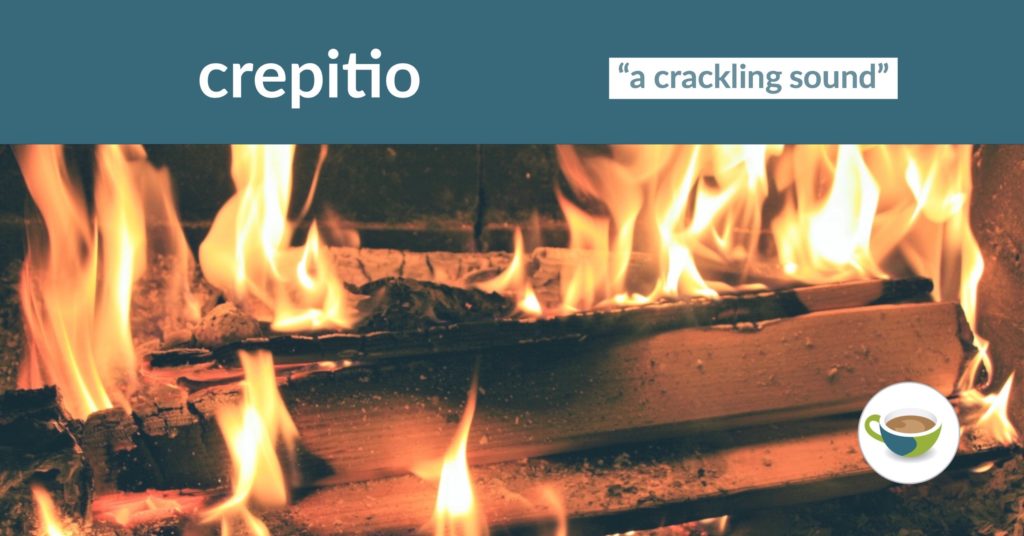
The rustling of leaves, the crackling of fire, the pattering of rain. There is one of beautiful Italian words that can describe these sounds: il crepitio. Try to pronounce this word and repeat it several times. Doesn’t it emulate the burning of logs in the fireplace or the tapping of raindrops on the window?
You can also use the verb crepitare to describe the making of these pleasing and relaxing sounds. It is a very evocative word that, despite its harsh “kr” phoneme, can bring back memories of outdoor naps, cosy nights-in and autumn afternoons.
7. Struggimento
How would you describe that feeling of yearning and torment that you experience when you argue with your significant other? Italians call it lo struggimento, a combination of gut-churning misery and desire, usually associated with one’s love life.
It is not necessarily a negative feeling; many poets – like Dante Alighieri, Petrarch and Giacomo Leopardi – found inspiration in their struggimento, another of beautiful Italian words.
Repeat this word in your head. Savour the harsh sound of its consonants. Now, can you understand what we are talking about here?
8. Boh!
In the list of interesting Italian words, this short expression deserves a spot. Well, you may not even notice it in a conversation, but it is a key expression of current Italian. Boh means “who knows?” or simply “I don’t know” and it is always accompanied by a dramatic shrug of the shoulders and a furrowed brow.
A non-native speaker should pay attention to the context, where boh! appears, though it’s quite easy to deduce its meaning since it usually appears in response to something.
Boh is an onomatopoeic expression that conveys doubt, indifference or unwillingness to talk about something. Similar expressions are bah and mah, both of which convey an idea of uncertainty.
Is that clear enough? Don’t answer boh! (or maybe do…)
9. Sfizio
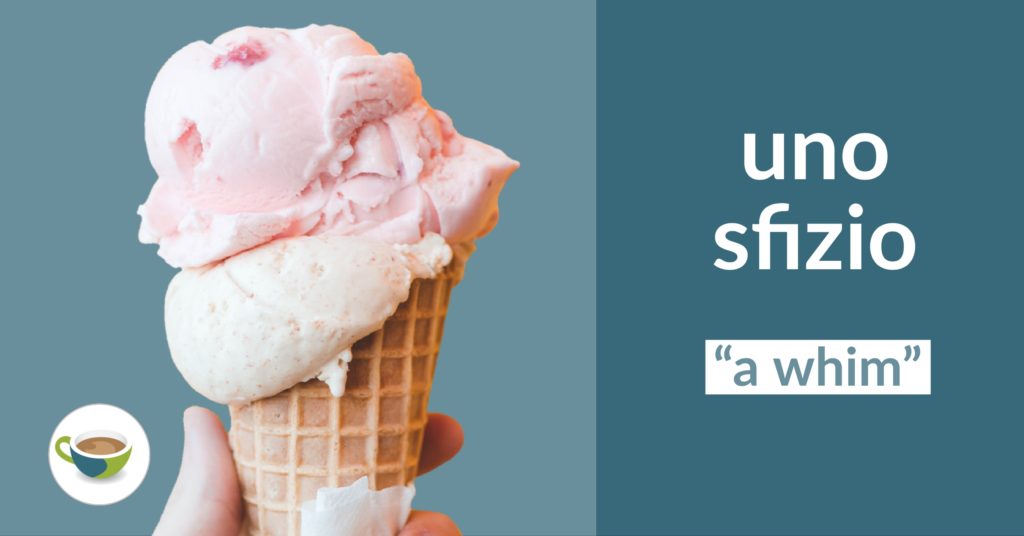
If you are a big shopper, you may know what we are talking about here. Do you know when you feel the urge to buy something you shouldn’t buy, but you buy it anyway? That’s what Italians call uno sfizio, meaning a whim or fancy.
Having gelato after dinner or bagging that pizza-shaped hat are actions that Italians would describe as togliersi lo sfizio, meaning “to satisfy one’s whim”. But, it’s not simply that! There is always a fun side to it, something between being ashamed and feeling right about it, enjoying it.
Sfizio: the tongue sizzles and fizzles. It sounds great and is definitely one of the most beautiful Italian words (especially if involves food)!
10. Procione
This may not be the most useful word, but it feels great on your tongue. It is a wonderful combination of the harsh “pr” sound and the sweet “tʃ” phoneme. Also, the fact that procione is the name of a cute animal made us include this word in our list.
We’re talking about a nocturnal animal, best known in North America, that is usually portrayed in movies and TV series as stealing food from a wheelie bin. Can you guess it? It’s a racoon. Although this mammal is not very common in Italy, its name sounds incredibly cute in Italian.
There is also another name for the racoon in Italian: l’orsetto lavatore (the washing little bear). We hope that you’ve enjoyed reading our article about beautiful Italian words.
Learning a language is a challenge, but it can be an enjoyable challenge. Try to find the words that please your ears and repeat them; they will help you improve your pronunciation. Languages are meant to be spoken, so remember to savour their sounds!
Why not see some of these beautiful Italian words in use? Check out our list of Italian movies for learners right now!
¡Es intraducible! Our 10 favourite untranslatable words in Spanish
Have you ever learned a new word in a different language and wondered how on earth you would translate it into English? Have you then started to doubt your translation skills, thinking that you no longer even know your language very well? Well… fear not! There are a lot of untranslatable words in Spanish.
Often, the reason for a word’s ‘untranslatable-ness’ is rooted in the cultural differences between the speakers of each language, as some cultural concepts which exist in the Spanish-speaking world simply don’t exist in the English-speaking world.
In this article, we’re focusing on untranslatable words in Spanish – words which can’t be translated easily into English, although some of them do have direct equivalents in other languages, such as French or Italian. All of the words on the list are used relatively frequently in conversation, so listen out for them next time you’re practising your Spanish.
You might even come across some of them in an episode of Coffee Break Spanish! ¿Estamos listos? ¡Vamos!
1) Estrenar
Are you familiar with the feeling when you’ve bought a new outfit and can’t wait to wear it? Well, fashion-conscious Spanish speakers have a single word to perfectly describe the 11-word English equivalent of “to wear a new item of clothing for the first time”: estrenar.
- Meaning: To wear something for the first time / to use something for the first time.
- In context: Esta noche voy a estrenar el vestido azul que compré ayer.
- Translation: I’m going to wear the blue dress I bought yesterday for the first time tonight.
2) Tapear
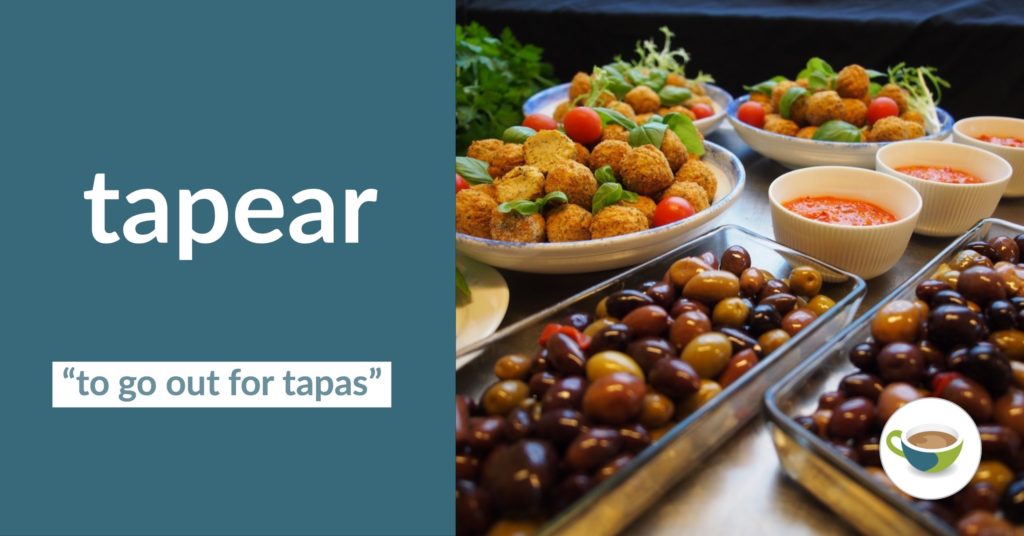
Everyone who has visited Spain will be familiar with the concept of going out for tapas and this is the theme of one of the untranslatable words in Spanish. While in English we say “to go out for tapas” or simply “to have tapas”, in Spain it’s more common to hear the phrase ir de tapas – literally, “to go of tapas”.
For example: vamos de tapas con José y Lucía esta noche. However, if this phrase is too much of a mouthful (excuse the pun), the Spanish have a verb to describe the activity of going out to eat tapas: tapear.
- Meaning: To eat tapas, often with the idea of moving from bar to bar
- In context: Este bar es uno de los mejores para tapear en Granada.
- Translation: This bar is one of the best bars to go out for tapas in Granada.
Related topic: 8 ‘Digestable’ Spanish Idioms For Your Delectation
3) Quincena
Although this is one of the untranslatable words in Spanish, it does have a direct equivalent in French (quinzaine) and Portuguese (quinzena), the closest word we have in English is “fortnight” or “two weeks”.
- Meaning: A period of 15 days, sometimes used in reference to the working calendar, as people are often paid bi-monthly in Spain. It is commonly used to talk about the first or the second half of a particular month.
- Context: En la primera quincena de julio llega la feria al pueblo.
- Translation: The festival comes to town in the first fortnight of July.
4) Friolero/friolento
Are you one of those people who always seems to be shivering while everyone around you is complaining about the heat and opening all the windows in the house? Another two untranslatable words in Spanish are friolero/a and friolento/a, used to describe those who feel the cold more than others.
- Meaning: Somebody who feels the cold very easily.
- In context: Javi es muy friolero, prefiere el verano al invierno.
- Translation: Javi really feels the cold; he prefers summer to winter.
5) Puente

You may have come across the literal meaning of the word puente before (bridge), but puente is also used in another very common context, making the list of untranslatable words in Spanish.
- Meaning: A special type of long weekend, when a holiday falls on a Thursday or a Tuesday so you only need to take one extra day off work to turn it into a four-day weekend, thus “bridging” the gap from Thursday to Monday, for example.
- In context: ¿Qué haces el puente de Mayo? Yo me quedo en casa, las vacaciones son para descansar.
- Translation: What are you doing during the long weekend in May? I’m staying at home, the holidays are for relaxing.
6) Soler
Out of all of the untranslatable words in Spanish on this list, soler is probably the most commonly used in everyday conversational Spanish. To describe habitual actions in English, we tend to use the structure “subject + usually + verb (infinitive)”, but in Spanish, we use the structure “soler (conjugated) + secondary verb (infinitive)”.
Take a look at the example below to get your head around this unusual grammatical structure.
- Meaning: To usually do something / to do something habitually / to tend to do something
- In context: Suelo ir de vacaciones en junio.
- Translation: I usually go to the beach in June.
7) Tocayo/tocaya
This is one of the untranslatable words in Spanish that will come in useful for those of you who have a common first name!
- Meaning: Somebody who has the same name as you / your ‘name-twin’, or namesake.
- In context: Me confundes con otra Elena, es mi tocaya.
- Translation: You’re getting me mixed up with the other Elena, we have the same name.
8) Entrecejo
Ever wondered what that little space in between your eyebrows is called? No? Well, this one is another word of untranslatable words in Spanish, as they have a word to describe it!
- Meaning: The space between one’s eyebrows.
- In context: Pablo tiene muchas arrugas en el entrecejo.
- Translation: Pablo has lots of wrinkles between his eyebrows.
9) Almorzar
El almuerzo is a light snack eaten between breakfast and lunch, and almorzar is its verb form. Some people think of el almuerzo as “lunch”, but when you consider that the main meal in the middle of the day in Spain rarely starts before 2:30 or 3:00, you’ll understand the need for almuerzo.
- Meaning: Similar to ‘elevenses’ in the U.K.
- In context: Almuerzo cada día sobre las 11 de la mañana.
- Translation: I have a snack every day at about 11am.
10) Sobremesa
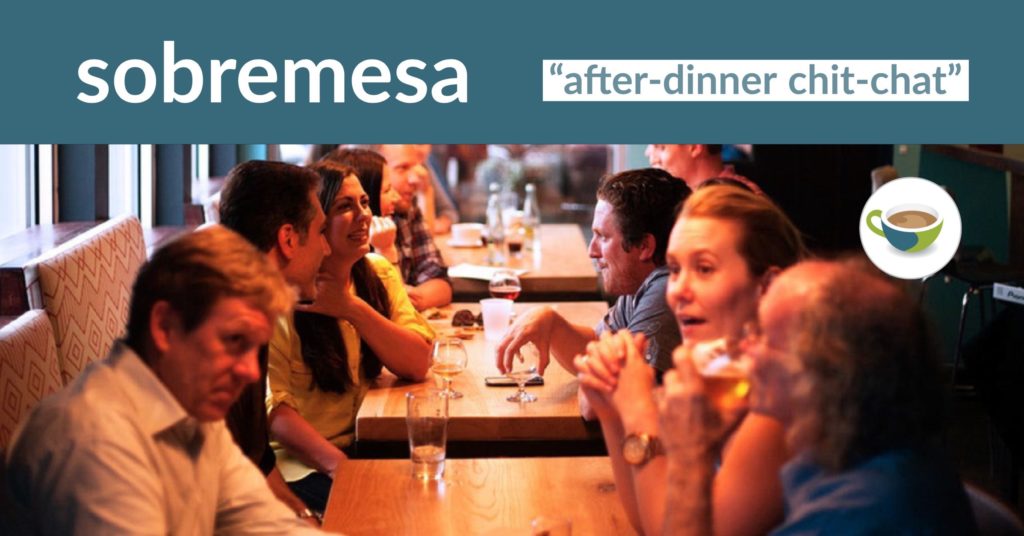
This may be one of the most well-known untranslatable words in Spanish on our list, as it refers to an inherent aspect of Spanish culture: the act of taking the time to sit around the table after a meal, talking to the people you’ve shared it with and enjoying each other’s company.
- Meaning: The after-dinner chit-chat people share whilst still sitting at the table. It can also literally mean “tablecloth”.
- In context: Mientras los padres hacen sobremesa, los niños juegan en el parque de juegos.
- Translation: While the parents take some time to chat at the table after eating, the children play in the playground.
We hope these Spanish untranslatable words will help you on your way to sounding more comfortable in the conversation! Remember that these words may vary from country to country in the Spanish-speaking world, so it’s always a good idea to read up on a country before visiting, just to ensure you’re saying the right thing!
If you want to keep on improving your Spanish, how about watching some films for Spanish learners? They can help you familiarise yourself with some nuances of pronunciation and even see some of these words used in context!
¡Hasta la próxima!
Pasta names in Italian: how not to be an imposter with your pasta!
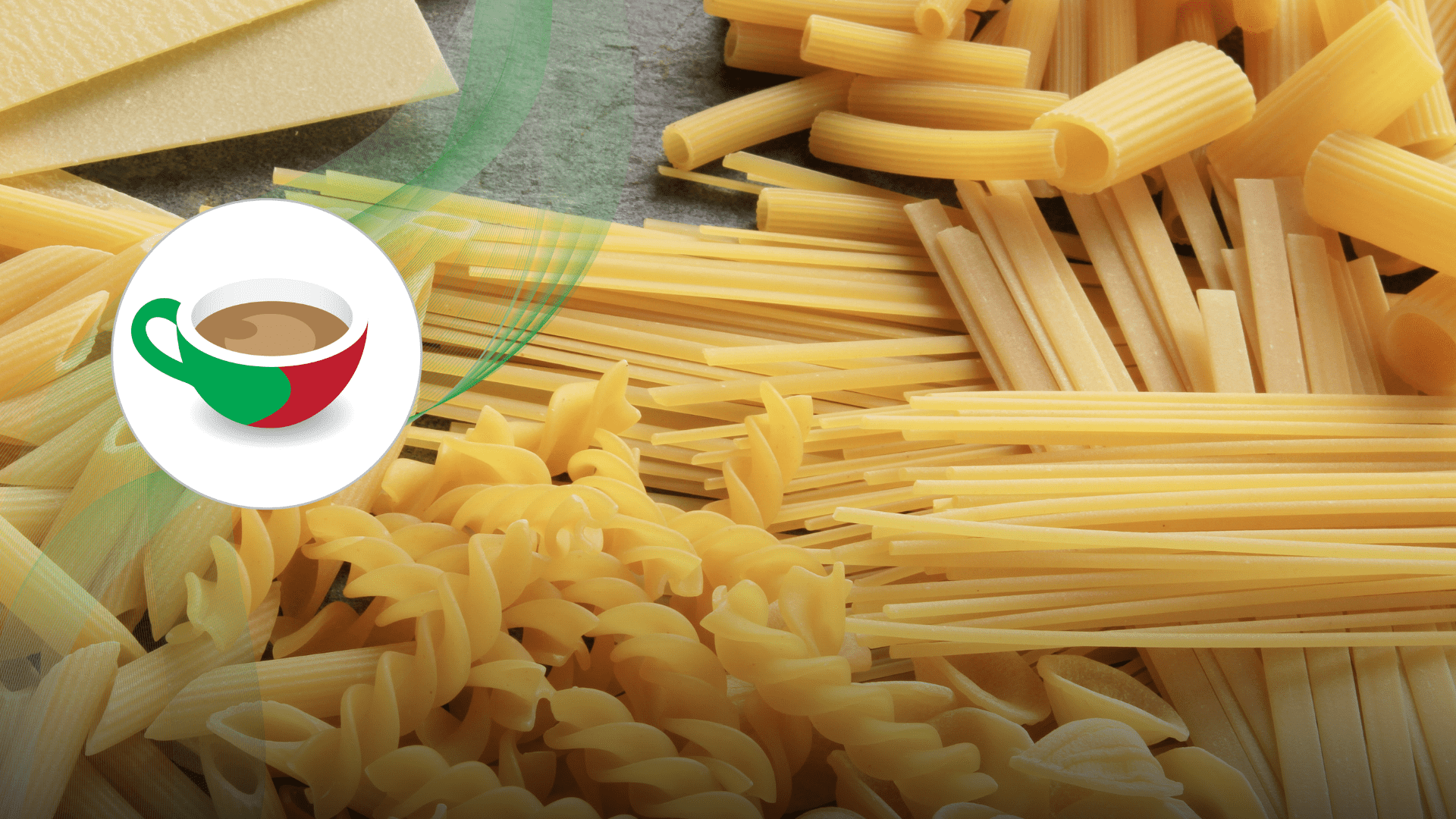
What better place to start building your Italian vocabulary than learning pasta names in Italian? Far from being just an ingredient kept at the back of the cupboard, pasta is a staple of Italian cuisine and culture, so cherished in Italy that wheat often has to be imported from other countries to keep up with Italians’ pasta-making demands!
In this article, we have taken a couple of common pasta varieties and researched their names’ origins, which will help you find out more about the famous foodstuff. We hope you enjoy this delicious learning experience and that it takes you from “pasta imposter” to “pasta pro”!
All that’s left to say now is let’s check out some pasta names in Italian and buon appetito!
The meaning behind pasta names in Italian
To get started, let’s have a look at the origin of the word pasta itself. The English word ‘pasta’ was, of course, adopted from Italian, in which pasta also means dough. Looking further back, the word also derives from the Greek word παστά (pasta), strangely meaning barley porridge.
Most pasta names in Italian are derived from their shapes, textures, or traditional preparation methods. Understanding these names can help you confidently order pasta at an Italian restaurant and impress your friends with your knowledge of authentic Italian food vocabulary.
1) Conchiglie
 Picture: Jameson Fink (Creative Commons 2.0)
The first pasta on our list of pasta names in Italian is conchiglie. In English, a conch is a type of spiral-shaped seashell, and that’s exactly where the name for this shell-shaped pasta comes from. In Italian, the word for seashell is conchiglia.
This pasta is traditionally made from durum wheat and can be coloured with spinach, tomato or squid to produce green, red or black shades. There are many other pastas – like lumaconi – which have a similar shell-like form to conchiglie, and are large enough to be stuffed with delicious fillings and baked in the oven.
- conchiglia (f) seashell
- lumaconi (m/pl) slugs / large snails
Hai fame? Hungry yet? Take a look at this delicious recipe featuring conchiglie. In this easy-to-follow recipe, the shell-shaped pasta is stuffed with buffalo mozzarella, fresh basil leaves and homemade tomato sauce – three pillars of Italian cuisine.
2) Farfalle
 Picture: eltpics (Creative Commons 2.0)
Instantly recognisable as bow tie shapes, farfalle are a true crowd-pleaser. However, the translation has nothing to do with bow ties. Can you guess the meaning of the word farfalle? In Italian, una farfalla is a butterfly, and farfalle is plural.
Farfalle is best served with rich cheese or tomato-based sauces due to their large surface area, which takes on all of the flavours from the sauce. There is also a mini version of farfalle, called farfalline, often stirred into soups.
- farfalle (f/pl) butterflies
We’ve found another mouth-watering recipe for you to try out: a healthy recipe which puts a slightly different spin on the classic pasta dish. Vorresti assaggiarlo tu? Perfect for summertime dinners or light lunches, this pasta salad can be whipped up in just half an hour!
3) Radiatori
 Picture: Dave Prasad (Creative Commons 2.0)
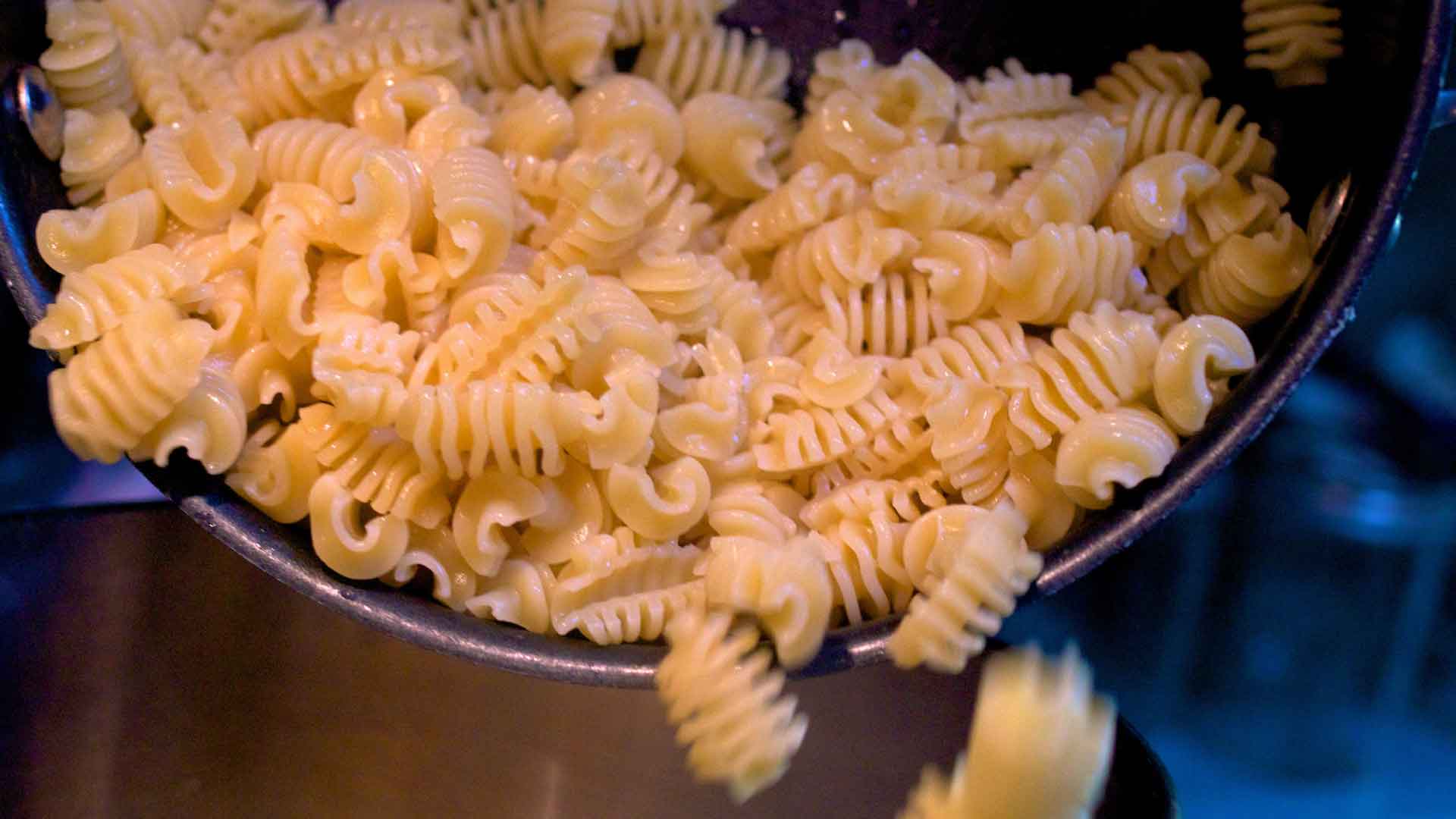
The third pasta we’ve chosen to be a part of our list of pasta names in Italian, and perhaps the easiest to work out the etymology of, is radiatori. This ruffle-edged pasta is relatively new to the scene: introduced in the 1960s, radiatori are medium-sized pasta shapes which are a popular choice for casseroles and other baked dishes.
The literal translation of radiatori is – unsurprisingly – radiators, which is exactly what this pasta looks like: little radiators!
- radiatore (m) radiator
This third recipe is written in Italian, which will give you a chance to practise your food-related vocabulary while trying your hand at this mushroom and crunchy pancetta radiatori dish. Serve this with a good glug of extra virgin olive oil and you’ll be good to go!
4) Tagliatelle
 Picture: Jason Hamner (Creative Commons 2.0)
This versatile pasta – often eaten with creamy or meaty sauces – is probably the most well-known on our list. But what is the origin of the word tagliatelle? Its name comes from a verb which translates as ‘to slice’ or ‘to cut’: tagliare. So, tagliatelle literally means ‘small slices’, perfectly describing the long strips of this ribbon-like pasta!
- tagliare (vb) to cut / to slice
- taglio (m) cut / slice
Although most would associate spaghetti with bolognese sauce, it is tagliatelle which most frequently accompanies an authentic bolognese sauce in Italy. Cosa aspetti?
5) Penne
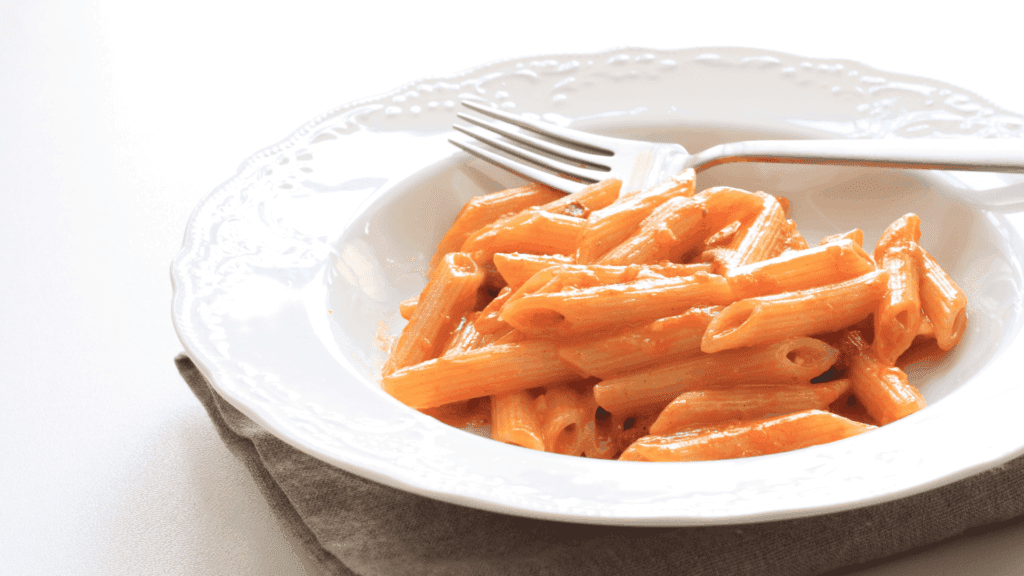
When you think of pasta names in Italian, this one is probably at the top of your list! The name penne comes from the Italian word for pen or quill because of its cylindrical shape and diagonal-cut ends.
This pasta is ideal for holding onto sauces, making it a great choice for creamy and tomato-based dishes like penne all’arrabbiata. A fun fact is that there are two main types of penne:
- penne lisce smooth penne
- penne rigate ridged penne
The ridges help the sauce cling to the pasta better!
6) Bucatini

Next, on our list of pasta names in Italian is bucatini. Imagine spaghetti but with a hole running through the centre… Well, that’s bucatini! The name comes from the Italian word buco, meaning hole.
Bucatini is famous for dishes like bucatini all’Amatriciana, a classic Roman pasta made with tomato, guanciale (cured pork cheek), and Pecorino Romano cheese.
7) Gnocchi
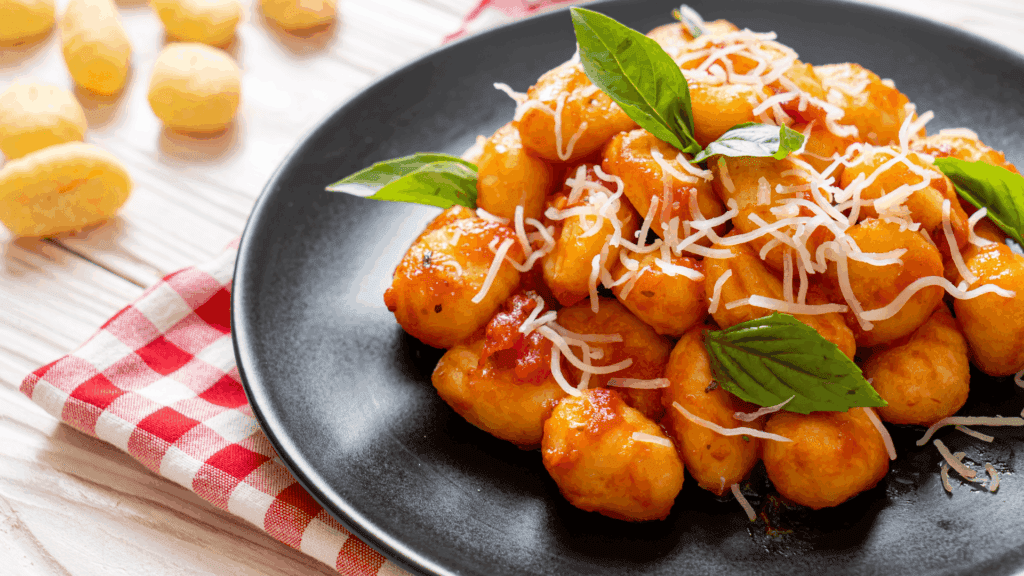
Another famous preparation on our list of pasta names in Italian! The word gnocchi comes from the Italian word nocchio, meaning knot in wood or from nocca, meaning knuckle. This makes sense, given their small, rounded shape.
Unlike most pasta, gnocchi isn’t made from wheat flour alone. Instead, it is typically crafted from potatoes, flour, and eggs, creating a soft texture that goes well with rich sauces. There are several varieties of gnocchi across Italy, each with unique ingredients and preparation style.
8) Rotelle
 Picture: cookbookman (Creative Commons 2.0)
Taken from the word rotella, meaning little wheel or cogwheel, this pasta is often referred to as wagon wheel pasta in the U.S. Similar to the flower-shaped fiori pasta, the large surface area of rotelle, provided by their spokes, means that they take on extra flavour when added to any sauce!
- rotelle (f/pl) little wheels
- rotare (vb) to rotate
- fiore (m) flower
To finish, we have another Italian recipe for you. Follow this step-by-step guide to create a tasty Italian sausage sauce—the perfect complement to this wagon wheel pasta.
We hope that you’ve enjoyed this article on pasta names in Italian and that it has reminded you that learning a language is not all about grammar books and memorising verb lists. There are countless interesting opportunities to incorporate language learning into everyday life, including at dinner time!
Do you have a favourite pasta dish you’d like to share with your fellow Italian learners? If so, let us know in the comments below! And to keep having fun with your language learning, check out the blog post we prepared with suggestions to help you enjoy your journey each step of the way!
12 ‘Digestable’ Spanish idioms for your delectation
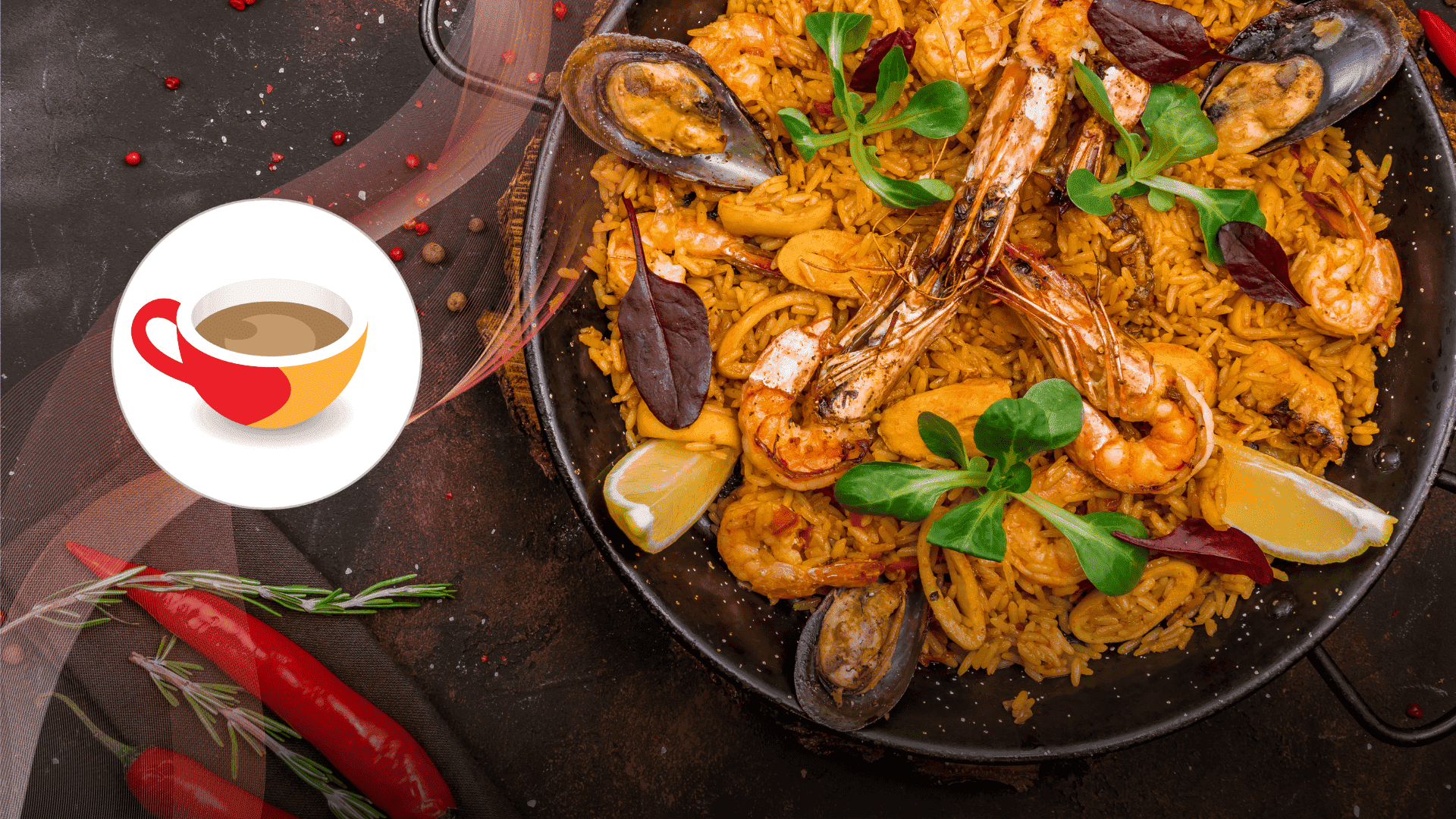
If you have ever heard expressions like ‘it’s not my cup of tea’ and ‘it’s raining cats and dogs’ in the United Kingdom, you know what idioms are. But have you ever thought about Spanish idioms?
It’s said that in order to find out more about the culture of a country, one need look no further than the language, or languages, spoken by the people who live there as it’s quite clear that a country’s language reflects what is most important to the people who speak it.
Bearing this in mind, today we’ll examine 12 Spanish idioms, or modismos, based on one particularly important aspect of Spanish and Hispanic culture: food.
¡Qué aproveche!
Note: the meaning of some of these idioms may vary from country to country, so watch out!
1. Ser la leche (Literally: To be the milk)
Have you ever wanted to be enthused about something in Spanish but already exhausted classic words like genial or bien? Well, next time you want to say that something or someone is really cool, you can use the idiom ser la leche.
For example: ‘Me encanta esa película, ¡es la leche!’ = ‘I love that film, it’s the best!’.
However, the catch with this expression is that it can also be used to mean the exact opposite.
For example: ‘¡Es la leche! ¿Cómo puede ser tan terco?’ = ‘He’s really something. How can he be so stubborn?’.
In this context, la leche is used to describe someone negatively. So, how do people know when it’s being used as a positive or a negative word? Well, as with many Spanish idioms, it all lies in the context and the tone of voice of the person using it, so keep an eye (or an ear) out!
2. Estar de mala leche (Literally: To be of bad milk)
The second Spanish idiom we are going to look at also uses the word leche, but this time with the verb estar. This is because this expression refers to a person’s current state, and, as we know, changeable things normally use estar. So what does estar de mala leche actually mean?
Here’s an example: ‘Hoy es mejor no hablar con Juan, está de mala leche’ = ‘It’s better not to talk to Juan today, he’s in a bad mood’.
The word uva, meaning ‘grape’ can also be used instead of leche (estar de mala uva), but has the same meaning: to be in a bad mood.
Note: the phrase ¡Qué mala leche! can be used to express sympathy, like the phrase ‘Too bad!’ in English.
For example: ‘¡Qué mala leche que no pudieron venir a la boda!’ = Too bad they couldn’t come to the wedding!
3. Ser pan comido (Literally: to be eaten bread)
If you are hoping to find literal translations of Spanish idioms in English, we are sorry to disappoint you. This one is the only one in our list that can be directly translated into English with another food-related idiom, although in the English version, it’s a different type of food. Can you think what it might be?
Well, pan comido literally means ‘eaten bread’, although this still doesn’t help us decipher the meaning of the idiom. Let’s look at an example to make it clearer:
Con todo el trabajo que he hecho, este examen va a ser pan comido’ = ‘With all the work I’ve done, this exam’s going to be a piece of cake!’.
So, ‘eaten bread’ is a Spanish version of the English idiom ‘a piece of cake’!

4. Importar un pimiento / un pepino (Literally: To matter a pepper / a cucumber)
How important is a pepper to you? And how about a cucumber? Apparently not very important, at least not in Spanish! In terms of Spanish idioms, this one is commonly used and means ‘I don’t care’ or even ‘I couldn’t care less’, if you’re really riled up!
Here it is in context: ‘A mi madre no le gusta mi novia, pero me importa un pimiento su opinión’ = ‘My Mum doesn’t like my girlfriend, but her opinion doesn’t matter to me / but I don’t care’.
5. Estar como una sopa (Literally: To be like a soup)
Among Spanish idioms, this is perhaps one of the easiest to understand from its literal meaning.
Let’s have a look at it in a sentence: Estaba lloviendo a mares y cuando la pobrecita llegó a casa, estaba como una sopa.’ = ‘It was absolutely chucking it down, and when the poor thing arrived home, she was soaked to the skin.’
So ‘estar como una sopa’ means ‘to be drenched’.
Bonus point: ‘llover a mares’ literally means ‘to rain oceans’, or as we say in English, ‘to rain cats and dogs’.
6. Cortar /partir el bacalao (Literally: To cut / to share out the cod)
Who shares the cod in your household or workplace? As with most Spanish idioms, this one doesn’t actually refer to fish. Cortar el bacalao can be translated in many ways, but the closest equivalent in English is probably ‘call the shots’. Can you think of any other translations?
Here it is in an example sentence: ‘Tengo que hablar con la jefa antes de tomar una decisión mañana porque es quien corta el bacalao en esta oficina.’ = ‘I have to speak to the boss before making a decision tomorrow because she’s the one who calls the shots in this office.
7. Ser del año de la pera (Literally: To be from the year of the pear)
At number 7 on our list of Spanish idioms, this is perhaps one of the most difficult to deduce from its literal meaning. In Spanish, if something is ‘from the year of the pear’, it means that it is old-fashioned or dated.
Let’s have a look at it in context: ‘Me encanta esta canción, pero es del año de la pera.’ = ‘I love this song, but it’s quite behind the times’.
This expression isn’t exclusively used for things such as clothing or music; it can also be used to say that someone’s views on a particular topic are outdated.
For example: ‘Armando es muy amable, pero sus ideas son del año de la pera.’ = ‘Armando is really nice, but his ideas are pretty outdated’.

8. ¡Vete a freír espárragos! (Literally: Go to fry asparagus!)
This modismo is slightly impolite, but no less useful. It can be used when you’re fed up with somebody.
For example: ‘Estoy harto de ti, ¡vete a freír espárragos!’ = ‘I’ve had enough of you, clear off!’.
9. Estar como un flan (Literally: To be like crème caramel)
If you are feeling very nervous and jittery, much like the way a flan wobbles, you can use one of the Spanish idioms that relate to food. Check the example below to understand how to use it in context:
Lorena tiene un examen muy importante mañana y está como un flan. = Lorena has a very important exam tomorrow and she is very nervous.
10. Ir al grano (Literally: To go to the grain)
This is another very useful Spanish idiom. It is used when you want to get straight to the point without wasting time on unnecessary details.
For example: No tenemos mucho tiempo, así que hay que ir al grano. = We don’t have a lot of time, so we have to get to the point.
11. Salir un churro (Literally: To get a churro)
Salir un churro is one of several funny Spanish idioms for when something turns out poorly or is of low quality. It is similar to saying “it turned out a mess” in English.
See it in context: No sé dibujar y, siempre que lo hago, me sale un churro. = I can’t draw and every time I do, I get a bad result.
12. Ponerse / Estar rojo como un tomate (To get/be red as a tomato)
This Spanish idiom is used to describe someone who is extremely embarrassed or blushing intensely. It’s similar to the English expression “to turn red as a beetroot.”
For example: Mi hijo se pone rojo como un tomate cada vez que ve a la persona que le gusta: ¡qué tierno! = My son blushes every time he sees the person he likes.
We hope you’ve enjoyed this article and are ready to have a go at using these Spanish idioms in context, even if it’s just a case of talking to yourself in Spanish! Using idiomatic phrases can help you sound more fluent.
Although the meaning of Spanish idioms in English can be quite tricky to remember – they are an invaluable tool for more advanced learners who want to take their language skills to the next level.
If you want to find more interesting and amusing aspects of the Spanish language, make sure to subscribe to the Coffee Break Spanish newsletter.