The Coffee Break Catch-up: 5 September 2019

It’s time for another Coffee Break Catch-up in which we update you on our latest podcast episodes, blog articles and videos. This week we’re also featuring a discussion on how to learn two languages at the same time and the members of the Coffee Break team shares their wisdom!

In this edition:

  • updates on the latest episodes of the Coffee Break French and German Magazines;
  • news of our latest One Minute Language courses available on our YouTube channel;
  • Tune for Tuesday and Question of the week;
  • the forthcoming Coffee Break French and Spanish Masterclass courses.

If you’d like to access all the links for this episode and practise your reading skills in the language you’re learning, click here to sign up for our weekly language and culture newsletter.

TFT: Für Frauen ist das kein Problem

Hallo! Wie geht’s? This week, Max Raabe’s Tune for Tuesday is going to help us with our German! He wrote the song Für Frauen ist das kein Problem, and many others, to perform with his Berlin-based Palast Orchester, which he founded with fellow students while studying opera in Berlin. Together, Raabe and Palast Orchester perform covers of cabaret songs from the Weimar period as well as original songs that merge 1920s and 30s melodies with modern lyrics. Luckily for us, he also sings very clearly! So have a listen to this song and let us know what you think in the comments.

To help you understand the German, we recommend reading the lyrics as you listen or, if you’d like to hear the song played more slowly, you can watch the YouTube video below and select a slower playback speed by clicking on the settings symbol.

Remember, whether you’re learning French, Spanish, German, Italian or another language, you can continue your international music listening with our full Spotify and YouTube playlists below.

CBF Mag 1.06 | Le Neuvième Art

In this episode of the Coffee Break French Magazine we’re talking “bande dessinées”, comic books. The French-speaking world has produced many famous bande dessinée including Tintin, the Smurfs and Astérix, and they can be a great way to expand your vocabulary and experience.a different reading format. Pierre-Benoît is on hand to explain everything in the text. Mark answers a listener’s question about the use of on and nous, and Susie shares some jeux de mots.

In each episode of this 10-lesson season for intermediate learners, you can build your vocabulary, increase your understanding of grammar and learn to use the French language in a more natural way. This series is aimed at learners who have completed at least Season 1 and Season 2 of Coffee Break French.

CBG Mag 1.01 | Tatort

The Coffee Break German team is back with a new series, the Coffee Break German Magazine. In each episode of this 10-lesson season for intermediate learners you can build your vocabulary, increase your understanding of grammar and learn to use the German language in a more natural way. This series follows on from Seasons 1 and 2 of Coffee Break German.

In the first episode of the series we’ll be focusing on a very important part of life in most German-speaking areas: Sunday night in front of the TV watching the crime series Tatort. We’ll listen to a text on this topic and then teacher Andrea and learner Mark will discuss the language in the text. Also included in the episode is our phone-in Q&A, and our “Sahnehäubchen” with Olivera in which we’re looking at the expression Nullachtfünfzehn.

The Coffee Break Catch-Up: French Special – 29 August 2019

Join Coffee Break Founder and CEO Mark and Coffee Break French host Pierre-Benoît for a special edition of the Coffee Break Catch-Up. In addition to updates on the latest podcast episodes and videos, Pierre-Benoît answers listeners’ questions live on the show.

In this edition:

  • updates on the return of the Coffee Break Magazine podcasts for French, Italian and German;
  • news of our latest One Minute Language course available on YouTube;
  • an announcement about the return of the Coffee Break French Masterclass;
  • cultural news from around the world;
  • live Q&A with Pierre-Benoît for French learners.

If you’d like to access all the links for this episode and practise your reading skills in the language you’re learning, click here to sign up for our weekly language and culture newsletter.

TFT: Ojalá que llueva café

¡Hola a todos! Welcome back to Tune for Tuesday, bringing you a new song every week from around the world! This week we’re listening to Ojalá que llueva café by Juan Luis Guerra from the Dominican Republic. Possibly one of the most internationally successful Latin artists, his music is heavily influenced by a range of styles, including native Caribbean merengue and bachata rhythms. We love this catchy song, whose lyrics use coffee to express an important message about granting people their basic necessities and relieving those in need of their hunger and struggle.

Coffee Break Spanish learners, have you noticed the use of the subjunctive in the title yet? It’s a perfect example of the structure ojalá que + subjunctive (to hope that something will happen). The lyrics also contain one other subjunctive trigger. Can you spot it? To help, try reading the lyrics while you listen to the song.

If you’d like to hear the song played more slowly, we recommend watching the YouTube video below and selecting a slower playback speed by clicking on the settings symbol.

To find our Spotify and YouTube playlist containing a whole range of music in some of the languages you may be learning, simply scroll down the page. Happy listening!

The Coffee Break Catch-up: 22 August 2019

Join Coffee Break Founder and CEO Mark for the first in a new season of our weekly Coffee Break Catch-up in which we update you on our latest podcast episodes, blog articles and videos. There are discussions on language learning, and a round-up of some of the cultural events happening around the world.

In this edition:

  • updates on what’s been happening over our summer break;
  • new episodes of Walk, Talk and Learn French, Coffee Break German To Go and our One Minute Languages series;
  • news of the latest member of the “To Go” family: Coffee Break French To Go coming soon;
  • confirmation of dates for Coffee Break Italian, French and German Magazines;
  • cultural news from around the world.

If you’d like to access all the links for this episode and practise your reading skills in the language you’re learning, click here to sign up for our weekly language and culture newsletter.

TFT: Papaoutai

Salut les amis ! Have you heard of Stromae? He is a Belgian rapper and singer-songwriter who is often associated with Belgian New Beat electronic music. His stage name comes from the word maestro. This is an example of verlan, a type of French slang which involves swapping round the syllables of a word. This week our Tune for Tuesday is Stromae’s song Papaoutai which was a great success across much of Europe when it was released in 2013.

While you’re listening, listen out for the title, coming from “Papa où t’es” (“Dad, where are you?”). The lyrics refer to the absence of Stromae’s father, Pierre Rutare, during his childhood, before Rutare was killed in the 1994 Rwandan genocide. 

Stromae sings a little fast but quite clearly, so try listening to the song a few times and let us know how you get on in the comments! Click here to read the lyrics while you listen or if you’d like to hear the song a little slower, you can play the YouTube video below at a slower playback speed by clicking on the settings symbol.

Do you know any other Belgian artists? Feel free to share some of your music suggestions for other French learners in the comments. And remember that you can find our full Spotify and YouTube playlist of songs from around the world by scrolling down.

TFT: Yuèliang dàibiǎo wǒ de xīn 月亮代表我的心

Dàjiā hǎo 大家好! Hello everyone! Today’s Tune for Tuesday comes from Taiwanese singer, Teresa Teng. The song is Yuèliang dàibiǎo wǒ de xīn 月亮代表我的心 (The moon represents my heart). It was made famous by Teng in 1977 and is often considered a classic within the Mandarin-speaking community.

Teng’s music was very important in the musical history of Taiwan and China. Her songs revolutionised music in China and were banned from the country in the 1980s, as this romantic style of song coming from Taiwan and Hong Kong was considered commercial and decadent. After the ban was lifted a few years later, however, Teng regained her status as one of the most popular singers within the worldwide Chinese community.

Luckily for Coffee Break Chinese learners, the lyrics are quite slow and clear, so see if you can pick out any words you know! Click here to read the lyrics written out in pinyin to help you. Or if you’d like to hear the song played more slowly, we recommend watching the YouTube video below and selecting a slower playback speed by clicking on the settings symbol. 

We hope you enjoy this taste of this style of music and would love to hear what you think of Yuèliang dàibiǎo wǒ de xīn in the comments.

Was sind deine Hobbys? Talking about your hobbies in German – Coffee Break German To Go Episode 10

To ask “what are your hobbies?” in German you can say was sind deine Hobbys?, or in a more formal situation, was sind Ihre Hobbys? In this episode of Coffee Break German To Go, Julia asks this questions to interviewees in the streets of Berlin. You can use the answers of our interviewees to help you learn to answer this question yourself.

In the first part of the video, watch the interviews without subtitles and try to understand. In the second part of the video, we’ve provided subtitles in German at the top of the screen. You can choose to turn on subtitles in English using the Subtitles/CC button.

In our first series, Julia is in the city of Berlin, and in each episode she’ll ask passers-by one question. Of course, that one question will result in many answers, and it’s through these answers that you can practise your German and build your vocabulary.

If you’d prefer not to wait for all 10 lessons of Season 1 to be published, you can access downloadable versions of the videos along with audio versions and lesson notes / transcripts in the Coffee Break Academy.

Coffee Break German To Go is based on the popular podcast series and online course Coffee Break German. For access to the free podcasts, click here.

TFT: A me piace lei

Ciao a tutti! This week our Tune for Tuesday comes from Italian indie rock singer-songwriter, Giuseppe Peveri, known by his stage name, Dente (Italian for “tooth”). He started his solo career in 2006 and has since become one of Italy’s most popular independent artists.

For any Coffee Break Italian learners who find the verb piacere a bit tricky to use, have a listen to Dente’s song A me piace lei for some good examples. Notice how the verb changes depending on whether what he likes is singular (mi piace) or plural (mi piacciono), or whether he’s talking about what she likes (le piace). Why not trying creating your own song or poem listing the things you like, using the verb piacere?

What other Italian artists do you know? Feel free to share some of your favourites in the comments!

We hope you enjoy listening to A me piace lei even if you’re not an Italian learner, and remember that you can find our full Spotify and YouTube playlists below, containing songs from all over the world.

If you’d like to hear the song played more slowly, we recommend watching the YouTube video below and selecting a slower playback speed by clicking on the settings symbol. To find the lyrics, click here.

Using adjectives with de/des – Walk Talk and Learn French Episode 007

Knowing when adjectives go before or after the noun can be tricky, and it’s further complicated when you’re using des, the partitive article. Think of how you would say “some new houses” or “some beautiful books”. Do you use des or de? In this episode of Walk, Talk and Learn French, Mark spots an advert which suggests “Vivez des Moments Forts”. He goes on to explain which adjectives come before the noun, which come after, and what happens when you have to use des in this situation.

Make sure you subscribe to Coffee Break Languages on YouTube to be notified when we post new videos!

TFT: Geboren um zu leben

Hallo alle zusammen! This week’s Tune for Tuesday is by German rock band Unheilig, who were together between 1999 and 2016. Their song Geboren um zu leben, released in 2010, was a great success in Germany and Austria. The whole 2010 album, Große Freiheit, was #1 in the German charts for 23 weeks, breaking the German record at the time. The singer, Bernd Heinrich Graf, isn’t too difficult to understand, so add this song to your music listening for the week and see how much you can understand by the end of the week! Look out for the many different tenses used as well. Feel free to share some examples you’ve found in the comments. To hear the lyrics sung more slowly, we recommend watching the YouTube video below and selecting a slower playback speed by clicking on the settings symbol.

What other German-speaking artists do you know? We’d love to hear from you in the comments!

We hope you’re enjoying our Tunes and remember to check out and follow our Spotify and YouTube playlists below, containing songs from all over the world.

For copyright reasons, we cannot publish the lyrics to Geboren um zu leben, but you can find them to read while you listen by clicking here.

Inspiration and motivation to learn a new language from the Tour de France

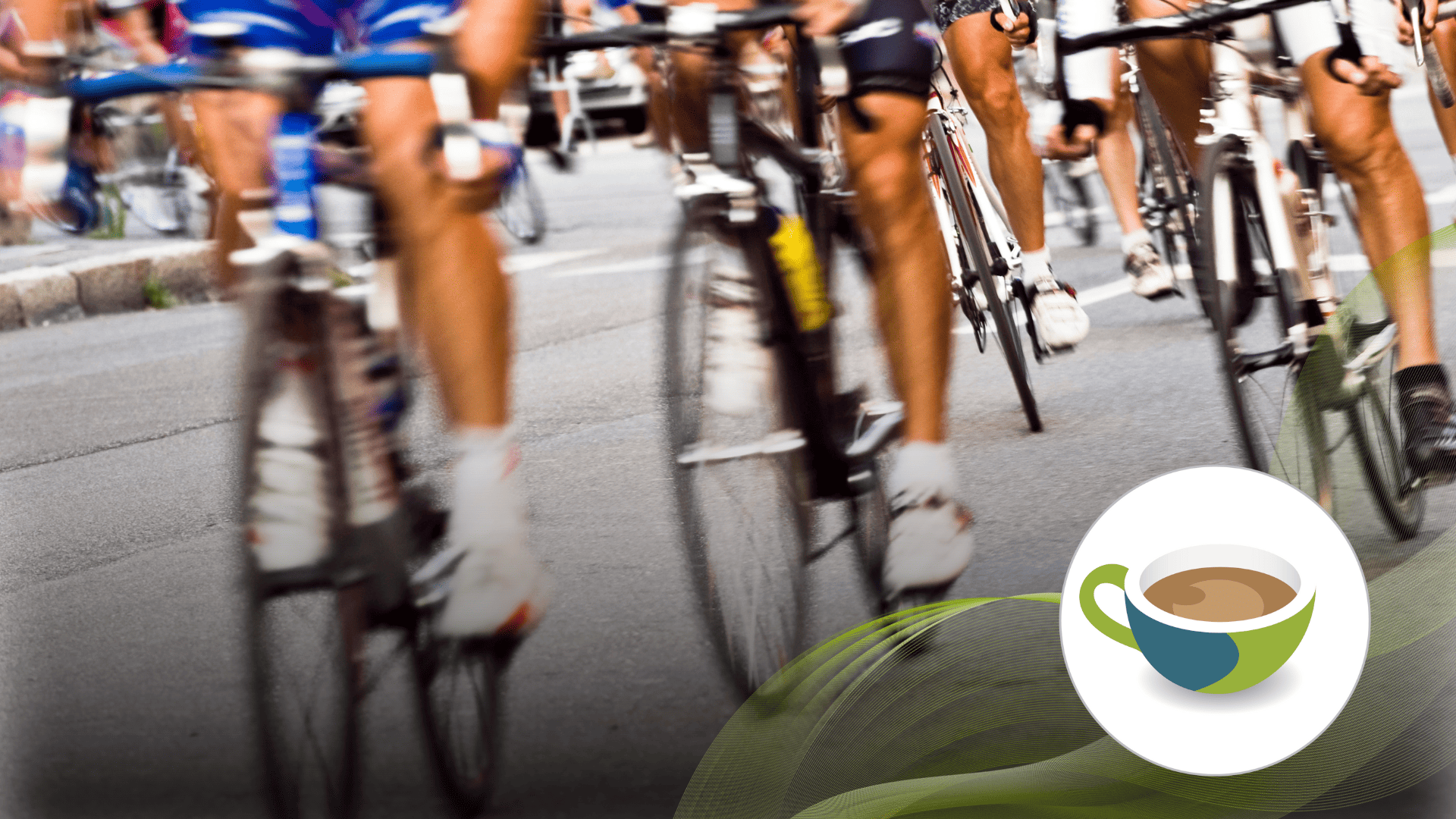
Close-up of cyclists racing on a road during the Tour de France, symbolising determination and motivation in language learning

Every year, France plays host to one of the largest annual sporting events in the world: Le Tour de France. For 23 days, competitors cycle 2000 miles through 21 different stages, covering mountain ranges and coastal villages. With all of its twists, turns, rapid sprints and gruelling ascents, the event can serve as a powerful source of inspiration and motivation to learn a new skill. In this case, that skill could be a new language.

Whether you’re just starting out or you’re close to reaching your goals, learning a language is a lot like competing in a challenging race: you need the motivation to learn and the perseverance to overcome challenges. So, get on your bike and come along for the ride with us!

Motivation to learn: your prologue to success 

It’s day one. You’re lined up at the start of the race and can’t wait to get going. Though your nerves are threatening to take over, you set your sights on your end goal as you wait for the sound of the starting pistol.

When you first start learning a language, it can feel a lot like the opening stage of the Tour de France, which is called the prologue. At this initial stage of learning a new language, it’s likely that you’ll feel that you’re advancing quickly with all of the new vocabulary you’re using each day. After all, this initial enthusiasm provides the perfect motivation to learn and sets the foundation for future success. 

The most helpful thing you can do for yourself at this stage is to find a method or technique for learning a language which you enjoy. Whether it’s listening to podcasts, using apps, writing out colourful notes or going to language ‘tandems’ (pardon the pun!), you’ll be much more likely to reach that final ‘Champs-Elysées’ stage if you enjoy what you’re doing.

Building consistency: the flat stages of language learning 

You are still filled with excitement and passion for the challenge you’ve taken on, but the further you advance, the more you realise how much is ahead of you. From here on, there’s no room for freewheeling.

After the initial rush of the prologue, language learning often moves into a steady, consistent phase. So far, you’ve been learning colours, numbers and days of the week, but to be able to advance further, it’s time to move up a gear and tackle grammar and more complicated learning points. 

This is when it’s crucial to find the motivation to learn through practising your skills consistently. Make sure to keep enjoying what you’re doing and try to immerse yourself in the language as much as possible, as this helps maintain your motivation to learn. Try listening to the radio in your new language every day, watch TV shows with subtitles or attend evening classes to keep your ear tuned to the sounds of the language.

Think of this moment of your language learning path as the flat stages of the Tour, where the race is less dramatic, but no less essential to reaching the finish line.

Overcoming challenges: the mountain stages 

Uh oh… You’ve hit the dreaded ‘wall’ and everything feels like an uphill climb that might never end. You’re at the back of the group; other people keep whizzing past you, and you can’t help but compare your progress to theirs. Make sure not to backpedal, you can do this!

Inevitably, every language learner faces obstacles. Anyone who has spent time learning a language will undoubtedly be familiar with ‘the wall’. This is when things start to feel more challenging than in the earlier stages. 

As learning a new language isn’t something that can be done overnight, it’s only natural that there will be peaks, troughs and the odd plateau along the way. That is why this part of the journey is comparable to the mountainous stretches of the Tour, where every climb tests a cyclist’s endurance. 

So, if you find yourself in a language-learning rut, why not try different activities and introduce some variety to your learning? Try something creative, like using sticky notes or flashcards to help you memorise vocabulary.

Changing your regular routine will stop things from becoming monotonous and will reinvigorate you, providing the motivation to learn and to get you to the next stage! Most importantly, as the saying goes, “if you fall off your bike, the best thing to do is get back on and keep pedalling”.

Confidence boost: time trial to the finish

The end is in sight, and it’s time to get your head down and perhaps even switch up a gear. Perhaps you are reminded of why you decided to take on this challenge in the first place, which gives a sudden burst of motivation. Although there are still some mountains to climb, your confidence is coming back and you’re racing along the route towards the finish line. 

One of the biggest obstacles in any major challenge is the fear of making mistakes. In language learning, the most important thing to do at this stage is to think about how far you’ve come. When you have the opportunity to put what you’ve learned into practice, don’t be embarrassed; just go for it. 

There’s an Italian expression, sbagliando s’impara, which means that it’s only by making mistakes that you actually learn. Once you have this breakthrough moment and realise that nobody will laugh if you get a word wrong, there will be no stopping you! 

This is also the stage where you begin to feel comfortable in the language, and you’ll experience a renewed sense of motivation to learn. At this stage, your confidence grows, so enjoy the feeling of ‘freewheeling’ as you put your language learning into practice.

Celebrating achievements: the Champs-Elysées of language learning 

Bravo ! You’ve won the yellow jersey! After countless ups, and just as many downs, you can be proud to say that you’ve accomplished what you set out to do at the beginning.

At this stage, it’s important to remember that reaching this level doesn’t necessarily mean that you will be mistaken for a native speaker, or that you won’t muddle up a verb conjugation now and again. What it does mean is that you can deal with a variety of different situations in the language you’re learning and that you are no longer afraid of making mistakes! 

Your motivation to learn has carried you through challenges, and now you’re ready to celebrate your success. Bear in mind that language learning is a lifelong journey, not a race, and there is so much to enjoy en route. With some of the skills you’ve already picked up, you’ll be ready for the Giro d’Italia or the Vuelta d’España next!

Embracing the open road: what’s next? 

Of course, it’s not just about the language: just as the cyclists who have completed the Tour de France will have built their stamina, developed their fitness, and hugely increased their mental focus, you will also have acquired a whole range of additional skills and attributes that go along with learning a language. 

Whether it is developing confidence, boosting your memory, becoming more creative, widening your cultural awareness, or even making new friends, these benefits can fuel your motivation to learn! 

So, which language are you going to learn next? No matter where you are on your language-learning path, remember that the motivation to learn comes from the whole journey! 

Was ist dein Lieblingssport? Talking about sports in German – Coffee Break German To Go Episode 9

To ask “what is your favourite sport?” in German you can say was ist dein Lieblingssport?, or in a more formal situation, was ist Ihr Lieblingssport? In this episode of Coffee Break German To Go, Julia asks this questions to interviewees in the streets of Berlin. You can use the answers of our interviewees to help you learn to answer this question yourself.

In the first part of the video, watch the interviews without subtitles and try to understand. In the second part of the video, we’ve provided subtitles in German at the top of the screen. You can choose to turn on subtitles in English using the Subtitles/CC button.

In our first series, Julia is in the city of Berlin, and in each episode she’ll ask passers-by one question. Of course, that one question will result in many answers, and it’s through these answers that you can practise your German and build your vocabulary.

If you’d prefer not to wait for all 10 lessons of Season 1 to be published, you can access downloadable versions of the videos along with audio versions and lesson notes / transcripts in the Coffee Break Academy.

Coffee Break German To Go is based on the popular podcast series and online course Coffee Break German. For access to the free podcasts, click here.

What’s the difference between Mieux and Meilleur? – Walk Talk and Learn French Episode 006

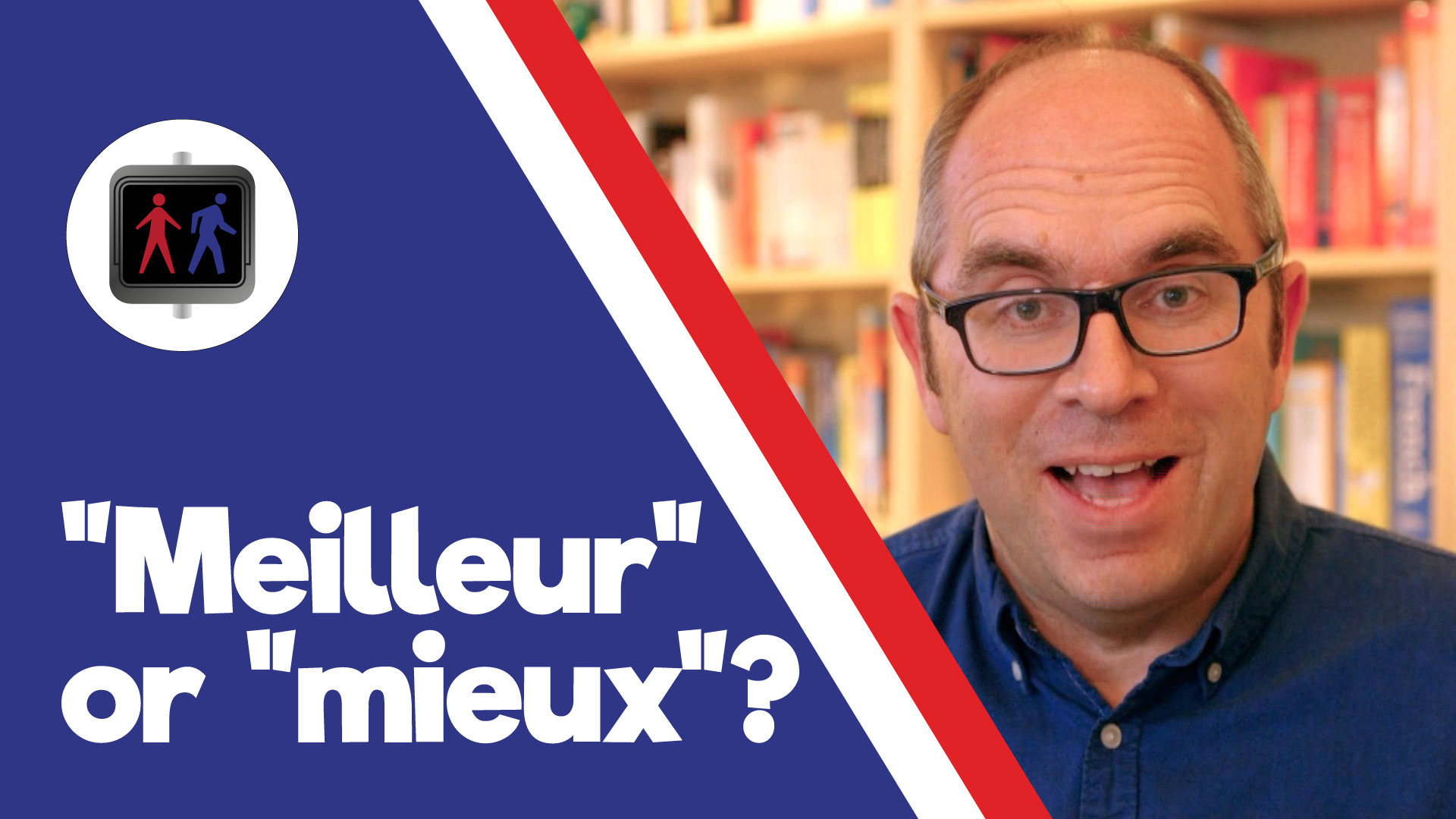
Do you get confused between meilleur and mieux? Are you unclear about the difference between these two words? Do you struggle to know how to translate “better” and “best” into French? In this episode of Walk, Talk and Learn French, Mark spots an advert on a bus shelter in Paris which provides an example of le meilleur, and he goes on to explain that meilleur is an adjective, the comparative form of bon, while mieux is an adverb, the comparitive form of bien.

Make sure you subscribe to Coffee Break Languages on YouTube to be notified when we post new videos!

Meet Liz, Coffee Break Spanish learner

Tell us who you are, where you live, your nationality and how long you’ve been learning a language with us.
I am Liz from Taiwan and live in Germany. I have been learning Spanish with Coffee Break Spanish for 3 months.

What experience have you had speaking and learning other languages?

I was born in Taiwan and my native languages ​​are Mandarin/Chinese, Taiwanese and Hakka. So far, I have learned English, Japanese, German and Spanish.

English: From 7th grade at school in Taiwan, I started learning English. Later, due to many stays in the USA and travelling around the world, I have improved my English.

Japanese: Japanese was one of my major subjects. As a student, I translated many Japanese comics into Chinese for a publisher to make quick money. Since college, I have not used Japanese at all and I can hardly do it now.

German: After trying to learn French, I learned German as a substitute for one semester. Two years later I continued learning German for love. My husband is German. Due to work, we travelled around the world for the first ten years of our marriage. This meant that I could only learn German through self-study. I got certificates for different language levels through exams at language schools, including the Goethe Institute in Germany.

Spanish:  I spent a few months in Peru, so I started learning Spanish there. Unfortunately I was only able to reach level A1, then I became a selfless mother. Several years ago I continued learning Spanish and so far I feel like I’m in love with Spanish.

I’ve been listening to Coffee Break Spanish (CBS) Season 1 & 2 during my morning gymnastics instead of music, and surprisingly, I’ve refreshed my Spanish knowledge.

What are your favourite memories of learning a language?

Through the lessons from CBS Season 1 & 2, my Spanish has improved, especially my listening comprehension. Now, I can understand more during the my weekly Spanish encounters in our little German town. I am also able to answer questions in Spanish more quickly. Once a Peruvian woman told us a joke that nobody understood except me, even though I was/am the least advanced learner in the whole group. After I translated the joke correctly, I was praised with a the burst of applause.

Where would your ideal coffee break be, and with whom?

I want to speak Spanish more fluently with friends, neighbours and my classmates at the Flamenco School when I travel to Seville again this year.

What’s the best language-learning tip you have found works for you?

My language-learning tip is to use the language as much as possible, so that you can get used to it.

Quick Fire Round

• Your favourite language: Spanish
• Your favourite word or phrase in the language: Mariposa, ¡Olé!
• Do you have a favourite film, TV show, book or singer in the language? TV series: La Casa de Papel
• Your favourite destination to practise your language: Andalucía, Spain

Please finish off with a message to your fellow members of the Coffee Break community and the Coffee Break Team.

Hello everyone,
I am glad to be here with you. I’m convinced that Coffee Break can help me learn Spanish effectively and successfully.
Best regards to all of you,
Liz

TFT: La Puerta de Alcalá

¡Hola amigos! This Tuesday we’re bringing you a classic Spanish “Tune” by Ana Belén and Víctor Manuel. La Puerta de Alcalá was a huge success when it was released in 1985 and it remains an important song for many Madrileños because of its link with Madrid’s monument of the same name. Its lyrics also give us a good example of ser vs. estar. Listen out for the refrain “Ahí está, la Puerta de Alcalá” (“There it is, La Puerta de Alcalá”).

If you’d like to hear the lyrics sung more slowly, we recommend watching the YouTube video below and selecting a slower playback speed by clicking on the settings symbol. And you can find the lyrics to La Puerta de Alcalá by clicking here.

What other songs in Spanish do you know? Share some of your favourites in the comments below! We’d be delighted to add some of them to our Spotify and YouTube playlists, which you can find by scrolling down the page.

A Summer Coffee Break Catch-up… from the pool!

Join Coffee Break Languages Founder and CEO Mark for a summer catch-up on all things coffee break … from the pool! In this short video Mark will update you on the latest podcast episodes, videos and blog posts from Coffee Break Languages.

In this edition:

  • updates on the latest podcast episodes available in the Coffee Break French and Italian Magazines;
  • news of forthcoming Coffee Break German and Spanish Magazines;
  • updates on new video content including Walk Talk and Learn French and the Coffee Break To Go series;
  • continuing series on our blog including CoffeeBreaker stories and our Tune for Tuesday.

If you’d like to access all the links for this episode and practise your reading skills in the language you’re learning, click here to sign up for our weekly language and culture newsletter.

Meet Freya, Coffee Break German learner

Tell us who you are, where you live, your nationality and how long you’ve been learning a language with us.

My name is Freya, I am British and I live in the East of England. I have been learning with Coffee Break for two months.

Which language or languages are you learning with Coffee Break?

German

What experience have you had speaking and learning other languages?

My earliest memory of having an interest in languages was my first day of Year 6 (eleven years old), being handed my timetable with ‘French’ scheduled on it. I was ridiculously excited, and genuinely puzzled as to why my peers weren’t sharing my enthusiasm. As a child, I used to go on holiday to France with my parents and they would always encourage me to say ‘bonjour’ and ‘merci’ to the locals. I used to love it when they responded to me in French, because it felt like a secret code. I continued to study French throughout my school years, albeit still not really being able to speak it. This changed when I enrolled myself in a language school in Montpellier for three months. I lived with a host family (who I ADORED), sat the DELF B2 (and passed!), and finally learnt how to communicate freely in French. Since then, I have kept the French up, spending a year working at a science research facility in France, watching the news every day in French, and discovering new French music to sing to in the car. Learning French opened my eyes to an international community of people I can relate to, and inspired me to learn more languages. This is one of the reasons I am now learning German.

What are your favourite memories of learning a language?

My best friend is German – we were thrown together as flatmates when we were working in France. In March 2019, I finally went to visit her and her family in Cologne, Germany. My friend has the most amazing English, and I never needed to speak to her in German, but I really wanted to impress her in Germany with a bit of dabbling in her mother tongue. I was lucky enough to discover Coffee Break German, and I started from the beginning as I pottered about in the lab at work. Over two months, I made my way through series one and half of series two, by which point it was time for my trip. I ordered things correctly in German (using the accusative!), I went to see a German play at the theatre in Düsseldorf (I understood one of the jokes – a win!), and I attended family dinners conducted entirely in German. I relied a lot on my friend, constantly asking her ’wie sagt man… auf Deutsch?’, but I also tried to get my point across by myself. The best part was having her family compliment me on my German, and being welcomed into a different culture.

Where would your ideal coffee break be, and with whom?

I’m obsessed with the French band ‘L.E.J’ to the point where I almost cried seeing them live. I’d love to have coffee with this group on a Spring afternoon in Paris, probably somewhere outdoors with a view of the Arc de Triomphe.

What’s the best language-learning tip you have found works for you?

Mix up your routine, and practise little and often. There are so many (free!) resources online, and variety keeps it interesting! Watch TV in your target language, listen to the radio, talk out loud to yourself in the car, find some new tunes, and find people to study with. Even if they’re not studying a language, having a productive environment will motivate you. Basically, make it fun.

Quick Fire Round

• Your favourite language: French
Your favourite word or phrase in the language: Insupportable (it’s so satisfying to say)
• Do you have a favourite film, TV show, book or singer in the language? L.E.J (short for Lucie, Élisa, Juliette) is my favourite French band. I saw them in Lille last year, and listen to them constantly!
• Your favourite destination to practise your language: My old hometown of Grenoble, in the lab with my French colleagues

Please finish off with a message to your fellow members of the Coffee Break community and the Coffee Break Team.

Coffee Break is a precious gem of a language resource. It succeeds at being enjoyable to listen to, thorough, and rewarding. It’s also incredibly moreish and I can listen and relisten to episodes without getting fed up. To the Coffee Break Team, I’d love to thank you for your efforts and time, and to the Coffee Break Community, I’d like to personally recommend CB German!