Quand êtes-vous né(e) ? – “When were you born?” – Coffee Break French To Go Episode 5

To ask “when were you born?” in French you can say quand es-tu né(e) ?, or in a more formal situation, quand êtes-vous né(e) ? In this episode of Coffee Break French To Go, Pierre-Benoît asks this questions to interviewees in the streets of his hometown, Pornic. You can use the answers of our interviewees to help you learn to answer this question yourself.

In the first part of the video, watch the interviews without subtitles and try to understand. In the second part of the video, we’ve provided subtitles in French at the top of the screen. You can choose to turn on subtitles in English using the Subtitles/CC button.

In this first series of Coffee Break French To Go, Pierre-Benoît is in the town of Pornic, in the west of France, and in each episode she’ll ask passers-by one question. Of course, that one question will result in many answers, and it’s through these answers that you can practise your French and build your vocabulary.

Coffee Break French To Go will be published every two weeks here on YouTube, and each Season will be filmed in a different part of the French-speaking world.

If you’d prefer not to wait for all 10 lessons of Season 1 to be published, you can access downloadable versions of the videos along with audio versions and lesson notes / transcripts in the Coffee Break Academy.

Coffee Break French To Go is based on the popular podcast series and online course Coffee Break French. For access to the free podcasts, please click here.

To purchase our full online courses on the Coffee Break Academy, click here.

Quand’è il tuo compleanno? / Quand’è il suo compleanno? – Coffee Break Italian To Go Episode 5

In this episode Francesca’s question is “Quand’è il tuo compleanno?” – “When is your birthday?”. Using the answers you’ll learn to say when your birthday is in Italian. Here are the words and phrases you’ll need:

When is your birthday? – Quand’è il tuo compleanno? (informal)
When is your birthday? – Quand’è il suo compleanno? (formal)
My birthday is … Il mio compleanno è il…

In the first part of the video, watch the interviews without subtitles and try to understand. In the second part of the video, we’ve provided subtitles in Italian at the top of the screen. You can choose to turn on subtitles in English using the Subtitles/CC button.

In this first series of Coffee Break Italian To Go, Francesca is in the town of Milan, in the north of Italy, and in each episode she’ll ask passers-by one question. Of course, that one question will result in many answers, and it’s through these answers that you can practise your Italian and build your vocabulary.

Coffee Break Italian To Go will be published every two weeks here on YouTube, and each Season will be filmed in a different part of the Italian-speaking world.

If you’d prefer not to wait for all 10 lessons of Season 1 to be published, you can access downloadable versions of the videos along with audio versions and lesson notes / transcripts in the Coffee Break Academy.

Coffee Break Italian To Go is based on the popular podcast series and online course Coffee Break Italian. For access to the free podcasts, please click here.

To purchase our full online courses on the Coffee Break Academy, click here.

CBG Mag 1.08 | 300 Jahre Liechtenstein

In this episode of the Coffee Break German Magazine we’re heading to the Principality of Liechtenstein, sandwiched between Austria and Switzerland. Europe’s fourth-smallest country it’s one of only two doubly landlocked countries in the world (the other being Uzbekistan!) Find out more about this small German-speaking country and its 300th anniversary in this episode. In addition Olivera is back with another long German word.

Christmas songs in different languages: a great way to learn!

At Coffee Break Languages, we love combining language learning with some festive spirit. What better way to practise your French, Spanish, German, or Italian than by enjoying some classic Christmas songs in different languages? 

These timeless songs help you immerse yourself in the culture of the countries you’re learning about and introduce you to vocabulary and phrases in a fun, memorable way. You may have already listened to our Tune for Tuesday YouTube and Spotify playlists. And now, it’s time for Tune for Tuesday – Festive Edition! 

We’ve compiled a multilingual playlist of songs, sung around the world to celebrate several different festivals and holidays at this time of year to help you practice your language skills while joining in the festivities. 

Why learn with Christmas songs in different languages?   

Holiday music is a fun way to discover language and culture. By listening to Christmas songs in different languages, you can pick up new words, practise pronunciation, and discover cultural references along the way.

What’s great is that these songs are often catchy and repetitive, making them perfect for beginners. And if you’re a more advanced learner, you’ll find that holiday tunes can introduce you to some new phrases, idioms, and expressions.

Plus, singing along can be incredibly helpful as it gives you a chance to practise speaking in a relaxed setting. Don’t worry if your pronunciation isn’t spot on – just having fun with the lyrics will help your fluency. 

Related topic: Music and studying: language learning using your favourite songs!

4 Christmas songs in different languages: Italian, German, French and Spanish 

Unsure of where to start? Check out our list of Christmas songs in different languages and discover some seasonal traditions in four languages!

A Natale puoi

LINKS: Lyrics | English translation

In Italy, Christmas is all about religion, family, and food! The festive season starts on the 8th of December, which, according to the Christian tradition, is the Feast of the Immaculate Conception. 

On this day, each family decorates their Christmas tree and creates a representation of the Nativity scene, also called presepe. Presepe is a very well-known Italian tradition: everyone recreates the nativity scene with little statuettes, and sometimes it is considered a real art form. 

On Christmas Eve, people have a huge dinner with their relatives: usually, there are more than five courses! Everyone stays up until midnight, and then it’s officially Christmas Day. On the 25th, children find their presents, which Babbo Natale (Santa Claus) brought them overnight and put under the Christmas tree. 

Adults also exchange gifts, and after going to church, people have another long lunch with relatives. The most popular Christmas food is probably pandoro or panettone. They are both sweet breads. The former is covered in icing sugar,  whereas panettone has either raisins or chocolate chips inside. 

Another very famous treat is torrone. Torrone is a nougat confection made of sugar, honey, egg whites and nuts and is usually eaten at the end of a meal. The last day of the Christmas holidays is the 6th of January, the day of the Epiphany. “Good” children get sweets and treats on this day, whereas “naughty” children only get coal! Since the 6th marks the end of Christmas, it is also the day when everyone puts away their Christmas tree and presepe.

Now that you know a little more about the festive season in Italy, have a listen to A Natale puoi, the first song to make it to our list of Christmas songs in different languages – and also a very popular tune in Italy. It is sung by Roberta Bonanno, an Italian singer who started her career after reaching second place on the popular Italian talent show Amici di Maria di Filippi in the 2007-2008 season. 

There are also Italian versions of many of the popular Christmas songs in English, such as Bianca Natale and Oh albero. Can you guess which Christmas songs in English these are referring to? Try looking them up on YouTube if you’d like to listen to them.

Fröhliche Weihnacht überall

LINKS: Lyrics | English translation

The festive season in Germany is primarily characterised by Christmas celebrations, which have become an integral part of German culture and tradition. Germans use this time to get together with their families and be merry together. 

The family reunion is often celebrated with a big Christmas dinner and the opening of presents on Christmas Eve. As a part of these festivities, traditional foods are prepared. One slightly more peculiar dish is now considered an integral part of the table, the Kartoffelsalat (potato salad). 

Originally introduced in connection with the Christian tradition of lent, this potato dish is enjoyed in all kinds of variations around German tables at Christmas. The Christmas dinner is often followed by decorating the Christmas tree and singing together – there is simply no better way of spreading Christmas joy throughout the night. 

If you plan on adding Christmas songs in different languages to your holiday playlist, Germans have written some beautiful ones. The traditional classics include O Tannenbaum, Fröhliche Weihnacht überall, and Oh du fröhliche, to name just a few. However, the Christmas festivities start long before the arrival of Christmas Eve. 

On the 6th of December, Saint Nikolaus arrives and leaves chocolate, nuts and fruit in the winter boots of the children who have been good. From that day on, the wait for Christmas Eve is filled with a range of merry activities, such as visiting a traditional Weihnachtsmarkt (Christmas market) and drinking Glühwein (mulled wine). 

But what would German Christmas time be without its most important tradition: the Weihnachtsbäckerei (Christmas baking)? As a part of this, young and old come together to create the most delicious Christmas treats, such as Lebkuchen, Zimtsterne and Christstollen.

One of the festive songs in our playlist is Fröhliche Weihnacht überall, which, as mentioned above, is a very popular song in Germany at this time of year. This version is sung by German singer, actress and TV presenter Helene Fischer and appears on her 2015 Christmas album, Weihnachten

Her music is often associated with the style known as Schlager, a style of popular music from Central and Northern Europe that has similarities with what is often known as country music, and five of her albums have been the best-selling albums of the year in Germany.

Entre le bœuf et l’âne gris

LINKS: Lyrics | English translation

The festive season in Belgium is also generally based on Christian values and begins around the 6th of December, Saint Nicholas Day, when children are left gifts during the night. It continues all the way up to Epiphany, on the 6th of January. 

During that last feast, families gather around a pie which hides a small figurine inside. Whoever bites into the slice with the figurine is the king for the following year and can wear a crown for the evening. This idea is in reference to the three kings in the nativity scene. Christmas markets are open across most cities between these two dates, offering vin chaud (mulled wine) and beignets powdered with sugar. 

The cougnou, a traditional Christmas pastry, is very popular with Belgians. Made with flour, milk, eggs, sugar and either raisins or chocolate chips, cougnous have a distinct oval shape with two rounded bundles on each end. 

This, funnily enough, is an attempt to recreate the shape of baby Jesus wrapped up in the manger. Most Belgians spend Christmas Eve with close family and gifts are exchanged that evening. Santa Claus is not recognised so much in Belgium, as Saint Nicholas Day is celebrated earlier in the month instead. 

The 25th is often spent with more family members, even more food and presents, while New Year’s Eve is almost exclusively a big party. Finally, because Belgium is a monarchy, the King delivers a speech both in French and Dutch, looking back over the year.

Next on our Christmas songs list in different languages is Entre le bœuf et l’âne gris. A Christmas carol that is popular in many French-speaking countries. It is one of the oldest French carols and has been recorded by many different choirs and individual artists, including Claire Pelletier. There are also French versions of many of the popular Christmas songs in English, such as Douce nuit and Mon beau sapin

Do you know the English equivalent to these songs? Try looking them up on YouTube to find more festive songs in French. 

Campana sobre campana

LINKS: Lyrics | English translation

In Panama, a Spanish-speaking country in Central America which borders Costa Rica and Colombia, the festive season is generally based on religious traditions. The festivities begin for some families with the lighting of the advent wreath on the first Sunday in December, and for others, it begins on the 8th of December with Mother’s Day, which intentionally coincides with the Feast of the Immaculate Conception. 

The 16th of December marks the start of the novenas for many families. The novenas is a typical tradition in Latin American countries, where families gather around the nine days before Christmas to pray and tell the story of Jesus. Other families also do posadas, which are gatherings where people sing Christmas carols.

The main event during this season is Christmas Eve, when families gather together and eat a big dinner with typical festive dishes such as: ham, turkey, potatoes, salad and arroz con guandú, which is rice with a special type of seasonal beans. After eating dinner, people wait patiently until midnight, greeting each other and enjoying fireworks while children open their presents. 

On Christmas morning, eating leftovers from dinner for breakfast is very common! New Year’s Eve follows a similar pattern: families wait for midnight to celebrate the new year with fireworks. Since Panama City’s capital is relatively close to beaches, some people spend New Year’s Eve at their beach houses, where they stay up all night to see the sunrise. The festive season finishes on the 6th of January with la llegada de los reyes magos (the Epiphany). 

On this day, children receive small gifts. The festive season in Panama is focused on spending time with family and loved ones. 

Many of the most popular Spanish Christmas songs are well-known in Spain and throughout Latin America, including Campana sobre campana. You can find the lyrics online by clicking on the link above. We’d recommend reading them as you listen to the song, as there may be a few unfamiliar words relating to the Christmas story.

We hope you’re feeling festive and ready to listen to more Christmas songs in different languages or the language you’re learning. The four songs above are in our Tune for Tuesday – Festive Edition playlist

And if you would like to discover more ways of making learning a new language fun, just like listening to music, make sure to check out the blog post we prepared!

 

The Coffee Break Catch-Up: 5 December 2019

Join Coffee Break founder and CEO Mark Pentleton for our weekly live broadcast in which we update you on all things Coffee Break, from our latest podcast episodes and videos to what’s been happening on our social profiles. Coming up in this edition:

  • the latest episodes of our Coffee Break German and Spanish Magazines;
  • news for language-learning music lovers;
  • the announcement of our Black Friday Prize Draw winners;
  • cultural updates from around the world.

If you’d like to access all the links for this episode and practise your reading skills in the language you’re learning, click here to sign up for our weekly language and culture newsletter.

Quel âge as-tu ? / Quel âge avez-vous? – “How old are you?” – Coffee Break French To Go Episode 4

In French when you talk about ages you don’t say “I am 21 years old”: instead you say “I have 21 years”. Equally, when you ask the question “how old are you?” or “what age are you”, you actually ask “what age do you have”. Here are the phrases you’ll need:

I’m (21) years old – j’ai (21) ans
How old are you? (informal) – Quel âge as-tu ?
How old are you? (formal) – Quel âge avez-vous?

In the first part of the video, watch the interviews without subtitles and try to understand. In the second part of the video, we’ve provided subtitles in French at the top of the screen. You can choose to turn on subtitles in English using the Subtitles/CC button.

In this first series of Coffee Break French To Go, Pierre-Benoît is in the town of Pornic, in the west of France, and in each episode she’ll ask passers-by one question. Of course, that one question will result in many answers, and it’s through these answers that you can practise your French and build your vocabulary.

Coffee Break French To Go will be published every two weeks here on YouTube, and each Season will be filmed in a different part of the French-speaking world.

If you’d prefer not to wait for all 10 lessons of Season 1 to be published, you can access downloadable versions of the videos along with audio versions and lesson notes / transcripts in the Coffee Break Academy.

Coffee Break French To Go is based on the popular podcast series and online course Coffee Break French. For access to the free podcasts, please click here.

To purchase our full online courses on the Coffee Break Academy, click here.

Quanti anni hai? / Quanti anni ha? – “How old are you?” – Coffee Break Italian To Go Episode 4

In Italian when you talk about ages you don’t say “I am 21 years old”: instead you say “I have 21 years”. Equally, when you ask the question “how old are you?” or “what age are you”, you actually ask “how many years do you have”. Here are the phrases you’ll need:

I’m (21) years old – ho (21) anni
How old are you? (informal) – quanti anni hai?
How old are you? (formal) – quanti anni ha?

In the first part of the video, watch the interviews without subtitles and try to understand. In the second part of the video, we’ve provided subtitles in Italian at the top of the screen. You can choose to turn on subtitles in English using the Subtitles/CC button.

In this first series of Coffee Break Italian To Go, Francesca is in the town of Milan, in the north of Italy, and in each episode she’ll ask passers-by one question. Of course, that one question will result in many answers, and it’s through these answers that you can practise your Italian and build your vocabulary.

Coffee Break Italian To Go will be published every two weeks here on YouTube, and each Season will be filmed in a different part of the Italian-speaking world.

If you’d prefer not to wait for all 10 lessons of Season 1 to be published, you can access downloadable versions of the videos along with audio versions and lesson notes / transcripts in the Coffee Break Academy.

Coffee Break Italian To Go is based on the popular podcast series and online course Coffee Break Italian. For access to the free podcasts, please click here.

To purchase our full online courses on the Coffee Break Academy, click here.

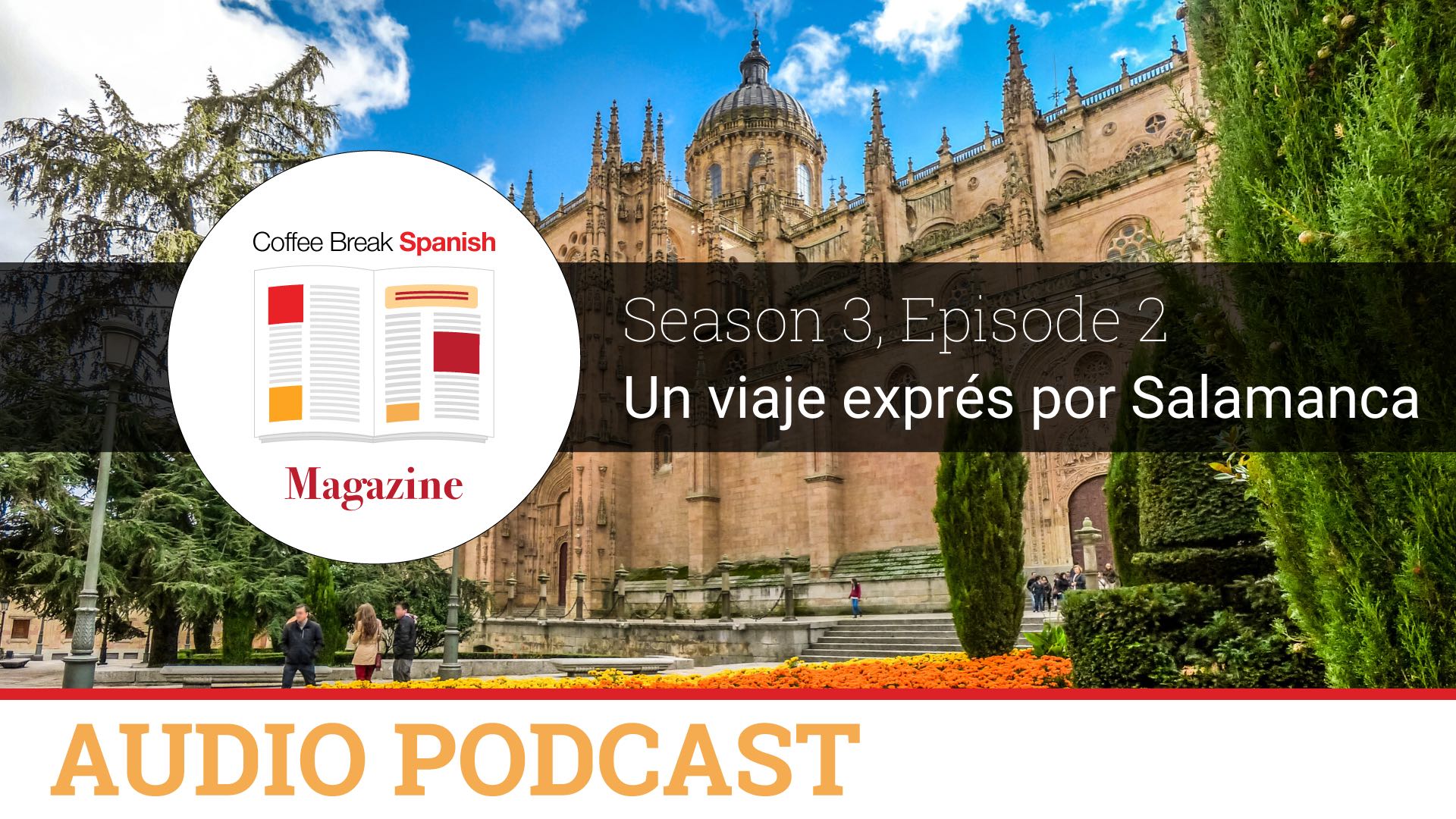
CBS Mag 3.02 | Un viaje exprés por Salamanca

In this episode of the Coffee Break Spanish Magazine we’ll be investigating an astronaut and a dragon eating ice cream on the façade of a 17th Century cathedral. There’s only one city in the Spanish-speaking world where you can see such a thing, and that is Salamanca. Join Mark, Fernanda and Anabel for a quick trip to this jewel in the crown of Castilla y León. In our grammar section we’ll be answering listener Hanne’s question about using the subjunctive after the word cuando.

8 German songs for learners

A phone and headphones resting on a dark table

Listening to songs when learning German is an effective and enjoyable way to practise your language skills. German songs can help improve your listening comprehension and your pronunciation and, on top of this, music is catchy! This means that the new words, phrases and structures that you hear within a song may be easier to remember and reuse in your own speaking or writing.

Thousands and thousands of songs exist throughout the German-speaking world – where do you start with finding ones to listen to which will help you practise your German? In this article, we’ve done the hard work for you! 

Read on to discover 8 German songs we recommend to help your learning.

1. Griechischer Wein – Udo Jürgens, 1974

As mentioned before, using music to learn a new language is an interesting and fun way to practise your skills. So, without further ado, let’s talk about our first suggestion on this list of German songs for learners:  Griechischer Wein, by Udo Jürgens.

He was an Austrian-Swiss singer and composer who is partly remembered for winning the Eurovision Song Contest for Austria in 1966 with the song Merci, chérie. Many consider him to have played a large role in expanding German-language pop music by bringing in influences from other genres, such as French chanson.

Griechischer Wein is one of his most popular songs and versions in a number of different languages have since been recorded, including Bing Crosby’s version which he recorded during one of his last sessions, titled Come Share the Wine.

LINK: Lyrics

2. Ein bißchen Frieden – Nicole, 1982

If you are a Eurovision fan, perhaps you’ll remember Germany’s winning song from 1982, Ein bißchen Frieden, performed by 17-year-old school student, Nicole. In 2005, the European Broadcasting Union announced Ein bißchen Frieden as one of the 14 most popular Eurovision songs ever, according to the results of their Internet poll. 

The song was written by Ralph Siegel and Bernd Meinunger and its success led to the recording of versions of it in many different languages. The English version, A Little Peace, reached Number 1 in the UK Charts.

Listen out for similes in this song’s first verse, as they are great examples of phrases of comparison in German. Just consider “wie eine Blume” or “wie ein Feuer” and you can spot the common construction introduced by the adverb “wie”. Another grammatical feature to look out for is the recurrence of embedded clauses beginning with the word “dass”.

LINK: Lyrics

99 Luftballons – Nena, 1983

In our look at German songs, this one is very popular and we’re sure may have heard the 80s hit 99 Red Balloons, which reached Number 1 in the UK and the US Charts, but have you tried listening to its original version in German? It was released in 1983 by German band, Nena, who were together between 1981 and 1987. 

The band is very important to German musical culture, as it was part of the forming of the German New Wave scene (Neue Deutsche Welle). 99 Luftballons was a huge success across Europe, leading to the writing of the English version the year after. 

Unfortunately, Nena never managed to match the success of 99 Luftballons and the band broke up after the release of its fourth, final and least successful album in 1986. They reunited in 2017 for a public performance of their debut single, Nur geträumt, to mark the 40th anniversary of the band’s first appearance on stage.

The lyrics to 99 Luftballons tell the story of the release of 99 balloons. These are mistaken for UFOs and the reactions of different nations result in a destructive war breaking out. The lyrics to 99 Red Balloons aren’t an exact translation but carry the same anti-war message.

Like many German songs, this one contains several interesting language points that you may recognise. For instance, it demonstrates the differences in building the plural form of nouns. For example, the words “Kriegsminister” and “Düsenjäger” remain in the same form when made plural. 

On the other hand, the nouns “Luftballons” and “Jahre” change in their plural form. Something else to note is the omission of the personal pronoun in sentences like “Hab’ nen Luftballon gefunden”. This song is also good practice for your numbers in German! Before you look at the lyrics, see if you can count how many times you hear her sing “neunundneunzig” (“ninety-nine”). 

LINK: Lyrics

4. Mensch – Herbert Grönemeyer, 2002

When talking about German songs, we could not leave out the title track of Germany’s best-selling album of all time. Mensch sold over 3 million copies in Germany and thanks to this success and the popularity of his fifth album, 4630 Bochum (1984), Herbert Grönemeyer is often considered one of the most successful German artists.

One prominent language feature of this song is the frequent use of the conjunction “und”. In German, this word is often added to form sentences with multiple dependent clauses. Also, listen out for examples of compound words, such as “Sonnenzeit” or “ozeanblau”.

LINK: Lyrics

5. Der perfekte Moment… wird heut verpennt – Max Raabe, 2017

The fifth recommendation in this article about German songs comes from an artist with a very interesting musical style. Max Raabe founded his Berlin-based Palast Orchester with fellow students in the mid-1980s while studying opera in Berlin. 

Together, Raabe and Palast Orchester perform covers of cabaret songs from the Weimar period as well as original songs that merge 1920s and 30s melodies with modern lyrics. As well as this, they have recorded some covers of modern pop songs in a 1920-30s style, including Britney Spears’ Oops!… I Did It Again

The title track of their most recent album, Der perfekte Moment… wird heut verpennt, is among the list of good German songs for learners as it allows you to practise your listening comprehension, where Raabe sings in nice, clear German. As you’re listening, it is particularly interesting to take a look at all the idioms the song contains. 

Most of them are used to describe that the singer will not do anything today, for example, “Heut’ mach’ ich gar nichts/Keinen Finger krumm”. “Was ich heut’ besorgen kann” is especially interesting, because it is a play on the original saying “Was ich heut’ kann besorgen, verschieb’ ich nicht auf morgen”.

LINK: Lyrics

6. Sowieso – Mark Forster, 2016

The sixth recommendation in our list of German songs is Sowieso by Mark Forster. This track is an upbeat song that talks about embracing life’s uncertainties. Mark Forster, a well-known figure in the German pop music scene, released this song in 2016, and it quickly became a hit.

Sowieso is perfect for German learners because the lyrics are clear and easy to follow, making it a great choice for practising listening comprehension. As you listen, pay attention to phrases like “Egal, was kommt, es wird gut, sowieso” and other interesting expressions.

LINK: Lyrics  

7. Barfuß am Klavier – AnnenMayKantereit, 2013

Released in 2013, this song by the German rock band AnnenMayKantereit is a beautiful ballad. The band’s distinctive sound is characterised by the deep voice of the lead singer Henning May, which adds a unique touch to their music. 

Barfuß am Klavier is part of this German songs list due to its poetic lyrics, offering listeners a glimpse into the band’s heartfelt storytelling. 

LINK: Lyrics

8. Auseinandergehen ist schwer – Wanda, 2014

The last on our list of German songs is “Auseinandergehen ist schwer” by the Austrian band Wanda. The band is known for their catchy melodies and honest lyrics.

The song is sung in clear German, making it an excellent choice for learners who want to practise their listening skills and expand their vocabulary relating to relationships and emotions.

LINK: Lyrics 

We hope this article has given you a useful introduction to just a tiny proportion of the huge variety of German songs which are out there. In our special Tune for Tuesday – German playlist you can find some more examples to learn the language with some catchy rimes. Don’t forget to save it.

If you want to get access to more interesting content like this, make sure to subscribe to our Coffee Break German newsletter!


Où habites-tu ? / Où habitez-vous ? – “Where do you live?” – Coffee Break French To Go Episode 3

To say “I live in…” in French you say j’habite à… . In this episode of Coffee Break French To Go, Pierre-Benoît asks the question, où habites-tu ? (informal) or où habitez-vous ? (formal). You can use the answers of our interviewees to help you learn to say where you’re from in French.

In the first part of the video, watch the interviews without subtitles and try to understand. In the second part of the video, we’ve provided subtitles in French at the top of the screen. You can choose to turn on subtitles in English using the Subtitles/CC button.

In this first series of Coffee Break French To Go, Pierre-Benoît is in the town of Pornic, in the west of France, and in each episode she’ll ask passers-by one question. Of course, that one question will result in many answers, and it’s through these answers that you can practise your French and build your vocabulary.

Coffee Break French To Go will be published every two weeks here on YouTube, and each Season will be filmed in a different part of the French-speaking world.

If you’d prefer not to wait for all 10 lessons of Season 1 to be published, you can access downloadable versions of the videos along with audio versions and lesson notes / transcripts in the Coffee Break Academy.

Coffee Break French To Go is based on the popular podcast series and online course Coffee Break French. For access to the free podcasts, please click here.

To purchase our full online courses on the Coffee Break Academy, click here.

Dove abiti? / Dove abita? – “Where do you live?” – Coffee Break Italian To Go Episode 3

In this episode of Coffee Break Italian To Go, Francesca asks the question, dove abiti (informal) or dove abita (formal). You can use the answers of our interviewees to help you learn to say where you’re from in Italian.

In the first part of the video, watch the interviews without subtitles and try to understand. In the second part of the video, we’ve provided subtitles in Italian at the top of the screen. You can choose to turn on subtitles in English using the Subtitles/CC button.

In this first series of Coffee Break Italian To Go, Francesca is in the town of Milan, in the north of Italy, and in each episode she’ll ask passers-by one question. Of course, that one question will result in many answers, and it’s through these answers that you can practise your Italian and build your vocabulary.

Coffee Break Italian To Go will be published every two weeks here on YouTube, and each Season will be filmed in a different part of the Italian-speaking world.

If you’d prefer not to wait for all 10 lessons of Season 1 to be published, you can access downloadable versions of the videos along with audio versions and lesson notes / transcripts in the Coffee Break Academy.

Coffee Break Italian To Go is based on the popular podcast series and online course Coffee Break Italian. For access to the free podcasts, please click here.

To purchase our full online courses on the Coffee Break Academy, click here.

TFT: Hùg air a’ bhonaid mhòir

This Saturday 30th November is Saint Andrew’s Day, the official national day of Scotland. That’s why this week we’re bringing you a Tune for Tuesday from Coffee Break Languages’ home country. Hùg air a’ bhonaid mhòir is a song in Scots Gaelic by Julie Fowlis, a folk singer and instrumentalist from the Scottish Outer Hebrides. You may recognise her voice from the soundtrack to the 2012 Disney-Pixar film Brave. Listen out for the off-beat, syncopated rhythms and repetition throughout the song, distinctive of Scottish folk music.

If you’re interested in learning some Gaelic, you can check out our One Minute Gaelic course by clicking here. And let us know what you think of Hùg air a’ bhonaid mhòir in the comments below. What other Scottish artists do you know and like?

To keep discovering songs from around the world, you can follow our Spotify and YouTube playlists, which can be found by scrolling down the page.


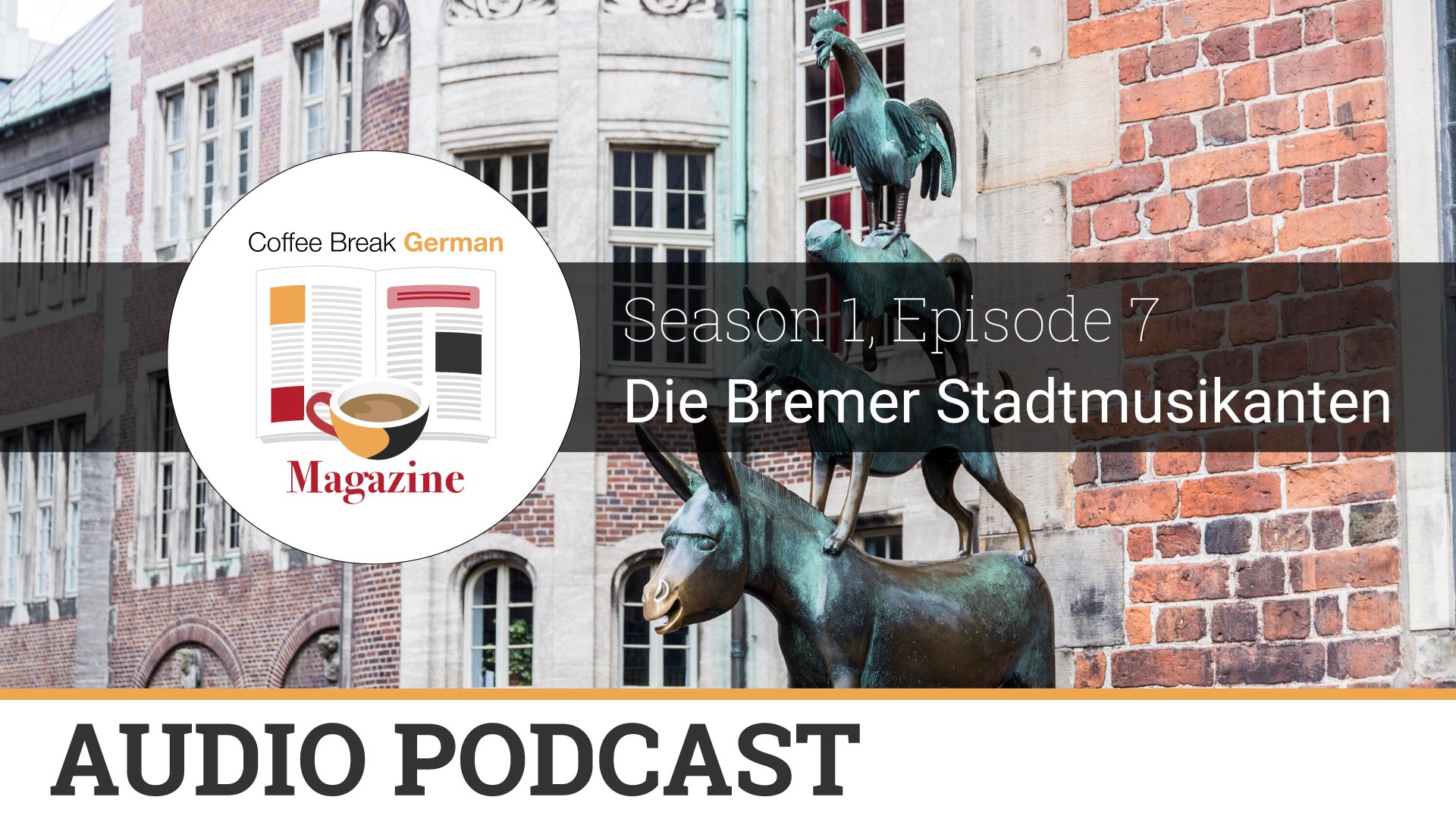
CBG Mag 1.07 | Entdecke die Bremer Stadtmusikanten

Have you heard the one about the donkey, the dog, the cat and the rooster? In this episode of the Coffee Break German Magazine we’re finding out about the famous Town Musicians of Bremen. First published in Grimms’ Fairy Tales in 1819, Die Bremer Stadmusikanten has become a key part of the cultural legacy of the German-speaking world. We’ll also hear from listener Nick who wants to know more about the small but versatile word doch, and Olivera is back with another long German word.

8 Spanish Songs For Learners

A cozy flat lay featuring a red coffee mug filled with black coffee, a pair of white over-ear headphones, and two books

Any learner wanting to have more contact with the language that they are learning should try to listen to music. That is why we ask you “do you know any songs for learning Spanish”? 

There are so many different songs available that it might be hard to find a playlist at a beginner level for the Spanish-speaking world. But, don’t worry! In this article, we’ve done the hard work for you and selected 8 songs in Spanish specifically for that purpose!

1. ¡Y viva España! – Manolo Escobar, 1973

The first music on our list of Spanish songs for learners was actually written by a Belgian composer and Belgian lyricist, Leo Caerts and Leo Rozenstraten. It started out as Eviva España, a song about holidaying in Spain, imitating the Spanish pasodoble musical style (the name given to a style of Spanish dance and music often played during bullfights). 

It seems that the meaning behind “Eviva” in the title is unknown, but when the song was translated into Spanish, this became “Y viva”. Manolo Escobar’s 1973 recording of the Spanish version of the song was extremely successful.

Escobar was a very well-known singer, actor and performer of Andalusian copla, a style of Spanish popular song. He began his career in a band with four of his brothers, called Manolo Escobar y sus guitarras.

There are many interesting language points to listen out for in this song. Don’t worry if there are some words you don’t recognise, as there are a few unusual pieces of vocabulary, for example, “fandanguillos y alegrías” are styles of Spanish music and dance.

Listen out for the many different verb tenses used in the lyrics, including the line which uses both the present perfect and the future tense, “España siempre ha sido y será…” (“Spain has always been and always will be…”). And, of course, you may quickly notice the repeated Spanish subjunctive in the chorus “Que viva España” (“Long live Spain”), as this is expressing a desire that something will happen

LINKS: Lyrics | English translation

2. La Puerta de Alcalá – Ana Belén & Víctor Manuel, 1986 

If you have ever visited Madrid, it is likely that the title of this next song will conjure up images of Madrid’s famous monument of the same name. Inaugurated in 1769, La Puerta de Alcalá is often associated with similar Roman arches such as the Arc de Triomphe and the Brandenburg Gate.

Over 200 years later, La Puerta de Alcalá, the song, was written by Bernardo Fuster, Luis Mendo, Miguel Ángel Campos and Francisco Villar, to be performed by Ana Belén and Víctor Manuel. These two Spanish singers were married in 1972 and are often considered symbols of the Spanish Transition to Democracy, with many of their songs expressing strong social and political opinions. 

Their recording of La Puerta de Alcalá stayed at Number 1 in the Spanish charts for seven weeks and it remains an important song for many Madrileños because of its link with the monument. In our list of songs for learning Spanish, this one has interesting lyrics as it contains several more complex phrases, and each verse of the song refers to a different socio-political event that has affected Madrid and its famous monument.

Amongst the many language points to look out for within the lyrics, listen out for the refrain “Ahí está, la Puerta de Alcalá” (“There it is, La Puerta de Alcalá”). You can remember this line as a good example of when to use ser or estar in Spanish to describe the position of something.

LINKS: Lyrics | English translation

3. En el muelle de San Blás – Maná, 1997

Our next song comes from a Mexican pop-rock group formed in 1986, whose name, Maná, comes from the Polynesian term for supernatural energy. They have won 4 Grammy Awards and are extremely popular throughout Latin America and further afield.

Their song En el muelle de San Blás tells the story of Rebeca Méndez Jiménez, who is said to have waited at the pier of San Blás, on the Pacific coast of Mexico, for 41 years for her husband to return from a fishing trip. It is thought that he tragically got caught in a storm out at sea and never returned. One day, she was noticed by Fher Olvera, the lead singer of Maná, who listened to her story and decided to write the song. 

The lyrics are a good challenge for your Spanish comprehension, so we recommend reading them as you listen to the song another time so that you can fully understand the story being told. They also contain many examples of the preterite and the imperfect tenses in Spanish.

LINKS: Lyrics | English translation

4. Color esperanza – Diego Torres, 2001

Born in Buenos Aires, Diego Torres is a singer, songwriter, actor and musician who is well-known throughout Latin America, the United States and Spain. He is also known for being the son of famous Argentinian film actress, Lolita Torres. His uplifting song, Color esperanza, focuses on hope. In 2003, Torres gave a special performance of it in order to welcome Pope John Paul II to Cuatro Vientos Airport in Madrid. 

Torres sings quite clearly and the lyrics aren’t too complex and, of course, contain many examples of language points you have been learning about. For example, note the interesting phrase in the chorus, “Saber que se puede, querer que se pueda”, which can be used to compare the use of the indicative and the subjunctive. 

This would be a good example to memorise, to help you remember the structures “saber que + infinitive” and “querer que + subjunctive”. For sure music that deserves to be on the list of songs for learning Spanish!

LINKS: Lyrics | English translation

5. El mismo sol – Alvaro Soler, 2015

The fifth tune on our suggestion of songs for learning Spanish was one of the hits of the summer of 2015 in Spain and across Europe. El mismo sol is the debut single of Spanish-German singer, Alvaro Soler. Following the success of the song, there are now various recordings of it. Soler collaborated with Jennifer Lopez to create a version with the addition of her vocals, and a version in Spanglish, El Mismo Sol (Under The Same Sun), with some lyrics in English. 

The lyrics to this positive, upbeat song focus on the idea of a united world where “no hay fronteras” (“there are no borders”) and where “todos estamos bajo el mismo sol” (“we are all under the same sun”). And also, luckily for us, they are sung nicely and clearly! 

We recommend reading the lyrics and trying to find some useful examples of the language points you have been studying. For example, note the double subjunctive in the first line of the chorus, “Yo quiero que este sea el mundo que conteste”. 

We’d also like to take a moment to admire Soler’s impressive number of languages. It is said that he speaks Catalan, Spanish, German, English, Italian, French and Japanese!

LINKS: Lyrics | English translation

6. Todo se transforma – Jorge Drexler, 2015

Jorge Drexler’s “Todo se transforma” released 14 years ago, is a timeless classic that talks about the interconnectedness of all things. As the Uruguayan artist says:

Nada es más simple
No hay otra norma
Nada se pierde
Todo se transforma

Nothing is simpler
There is no other rule
Nothing is lost
Everything transforms

The song lyrics are an excellent resource for learners looking to expand their vocabulary. The way Drexler plays with words and ideas offers a unique opportunity to understand deeper, more abstract concepts in Spanish. 

LINKS: Lyrics | English translation

6. Cuando te mueras –  Jósean Log, 2020

Jósean Log’s “Cuando te mueras” is a very emotional song that brings to light themes of ageing and companionship. Its lyrics are a great example of Spanish songs with subjunctive, a crucial aspect of grammar. 

Although the song’s theme might be intense, it offers a profound learning experience, illustrating the depth of Spanish linguistic and emotional expression.

LINKS: Lyrics | English translation

7. Te guardo – Silvana Estrada, 2022

Released in 2022, this song stands out as a captivating piece that blends traditional Mexican folk elements with contemporary influences. The lyrics are poetic and talk about personal experiences and universal emotions.

The release of “Te guardo” in 2022 marked another milestone in Silvana Estrada’s career. As a rising star in the Latin music scene, Estrada continues to enchant listeners with her unique sound and storytelling, solidifying her place as a significant voice in contemporary music.

LINKS: Lyrics | English translation

8. Si no estás – Íñigo Quintero, 2024 

If you are an active user on TikTok you might have come across this trendy song. The lyrics of “Si no estás” are poetic and relatable, painting a vivid picture of the void left by a loved one’s absence. 

Lines like El tiempo pasa lento sin tu sonrisa Time passes slowly without your smile and Mis días son oscuros si no estás My days are dark if you’re not here showcase the artist’s ability to express complex emotions with simplicity and grace. 

LINKS: Lyrics | English translation

We hope this article has given you a useful introduction to just a tiny proportion of the huge variety of Spanish-language music which is out there, across the whole Spanish-speaking world. 

Two of the songs we have chosen, La Puerta de Alcalá and En el muelle de San Blás, are already included in our Tune for Tuesday on our Spotify playlist

Now, how about understanding more about how you can use songs to improve your language learning? Check our blog post on the subject and make the most of your journey!

D’où viens-tu ? / D’où venez-vous ? – “Where are you from?” – Coffee Break French To Go Episode 2

To ask “how are you?” in French you can say d’où viens-tu ?, or in a more formal situation, d’où venez-vous ?. In this episode of Coffee Break French To Go, Pierre-Benoît asks this question to passers-by in the streets of his hometown, Pornic. You can use the answers of our interviewees to help you learn to introduce yourself in French.

In the first part of the video, watch the interviews without subtitles and try to understand. In the second part of the video, we’ve provided subtitles in French at the top of the screen. You can choose to turn on subtitles in English using the Subtitles/CC button.

In this first series of Coffee Break French To Go, Pierre-Benoît is in the town of Pornic, in the west of France, and in each episode he’ll ask passers-by one question. Of course, that one question will result in many answers, and it’s through these answers that you can practise your French and build your vocabulary.

Coffee Break French To Go will be published every two weeks here on YouTube, and each Season will be filmed in a different part of the French-speaking world.

If you’d prefer not to wait for all 10 lessons of Season 1 to be published, you can access downloadable versions of the videos along with audio versions and lesson notes / transcripts in the Coffee Break Academy.

Coffee Break French To Go is based on the popular podcast series and online course Coffee Break French. For access to the free podcasts, please click here.

To purchase our full online courses on the Coffee Break Academy, click here.

Di dove sei? / Di dov’é? – “Where are you from?” – Coffee Break Italian To Go Episode 2

In this episode of Coffee Break Italian To Go, Franceca asks the question, di dove sei? (informal) or di dov’è? (formal) to passers-by in the streets of Milan. You can use the answers of our interviewees to help you learn to say where you’re from in Italian.

In the first part of the video, watch the interviews without subtitles and try to understand. In the second part of the video, we’ve provided subtitles in Italian at the top of the screen. You can choose to turn on subtitles in English using the Subtitles/CC button.

In this first series of Coffee Break Italian To Go, Francesca is in the town of Milan, in the north of Italy, and in each episode she’ll ask passers-by one question. Of course, that one question will result in many answers, and it’s through these answers that you can practise your Italian and build your vocabulary.

Coffee Break Italian To Go will be published every two weeks here on YouTube, and each Season will be filmed in a different part of the Italian-speaking world.

If you’d prefer not to wait for all 10 lessons of Season 1 to be published, you can access downloadable versions of the videos along with audio versions and lesson notes / transcripts in the Coffee Break Academy.

Coffee Break Italian To Go is based on the popular podcast series and online course Coffee Break Italian. For access to the free podcasts, please click here.

To purchase our full online courses on the Coffee Break Academy, click here.

TFT: Bailando

¡Hola amigos! We’re sure that many of you will already known the artist of today’s Tune for Tuesday. Today we’re listening to Bailando which was written and recorded by Enrique Iglesias and Cuban artists Descemer Bueno and Gente de Zona in 2014. The song topped the charts all over Latin America, in Spain and in many other European countries, but was not so successful in the UK and Ireland. It was also the theme music of the telenovela (soap opera) Reina de corazones (Queen of Hearts). The music video, which you can watch by scrolling down, was filmed in Santa Domingo in the Dominican Republic and was the first Spanish-language music video to reach over 1 billion views. Several other versions of the song have since been recorded, including a Spanglish version featuring Jamaican singer, Sean Paul.

If you’re a Coffee Break Spanish listener, you may have already noticed that the song’s title, Bailando, is an example of the present continuous tense, which can be translated into English as ‘dancing’. Why not see if you can find some of the other examples of this tense in the lyrics? If you need some help, you can find the lyrics online by clicking here, or if you’d like to hear the song played more slowly, we recommend watching the YouTube video below and selecting a slower playback speed by clicking on the settings symbol.

We hope you enjoy practising your Spanish comprehension with this song, and remember to check out our full Tune for Tuesday playlist by scrolling down.


CBS Mag 3.01 | El fútbol – en el corazón de todos los latinos

In this first episode in our new season of the Coffee Break Spanish Magazine, join Fernanda, Sofía and Mark as they discuss a topic close to every Latin American’s heart: el fútbol. There’s a question from listener Lonneke about the different verbs for “to walk”, and Sofía provides us with some useful words and phrases associated with football.

10 French songs for learners

Close-up of a laptop keyboard with a pair of white over-ear headphones resting on it, alongside a cup of espresso on a white wooden desk.

Listening to songs in the language you’re learning is an effective and enjoyable way to practise your language skills. It can help improve your listening comprehension and your pronunciation, and on top of this, music is catchy! When you listen to French songs, you might find that the new words, phrases, and structures stick in your mind more easily, making it simpler to use them in your own speaking or writing.

But there are thousands of songs throughout the French-speaking world—where do you start with finding ones that will help you practise your French? In this article, we’ve done the hard work for you! Read on to discover our ten recommended songs for learning French.

1. À la claire fontaine – traditional French song

We’ll start our list of French songs for learners with one that may be the first that many French children have ever heard. À la claire fontaine is a very well-known traditional French song. This classic nursery rhyme is thought to date back to the early 17th Century when it was sung both in France and in what was later to become Quebec, as French settlers were arriving in Canada. 

To make the most of your language learning using music, you must listen to the song a few times without looking at the lyrics and then add the lyrics in! À la claire fontaine is very useful for French learners, as it contains many different verb tenses, including the passé composé, the imperfect, the future and even the imperfect subjunctive – fût in the final verse is the third person singular form of être in the imperfect subjunctive. 

We recommend trying to spot all the tenses you know while reading the lyrics. To help you with any comprehension problems, you can also look at an English translation of the text. 

LINKS: Lyrics | English translation

2. La mer – Charles Trenet, 1946

We’re sure that many of you will be familiar with this very famous song, originally recorded by Roland Gerbeau in 1945 but made famous by the great Charles Trenet in 1946. Trenet was a very popular French singer-songwriter whose career lasted from the 1930s to the 1990s. Following his recording of La mer, it was translated into many different languages, including, as many of you will know, English (titled Beyond the Sea).

Again, study the lyrics like you would if they were any other reading text: look up new words you don’t know and try to spot specific language points you have been studying. La mer is one of the best French songs for practising adjectives. 

Take a moment to consider which adjectives precede the noun and which come after it, and note how the adjectives change depending on whether the noun it’s describing is masculine or feminine and singular or plural. For example, compare ces grands roseaux mouillés and ces maisons rouillées. If you’d like to recap adjective agreement and positioning, join Mark and Anna in Coffee Break French Season 2 Episode 9

LINKS: Lyrics | English translation

3. Tous les garçons et les filles – Françoise Hardy, 1962

It is generally thought that Françoise Hardy stood out from the crowd among the 1960s French yé-yé pop singers because she wrote her own songs and went on to influence the likes of Mick Jagger and Bob Dylan. She rose straight to the top of the charts at the age of 18 with her first record, Tous les garçons et les filles, which describes a young person watching with envy the couples around her when she has never known love herself. Hardy later recorded the song in Italian (Quelli della mia età) and in English (Find Me a Boy). 

And luckily for us, this is one of the French songs in which the vocabulary used isn’t too tricky, so have a listen and see how much you can understand. As always, listen out for examples of the language points you have been learning about. For example, if you are familiar with the word personne, which can mean no one, listen out for the repeated phrase personne ne m’aime no one loves me.

LINKS: Lyrics | English translation

4. Je reviendrai à Montréal – Robert Charlebois, 1976

The fourth song on our list of French songs for learners is Je reviendrai à Montréal, one of the most famous songs by musician, composer, author, and actor Robert Charlebois. Originally from Montreal, Quebec, he is thought to have been hugely influential in the development of music in Quebec and throughout the francophone world. In 1999, he was made an Officer of the Order of Canada.

The lyrics of some of his songs include many, specifically québécois words, which makes them very interesting, but if you try listening to them, don’t worry if you struggle to understand what he is singing about! 

However, the lyrics of Je reviendrai à Montréal, are in a much more standard, universal French. Look out for the example of the future tense in the title and repeated throughout the song, je reviendrai, meaning I will come back. There are also several uses of avoir besoin de + infinitive/noun, for example, j’ai besoin de sentir le froid  I need to feel the cold and j’ai besoin de cette lumière I need that light and an example of the subjunctive trigger sans que + subjunctive. 

To learn more about the subjunctive and other subjunctive triggers, listen to Coffee Break French Season 3 Episode 16.

LINKS: Lyrics | English translation

5. Papaoutai – Stromae, 2013

We’re sure that many of you already know Stromae, a Belgian rapper and singer-songwriter whose songs have been huge successes across much of Europe. Paul Van Haver originally chose Opsmaestro as his stage name but then changed it to Stromae. 

This name comes from the word maestro and is an example of verlan, a type of French slang involving swapping around a word’s syllables (mae-stro stro-mae). His song Papaoutai, Belgium’s best-selling single of 2013, refers to the absence of Stromae’s father during his childhood. The title comes from Papa où t’es ? Dad, where are you?

The lyrics contain many examples of different verb tenses, the use of the pronouns y and en and many more language points you can look out for. Also, note how the repeated question in the chorus où t’es ? combines tu and es to make t’es, which is very common in informal, spoken French. 

LINKS: Lyrics | English translation

6. Et si tu n’existais pas –  Joe Dassin, 1975

A true classic when it comes to French songs, Et si tu n’existais pas by Joe Dassin is a poetic love song. Released in 1975, this music is one of Dassin’s most well-known songs. The lyrics explore a world in which the singer’s beloved does not exist.

One of the key grammar points found in this song is the use of si clauses (if clauses) combined with the conditional tense – a fundamental structure in French grammar. In particular, this music features a Type 2 si clause, which follows this pattern:

  • Et si tu n’existais pas, dis-moi pourquoi j’existerais ? And if you didn’t exist, tell me why I would exist?

LINKS: Lyrics | English translation

7. J’irai où tu iras – Céline Dion, 1995

If you’re looking for French songs that beautifully showcase the future tense and the conditional, J’irai où tu iras is a perfect choice. This upbeat and emotional duet was released in 1995 on Céline Dion’s album D’eux, which remains the best-selling French-language album of all time.

The title itself, J’irai où tu iras I will go where you will go, gives us a great example of the future tense in French j’irai I will go and how it is used to express determination and certainty about the future. Throughout the song, the singers talk about following each other wherever life takes them, using different conjugations of the future tense (je ferai, tu verras) and the conditional (je voudrais, tu aimerais) to express both certainty and possibilities.

LINKS: Lyrics | English translation

8. Hier Encore – Charles Aznavour, 1964

This 1964 song reflects on the passage of time, lost youth, and past mistakes. Aznavour, one of the most celebrated French singers, is known for his deeply emotional lyrics and expressive storytelling. But beyond its moving message, this is one of the best French songs for learners to practise the contrast between the imparfait and passé composé, two essential past tenses in French.

These two tenses play different roles in French narration, and this song provides a perfect example of how they are used in real-life contexts.

LINKS: Lyrics | English translation

9. Je te promets – Johnny Hallyday, 1986

Johnny Hallyday, often referred to as the French Elvis, was a legendary rock star in France with a career spanning over five decades. Je te promets is one of his most beloved songs. Its romantic lyrics are filled with promises for the future, making it one of the best French songs for learners to study the future simple tense in action.

Throughout the lyrics, Johnny Hallyday makes various promises about what will happen in the future, using the futur simple tense. Here are some examples from the song:

  • Je te promets des histoires différentes des autres. I promise you stories different from others
  • Je te promets du feu à la place des armes. I promise you fire instead of weapons.

LINKS: Lyrics | English translation

10. Francis – Cœur de Pirate, 2008

Finally, on our list of French songs is one to help you master negation in French. Francis by Cœur de Pirate is a perfect choice. Released in 2008 as part of her debut album, this song showcases Béatrice Martin’s signature melancholic storytelling and delicate piano melodies. 

One of the most interesting aspects of the lyrics is how they feature different forms of negation, offering learners a chance to hear how negation is used in French. The song uses ne… plus no longer and ne… jamais never instead of the typical ne… pas not, providing a more nuanced way to express negation beyond the basics.

LINKS: Lyrics | English translation

And there you have it – ten fantastic French songs that will not only introduce you to a variety of musical styles, but also help you improve your vocabulary, grammar, and pronunciation. By listening to these songs, reading the lyrics, and singing along, you can boost your comprehension skills while enjoying some of the best music the francophone world offers. So why not start incorporating French songs into your language-learning routine today?

If you would like to see some French movies to help you improve your learning routine even further, check out the article we prepared with eight great suggestions!

Comment vas-tu ? / Comment allez-vous ? – “How are you?” – Coffee Break French To Go Episode 1

To ask “how are you” in French you can say comment vas-tu ? or, more formally comment allez-vous ?. In this episode of Coffee Break French To Go, Pierre-Benoît asks the question to passers-by in the streets of his hometown, Pornic. You can use the answers of our interviewees to help you learn to answer this question yourself.

In the first part of the video, watch the interviews without subtitles and try to understand. In the second part of the video, we’ve provided subtitles in French at the top of the screen. You can choose to turn on subtitles in English using the Subtitles/CC button.

In our first series, Pierre-Benoît is in the town of Pornic, in the west of France, and in each episode he’ll ask passers-by one question. Of course, that one question will result in many answers, and it’s through these answers that you can practise your French and build your vocabulary.

If you’d prefer not to wait for all 10 lessons of Season 1 to be published, you can access downloadable versions of the videos along with audio versions and lesson notes / transcripts in the Coffee Break Academy.

Coffee Break French To Go is based on the popular podcast series and online course Coffee Break French. For access to the free podcasts, please click here.

To purchase our full online courses on the Coffee Break Academy, click here.