How to pronounce ‘eat’ and ‘it’ correctly

Do you know how to pronounce the words eat and it correctly in English?

These two words sound very similar, and it can be difficult to understand the difference between them, when it comes to pronunciation.

This is because the vowel (vowel = the letters a, e, i, o, u) sounds are very similar. There are lots of pairs of words that people often mix up, because they contain these sounds.

The Coffee Break English Show is a podcast series of bite-sized, friendly conversations to help you understand some difficult topics in English. In the latest episode, Josie and Maurizio talk about the difference between these vowel sounds and how to pronounce eat and it correctly.

Continue reading to find out more and, because this episode focuses on pronunciation, it’s best to watch the video or listen to the episode before you read this blog, to hear Josie and Maurizio making the sounds.

So, let’s get started and look at these two vowel sounds. Why not get a cup of coffee or tea to enjoy while you read and listen?

The vowel sound in ‘eat’

The vowel sound in the word eat is a long sound. To make it, your jaw should be tense (tense = not relaxed), and you should look like you are smiling. The symbol for this sound in the International Phonetic Alphabet is /i:/. Other words that contain this sound are:

feet
e.g. He has small feet.

sheep
e.g. There are nine sheep in that field.

beat
e.g. My team beat your team in the football match last night.

these
e.g. These microphones are powerful.

cheap
e.g. My new bike was very cheap.

The vowel sound in ‘it’

The vowel sound in the word it is a short sound. To make it, your jaw and mouth should be relaxed, and the tip of your tongue should be behind your bottom teeth. The symbol for this sound in the International Phonetic Alphabet is /ɪ/. Other words that contain this sound are:

fit
e.g. I go running to keep fit.

ship
e.g. They travelled by ship to America.

bit
e.g. I speak a bit of German.

this
e.g. This table is big.

chip
e.g. My favourite meal is fish and chips.

Example sentences with /i:/ and /ɪ/

Is everything clear so far? We hope you are ready for a challenge! Here are some example sentences containing the vowel sounds /i:/ and /ɪ/. Try to say them several times to practise your pronunciation.

I sit on the seat.

Can I eat it?

The shoes fit on my feet.

Is that a ship or a sheep?

Let’s review

It’s a good idea to practise the sounds /i:/ and /ɪ/ because they are very similar, and it’s possible that people could misunderstand you if you don’t pronounce them correctly. Try making a list of all the words with these sounds that you find difficult to pronounce, and practise them every day.

However, remember that it’s OK if you don’t sound like a native speaker when you’re speaking English. It’s more important that you are confident when you’re speaking, and that people can understand you.

If you found this post interesting, listen to the full episode with Josie and Maurizio on The Coffee Break English Show. In this series we look at lots of useful topics for English learners, so make sure to subscribe to our podcast feed and our channel on YouTube.

Plus! To get regular free English lessons in your inbox, you can sign up for our email lessons. We regularly send short (coffee-break-sized) email lessons that will help you improve your English. You will also hear from Mark, the founder of Coffee Break Languages, giving advice for language learners at any level. Sign up below!

Happy Coffee Breaking!
Listen to the podcast

Converse in Spanish like a native: choosing ‘tú’ or ‘usted’

Knowing when to use and when to use usted can be challenging for any learner of Spanish, especially because it depends on the location where you are speaking Spanish.

The Coffee Break Spanish Show is a podcast series of bite-sized, friendly conversations, in which we demystify tricky Spanish language topics. In the latest episode, Anabel and Concha look into how to use and usted like native speakers in Spanish and sound natural in any part of the Spanish-speaking world.

Continue reading to find out more and why not listen to the podcast as you go?

Should I say ‘tú’ or ‘usted’?

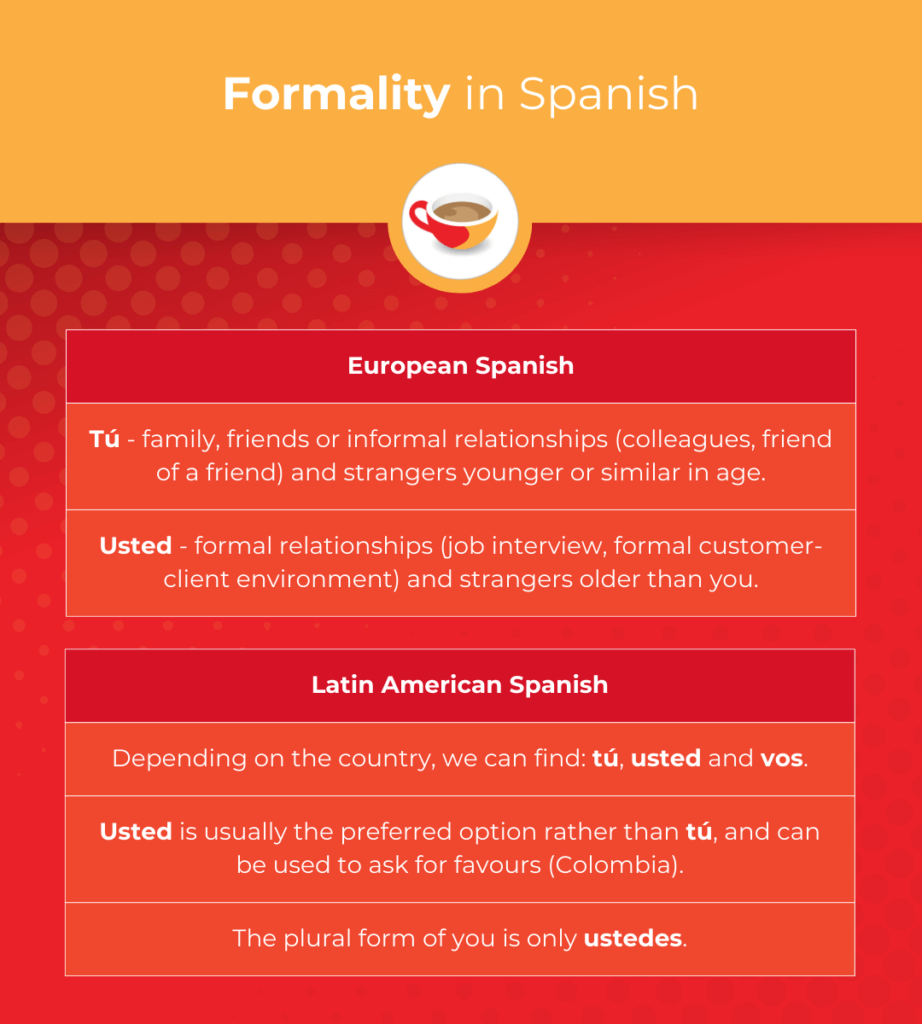
In European Spanish, in general, we use both  and usted, and there are actually verbs to describe both of these actions:

tutear
to use the tú form with 

ustedear
to use the usted form with

The use of one or the other will be determined by the context and how formal or informal the situation is. For example, we use when talking to people close to our age and with friends and family. We use usted when talking to strangers, especially if they are older than us, in order to show respect.

However, the lines aren’t always clear, so don’t worry! Here are some key points to remember:

  • Use with your colleagues and maybe managers if the relationship is informal.
  • With strangers, use with people younger or around your age.
  • In customer service we can find both and usted. is used when the brand looks for a more relaxed and friendly tone with their customers and usted if they prefer to show professionalism. Both are correct and it depends mainly on the company ethos.
  • As for the plural forms, to address more than one person, we use vosotros/as in all the situations where you would use tú with an individual, and we use ustedes in the situations where you would use usted with an individual.

What about in Latin America?

In Latin American Spanish, the diversity in usage is greater and it will depend on the country.

In some countries, the use of vos instead of is the preferred option, while in other countries Spanish speakers prefer usted over .

One thing all Latin American countries have in common is that the plural form tends to always be ustedes, and not vosotros/as in informal contexts.

Another specific usage to note is that in Colombia, we can use usted to ask for a favour or to talk dearly to someone:

Anabel, ¿puede llevarme a la estación de tren en coche, por favor?
Anabel, can you take me to the train station by car, please?

Another regional difference

If you have enjoyed learning about the local differences and uses of , usted and vos, you may like this!

In the west of Andalucía, Concha says in the episode that she uses ustedes instead of vosotros, but using the vosotros conjugation of verbs. This means that Concha would naturally say ustedes tenéis for “you have”. Qué interesante, ¿verdad?

Keep practising ‘tuteando’ and ‘ustedeando’

One important thing to keep in mind is that we don’t need to stress too much about all these differences. Native speakers will be able to understand what you mean! However, it’s always nice to learn about the cultural differences and the diversity we can find in the Spanish language.

If you found this post interesting, make sure to listen to the full episode with Concha and Anabel on The Coffee Break Spanish Show. This is the series in which we look at a range of topics for Spanish learners, so make sure to subscribe to our podcast feed and our channel on YouTube.

Plus! To get regular free Spanish lessons in your inbox, you can sign up for our short (coffee-break-sized) email lessons that will help you improve your Spanish. You will also hear from Mark, the founder of Coffee Break Languages, giving advice for language learners at any level. Sign up below!

Remember to keep practising using and usted when you are in a Spanish-speaking country, and listen out to hear how others do so. This is something you will get the hang of little by little and we’re sure that it will start to feel more instinctive in no time.

Happy Coffee Breaking

Listen to the podcast

A guide to forming questions in German

How do you ask questions in German?

Questions are essential to every conversation and will always be part of your interactions when visiting a German-speaking country.

So, read on, as we’re going to answer all your questions about forming questions in German!

The Coffee Break German Show is a podcast series of bite-sized, friendly conversations, in which we demystify tricky German language topics. In the latest episode, Mark and Thomas look at how to form questions in German, focusing on the different question words, as well as sentence structure.

Continue reading to find out more and why not listen to the podcast episode as you go?

Die W-Wörter

All question words in German begin with the letter w. We’ll look at each of these in turn.

Wann?

Wann? means “when?”. Let’s start by looking at some examples using this question word.

Wann öffnet das Museum?
When does the museum open?

Wann fährst du nach Slowenien?
When are you going to Slovenia?

You’ll notice that the question word, wann?, starts the sentence, then the verb is next to it, in second position. The subject is in the third position, after the verb:

question word > verb > subject

Was?

Was? means “what?”. For questions with was?, we follow a similar structure.

Was denkst du?
What do you think?

Wer?

Wer? means “who?”. This question word looks and sounds a little like “where” in English, but it means “who”.

Wer kommt zur Party?
Who is coming to the party?

In the above example the pattern is:

question word > verb > object (location)

Note that wer is functioning as the subject of the sentence in this case.

Wo?

Wo? means “where?”. For example:

Wo liegt die Kirche?
Where is the church?

Wo ist die Bäckerei?
Where is the bakery?

Woher?

Woher? means “from where?” or “where from?”. Let’s see an example:

Woher kommst du?
Where do you come from?

“Where” can sometimes be used in English where woher would be needed in German. The suffix -her can be detached and be placed at the end of a question. This does not change the meaning of the question at all:

Wo kommst du her?
Where do you come from?

Wohin?

Wohin? means “where to?”. For example:

Wohin fährst du?
Where are you going to?

Wohin fährst du in den Ferien?
Where are you going to in the holidays?

Wo cannot be used where wohin would be needed in German. As Thomas mentions in the podcast, there’s a handy trick. The suffix -hin can be detached and added at the end of a question:

Wo fährst du morgen hin?
Where are you travelling to tomorrow?

Wie?

Wie? means “how?”. Here are some examples:

Wie viel kostet das?
How much does that cost?

Wie geht’s dir?
How are you?

As Thomas mentions, wie can be combined with other words to form other questions besides “how”.

Wie spät ist es?
What time is it? (literally, “how late is it?”)

Warum?

Warum? means “why?”. Let’s see this in an example sentence:

Warum lernen wir Fragewörter?
Why are we learning question words?

Wieso can also be used to mean “why”, as can weshalb. There can be regional differences in which question words are used. For example, wieso is more common in the south of Germany.

Forming yes/no or closed questions

The word order changes slightly for this type of question, but there is no question word. The verb comes first, so the subject is next. For example, here’s a question that Coffee Break German learners will be very familiar with from the start of our lessons!

Bist du bereit?
Are you ready?

Let’s see how a previous example question can be altered to become a yes/no question:

Wann fährst du nach Slowenien? > Fährst du nach Slowenien? 
When are you going to Slovenia? > Are you going to Slovenia?

Here, the sentence structure is:

verb > subject > object (location)

A visual summary

Getting used to forming questions in German can take some time, but don’t worry, the more you practise and hear people having conversations the more natural questions will become.

If you found this post interesting, make sure to listen to the full episode with Mark and Thomas on The Coffee Break German Show. This is the series in which we look at a range of topics for German learners, so make sure to subscribe to our podcast feed or our channel on YouTube.

Plus! To get regular free German lessons in your inbox, you can sign up for our short (coffee-break-sized) email lessons that will help you improve your German. You will also hear from Mark, the founder of Coffee Break Languages, giving advice for language learners at any level. Sign up below!

Happy Coffee Breaking!
Listen to the podcast

CBP 1.17 | Shopping at the market – Portuguese fruits and vegetables vocabulary

In lesson 17 of Coffee Break Portuguese we’re taking what we learned in our previous lesson a stage further and continuing with the topic of shopping. This time, we’re at the market, and we’re applying some of the same language to a new context, as well as learning lots of new words for the food items you might find there and how to express quantities in Portuguese. We’ll also be joined by Catarina in today’s Cafezinho com Catarina, in which she tells us about a famous market in Lisbon.

How to say ‘can’ in Italian: potere, sapere, riuscire

Did you know that the English verb “can” can be translated into Italian in three different ways? Each of the three verbs brings its own twist to the concept of “can” – creating a painter’s palette of nuanced expressions!

The Coffee Break Italian Show is a podcast series of bite-sized, friendly conversations in which we demystify tricky Italian language topics. In the latest episode, Francesca and Mark guide us through this topic to understand these three verbs and discover how they transform the simple idea of “can”. They discuss the different uses of the three verbs and also their irregular conjugations.

Continue reading to find out more, and why not listen to the podcast as you go!

sapere

sapere – present tense:
so
sai
sa
sappiamo
sapete
sanno

This verb is used to talk about our abilities and skills that you have acquired. The idea is that there has been a learning process that has allowed you to know how to do something. Here are some examples to clarify this point:

Luca sa suonare il violino.
Luca can / knows how to play the violin.

So giocare a golf.
I can / know how to play golf.

I miei amici non sanno cucinare.
My friends can’t / don’t know how to cook.

potere

potere – present tense:
posso
puoi
può
possiamo
potete
possono

You should use this verb when you have the possibility of doing something or the permission to do something. As Francesca explains, the idea is that other people or some external factors affect your ability to do something. Let’s look at some examples:

Questa sera Anna può uscire perché non lavora.
Tonight, Anna can go out because she is not working.

Non posso mangiare i crostacei.
I can’t eat shellfish.

Notice the difference if we decide to use sapere for this last sentence:

Non so mangiare i crostacei.
I can’t eat shellfish (because I don’t know how to clean them, for example, rather than because of an allergy).

Potere is also a verb of politeness and it is used to make requests. For example:

Puoi prestarmi il motorino, per favore?
Can you lend me your moped, please?

riuscire

riuscire – present tense:
riesco
riesci
riesce
riusciamo
riuscite
riescono

Our last verb for today is riuscire, which conveys the idea of succeeding in doing something or managing to do something. It indicates that the person has made an effort to do something. For example, we would say:

riuscire a fare qualcosa
to manage to do something

As you can see there, when using this verb, it is important to remember that it is followed by a + an infinitive. Here are some examples:

Non riesco a trovare le chiavi.
I can’t find my keys (because I left them somewhere).

Luisa riesce sempre a sorprendermi.
Luisa always succeeds in surprising me.

Nuances of ‘sapere’, ‘potere’ & ‘riuscire’

We can see the nuances of these three verbs in Italian by changing the verb in this example:

Riesci ad aprire questa bottiglia?
Can you manage to open this bottle?

Puoi aprire questa bottiglia?
Can you / Are you allowed to open this bottle? (Maybe you’ve been saving it for some time for a specific occasion.)

Sai aprire questa bottiglia?
Can you / Do you know how to open this bottle? (Maybe it’s tricky to open because there is a specific way of opening it.)

A little test… Can you do it?

Here’s a final test to check if you have understood the difference between sapere, potere and riuscire! Can you identify the subtle difference in meaning between each sentence below? Think about what the context may be in each situation, then scroll down to the end of the article to find the answers.

  1. Non so guidare il camper.
  2. Non posso guidare il camper.
  3. Non riesco a guidare il camper.

Eccoci alla fine!

The next time you’re in Italy or engaging in an Italian conversation, remember these three useful verbs. They will not only enrich your language skills but also open doors to a better understanding of the nuances of the Italian language.

If you found this post interesting, make sure to listen to the full episode with Mark and Maurizio on The Coffee Break Italian Show. This is the series in which we look at a range of topics for Italian learners, so make sure to subscribe to our podcast feed or our channel on YouTube.

Plus! To get regular free Italian lessons in your inbox, you can sign up for our short (coffee-break-sized) email lessons that will help you improve your Italian. You will also hear from Mark, the founder of Coffee Break Languages, giving advice for language learners at any level. Sign up below!

Happy Coffee Breaking!
PS. Here are the answers to our test:

  1. Non so guidare il camper. I can’t / I don’t know how to drive the camper van. (I have never learned how to drive one.)
  2. Non posso guidare il camper. I can’t / I’m not allowed to drive the camper van. (I don’t have permission to do so, perhaps I don’t have the right licence or insurance policy to do so.)
  3. Non riesco a guidare il camper. I can’t / I’m not able to drive the camper van. (No matter how hard I try – perhaps it feels too big).

Listen to the podcast

Useful expressions with ‘avoir’

Which French expressions do you know that use the verb avoir? There are many to choose from! While avoir translates into English as “to have”, its use goes beyond possession and ownership, extending to sensations, emotions and age.

The Coffee Break French Show is a podcast series of bite-sized, friendly conversations in which we demystify tricky French language topics. In the latest episode, Mark and Max chat about the verb avoir and look at some common expressions in which avoir is used differently from “to have” in English.

French’s linguistic quirks make it fascinating and, at times, tricky for learners, so using avoir correctly is an important learning point.

Continue reading to find out more and why not listen to the podcast as you go?

Common expressions that use ‘avoir’

Let’s look at how avoir can be combined with various nouns to take on a variety of meanings that may not necessarily relate to possession or ownership.

Age

avoir _ ans
to be _ years old

In French, your age is something you “have”. For example:

J’ai 30 ans.
I am 30 years old.

To be hungry or thirsty

avoir faim
to be hungry

avoir soif
to be thirsty

When you’re hungry or thirsty, in French this is expressed as “having” the feeling of “hunger” or “thirst”. For example:

J’ai faim.
I am hungry.

J’ai soif.
I am thirsty.

To be hot or cold

avoir chaud
to be hot

avoir froid
to be cold

French speakers also use avoir to express temperature sensations. For example:

J’ai chaud.
I am hot.

J’ai froid.
I am cold.

To be right or wrong

avoir raison
to be right

avoir tort
to be wrong

In French, you don’t say that “you are right or wrong”. Instead, “you have reason or wrong”. Here’s an example:

Je pense qu’il a raison.
I think he is right.

To be scared

avoir peur de
to be afraid of, to be scared of

When it comes to fear, we also express this using avoir in French. Let’s look at an example:

J’ai peur des araignées.
I am afraid of spiders.

To be sleepy

avoir sommeil
to be sleepy

When you’re feeling sleepy, you don’t say that “you are sleepy” in French, rather, “you have sleepiness”.

J’ai sommeil ce soir.
I’m sleepy tonight.

To need something

avoir besoin de
to need

To express that you need something in French, we literally say that “you have need of” whatever it is. For example:

J’ai besoin de deux kilos de pommes.
I need two kilograms of apples.

To want or feel like something

avoir envie de
to want, to feel like

We can also express a desire or craving for something using an avoir expression in French. Note that avoir envie de can be followed either by a verb (in the infinitive form) or a noun. Here’s an example:

Tu as envie de manger une tarte aux pommes ?
Do you feel like eating an apple pie?

A little challenge

Let’s see if you can remember some of these expressions we’ve talked about. Here are three sentences for you to translate into French, using avoir expressions:

  1. My mother is always right.
  2. I needed five more minutes.
  3. It’s 3 am and I am not sleepy.

Once you have your answers, scroll down to the bottom of the page to see how you got on.

In conclusion

As we’ve seen, the use of avoir in French very often cannot be translated into English as “to have”. Combined with different nouns, its meaning can range from sensations, to emotions and even age.

While these nuances may initially leave learners a little perplexed, don’t worry, you’ll get used to them. Ultimately, they add depth and character to the language, so the next time you encounter avoir, enjoy the thought that this little word can be used for expressing such a wide range of human experiences!

If you found this post interesting, make sure to listen to the full episode with Mark and Max on The Coffee Break French Show. This is the series in which we look at a range of topics for French learners, so make sure to subscribe to our podcast feed and our channel on YouTube.

Plus! To get regular free French lessons in your inbox, you can sign up for our short (coffee-break-sized) email lessons that will help you improve your French. You will also hear from Mark, the founder of Coffee Break Languages, giving advice for language learners at any level. Sign up below!

Happy Coffee Breaking!

PS. Here are the answers to the challenge:

  1. My mother is always right. Ma mère a toujours raison.
  2. I needed five more minutes. J’avais besoin de cinq minutes de plus.
  3. It’s 3 am and I am not sleepy. Il est trois heures du matin et je n’ai pas sommeil.

Listen to the podcast

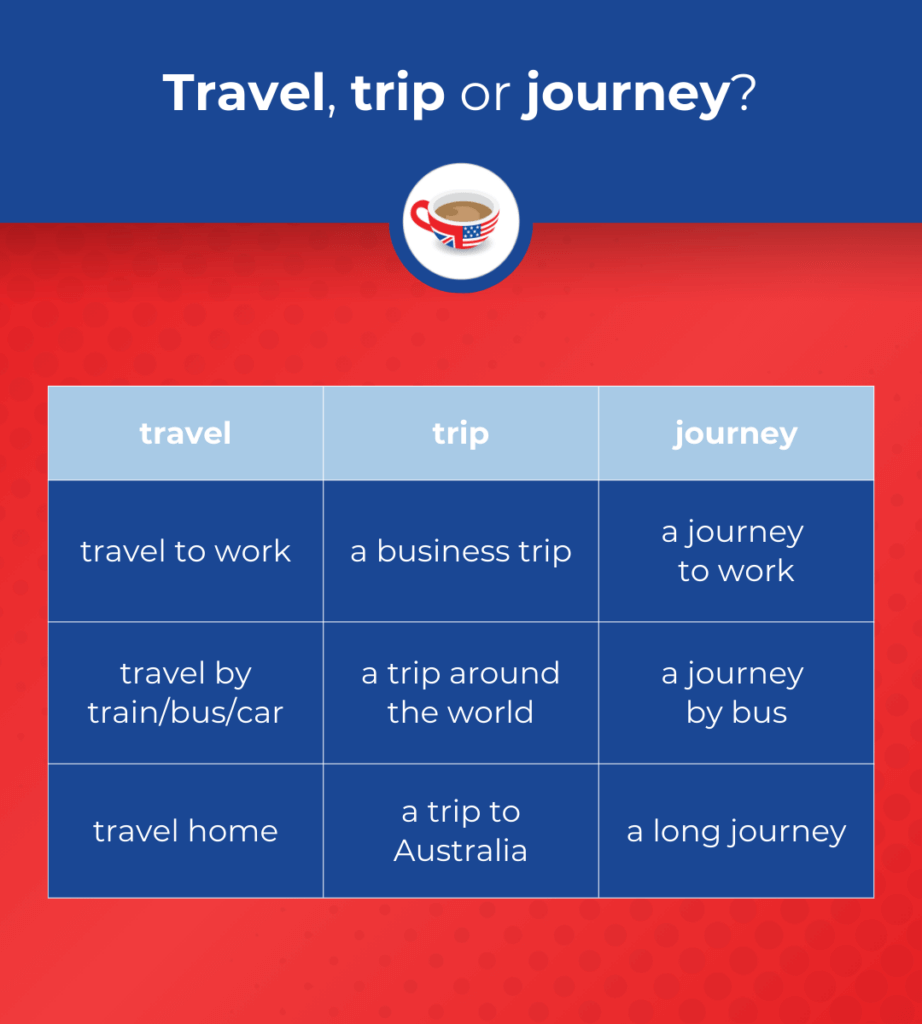
When do I use ‘travel’, ‘trip’ and ‘journey’?

Do you know the difference between the words travel, trip and journey? They all have similar meanings, so it’s easy to confuse them!

The Coffee Break English Show is a podcast series of bite-sized, friendly conversations to help you understand some difficult topics in English. In the latest episode, Mark and Josie talk about when to use travel, trip and journey correctly.

Continue reading to find out more and why not listen to the podcast as you go?

So, let’s get started and look at the words travel, trip and journey.

Travel

Travel is a verb. It describes the action of going to a place.

Here are some examples using travel:

They travelled to London by train.

I’m going to travel to Australia this summer.

Top tip: we can often replace travel with go.

Travel is usually a verb, but not always. The word travels describes the action of visiting different places, and we can replace it with adventures. We use travels in the expressions go on your travels and be off on your travels. For example:

Now that my daughter has finished high school, she’s off on her travels.

When are you going on your travels in Europe?

Journey

Journey is a noun. It describes the action of travelling from one place to another place. For example:

Mark’s journey to work takes 20 minutes.

I am exhausted after my long bus journey.

Have a safe journey home!

Trip

Like journey, trip is also a noun. It describes the process of travelling to a place, doing things in that place, and travelling back home again. We use trip in the expressions take a trip and go on a trip. For example:

She’s going on a business trip to Thailand.

We’re taking a trip to Greece this summer.

Let’s practise!

Now, let’s practise! Here are five sentences. Complete the spaces with travel, trip, or journey. The answers are at the end of this blog post, but don’t look until you’ve thought about the answers!

  1. I ___ to work by train.
  2. It was a really long car ___.
  3. I’d love to go on a ___ around the world.
  4. How long will the ___ to Rome take?
  5. My brother is on a work ___ this week.

Happy Coffee Breaking!

If you found this post interesting, make sure you listen to the full podcast episode with Mark and Josie on The Coffee Break English Show. We will release more episodes soon, about some more useful topics! Subscribe to our podcast feed and our channel on YouTube to learn when the next episode is available.

Plus! To get regular free English lessons in your inbox, you can sign up for our email lessons. We regularly send short (coffee-break-sized) email lessons that will help you improve your English. You will also hear from Mark, the founder of Coffee Break Languages, giving advice for language learners at any level. Sign up below!

So, keep practising when to use travel, trip, and journey! Remember that all English learners make mistakes, but people can usually still understand you. It’s all part of the language-learning journey.

Happy Coffee Breaking!

PS. Here are the answers to the questions:

  1. I travel to work by train.
  2. It was a really long car journey.
  3. I’d love to go on a trip around the world.
  4. How long will the journey to Rome take?
  5. My brother is on a work trip this week.

Listen to the podcast

How to use ‘me gusta’ in Spanish

Me gusta el español may be one of the first sentences we learn when we start studying Spanish. However, gustar can be a tricky verb to use!

In fact, “how do you say that you like something?” is one of the questions we get asked the most by our Coffee Break Spanish community. That’s why in the latest episode of The Coffee Break Spanish Show Mark and Concha are chatting about how the structure me gusta works and teaching us how to use it in different tenses and situations.

The Coffee Break Spanish Show is a podcast series of bite-sized, friendly conversations in which we demystify tricky Spanish language topics, and we hope that after listening to the episode and reading this article you’ll be confident using the verb gustar in many different situations.

Continue reading to find out more and why not listen to the podcast as you go?

Me gusta

Verbs like gustar (used to talk about liking things) or encantar (used to talk about loving things) are back-to-front verbs when we compare the structure to English. Let’s take an example:

Me gusta el café.
I like coffee.

Yes, this means “I like coffee”, but its literal meaning is “to me (me) it pleases (gusta) the coffee (el café)”. Or, in other words, “coffee pleases me” = me gusta el café.

Understanding this structure is key to using the verb properly, because the verb is conjugated according to what is pleasing to us or what we like.

That might sound a bit obscure, so here are three examples where we can see how it is used in different situations:

me gusta + singular noun

e.g. Me gusta la manzana.
I like the apple.

me gustan + plural noun

e.g. Me gustan las tazas.
I like the mugs.

me gusta + verb (infinitive)

e.g. Me gusta estudiar español.
I like studying Spanish.

As you can see in the second structure, when we have a plural noun (tazas – “mugs”), instead of using me gusta (gustar in the third person singular form) we use me gustan (in the third person plural form). Remember that in Spanish we are saying “something pleases me”. When that something is a plural noun (as is the case with tazas), we are therefore saying “they please” (gustan), rather then “it pleases” (gusta).

‘Gustar’ in different tenses

Now, let’s take this a stage further and try using gustar in different tenses. How would you say the following sentences in Spanish?

I have liked them a lot.

I liked them a lot.

You will like them.

You are going to like them.

Think about them for as long as you need to, then check the answers below:

I have liked them a lot.

Here, we are using the perfect tense:
Me han gustado mucho.

I liked them a lot.

Now, we are using the preterite tense.
Me gustaron mucho.

You will like them.

Using the future tense, this would be:
Te gustarán mucho.

You are going to like them.

Here, we use the structure ir a + infinitive, and here we have two possible options. In the first option, the pronoun (te) goes before the van a gustar structure. In the second option, the pronoun goes after and is attached to the infinitive. Both are correct and there’s no difference in meaning:
Te van a gustar mucho. / Van a gustarte mucho.

How to say “I like you”

We have seen how to use gustar in different tenses and structures, so now, can you guess how “I like you” is expressed in Spanish?

Since we are literally saying “you please me”, this would be me gustas (tú), where the verb is conjugated according to the subject, . Remember that the subject pronoun is optional, as usual in Spanish.

To ask somebody “do you like me?”, you would say ¿te gusto?, literally meaning “do I please you?”

Note that using gustar in this way suggests liking someone in a romantic way.

“I like you” – with friends

If you want to say you like someone, but not in a romantic way, we use caer bien in Spanish. ¡Ojo! Caer is an irregular verb in some tenses. Let’s look at some examples:

La novia de mi hermano me cae bien.
I like my brother’s girlfriend
 (literally, “my brother’s girlfriend falls well to me”).

Los vecinos no me cayeron bien.
I didn’t like the neighbours.

Translation challenge

Let’s put what we’ve learned to the test. How would you say the following sentence in Spanish? Try translating it using gustar first, then using caer bien, and think about how the meaning changes with each verb. You can find the answers at the end of this article. Here’s your translation challenge:

At the beginning I didn’t like you, but now I like you very much.

Conclusion and answers

If you found this post interesting, make sure to listen to the full episode with Mark and Concha on The Coffee Break Spanish Show. This is the series in which we look at a range of topics for Spanish learners, so make sure to subscribe to our podcast feed and our channel on YouTube.

Plus! To get regular free Spanish lessons in your inbox, you can sign up for our short (coffee-break-sized) email lessons that will help you improve your Spanish. You will also hear from Mark, the founder of Coffee Break Languages, giving advice for language learners at any level. Sign up below!

Happy Coffee Breaking!

PS. Here are the translations of the sentence:

Using caer bien:
Al principio no me caíste bien, pero ahora me caes muy bien.
You would use this when talking to a friend or an acquaintance.

Using gustar:
Al principio no me gustabas, pero ahora me gustas mucho.
You would use this when talking to somebody you are romantically interested in.

Listen to the podcast

Everything you need to know about the German umlaut

As you may already know, the umlaut in German is the two small dots that can be used above the letters aand u. But when and why do we use an umlaut? And how does the umlaut change the sound of the letter?

The Coffee Break German Show is a podcast series of bite-sized, friendly conversations in which we demystify tricky German language topics. In the latest episode, Mark and Thomas look at exactly how to pronounce letters with an umlaut and they chat about its different uses.

Continue reading to find out more and why not listen to the podcast as you go?

How did umlauts evolve?

It is said the umlaut came about through laziness! Thomas describes them as “vowel harmonies”. Basically, words that had an a, o or u alongside the letter i were difficult to pronounce and over time these letter combinations became ä, ö and ü.

One example of such an evolution in spelling is in the word for “goose”, Gansi > Gänse.

Pronunciation

There are three letters that can be written with the umlaut in German. Let’s tackle them one by one.

‘a’ with an umlaut: ä

Let’s take a look at the ä sound. It is pronounced like the e sound in the English word “egg”. Though beware – different accents in English pronounce such words differently! Here are some examples of the umlaut in action:

Äpfel
apples

Hände
hands

ähnlich
similar

Käfer
bug, beetle

Of course, there are often exceptions to a rule. The ä sound in the following words has a slightly different pronunciation. To perfect these words, listen carefully to Thomas in the episode and really focus on the pronunciation.

Käse
cheese

Mädchen
girl

Allgäu
an area in Germany

Mäuse
mice

A little note about that last example: it is quite common in German to have a word of only one syllable in the singular, for example Maus (“mouse”), which adds an umlaut in the plural, as well as the -e at the end, in this case becoming Mäuse (“mice”).

‘o’ with an umlaut: ö

Now, let’s look at the sound created by ö. It can be pronounced as a short sound. You can hear these examples in the episode:

öffnen
to open

können
to be able to

In some words, the ö sound is longer. This can be heard in:

Öl
oil

schön
beautiful

‘u’ with an umlaut: ü

Next, we’ll look at ü, which you can pronounce by making an “ee” sound in English, but then pursing your lips. Thomas gives a great demonstration of this in the episode. Here are some examples of words containing ü:

fünf
five

Müll
rubbish

Tür
door

üben
to practise

übertrieben
over the top

Note that in the first two examples above the ü has a short sound, but in the last three it has a longer sound.

By the way, the last word is one that Thomas used at the start of the episode to describe how excited he was about this topic!

What else do we need to know about umlauts?

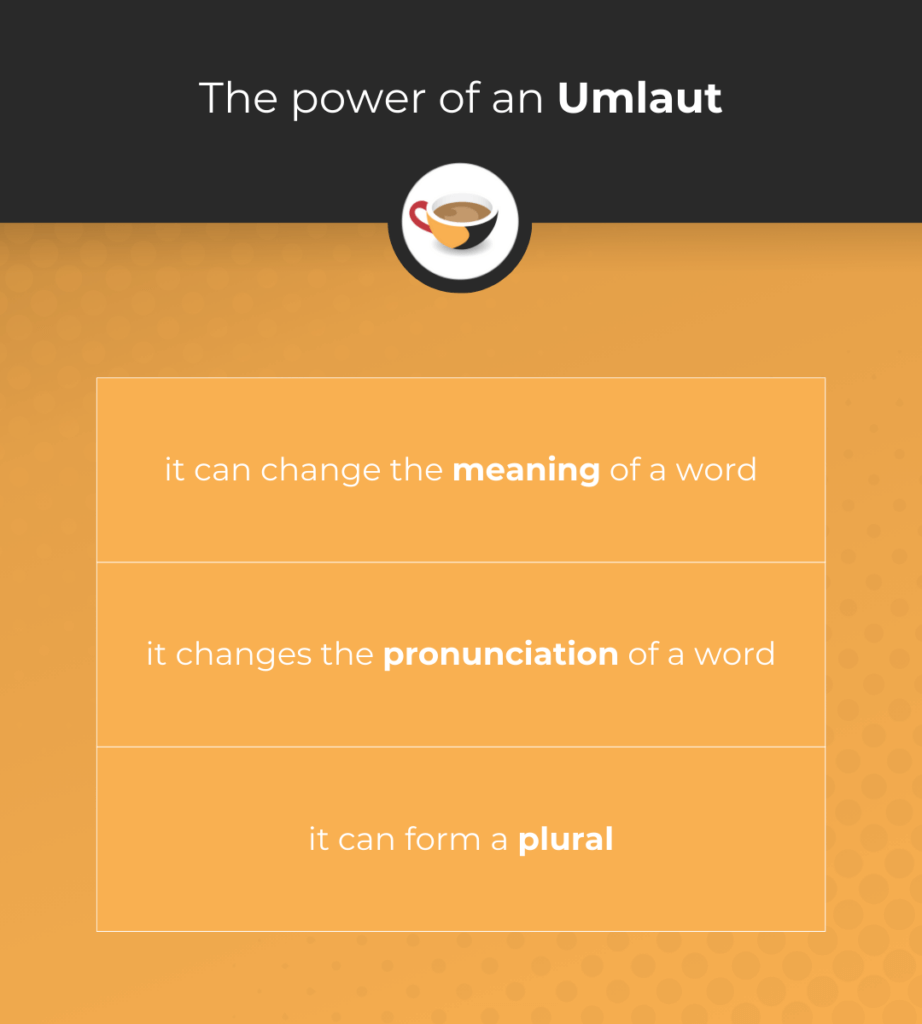
It is essential to take note that where an umlaut is found can make a difference not only to the sound of a word, but its meaning, too.

One example is that the word schon means “already”, but schön means “beautiful”. It is only the addition of the umlaut that distinguishes the two words from one another, yet it changes the meaning significantly.

Adding an umlaut can create a plural noun

As we’ve seen, adding an umlaut is often how the plural of a noun is formed, particularly for single-syllable nouns. Here are some more examples:

Maus > Mäuse
mouse > mice

Haus > Häuser
house > houses

Hand > Hände
hand > hands

Zug > Züge
train > trains

Adding an umlaut to form the comparative

When changing an adjective into the comparative form, an umlaut is often added to create that form. For example:

groß > größer
big > bigger

arm > ärmer
poor > poorer

It is often the case that one-syllable adjectives form the comparative by adding an umlaut (similar to one-syllable nouns). Obviously, the comparative adds the –er ending as well as adding the umlaut.

Umlauts in conjugated verbs

Often, when a verb is conjugated in the present tense, an umlaut is added. Thomas mentions the verb that was the focus of a previous episode in this series, fahren. Previously, we looked at when to use fahren and when to use gehen to translate “to go”, but now let’s see how different parts of the verb are spelled differently, involving an umlaut:

ich fahre
du fährst
er/sie/es fährt
wir fahren
ihr fahrt
Sie/sie fahren

A visual summary

We hope that you now know how and when to use an umlaut in German. If you’re unsure of how to type letters with umlauts on your keyboard, scroll down to take a look at our tips.

If you found this post interesting, make sure to listen to the full episode with Mark and Thomas on The Coffee Break German Show. This is the series in which we look at a range of topics for German learners, so make sure to subscribe to our podcast feed or our channel on YouTube.

Plus! To get regular free German lessons in your inbox, you can sign up for our short (coffee-break-sized) email lessons that will help you improve your German. You will also hear from Mark, the founder of Coffee Break Languages, giving advice for language learners at any level. Sign up below!

Remember to bookmark this article so that you can refer back to it for help with the pronunciation and uses of the umlaut. We’ll be back soon with another interesting German language topic.

Happy Coffee Breaking!

How to type an umlaut on your keyboard

Finally, here is our guide on how to type an umlaut when you are writing on a keyboard or phone.

This, of course, depends on which operating system you use. As Thomas says, if you have a German keyboard, it’s easy as there is an umlaut key on the keyboard.

If you are using a Mac:

  1. Hold down the option/alt key + u, which gives the umlaut.
  2. Then release the keys and type the letter over which you want the umlaut (a, o or u).

If you are using a PC, it’s a little more complicated. Different systems have their own shortcuts, but there is one fail-safe option:

  1. Hold down the Windows key + r to open the Run dialog box, then type in “charmap” and press enter. The character map box should appear.
  2. Double click on the character you want to copy so that it appears in the text box.
  3. Click on “copy” to copy the character, then you can paste it anywhere with the ctrl + v shortcut.

With most smartphones, hold down the letter to which you want to add the umlaut and options will appear. Scroll or swipe along to select the one you want to use.

If you are unable to use any of these options, you can write the letter e after the a, o or u. This option will give the same sound as using an umlaut so it will be understood by readers.

Listen to the podcast

5 rules for when to use ‘a’ and ‘in’ in Italian

Going to a café can be a great opportunity to sit down and listen to one of our Coffee Break Italian podcasts with a nice cup of coffee or tea. In this article we’re talking about prepositions, so do you know which preposition you’d use in Italian to talk about going to a café or being in a café?

The Coffee Break Italian Show is a podcast series of bite-sized, friendly conversations in which we demystify tricky Italian language topics. In the latest episode Mark and Maurizio talk about prepositions and, in particular, when to use a and when to use in.

These prepositions can describe both being in a location and motion towards a place. Depending on how they are used in a sentence, a and in could be translated into English as “in”, “at” or “to”.

If this sounds confusing just now, don’t worry! In the episode, Maurizio gives us five rules to help us remember when to use these prepositions.

Read on to find out more, and why not listen to the podcast as you go?

Rule 1: use ‘a’ with cities

In Italian, the preposition a is used to describe both being in a city and going to a city. Let’s look at some examples:

Sono a Londra.
I’m in London.

Vado a Londra.
I go to London.

Abito a Roma.
I live in Rome.

Tommaso va spesso a Dublino.
Tommaso often goes to Dublin.

Rule 2: use ‘in’ with countries

The preposition in is used to talk about location and motion when it comes to bigger geographical areas, such as continents, countries, states, and regions. For example:

Tommaso va spesso in Irlanda.
Tommaso often goes to Ireland.

Oggi ci troviamo in Oregon.
Today, we are in Oregon (literally, “we find ourselves in Oregon’”).

Mi piace viaggiare in Asia.
I like travelling in Asia.

Vivete in Piemonte o in Liguria?
Do you (plural) live in Piedmont or in Liguria?

Rule 3: use ‘in’ with rooms

We also use the preposition in with rooms. Again, it can mean either “in” or “to”, depending on the context. For example:

Sto andando in cucina per preparare il pranzo.
I’m going to the kitchen to make lunch.

Vado in bagno.
I’m going to the bathroom.

Siamo in classe.
We’re in class.

Andiamo in cucina.
We go to the kitchen.

Dormiamo in camera da letto.
We sleep in the bedroom.

Rule 4: use ‘in’ with buildings

When you’re talking about being at or going to a building, you should use the preposition in. Let’s look at these examples:

Andiamo in chiesa.
We go to church.

I miei figli vanno in palestra.
My children go to the gym.

Ora sono in banca.
I’m at the bank now.

Lavorano in ufficio.
They work at the office.

We also use in when talking about places ending in -ia or -teca:

Andiamo in biblioteca.
We go to the library.

Mangiamo in pizzeria.
We eat at the pizzeria.

Rule 5: rules have exceptions!

Mark and Maurizio also mention other phrases with a and in that don’t really follow the previous rules.

Despite being a building, we always use the preposition a when we are talking about a house or home. So, a casa can mean both “in the house” and “to the house”. For example:

Sei già a casa?
Are you already home?

Other similar exceptions are school and theatre – a scuola, for example, meaning both “at” or “to the school”, and a teatro, meaning “at” or “to the theatre”. Here are some examples:

Sei ancora a scuola?
Are you still at school?

Andiamo a teatro stasera.
We’re going to the theatre tonight.

Andiamo al teatro alla Scala.
We’re going to La Scala theatre.

Another tricky one is when you go to bed. We mentioned that we say in camera da letto. However, for being “in” or going “to bed” we say a letto.

Sono a letto.
I’m in bed.

Finally, Mark and Maurizio mention some specific phrases with in in relation to going on holiday:

andare in vacanza
to go on holiday

andare in montagna
to go to the mountains

essere in spiaggia
to be at the beach

andare in campagna
to go to the countryside

essere in hotel / albergo
to be in the hotel

A visual summary and a challenge!

Siamo pronti? Let’s see if you can translate the following sentences:

Right now, I’m in the office in Milan, in Lombardy, in Italy, in Europe.
Tomorrow, I’ll be on holiday in Palermo, in Sicily, in the hotel or at the beach!

The answers are at the end, but no peeking until you have noted down your translations!

Conclusion and answers

If you found this post interesting, make sure to listen to the full episode with Mark and Maurizio on The Coffee Break Italian Show. This is the series in which we look at a range of topics for Italian learners, so make sure to subscribe to our podcast feed or our channel on YouTube.

Plus! To get regular free Italian lessons in your inbox, you can sign up for our short (coffee-break-sized) email lessons that will help you improve your Italian. You will also hear from Mark, the founder of Coffee Break Languages, giving advice for language learners at any level. Sign up below!

Other than that, keep practising when to use in and a! Mastering prepositions can make a complete change to how you sound in a language and will help you be much more confident when you next travel to Italy. However, don’t worry if you make mistakes – you’ll still be understood, even if you get your prepositions wrong. The most important thing is to make the effort to communicate.

Happy Coffee Breaking!

PS. Here are the answers to the challenges:

Right now, I’m in the office in Milan, in Lombardy, in Italy, in Europe.
Adesso sono in ufficio a Milano, in Lombardia, in Italia, in Europa.

Tomorrow, I’ll be on holiday in Palermo, in Sicily, in the hotel or at the beach!
Domani sarò in vacanza a Palermo, in Sicilia, in albergo o in spiaggia!

PPS. We opened this article with the question of how to talk about going to a café and being in a café. In Italian, both “to the café” and “in the café” would be translated as al caffè.

Listen to the podcast

Converse in French like a native: choosing ‘tu’ or ‘vous’

Learning a new language comes with its own set of interesting challenges, and for learners of French, one of these challenges is knowing when to use the informal tu and when to use the formal vous, especially if your native language is one which only has one word for “you”.

Mastering this nuance, however, is important to help you converse in French like a native. This subtle distinction can greatly affect the way you communicate with others and is a crucial aspect of French etiquette.

The Coffee Break French Show is a podcast series of bite-sized, friendly conversations in which we demystify tricky French language topics. In the latest episode, Mark and Max explore the key points related to the use of tu and vous, shedding light on the rules, the exceptions and the social context that surrounds this linguistic choice.

In this article, we are going to look at the tips they give us to be able to confidently hold a conversation in French, choosing whether to go with the informal tu or the formal vous.

Continue reading to find out more and why not listen to the podcast as you go?

‘Tu’ or ‘vous’?

Before we get into when to use tu and when to use vous, we should say that while it’s an important and interesting topic for French learners, don’t get too hung up on it! The most important thing is that you are using your French to communicate, and if you use the “wrong” word for “you”, people will understand you’re a learner and will just be happy that you’re practising your French with them.

Now, let’s get into our topic. One of the fundamental distinctions in French language usage is between tu and vous. The choice between these two forms of address is not arbitrary, but rather dictated by politeness and respect.

‘Vous’: a matter of politeness and respect

  • Use vous when you want to convey politeness and maintain a certain distance in your conversation.
  • Address older individuals, people in professional settings (e.g. restaurants, shops) and strangers with vous.
  • It is a common choice when interacting with people you don’t know well or who hold a certain level of authority.

‘Tu’: reserved for family and friends

  • Reserve tu for close relationships, such as family and friends, and when addressing children.
  • The use of tu indicates a more intimate and friendly level of communication.

The plural “you”

  • When speaking to two or more individuals simultaneously, always use vous.
  • This rule takes precedence over other considerations, so vous is used in both formal and informal situations to refer to a plural “you”.

‘Tutoyer’: a checkpoint in friendship

Transitioning from using vous to tu can be a significant moment in a relationship. It reflects a closer, more intimate bond between individuals.

Often, friends in the making ask each other on se tutoie ? to establish whether they should switch to using tu. This question uses the verb tutoyer, which means “to use the tu form with”. Vouvoyer, on the other hand, means “to use the vous form with”.

Key phrase: On se tutoie ? Shall we use the tu form with each other?

Some anecdotes

To better understand the nuances of using tu and vous in French, in this episode Mark and Max share some personal anecdotes with us, which highlight how choosing between tu and vous can be dictated by the context, even between the same two people.

Social context can influence choice

Mark tells us that he once attended a work event in France where he initially used vous during the day when interacting with colleagues. However, in the relaxed atmosphere of a restaurant later on in the evening, they switched to tu. The next day, back in the formal setting of the conference, they returned to using vous. This demonstrates how context can influence your choice.

Max talks about his teacher at school, who was also the father of a football teammate. In the classroom, he addressed the teacher as vous, but used tu when interacting on the football pitch. This example underscores how the social context can govern whether to use tu or vous.

A sign of growing up!

Max explains that, in French culture, the first time someone addresses you with vous is often seen as a moment of growing up or becoming more mature. This typically happens around the time when teenagers start to transition into adulthood.

A visual summary

Before we go, there’s one last thing to mention about tu and vous, which may have already occurred to you if you watched or listened to episode 1 of our series, and that is pronunciation! In episode 1, Mark and Max discussed the difference between the vowel sounds u and ou in French, so make sure to differentiate between the u in tu and the ou in vous. If you haven’t already seen it, you can find that episode here, and you can practise your u and ou vowels just by saying the two words for “you”!

Mastering the distinction between formal and informal language will make your experience of speaking French richer and more complete. For example, the transition from vous to tu can be a meaningful checkpoint in developing closer, more intimate relationships with native speakers.

So, whether you find yourself addressing a new acquaintance with vous or using tu with a close friend, you’re now equipped to make the right choice in your French conversations. Embracing these language subtleties will enhance your ability to connect with French speakers and immerse yourself more deeply in their culture.

If you found this post interesting, make sure to listen to the full episode with Mark and Max on The Coffee Break French Show. In this series of chats between our language experts, we look at a range of topics for French learners, so make sure to subscribe to our podcast feed and our channel on YouTube.

Plus! To get regular free French lessons in your inbox, you can sign up for our short (coffee-break-sized) email lessons that will help you improve your French. You will also hear from Mark, the founder of Coffee Break Languages, giving advice for language learners at any level. Sign up below!

Finally, while it may seem daunting at first, remember that with practice and experience it will become more natural. In the meantime, making mistakes is normal and native speakers will always be happy to hear you make the effort.

Happy Coffee Breaking!

Listen to the podcast

The present simple and present continuous: ‘I work’ or ‘I am working’?

Do you know the difference between I work and I am working in English?

This can be a challenging topic for English learners, especially because many languages just have one present tense.

The Coffee Break English Show is a podcast series of bite-sized, friendly conversations to help you understand some difficult topics in English. In the latest episode, Mark and Josie talk about the difference between the present simple and the present continuous tenses.

They explain the rules for when to use these tenses, so hopefully this will help you understand them better.

So, let’s get started and look at the present simple and present continuous tenses. Keep reading to find out more and why not listen to the podcast as you go?

Present simple

I work is the present simple tense. Here is the verb work conjugated in the present simple:

I work
you work
he/she/it works
we work
they work

I don’t work
you don’t work
he/she/it doesn’t work
we don’t work
they don’t work

When to use the present simple

Now that we know the structure of the present simple, do you know when to use it?

We use the present simple when we talk about habits, routines, and things that are always true. For example, when we are talking about someone’s permanent job or career. Here are some examples:

I work as a teacher.

She works as a bus driver.

They work from home.

Present continuous

I am working is the present continuous tense. Here is the verb work conjugated in the present continuous:

I am working
you are working
he/she/it is working
we are working
they are working

I’m not working
you aren’t working
he/she/it isn’t working
we aren’t working
they aren’t working

When to use the present continuous

We use the present continuous tense when we talk about temporary actions, or actions that are happening as we are speaking or at the present moment. For example:

I’m working, so I can’t talk right now.
= action happening in the present moment

She usually works in the office, but she’s working at home this week.
= temporary action

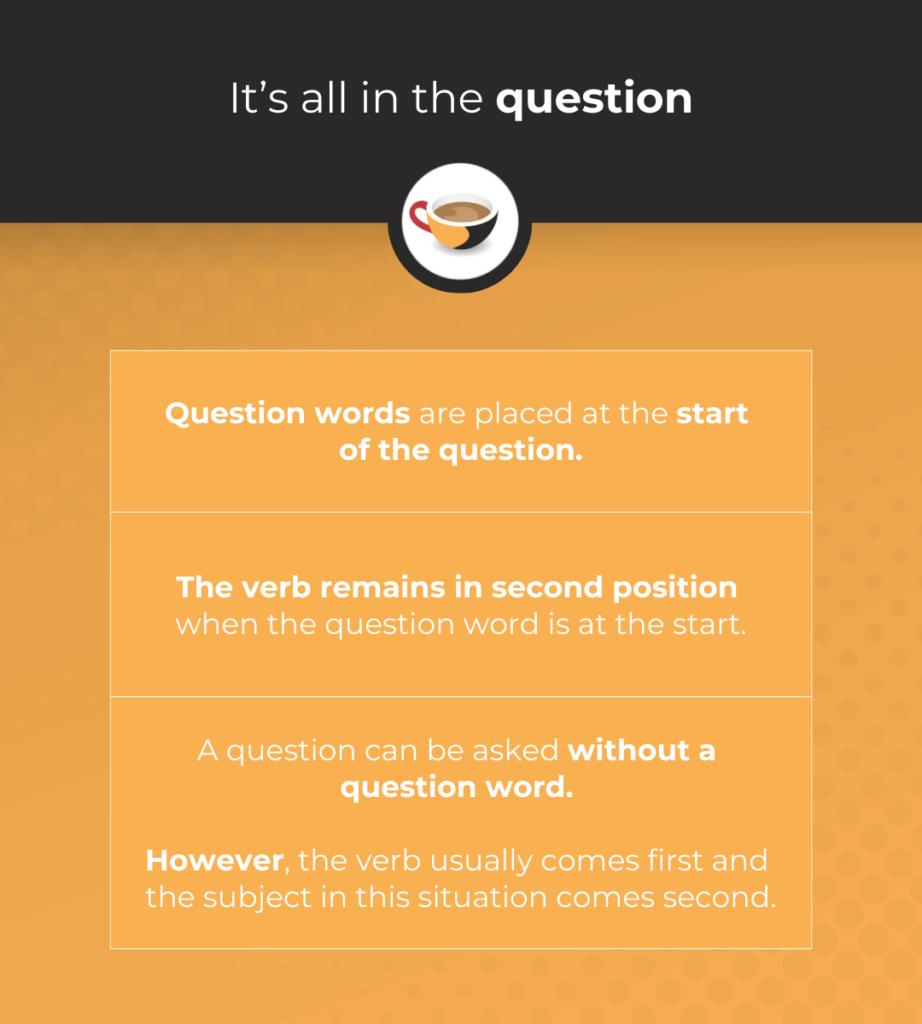
Let’s compare

Here are some more examples where you can see the difference between the present simple and the present continuous:

I’m drinking coffee now.
I drink coffee every day.

We are speaking English at the moment.
Josie also speaks French.

I go to the cinema once a month.
This podcast is going very well!

The exception: state verbs

So far, so good! However, there are some verbs that we don’t usually use in the present continuous tense. These are called “state verbs”.

State verbs usually describe internal things like senses, emotions, and possession. So, even when we are talking about temporary actions, or actions that are happening at the present moment, we have to use the present simple, not the present continuous. For example:

I am being happy right now.
I am happy right now.

I am knowing the answer.
I know the answer.

He is wanting a coffee.
He wants a coffee.

There are lots of state verbs, so it’s a good idea to do some more research and learn some more.

Let’s review

If you found this post interesting, make sure you listen to the full podcast episode with Mark and Josie on The Coffee Break English Show. We will release more episodes soon, about some more useful topics! Subscribe to our podcast feed and our channel on YouTube to learn when the next episode is available.

Plus! To get regular free English lessons in your inbox, you can sign up for our email lessons. We regularly send short (coffee-break-sized) email lessons that will help you improve your English. You will also hear from Mark, the founder of Coffee Break Languages, giving advice for language learners at any level. Sign up below!

Happy Coffee Breaking!
Listen to the podcast

When to use ‘el’ with feminine nouns

Have you ever wondered why there are some feminine nouns that use the masculine definite article el? You may be thinking of examples like el aguael hambre or el aula.

You probably already know that when it comes to grammatical gender in Spanish, nouns can either be masculine or feminine. Masculine nouns use the word el to mean “the” in the singular form, while feminine nouns typically use la. So, what is happening with words like el agua?

The Coffee Break Spanish Show is a podcast series of bite-sized, friendly conversations in which we demystify tricky Spanish language topics. In the latest episode, Mark and Anabel look at a selection of words that take the article el despite actually being feminine nouns. By the end of this episode, you’ll know exactly how to use these nouns with any article or adjective, and see that it’s not as complicated as it may seem at first!

Continue reading to find out more and why not listen to the podcast as you go?

Is ‘agua’ masculine or feminine?

One of the most common mistakes when it comes to noun gender in Spanish comes with words like agua (“water”), hambre (“hunger”), or aula (“classroom”) – some of the first words you may learn in the language!

You have probably learned to write el agua, el hambre and el aula, and you are not wrong! The issue comes when you assume they are masculine nouns or they always use masculine articles, because that’s not the case.

¿Qué está pasando entonces? Feminine nouns starting with a stressed a sound follow some very special rules.

When a feminine singular noun starts with a stressed a, we use el, un, algún and ningún before them.

For example:

el agua
the water

un agua
a water

algún agua
some water

ningún agua
no water

When the noun is in its plural form, we use the feminine form of the article.

For example:

las aguas
the waters

unas aguas
a few waters

algunas aguas
some waters

ningunas aguas
no waters

It’s important to keep in mind that we only use the masculine form with these nouns when we use el, un, algún and ningún before the noun. As you can see, we use the feminine form of the articles when using the plural form.

Take a look at these further examples and notice that esta, mucha and nuestra are in their feminine singular form – back to what you would expect with a feminine noun like agua.

esta agua
this water

mucha agua
a lot of water

nuestra agua
our water

¡Ojo! If we want to say “all the water”, it should be toda el agua, where the feminine form is used in toda, but we keep the masculine article el.

Indeed, when this type of noun is combined with an adjective, the adjective agrees in gender with the noun, even when using a masculine article. For example:

el agua fría
the cold water

However, if we move the adjective before the noun, then we have:

la fría agua
the cold water

In summary, el agua, el hambre and el aula might look like masculine nouns at first, but it is only to help pronunciation – in reality, they are all feminine nouns. The best way to get your head around this is to put it into practice.

Let’s practise!

Translate the following phrases into Spanish. For each one, we’ve given you the noun in brackets. You can find the answers and an explanation at the end of this article.

  1. open area (área)
  2. the bald eagle (águila)
  3. some white wing (ala)
  4. the best water (agua)
  5. the small classroom (use aulita (aula + ita) for “small classroom”)

Conclusion and answers

If you found this post interesting, make sure to listen to the full episode with Mark and Anabel on The Coffee Break Spanish Show. In this series of chats between our language experts, we look at a range of topics for Spanish learners, so make sure to subscribe to our podcast feed and our channel on YouTube.

Plus! To get regular free Spanish lessons in your inbox, you can sign up for our short (coffee-break-sized) email lessons that will help you improve your Spanish. You will also hear from Mark, the founder of Coffee Break Languages, giving advice for language learners at any level. Sign up below!

Finally, remember that when it comes to noun gender, while it’s useful to learn the rules and can help to give you more confidence when speaking, you’ll be easily understood even if you make mistakes!

We’ll be back soon with another interesting Spanish language topic. Until then, happy Coffee Breaking!

PS. Here are the answers to the challenges:

  1. open area (área) – área abierta
    Área
    is a feminine noun.
  2. the bald eagle (águila) – el águila calva
    Águila
    is a feminine noun, so the adjective calvo/a agrees with it. However, it starts with a stressed a, so we use the article el.
  3. some white wing (ala) – algún ala blanca
    The same applies here as in the previous example. However, we can also say alguna blanca ala. Since the adjective goes before the noun in this case, the article doesn’t change.
  4. the best water (agua) – la mejor agua
    The adjective mejor always goes before the noun. Since the adjective goes before the noun, the article remains as la, rather than el.
  5. the small classroom (aulita) – la aulita
    Aulita
    now has the stress on the syllable li-, so it doesn’t start with a stressed a, meaning that it doesn’t need a different article. Other options could have been: el aula pequeña or la pequeña aula.

Listen to the podcast

Saying ‘to go’ in German: ‘fahren’ or ‘gehen’?

Most learners think of the verb gehen when they want to say “to go” in German, but that’s not always correct!

Yes, there are times when you should use gehen, but at other times we use fahren. Both verbs can mean “to go” in different contexts.

The Coffee Break German Show is a podcast series of bite-sized, friendly conversations in which we demystify tricky German language topics. In the latest episode, Mark and Thomas clarify when to use gehen or fahren. Continue reading to find out more and why not listen to the podcast as you go?

Translating “to go” into German

In English, “to go” covers all methods of getting to a destination. For example, we can say:

We are going to the supermarket.

We went to Spain last week.

We are going on a holiday.

However, German requires a more nuanced approach.

When to use ‘fahren’

Usually, when a method of transport, such as car, bus, or train, is involved, then fahren would be used. Here are some examples:

Ich fahre zum Einkaufen.
I am driving / going to the shops.

Er fährt morgen mit dem Zug nach Berlin.
He is going to Berlin tomorrow by train.

Wann fährst du in den Urlaub nach Peru?
When are you going on holiday to Peru?

When to use ‘gehen’

When no method of transport is mentioned, gehen is used. It, therefore, implies that someone is walking somewhere. For example:

Ich gehe zur Post und kaufe eine Briefmarke.
I am going / walking to the post office and I am buying a stamp.

Wenn es schön ist, gehe ich zur Arbeit.
When the weather is nice, I walk to work.

Both of these examples clearly imply that the person is walking and so gehen is used.

Another use of ‘gehen’

The verb gehen is more often used in the context of going somewhere to do an activity or task, or attending something. Let’s look at these examples:

Sie gehen schwimmen.
They are going swimming.

Mein Bruder geht in die Grundschule.
My brother goes to primary school.

The second example shows how the verb gehen is used to mean “to attend”.

To distinguish between gehen and fahren, Mark uses the example:

Wir fahren morgen zum Schwimmbad. Wir gehen schwimmen.
We are going to the swimming pool tomorrow. We are going swimming.

Ready to go?

Before we go, here’s a visual summary of what we’ve learned.

As you can imagine, there is a bit of a grey area, so it’s always best to check if you are not sure. But don’t worry – you will always be understood, even if you mix up the verbs.

If you found this post interesting, make sure to listen to the full episode with Mark and Thomas on The Coffee Break German Show. In this series of chats between our language experts, we look at a range of topics for German learners, so make sure to subscribe to our podcast feed and our channel on YouTube.

Plus! To get regular free German lessons in your inbox, you can sign up for our short (coffee-break-sized) email lessons that will help you improve your German. You will also hear from Mark, the founder of Coffee Break Languages, giving advice for language learners at any level. Sign up below!

Happy Coffee Breaking!

Listen to the podcast

CBP 1.16 | Shopping for souvenirs – Essential Portuguese shopping vocabulary

Welcome to lesson 16 of Coffee Break Portuguese! This is the series in which we’re learning Portuguese right from the beginning, along with Rafael and Ava. The topic of this lesson is shopping. We’re learning some transactional language that will come in useful when you’re in a shop. We learn the words for different types of souvenirs, and how to ask how much things cost.

How to pronounce Italian double consonants

Italian is renowned for its smooth and lyrical sounds. One of the intriguing aspects of Italian pronunciation lies in its double consonants – or le doppie.

In Italian, all consonants can be doubled (apart from the letter H). Even the double Q exists – soqquadro (“disarray”).

The Coffee Break Italian Show is a podcast series of bite-sized, friendly conversations in which we demystify tricky Italian language topics. In the latest episode, Mark and Maurizio share some tips on how to perfect your pronunciation of double consonants.

Mastering this phonetic feature is a way to make you sound more Italian when you speak, so continue reading to find out more, and why not listen to the podcast as you go?

The power of ‘le doppie’

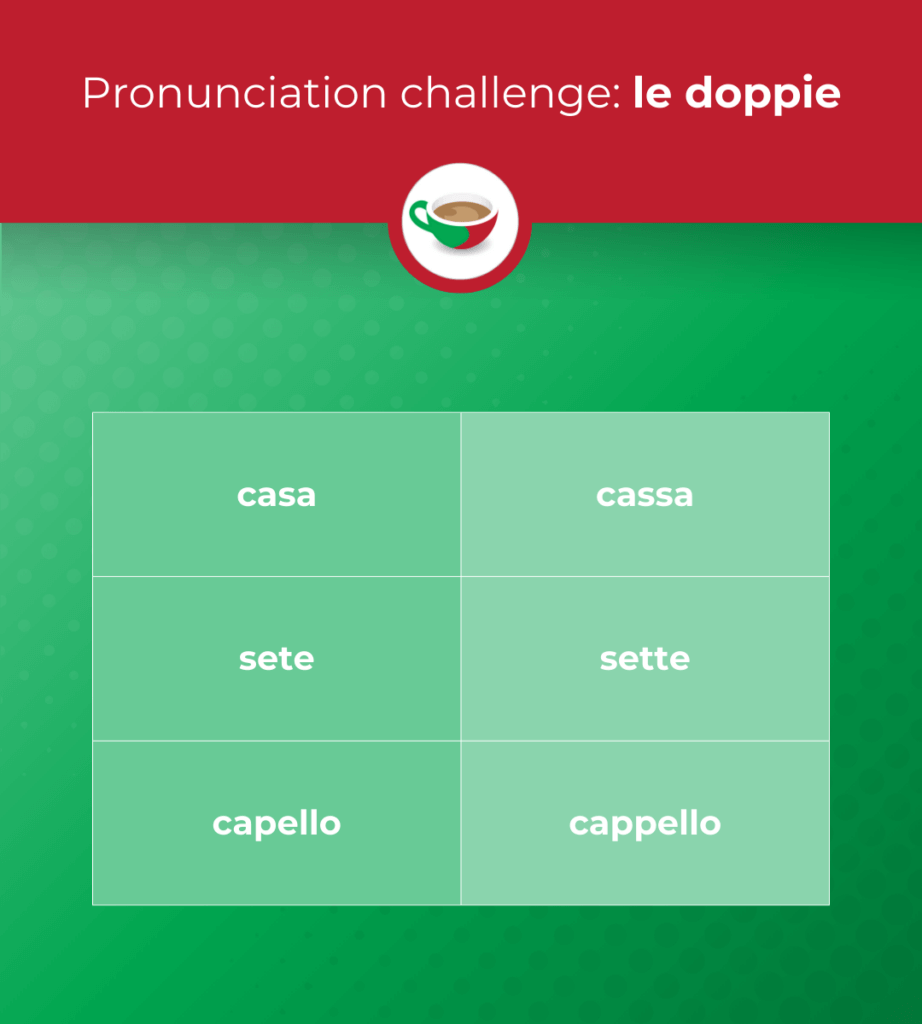
Sometimes, the pronunciation of le doppie marks the difference in meaning between words. For example, notice the difference in meaning between the following words:

casa
house

cassa
box

pena
pain, suffering

penna
pen

This underscores why it is important to learn how to pronounce double consonants. Having said this, context always helps, and in most situations the person you’re speaking to will understand what you’re talking about. Even if you don’t quite pronounce le doppie correctly, most people will just be happy you’re speaking in Italian!

Tips for pronouncing double consonants

Producing the distinctive sounds of Italian double consonants requires a bit of practice. We have some tips to help you out:

Elongate the sound

When encountering a double consonant, elongate the sound while holding it in your mouth. For example, try saying sasso (“rock”), palla (“ball”) and mamma (“mum”).

Push the sound forcefully

For consonants like B, P, C, G, T and D, try pronouncing them more forcefully by pushing air through your mouth. This extra burst of air adds emphasis to the consonant. Experiment with words like babbo (“dad”) and mucca (“cow”) to feel the difference.

“Bounce” on the letter

One last tip is to imagine bouncing on the double consonant as you say the word. This mental image can help you emphasise the sound. You could even try to physically bounce on the spot to help you practise the pronunciation of double consonants!

Now, try to pronounce these two sentences. Each has the same consonant sounds, but only one has double-lettered words:

La palla è rossa.
The ball is red.

La pala è rosa.
The shovel is pink.

Regional differences

It’s important to note that sounds can also change depending on regional accents. In certain parts of Italy, vowel sounds preceding le doppie may vary.

There are rules of diction for standard Italian when it comes to the sound of vowels before le doppie, but the regional accents of many Italians might appear to contradict these rules.

The most important thing is to speak the language and then you can decide whether to adjust your vowel pronunciation depending on where you find yourself in Italy or who you are talking to.

Remember that there isn’t one specific regional variety of Italian to learn or copy – all accents and pronunciations are correct.

A pronunciation challenge

Let’s take a look at some common examples of how double consonants can change the meaning of words. Try to pronounce the following words, then listen to the podcast episode or watch the video to check how Maurizio pronounces each of them.

casa
house

cassa
till, cash desk

papa
pope

papà
dad

pappa
baby food

sete
thirst


sette
seven

cappello
hat

capello
hair

È tutto per oggi!

Keep practising your Italian pronunciation, paying attention to those double consonant sounds, and you will be well on your way to sounding more like a native speaker!

If you found this post interesting, make sure to listen to the full episode with Mark and Maurizio on The Coffee Break Italian Show. This is the series in which we look at a range of topics for Italian learners, so make sure to subscribe to our podcast feed or our channel on YouTube.

Plus! To get regular free Italian lessons in your inbox, you can sign up for our short (coffee-break-sized) email lessons that will help you improve your Italian. You will also hear from Mark, the founder of Coffee Break Languages, giving advice for language learners at any level. Sign up below!

Your pronunciation will improve with practice, so keep listening to Italian songs, watching TV and films, and trying to speak it whenever you can. We’ll be back soon with more interesting discussions about learning Italian.

Happy Coffee Breaking!

Listen to the podcast

Understanding adjective placement in French: when do adjectives go before a noun?

Adjectives play a crucial role in adding depth to your French conversations. However, understanding where to place them in a sentence can be tricky for learners.

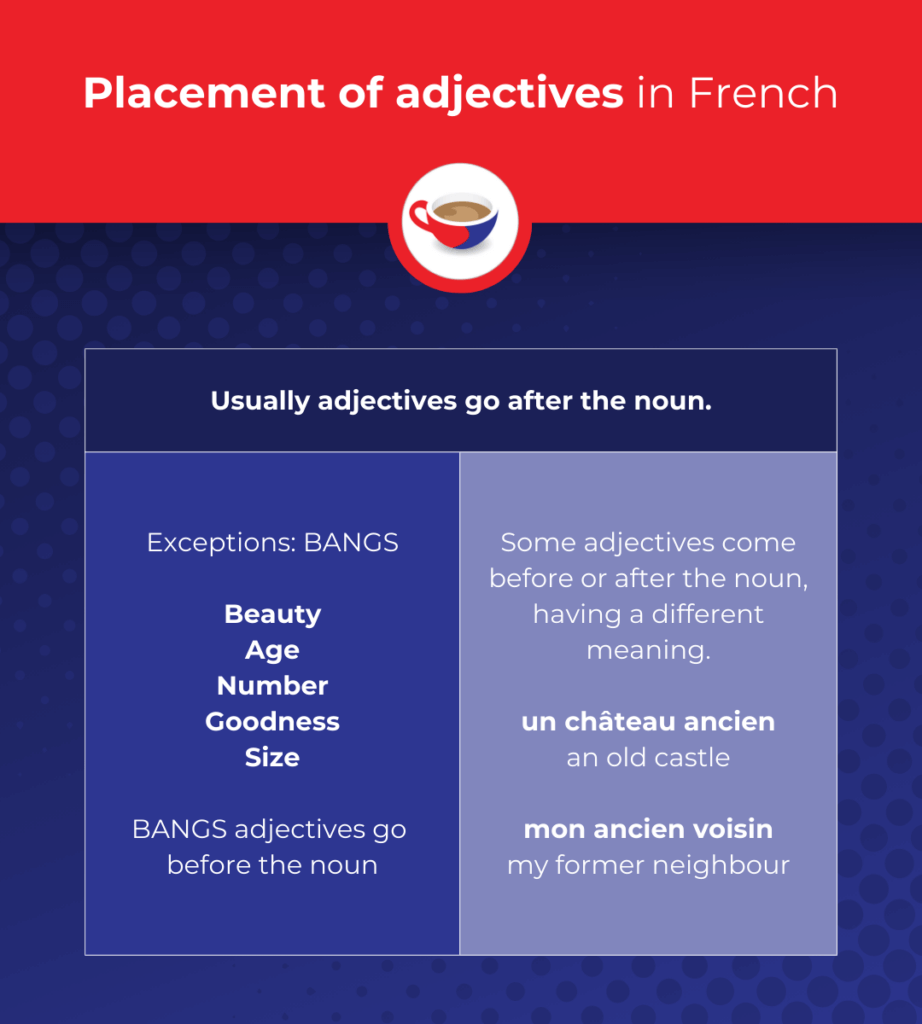
In most cases, adjectives in French come after the noun they modify, but there are some exceptions which can make this rule seem more like a guideline.

The Coffee Break French Show is a podcast series of bite-sized, friendly conversations that demystify tricky French language topics. In the latest episode, Mark and Max discuss how to get your head around adjective placement.

Let’s dive into the world of adjectives in French and explore when and why some go before the noun.

B.A.N.G.S.

To help you remember which adjectives go before the noun, you can use the acronym BANGS, which stands for Beauty, Age, Number, Goodness and Size.

Beauty

In French, adjectives that convey the idea of beauty come before nouns. For example:

un beau livre
a beautiful book

une belle armoire
a beautiful wardrobe

un bel oiseau
a beautiful bird

une jolie maison
a pretty house

Age

When discussing age, adjectives like vieux / vieille (“old”) come before the noun, as in:

un vieux château
an old castle

une vieille maison
an old house

Number

Adjectives related to numbers, such as premier / première (“first”) and deuxième (“second”), are placed before the noun. For instance:

le premier jour
the first day

la deuxième fois
the second time

Goodness

Adjectives like bon / bonne (“good”) and mauvais(e) (“bad”) are positioned before nouns. For example:

le bon gâteau
the good cake

la mauvaise nouvelle
the bad piece of news

Size

Adjectives describing size, such as grand(e) (“large”) and petit(e) (“small”), also go before the noun. For instance:

un grand canapé
a large sofa

une petite table
a little table

Adjectives with two possibilities

Now, here’s where it gets interesting. Some adjectives can be placed before or after the noun – and their placement alters the meaning. Here are some of them. In each pair of examples, notice how the meaning of the adjective changes, depending on whether it comes before or after the noun.

ancien / ancienne

mon ancienne maison
my former house

la maison ancienne
the old house

cher / chère

Cher Mark …
Dear Mark …

un canapé cher
an expensive sofa

curieux / curieuse

une curieuse recette
a strange recipe

mon ami curieux
my curious friend

dernier / dernière

le dernier mois de l’année
the last month of the year

le mois dernier
last month

vrai / vraie

C’est une vraie Rolex ?
Is it an actual Rolex?

C’est une histoire vraie.
It’s a true story.

propre

C’est ma propre chambre.
It’s my own bedroom.

ma chambre propre
my tidy bedroom

A visual summary

In conclusion

Understanding these exceptions and nuances in adjective placement can be a huge boost in your French fluency and allow you to express your ideas more precisely.

So, whether you’re describing a beautiful landscape or discussing your dear friend, mastering the placement of adjectives will help you convey your thoughts and opinions effectively.

If you found this post interesting, make sure to listen to the full episode with Mark and Max on The Coffee Break French Show. In this series of chats between our language experts, we look at a range of topics for French learners, so make sure to subscribe to our podcast feed and our channel on YouTube.

Plus! To get regular free French lessons in your inbox, you can sign up for our short (coffee-break-sized) email lessons that will help you improve your French. You will also hear from Mark, the founder of Coffee Break Languages, giving advice for language learners at any level. Sign up below!

Happy Coffee Breaking!
Listen to the podcast

When to use ‘do’ and ‘make’ in English

Do you know when to use do and when to use make when you’re speaking English? This can be a difficult topic for English learners, because many languages just have one verb for do and make. In this episode of The Coffee Break English Show, we’ll do some work to help you avoid making mistakes with do and make.

The Coffee Break English Show is a podcast series of informal conversations to help you understand some difficult topics in English! In the latest episode, Josie and Mark talk about when to use do and make.

There are some rules to follow, but as Josie and Mark explain during the episode, the best way to learn when to use do and make is to learn some fixed expressions.

So, let’s get started and look at the rules and expressions with do and make. Continue reading to find out more, and why not listen to the podcast as you go!

Make

We use make when we create or produce something. The result is usually something that we can see and touch. Here are some examples:

make dinner
I’m making pasta for dinner tonight.

make lunch
Mark made a salad for lunch.

make breakfast
My grandma makes pancakes for breakfast on Sundays.

make a coffee
Would you like me to make you a coffee?

make clothes
My brother makes his own clothes – he’s very creative.

make furniture
I made this table all by myself.

Do

We use do to describe actions. Let’s look at some examples:

do homework
The children are doing their homework.

do housework (e.g. do the laundry, do the dishes)
I don’t like doing housework.

do something
I’m bored – let’s do something fun!

do anything
Did you do anything yesterday evening?

do nothing
He loves doing nothing on Sunday mornings.

Fixed expressions with ‘make’

As we mentioned before, the best way to learn when to use make and do is to learn some fixed expressions. Here are five fixed expressions with make:

make a mistake
When you’re learning a language, you often make mistakes.

make friends
I made all my best friends at university.

make a decision
We need to make a decision about where to go on holiday this summer.

make plans
Have you made plans for the weekend yet?

make a mess
Please try not to make a mess in the kitchen!

Fixed expressions with ‘do’

Now you’ve seen some expressions with make, here are five fixed expressions with do:

do your hair / make-up
It usually takes her 10 minutes to do her hair in the morning.

do an exam
I did an exam yesterday, and I passed!  

do exercise / sport
Do you usually do exercise in the morning or in the evening?

do the shopping
I’m going to the supermarket to do the shopping.

do research
She is doing research for her PhD at the moment.

Remember, there are many more expressions with make and do. It’s a good idea to make a list when you see or hear a new expression, to help you remember it.

Let’s review

If you found this post interesting, make sure you listen to the full podcast episode with Mark and Josie on The Coffee Break English Show. We will release more episodes soon, about some more useful topics! Subscribe to our podcast feed and our channel on YouTube to learn when the next episode is available.

Plus! To get regular free English lessons in your inbox, you can sign up for our email lessons. We regularly send short (coffee-break-sized) email lessons that will help you improve your English. You will also hear from Mark, the founder of Coffee Break Languages, giving advice for language learners at any level. Sign up below!

So, keep practising make and do! Remember that all English learners make mistakes, but people can usually still understand you. It’s all part of the language-learning journey. Why not make a coffee now and do some more research about make and do?

Happy Coffee Breaking!

Listen to the podcast