
On Location Italian – 14 Feb 2013

130215-nicoleBuongiorno a tutti and welcome to On Location Italian. It has been a busy old week here in Verona. To start off with there was the famous Carnevale di Venezia (“Carnival of Venice”), an annual festival held in Venice that attracts visitors from all over. I was fortunate enough to spend the day there, taking in the electric atmosphere and witnessing all the weird and wonderful masks at the contest for “La Maschera più bella” (“the most beautiful mask”) held in Venice’s main square, Piazza San Marco. The effort and detail that went into these masks was incredible! Verona also held its own Carnevale, not quite on the grand scale of the one taking place in Venice but one nonetheless impressive.

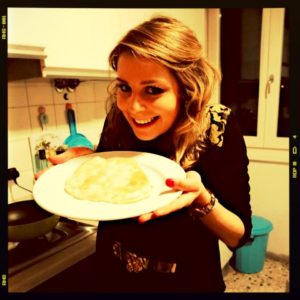
The period of the Carnevale ended on Martedi Grasso (literally “Fat Tuesday” but best translated as “Shrove Tuesday” (or “Pancake Tuesday”), another holiday that I very much enjoyed as you can see from my photo!). The celebrations for some, however, are set to continue today as couples will be declaring their love for one another on St. Valentine’s Day (San Valentino). Given that Verona is famous for inspiring Shakespeare’s Romeo and Juliet, it is difficult to escape the loved up couples enjoying a romantic getaway at the best of times, however I am anticipating the romantic atmosphere to be heightened today. Not only is Verona renowned for being a romantic city, but Italians themselves have a reputation for being somewhat the hopeless romantics. This morning I have reflected on the stereotypical passionate Italian male who loves all women, including his mamma (there is a term known as “mammoni” to describe mamma’s little boy, even if he is in his 30s). I have had a good giggle thinking back to some of the cheesy chat up lines my friends and I have overheard in the bars on a Friday night. There have been the more run of the mill chat up lines such as hai degli occhi belli (“you have beautiful eyes”) and sei bella (“you are beautiful”). However, my friends have also told me a few gems that they have been subjected to such as fa caldo qui, o è perchè ci sei tu? (“is it hot in here, or is it because you are here?”) and a particular favourite of mine ti sei fatta male quando sei caduta dal cielo? sei un angelo! (“did you hurt yourself when you fell from the sky? You are an angel”).

I am sure those users of the dodgy chat up lines are, like their counterparts in Scotland who try to be the next Casanova, in the minority. In any case, who knows maybe on this romantic day Cupid will strike with his arrow turning them into less hopeless romantic and more sophisticated/stylish romantic. I hope you have enjoyed On Location Italian this week. A presto!
On Location German – 13 Feb 2013

130213-hollyHi everyone! It’s Holly here with another blog post from Germany and after having been back in Scotland for a couple of weeks for the Christmas holidays, I am looking forward to getting back into the German way of life.

As most of you will already know, I now live with a German family and it is going very well. It is great to see how people of different ages use different types of language. There are four teenagers in the family and I have started to pick up things that they say that an adult just simply wouldn’t. One example that I hear every night at the dinner table is “Alter!” which would be best translated as something along the lines of “guys!” when someone has been annoyed by another person.

Another thing that I quite often hear when the dog comes to the dinner table is “hau ab!” which means “scram” or “get lost”. As well as this, I have learned that “Hör auf!” means “stop it!” or “knock it off!”. As you can see, meal times in my Germany host family can be quite lively!

It’s not only words I’ve been noticing: it appears that German people wave their hand in front of their face when they think something is crazy or daft. This interesting gesture can be combined with a “Bekloppt” or “bescheuert” which both mean “cuckoo” or “daft” – these are two favourite words in this household.

I’ve not spent all my time at the dinner table though! Since being back I have also seen “Schwanensee” (Swan Lake) in a theatre in Dortmund which was wonderful, and I have also being doing a fair bit of travelling, taking a trip over the border to Enschede in Holland and visiting Bonn and Cologne. This weekend I’m off to Berlin with my boyfriend so I’ll update you on the interesting sights we visit – and any language points that I pick up!

Bis bald, Holly 🙂

‘Where do you live’ in German – How to ask and answer this question

CBG 1-04

If you have plans of interacting with someone in Berlin, Vienna or Bern, two of the things you want to be able to ask someone are ‘where are you from’ and ‘where do you live’ in German. Especially because this is a fundamental part of everyday conversation, right?  

So, whether you’re meeting new friends, networking, or just practising your language skills, knowing how to navigate this topic will help you feel more confident to talk to the locals. In this article, we will explore how to ask ‘where do you live’ in German, how to respond, and some useful phrases that will help you engage in conversation about locations.

Keep reading to check it out and don’t forget to listen to the episode while reading the article to make your pronunciation flawless!

Asking the question ‘where do you live’ in German

If you already know how to ask someone ‘where are you from’ in German, the next step to continue the conversation is to ask where the person lives. The structure to ask is quite simple; check these examples: 

  • Wo wohnst du? 
  • Wo wohnen Sie?

As you already know, du indicates a more informal variation of the question while Sie marks the ‘where do you live’ in German formal variation. 

Responding to the question ‘where do you live’ in German

When responding to the question, you can keep it simple. The basic structure to answer “where do you live” in German is:

  • Ich wohne in… I live in…

This can be followed by the name of a neighbourhood, region, city, town or country. For example: 

  • Ich wohne in München. I live in Munich.
  • Ich wohne in Kanada. I live in Frankfurt.
  • Ich wohne im Stadtzentrum. I live in the city center.

Adding more details

To make your answer even more complete, you can add extra details about your living situation. Here are some phrases you might find useful:

  • Ich wohne in einem Haus im Vorort. I live in a house in the suburbs.
  • Ich wohne in einer Wohnung in Frankfurt. I live in an apartment in Frankfurt.
  • Ich wohne allein in Österreich. I live alone in Austria.

And you?

Ok, if the person you are talking to asked you ‘where do you live’ first, how can you ask them back? Simple! You can simply say Und du? Wo wohnst du? or Und Sie? Wo wohnen Sie? for a more formal setting. 

Now that you have a good understanding of how to ask and answer the question about where you live, try practising with a friend or language partner. Use the phrases and vocabulary you’ve learned to create your own dialogues.

In sum, knowing how to ask and answer this question is a crucial step in developing your language skills. With these key phrases and structured responses, you are ready to chat with the locals. 

To keep learning new, useful vocabulary, read the article where we talk about family members in German!

On Location Spanish – 12 Feb 2013

130212-graceBienvenido a todo el mundo to Grace’s first On Location Spanish update of 2013! I hope the New Year has gotten off to a great start for you all, and without further ado I’d like to tell you about my first months back in Valencia.
For the majority of the Brit Pack, we had returned to Valencia with only two resolutions: 1. Speak more Spanish, 2. Get healthy. Heeding the words of our lecturers, and taking advantage of the late night kick-off at Valencia’s Mestalla Stadium, off we went to see the Home team put up a formidable fight against Real Madrid. At a draw of 1-1, this was a satisfying result for the Valencia fans. Sadly for us, with the majority of the supporters’ songs sang in the regional valenciano, we spent most of our evening in the dark. Well, except for our rousing rendition of ¡Adios a la Liga, Adios! urging the Away team to “wave goodbye to the league title”.

Addressing resolution no.2, we all knew that we had to say goodbye to Mercadona’s reasonably priced magdalena cakes and our Wednesday night Agua de Valencia cocktails in Plaza Honduras. Getting healthy meant getting ourselves to the frutería (“fruit shop”), getting down to the carnicería (“butcher”), getting ourselves some fresh produce and (lending a hand to resolution no.1) mixing with Spaniards.

And boy am I glad we actually did! After around 4 months of incorrectly asking waitresses and shop assistants, ¿Puedo tener (algo)?, which I had quite literally translated as “May I have (something)?”, only now has my local butcher put a stop to this madness.  Setting me straight once and for all, I now know to ask:

¿Me pone una docena de huevos, por favor?
May I please have a dozen eggs?

If like me you’re most familiar with poner in the “to put” sense of the word, don’t be alarmed. Using this construction is seemingly the most accurate from a native’s point of view, and has certainly reduced the number of times a day that this Jonny Foreigner gets asked where she’s from and how she’s enjoying Spain.

I hope your Spanish is coming along well this year and that you’re enjoying the updates from Iain and myself. Please join me for more On Location Spanish and I’ll let you know if I’m having any more luck blending in and keeping healthy. ¡Hasta luego!

On Location French – 11 Feb 2013

130211-scottBonjour à tous et à toutes et bienvenue à ma première entrée de blog de l’année 2013! Since we last spoke, I flew back home to Scotland to spend the festive period with all my family and friends; I travelled to places like Paris and Barcelona to visit friends; and I recommenced my studies and my life in Toulouse. Whilst I am thoroughly enjoying my time here in France, it was great to be able to return, albeit rather briefly, to all the old faces and familiar climes; the fact always remains that on n’est nulle part mieux que chez soi – there’s no place like home!

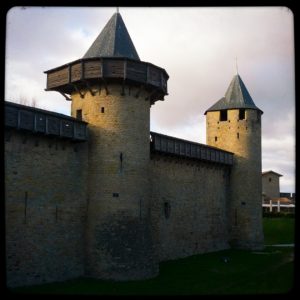
Just last weekend, I embarked on a road trip with four French friends to Carcassonne, an olde worlde southern French fortress town famous for its historic castle, and Andorra, the small country at the heart of the Pyrénées mountain range which borders France and Spain. After packing into my friend’s car, a fifteen year old Rover which he affectionately called his vieille et fidèle bagnole (’trusty old banger’), we set off on our journey. With my roommate as chief navigator, we headed south on l’autoroute (the motorway) before coming off and taking a more scenic route, so as to avoid the many expensive péages (toll booths).

Upon arriving, I could see why so many tourists flock to Carcassonne – le château (the castle) is immensely picturesque with its imposing tourelles (turrets) and grandiose portcullis and drawbridge (la herse et le pont-levis), surrounded by its own douves – the moat. We took a fascinating tour of the museum which the castle has now become and I actually wound up learning a lot about the local history… well, on en apprend tous les jours – you learn something new every day!

We continued onward to Andorra and our proximity to the small Pyrenean nation became evident as we travelled higher and higher into the hills and the temperature consequently got lower and lower! The Andorran scenery was breathtaking, with snowy mountainsides all around and charming little chalet villages dotted here and there. From a linguistic perspective I also found the country very interesting, as the first language there is neither French nor Spanish, but Catalan. Fortunately for me, I found that they spoke good French too as when I asked a shopkeeper “Où sont les toilettes?“, she understood perfectly!

I am planning many more excursions within France later in the spring, and I shall of course be keeping you informed of how they go and what new French I learn! For now, I wish you bonne continuation avec vos études de français, et à la prochaine!

Send us a voice message!

We’ve added a new feature to our website and Facebook pages: if you have a microphone or webcam connected to your computer, you can leave us a voice message easily by clicking on the “Send us a voice message” on the right hand side of the screen. Please note that for the time being this feature does not work on iOS, but we hope to include an iOS option soon.

If you’d like to send us a voice message to be included in the next Word of the Day Review episode, please also post your message on the CBS Facebook page or CBF Facebook page on the relevant entry to make sure it’s picked up by the team. If you’re sending a question for Q&A Spanish, please make sure you leave your name.

Please be aware that by sending your voice message we may use this in future shows. However, we do not guarantee to use all voice messages.

Here’s a video to explain more:

Spanish WOTD Review – 9 Feb 2013

We’ve been publishing a daily word on Facebook and Twitter and each day we’ve asked our Facebook friends and Twitter followers to post a comment using the word of the day, thereby practising their language skills. This week we’ve been talking about buying things and as usual the Radio Lingua community has come up with some excellent examples of this week’s words: comprar, la talla, el precio, hacer un cambio, and el recibo.

Friend us on Facebook | Follow us on Twitter | iTunes link

French WOTD Review – 9 Feb 2013

We’ve been publishing a daily word on Facebook and Twitter and each day we’ve asked our Facebook friends and Twitter followers to post a comment using the word of the day, thereby practising their language skills. This week we’ve focused on the topic of eating out and we’ve shared the following words and phrases with our community: l’addition, la carte, l’entrée, commande and réserver. As usual, the Radio Lingua community has come up with some excellent examples of these words in sentences, and that’s what we’re looking at in this episode of the show.

Follow us on Twitter | iTunes link

Episode 302 – Q&A Spanish

JP and Nahyeli are back with another episode of Q&A Spanish. In this episode they answer a question from listener Laya about possessive pronouns, and a couple of questions from Sam about how best to say “these days” in Spanish, and also how to say “it can’t be denied”. Find out the answers to these questions in this episode.

Use the player below to listen to this week’s episode:

If you have a question for our experts, you can get in touch with the Q&A Spanish team at the Q&A Spanish page. Remember that we welcome all questions, even if you’re just starting out with Spanish!

iTunes link | RSS feed

Woher kommst du? Learn how to ask and tell where are you from in German

CBG 1-03

When learning a new language, one of the fundamental skills is being able to ask and answer where someone is from. This is especially useful when travelling and meeting new people. In this blog post, we will understand what woher kommst du means and how to answer where you are from in German. 

By the end of this text, you’ll be able to confidently discuss the topic in the language. To master the pronunciation, press play and listen to the episode while reading the article!

Woher kommst du? – askng ‘Where are you from?’ in German

After saying ‘hello’ in German and introducing yourself, you are probably looking for questions to keep the conversation going and to ask someone where they are from is a great way. 

To do that in German, you can use the phrase ‘Woher kommst du? which translates directly to ‘Where do you come from?’. This is the informal way of asking, suitable for conversations with friends and people of the same age group or younger than you.

For a more formal setting, such as speaking with an elder, a superior, or someone you don’t know well, you should use ‘Woher kommen Sie?’. As you are aware, the use of Sie indicates formality.

Telling where do you come from in German

Responding to the question ‘Woher kommst du?’ is quite simple. You only need to follow a straightforward structure: Ich komme aus, followed by the name of the country or city you are from.

Let’s check some examples and check some countries names: 

  • Ich komme aus den U.S.A. I come from the USA.
  • Ich komme aus Spanien. I come from Spain.
  • Er kommt aus der Schweiz. He comes from Switzerland.
  • Sie kommen aus Wien. They come from Vienna.

Notice that when you are talking about “the United States” you need the definite article den and when talking about Switzerland, you need the definite article der. But don’t worry too much about the articles and their different forms in German just yet, we will go back to it in another blog post. Other countries

To enrich your vocabulary, let’s check some more countries: 

  • Schottland Scotland
  • Brasilien Brasil
  • Italien Italy
  • Mexiko Mexico
  • Österreich Austria

Nationalities in German

Another way of answering the question ‘woher kommst du?’ is by telling your nationality. You can use the structure you’ve learned for introducing yourself in German: ‘Ich bin…’. This is another way of describing your origin.

For example: 

  • Ich bin Deutscher/Deutsche (masc/fem). I am German.
  • Ich bin Amerikaner/Amerikanerin (masc/fem). I am American. 
  • Ich bin Spanier/Spanierin (masc/fem). I am Spanish.
  • Ich bin Schotte/Schottin (masc/fem). I am Scottish.
  • Ich bin Portugiese/ Portugiesin (masc/fem). I am Portuguese.

With this new vocabulary, you are ready to ask ‘woher kommst du’ and answer the question when asked. What a great way to share your background and learn about others, right? 

To keep learning more about useful phrases and improving your conversation skills, check out the blog post on how to say where you live in German right now! 

On Location Swedish – 1 Feb 2013

130201-ailieHej allihopa! Och välkommen tillbaka! I hope you all had a great Christmas and New Year, and have entered 2013 feel refreshed, revitalised and (hopefully!) with a resolution to learn some more Swedish! To ease back into January I thought it could be interesting to look at some Swedish stereotypes and phrases associated with them, as it was not until I returned home for Christmas that I realised just how well some of these stereotypes really fit reality (although not always, of course!).

So, what springs to mind when we think about our stereotypes of Swedish people? Tall, blonde, beautiful? This for the most part does actually seem to be pretty true – but then, I barely scrape a height of 5´3 (159cm in Euro-measures), so everyone seems tall to me (although I do have a couple of friends who I am pretty sure are at least twice my height). One of my flatmates taught me the phrase “en Svensson familj”, meaning a really stereotypical Swedish family, generally used to describe the family with the blonde kids, nice house, probably a summer cabin out in the countryside, and a Volvo. In fact, much the same stereotype as we seem to imagine! And the wee blonde children, sitting in their dagis (preschool), they are referred to as lintottar (lit. “flax tufts” because of the way their blonde hair resembles the fields of flax one finds around the Swedish countryside).

Another great Swedish stalwart is, of course, IKEA. And, with my best friend newly arrived in Uppsala from Scotland, where better to pay a visit to on a biogas bus through the snow! After stocking up on ljus (here, “candles”; but also “light”; the noun and adjective), and full of köttbullar, potatismos och lingonsylt (meatballs, mashed potatoes and lingonberry jam), we could return home safe in the knowledge that Sweden really is just as “Swedish” as we felt it should be; cold (it was a balmy -2 today), environmentally-friendly, with IKEA furniture for all and impossibly tall people kindly helping me to reach things on high shelves, responding to my thanks with a shy, “ingen fara” (“no worries). Until next week,hej då!

On Location Italian – 31 Jan 2013

130131-nicoleBuongiorno a tutti and welcome back to On Location Italian. After having a great Christmas and New Year at home with all the family, I am ready to jump straight back into my life as an Erasmus student in Verona. Unfortunately my first week back was consumed by exams. Once they were done and dusted,  however, I had some free time to explore some more of the beautiful cities surrounding Verona. First stop, Vicenza. I was fortunate enough to have a friend from this elegant city. He pointed out the work of Andrea Palladio and his style of architecture known as Palladian, often characterised by the use of pillars, which was influenced by the formal classical styles of the temples of ancient Greece and Rome and which has had an influence on architecture in many other countries.

It was during this visit that my friend taught me a handy new expression. He asked me if I had una notte in bianco the night before my first exam. Literally, una notte in bianco means “a white night”, or as my friend explained to me, it can be translated in English as “a sleepless night”.

With exams finished, I was also able to start reading an Italian book Babbo Natale (“Father Christmas”) had left for me in my calza di Natale (“Christmas stocking”). I came across the phrase facciamo un brindisi which means “let’s toast”. During my first semester in Verona I heard the phrase fare un cin cin, meaning to make a toast so it was useful to learn that fare un brindisi is also used for the same purpose.

I hope you have enjoyed reading my blog post for this week and I will be back again soon with more On Location Italian. A presto!

‘My name is’ in German: a guide to introducing yourself

CBG 1-02

Being able to introduce yourself is a very important skill that language learners must acquire. If you plan on visiting Berlin, Vienna, Luxembourg, or any other German-speaking country,  knowing how you say ‘my name is’ in German can make a difference when starting conversations. 

In this blog post, you will be guided through the basics of introductions in the language, ensuring you can start conversations with confidence and make a great first impression. Don’t forget to listen to the podcast while reading the article to master the pronunciation of this phrase!

How do you say ‘my name is’ in German?

After you say ‘hello’ in German, the next step is to start a conversation. Introducing yourself does the trick as it helps establish a connection and show respect and interest in the other person. 

You can say ‘my name is’ in German in three different ways. The most straightforward one is by using the phrase: mein Name ist, followed by your name. For example:

  • Mein Name ist Julia. My name is Julia.

The other two ways of saying ‘my name is’ in German are more casual. You can use the phrase Ich heiße I am called or Ich bin I am:

  • Ich heiße Mathias. I’m called Mathias.
  • Ich bin Maria. I am Maria.

Asking for someone’s name 

Just as important as introducing yourself is asking for the other person’s name. In German, it is important to consider that there is a formal and informal way of doing that.

Let’s check the phrases you can use:

  • Wie heißen Sie? What is your name? (formal)
  • Wie heißt du? What is your name? (informal)

After that, you can say your name or that you are happy to meet the person, acknowledging their name with the phrase:

  • Freut mich, Sie kennenzulernen (formal)
  • Freut mich, dich kennenzulernen (informal)

Or you can simply say ‘freut mich’.

Introducing yourself: conversation example 

Now you know how to say ‘my name is’ in German, so you should be able to understand what is said in this conversation example. Try to read it and pronounce the words while doing it!

  • Guten Tag! Mein Name ist Michael Schmidt.
  • Guten Tag, Herr Schmidt. Ich heiße Hans Müller. Freut mich, Sie kennenzulernen.
  • Freut mich auch, Herr Müller. 
  • Es war schön, mit Ihnen zu sprechen, Herr Schmidt. Bis später!
  • Ja, bis bald!

You might notice that when addressing someone formally, you should use their title and last name, for example, Herr Schmidt Mr. Schmidt. In informal settings, first names are typically used.

Check the dialogue translation here: 

  • Good day! My name is Michael Schmidt.
  • Good afternoon, Sr. Schmidt. I’m called Hans Müller. I am glad to meet you.
  • I’m pleased too, Mr. Müller. 
  • It was nice to talk to you, Mr. Schmidt. See you later!
  • Yes, see you soon!

We are sure that you are now able to introduce yourself confidently and make a positive impression in any German-speaking environment. Remember to practice regularly, pay attention to pronunciation and be aware of cultural aspects.

To add more layers to your conversation after introducing yourself, you can ask people about where they are from. We prepared a blog post to talk about it exclusively. So, are you ready to learn how to say where you are from and the name of your country in German? Read now!

On Location German – 30 Jan 2013

Hallo zusammen! After a couple of carefree weeks back home in not-so-sunny Scotland, I am now back in Germany. For some strange reason, ever since I got back I’ve been hearing the phrase sich Mühe geben a lot, so I decided to look it up. It turns out that it means “to make an effort”. At the school I work in, for example, a girl said, ‘ich habe mir so viele Mühe gegeben!’(“I made such an effort/I tried so hard!”) after receiving a disappointing grade.

We’re now two weeks into term, and I was invited to take part in a less-than-German tradition: Burns’ Night, in Bonn. A few friends from back home who are either here in Germany at the Universität (“University”) in Bonn or, like me, are here as Fremdsprachenassistenten (“foreign language assistants”), were also invited. Most of the group was made up of Germans and that’s how I came to learn the great phrase hau rein! (“Dig in!/Get stuck in!/Knock yourself out!”) The Germans told me that hau rein can be used both in the sense of “tuck in! (to your food)” and “get stuck in!”, which you could say to someone going on a night out, zum Beispiel (“for example”). As most of you might know, as well as the songs and poems said at a Burns’ Supper, the main component is the meal, which consists of haggis, which is simply ‘Haggis’, mit einem deutschen Akzent, natürlich, (“with a German accent, of course!”), neeps, or turnips, which is die Rübe in German and that staple of both German and British cuisine: Kartoffeln! (“potatoes”) After a few toasts, where ‘Prost’ is said instead of “cheers”, I also learned the importance of eye contact during a German toast…

Insgesamt (“all in all”), I have, as expected, become quickly re-acquainted with my new German lifestyle and look forward to letting you know more of my experiences next month!

Bis bald,

Daniel.

On Location Spanish – 29 Jan 2013

130130-iain¡Hola a todos! It’s Iain here from Salamanca, and it gives me great pleasure to welcome you back to On Location Spanish to follow my second term here on Erasmus exchange in Spain.
As I write this, I’m finally reaching the end of my exam period at the Universidad de Salamanca. It’s been a long, hard slog getting to grips with Spanish exams – now they’re almost over, I’m glad to be able to reflect on my improved Spanish and also look forward to a bit more spare time in the forthcoming semester to explore the country properly.

The University’s library was abuzz on the first day back after the holidays as we shared our stories of spending the holidays at home. Salamanca attracts students from all over Spain – as well as all over Europe through the Erasmus programme – and my course-mate Pedro told me of the celebrations in Badajoz, his home town near the Portuguese border. Of his mother’s cooking, he exclaimed:

“¡Me puse morado!”

Translated literally, this means “I turned myself purple”, however Pedro went on to explain that this was an idiomatic expression meaning “to stuff oneself with food”. Much like Christmas back home in Scotland, it’s a time of indulgence in Spain!

Elsewhere in Salamanca, everyone seems to be:

“buscando las gangas en las rebajas”

With all the shops selling off their excess winter stock, the main shopping street in Salamanca, Calle Toro, is filled with shoppers “hunting for bargains in the sales”. It’s certainly busier than I’ve ever seen it, which lends the Plaza Mayor and the surrounding streets, bars and cafes a bustling, busy atmosphere.

I’m about to head off into the thick of the shoppers to load up on stationery, notebooks and textbooks for my new classes in the forthcoming semester. I’m excited to get back into lectures, and wave these exams goodbye!

¡Hasta la próxima!

On Location French 28 Jan 2013

Salut tout le monde, et bonne année! It’s Rose here, and after enjoying a few weeks at home over the Christmas holidays, I’m back in France. I’ve quickly discovered that the month of January for French people means two things: la galette des rois, et les soldes. La galette des rois is a French tradition, to celebrate the Christian feast day of the Epiphany on the 6th January. French people celebrate by eating a cake called une galette des rois. The type of cake varies region to region; in Brittany it is made of puff pastry with a frangipane centre, and often an added dash of rum for some extra flavour. Inside the cake is a small figurine toy, une fève, and whoever finds the toy inside their slice of cake becomes ‘king’ or ‘queen’ for the day! From late December bakeries sell these cakes, with a wide variety of toys hidden inside. In recent years, they have become more commercialised, now including Disney Princess or Toy Story themed treasures, for example. When you buy a galette des rois they often come with paper crowns, to give to the person who finds la fève.

That’s les galettes des rois out the way. Les soldes, or the January sales, are another issue altogether, one which French people take very, very seriously if staff room chatter is anything to go by. It’s been the hot topic all week in school! Government stipulations mean that shops in France can only have so many ‘sale-days’ per year, and people look forward almost all year to the January sales. The sales run from around the 9th January to 5th February. They already have good reductions in most shops, but the teachers at school have told me il faut attendre, to wait a little longer, to get even better deals. However, I decided to brave the sales with a few friends at the weekend anyway. I thought I was a seasoned shopper but apparently not – il y avait trop de monde – it was too busy! We decided to leave and go for a coffee a measly hour into our highly anticipated shopping trip! Have you indulged in some sale shopping this month, or maybe tried a galette des rois? À la prochaine!

Episode 301 – Q&A Spanish

We’re delighted to announce that JP and Nahyeli are back with another series of Q&A Spanish. As usual, they’re answering listener questions and in this week’s show, Soumaya wants to know if it’s possible to say buenas tardes when you’re saying goodbye to someone. Normally buenas tardes would be seen as a “hello” equivalent in the evening, but it’s possible to use this phrase – and others – as a goodbye. Listener Rodney has a similar question about the word buenas used as a shortened greeting. JP and Nahyeli provide an insight into these alternative greetings. Listener Steve is asking about the word casi in the present tense. This is quite a peculiar usage in Spanish which seems to go against everything we’ve learned so far about tenses! As ever, our Spanish language experts will explain everything.

Use the player below to listen to this week’s episode:

If you have a question for our experts, you can get in touch with the Q&A Spanish team at the Q&A Spanish page. Remember that we welcome all questions, even if you’re just starting out with Spanish!

iTunes link | RSS feed

Introducing Q&A Spanish

If you’re a long-standing Coffee Break Spanish listener did you know that we also have another show for Spanish learners? In Q&A Spanish our resident Spanish language experts, JP and Nahyeli, answer questions from our listeners. This special introductory episode for Coffee Break Spanish listeners will explain how to access the Q&A Spanish course.

In order to access all Q&A Spanish lessons moving forward, you need to make sure that you’re subscribed to the Q&A Spanish feed: we’ll not be publishing the weekly episodes in the Coffee Break Spanish feed, so you must subscribe to the Q&A Spanish feed. Use the links below:

iTunes link | RSS feed

How to say ‘goodbye’ in German and other greetings

CBG 1-01

Are you planning a trip to Germany, connecting with German-speaking friends, or simply expanding your linguistic vocabulary? In any case, knowing your way around basic greetings, like how to say ‘goodbye’ in German, is a must as it leads to smoother interactions with the locals.

In this blog post, you will get familiar with these expressions and will feel more confident in starting and ending conversations. To practise your pronunciation, don’t forget to press play on the audio file. 

Auf geht’s!

How to say ‘hello’ in German

Before learning how to say ‘goodbye’ in German, you must first know how to start a conversation. As with any language, there are formal and casual greetings. 

To say a casual ‘hello’ in German, you can simply say hallo. However, you can also use: 

  • Guten Tag Good day (used throughout the day in formal settings);
  • Guten Morgen Good morning (typically used until late morning);
  • Guten Abend Good evening (used from late afternoon into the evening).

It is important to consider that different regions have different greetings. In Austria and Bavaria, they can say Servus or Moin in the northern part of Germany. 

How to say ‘goodbye’ in German

Now, let’s answer the question of how to say ‘goodbye’ in German. Similar to greetings, saying ‘goodbye’ in German varies by formality and context. 

Here are common ways to say farewell:

  • Auf Wiedersehen Goodbye (formal, indicating ‘until we see each other again’);
  • Tschüss Bye (casual and widely used among friends);
  • Bis später See you later (used when parting with the expectation of seeing each other again the same day);
  • Bis morgen Until tomorrow.

How can you ask and answer ‘how are you’ in German

The easiest and most common way to ask someone ‘how are you’ in German is using ‘Wie geht’s?’. If you want to ask that question in a more formal context, you can say ‘Wie geht es Ihnen?’. 

To reply to this question, there are different answers you can say: 

  • Mir geht’s gut. I’m good.
  • Mir geht’s sehr gut. I’m (feeling) very well.
  • Mir geht’s schlecht. I’m feeling bad.
  • Mir geht’s nicht so gut. I’m not (feeling) so good.
  • Mir geht’s wunderbar. I’m feeling great.
  • Mir geht’s ausgezeichnet. I’m feeling fantastic, extraordinary.

Well, now you know how to say ‘hello’ and ‘goodbye’ in German! Moreover, you are prepared to ask and reply if someone asks you how you are doing. With some basic knowledge like this, you can easily make your travel experience much better by connecting with the locals.

Keep learning useful terms and sentences: check out our article on how to introduce yourself in German!

Coffee Break German – Introductory Episode

CBG Introduction

In this introductory episode, Mark and Thomas talk about what you can expect in the first ten lessons of the course which starts this Wednesday, the 23rd of January 2013. The lessons will introduce the basics of the language and by the end of the first group of ten lessons you’ll be able to communicate in basic German with confidence. Topics covered include introductions and greetings, talking about where you’re from, your family, dealing with numbers and paying for things, finding your way around the town and coping with language difficulties.