The Power and Potential of Podcasting: Mark interviewed on “ICT in the MFL classroom” podcast

Radio Lingua Director, Mark Pentleton, was interviewed during PodcampUK by Joe Dale for his Integrating ICT into the MFL Classroom podcast. The interview outlined Mark’s background and how he got into podcasting, and gives an insight into the model behind the Radio Lingua Network.

Listen below or download the mp3 file.

Learn more family members and discover how to count from 1 to 10 in French

Learning a new language can be an exciting adventure, and mastering the basics is the first step. In this article and episode, we will continue the theme of family members and learn how to count from 1 to 10 in French. 

Understanding these essentials will help you in everyday conversations and build a strong foundation for further learning. Let’s dive in and explore these key elements of the French language!

Family Members in French

Having family members’ vocabulary in French is crucial for everyday conversations. Whether you are introducing your family or talking about them, these terms will come in handy. 

Let’s check out some of these terms!

La maman 

In French, maman means mom. This affectionate term is commonly used in everyday conversations and reflects warmth and familiarity. For example, you might say:

  • La maman cuisine le dîner. The mom is cooking dinner.

Le papa 

Similarly, le papa means dad. This term encapsulates paternal affection and authority. An example sentence would be:

  • Le papa aide les enfants avec leurs devoirs. The dad is helping the children with their homework.

Les parents 

To collectively address both parents, one would use parents in French. This term encompasses the roles of both the mother and father. For exampleÇ

  • Mes parents sont en vacances. My parents are on vacation.

Numbers 1 to 10 in French

Do you know how to say that in French if you have three children or two siblings? Numbers form the foundation of many aspects of life, from counting your family members to giving your phone number.

Learning how to count from 1 to 10 in French is an essential skill that will aid you in numerous situations. Let’s go through the numbers and their uses in daily conversations.

1 to 10 in French

  • 1 – un
  • 2 – deux
  • 3 – trois
  • 4 – quatre
  • 5 – cinq
  • 6 – six
  • 7 – sept
  • 8 – huit
  • 9 – neuf
  • 10 – dix 

Using family members and numbers from 1 to 10 in French in sentences

Let’s practice using family members and numbers from 1 to 10 in French in sentences:

  • J’ai une sœur et un frère. I have a sister and a brother.
  • J’ai deux filles. I have two daughters.
  • Tu as des enfants ? Do you have children? (informal)
  • Vous avez des enfants ? Do you have children? (formal)
  • Tu as une sœur ? Do you have a sister? (informal)
  • Vous avez une sœur ? Do you have a sister? (formal)

Would you like to learn the pronunciation of these phrases? In episode 6 of Season 1 of the Coffee Break French podcast, you can get more insight into them and also learn other useful phrases. Listen to it now:

Asking for and Giving Phone Numbers in French

Now that you are familiar with how to count from 1 to 10 in French, more than talking about the number of family members, you can also give and ask for phone numbers.

Knowing how to ask for and give phone numbers is a practical skill that you’ll likely use often. Here are some essential phrases and examples to help you master this aspect of French communication.

Quel est ton numéro de téléphone ?

This phrase, Quel est ton numéro de téléphone ? is the informal way to ask someone for their phone number. For instance, Quel est ton numéro de téléphone, s’il te plaît ? What is your phone number, please?

Quel est votre numéro de téléphone ?

In formal contexts or when speaking to someone you don’t know well. An example sentence would be, Bonjour, quel est votre numéro de téléphone, s’il vous plaît ? Hello, what is your phone number, please?

Mon numéro de téléphone

To say my phone number, you would use mon numéro de téléphone. For example:

  • Mon numéro de téléphone est zéro, un, deux, trois, quatre, cinq, six, sept, huit, neuf. My phone number is 0123456789. 

In France, phone numbers are 10 digits long and usually when French people spell their numbers, they do to 2 by 2, so the correct way would be:

  • Mon numéro de téléphone est zéro un, vingt-trois, quarante-cinq, soixante-sept, quatre-vingt-neuf. My phone number is 0123456789.

By learning these essential family terms, numbers 1 to 10 in French, and useful phrases for exchanging phone numbers, you’ll be better equipped to engage in everyday conversations. Keep practising, and you’ll soon find yourself more comfortable and confident speaking French. Remember, language learning is a journey, and every new word brings you one step closer to fluency!

Do you want to keep improving your French skills and learn how to talk about your job? Then check out the episode we prepared, which will teach you how to say that and much more!

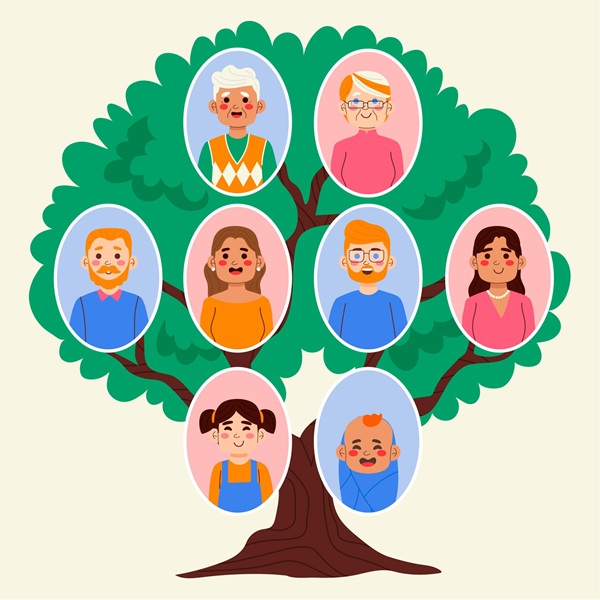
Learn to talk about family members in French: essential phrases and vocabulary

Understanding how to talk about family members in French is a fundamental part of learning the language. Whether you are introducing your family, talking about them, or simply learning new vocabulary, mastering these terms will help you engage in meaningful conversations.

In this article, we’ll explore key phrases and vocabulary related to family in French.

Basic family members in French

Let’s start with the basics. Here are the essential terms for family members in French:

  • la sœur the sister
  • le frère the brother
  • la mère the mother
  • le père the father
  • le mari the husband
  • la femme the wife
  • le fils the son
  • la fille the daughter
  • l’enfant the child
  • les enfants the children

Possessive adjectives in French

Knowing how to use possessive adjectives is crucial when talking about your family in French. These adjectives change depending on the gender and number of the noun they precede.

Mon 

For masculine nouns, use “mon”:

  • mon frère my brother
  • mon père my father
  • mon mari my husband

Ma

For feminine nouns, use “ma”:

  • a msœur my sister
  • ma mère my mother
  • ma femme my wife

Mes

For plural nouns, use “mes”:

  • mes enfants my children
  • mes frères my brothers
  • mes sœurs my sisters

Would you like to learn the pronunciation of these phrases? In episode 5 of Season 1 of the Coffee Break French podcast, you can get more insight into them and also learn other useful phrases. Listen to it now:

Introducing family members in French

When introducing your family members, you can use these phrases to make a good impression:

Voici…

This phrase is used to introduce someone:

  • Voici mon frère. Here is my brother.
  • Voici ma sœur. Here is my sister.

Je te présente…

This informal phrase is used to introduce someone to a friend or peer:

  • Je te présente mon père. I introduce to you my father.
  • Je te présente ma mère. I introduce to you my mother.

Je vous présente…

Use this formal phrase when introducing someone to a group or someone you don’t know well:

  • Je vous présente mon mari. I introduce to you my husband.
  • Je vous présente ma femme. I introduce to you my wife.

Talking about your family members

You can describe your family members using the following phrases:

Il s’appelle…

Use this phrase to say the name of a male family member:

  • Il s’appelle Jean. His name is Jean.

Elle s’appelle…

Use this phrase to say the name of a female family member:

  • Elle s’appelle Marie. Her name is Marie.

Ils s’appellent…

Use this phrase to introduce multiple male or mixed-gender family members:

  • Ils s’appellent Jean et Paul. Their names are Jean and Paul.

Elles s’appellent…

Use this phrase to introduce multiple female family members:

  • Elles s’appellent Marie et Sophie. Their names are Marie and Sophie.

Examples of introducing and describing your family members in French

Putting everything together, here are some examples of how you might talk about your family members in French:

  • Voici ma sœur. Elle s’appelle Sophie. Here is my sister. Her name is Sophie.
  • Je te présente mon frère. Il s’appelle Marc. I introduce to you my brother. His name is Marc.
  • Je vous présente mes enfants. Ils s’appellent Luc et Anne. I introduce to you my children. Their names are Luc and Anne.
  • Ma mère s’appelle Claire et mon père s’appelle Pierre. My mother’s name is Claire and my father’s name is Pierre.

By mastering these essential phrases and vocabulary, you will be able to confidently talk about family members in French. These skills will help you engage in more personal and meaningful conversations.

Keep practising, and you’ll find yourself more comfortable and fluent when discussing your family in French. Remember, language learning is a journey, and every new word brings you one step closer to fluency.

Do you want to keep improving your French skills and learn more family members and numbers from 1 to 10? Then check the article we prepared to teach you how to say that and much more!

Learn to ask “where do you live” in French: essential phrases and Vocabulary

When learning a new language, one of the first things you’ll want to discuss is where you and others live. This article will teach you how to ask “where do you live” in French, along with various ways to describe your hometown or current residence.

These essential phrases will help you engage in meaningful conversations and make new connections. Let’s check them out!

How to say “where you live” in French

To start a conversation and be able to ask “where do you live” in French, you need to know how to formulate this basic question in both informal and formal contexts.

Où habites-tu ? 

This is the informal way to ask someone where they live.

Où habitez-vous ? 

Use this formal version to ask “where do you live” in French when speaking to someone you don’t know well or in a professional setting.

People pointing where they live

Discussing where you live now

Knowing how to talk about your current residence is just as important as asking “where do you live” in French. These phrases will help you describe where you live now.

J’habite à … 

To tell someone where you currently live, use this phrase:

  • J’habite à Londres. I live in London.
  • J’habite à Tokyo. I live in Tokyo.

Je n’habite pas à … 

Use this phrase to say where you do not live:

  • Je n’habite pas à Berlin. I do not live in Berlin.

Je viens de … mais maintenant j’habite à … 

This is a useful phrase for explaining where you are from originally and where you live now:

  • Je viens de Rome, mais maintenant j’habite à Milan. I come from Rome, but now I live in Milan.

Would you like to learn the pronunciation of these phrases? In episode 4 of Season 1 of the Coffee Break French podcast, you can get more insight into them and also learn other useful phrases. Listen to it now:

Describing your residence in French

Whether you live in a small village or a big city, these phrases will help you describe your home.

J’habite dans un village

Use this phrase to say you live in a village:

  • J’habite dans un village qui s’appelle Provence. I live in a village called Provence.

J’habite dans une ville 

To say you live in a city, use this phrase:

  • J’habite dans une ville qui s’appelle Bordeaux. I live in a city called Bordeaux.

Asking and answering if someone is local

These phrases will help you ask if someone is from the local area and respond to similar questions.

Tu es d’ici ? 

This is the informal way to ask if someone is from the place you are currently in:

Vous êtes d’ici ?

Use this formal version to ask if someone is from the local area.

Je suis d’ici

If you are from the local area, use this phrase.

Je ne suis pas d’ici 

To say you are not from the local area, use this phrase.

By mastering these phrases and vocabulary, you’ll be able to discuss “where do you live” in French confidently. These skills will help you engage in deeper conversations and make meaningful connections with French speakers. Practice these phrases regularly to become more comfortable and fluent.

Do you want to keep improving your French skills and learn how to talk about your family members? Then check the article we prepared to teach you how to say that and much more!

Celebrating one year of Coffee Break Spanish

We’re delighted to announce that Coffee Break Spanish reaches something of a milestone today. We launched the podcast on 18 October 2006. Forty-two shows – and 9.6 million downloads – later, we’d like to thank all our listeners for sharing 15 minutes of your day with us as you learn Spanish. Here’s to another year!

Learn how to ask where are you from in French

Knowing how to greet someone and being able to ask “where are you from” in French is an essential vocabulary for any learner. It breaks the ice, sparks conversation, and lets you learn about different cultures!

So, are you ready to get familiar with this vocabulary? Then keep reading!

Formal and Informal Greetings

Let’s start by looking at some formal and informal greetings. If you want to learn more ways to say “hi” in French and ask ‘how are you,’ we have you covered in our previous blog post and episode, so make sure to have a look!

Salut ! 

(Hi!) – This is a casual greeting pronounced like “sah-LOO” and is similar to saying “hi” in English. Use this with friends, family, or acquaintances.

Bonjour, Madame/Monsieur [Name] !  

Pronounced “bohn-zhoor, mah-DAHM/mə-SYUR [Name],” this is a more formal greeting suitable for professional settings or when meeting someone for the first time. “Madame” is used for ladies, and “Monsieur” is used for gentlemen.

Asking Someone’s Name in French

Getting to know someone’s name is an essential part of introductions and social interactions. In French, the way you ask for someone’s name varies depending on the formality of the situation.

Comment t’appelles-tu ? 

This is the informal way to ask someone’s name. “Comment” means “how,” “t’appelles” is the second person singular conjugation of the verb “appeler” (to call), and “-tu” is the informal pronoun “you.”

Comment vous appelez-vous ?

This is the formal way to ask someone’s name. “Vous” is the formal pronoun “you.”

How to say where you are from in French? 

When engaging in conversations, knowing how to ask “where you are from” in French can be very useful. The phrasing differs between formal and informal contexts, making it important to choose the right expression.

D’où venez-vous ?

This is the most common way to ask “where are you from” in French in a formal setting. “D’où” means “from where” and “venez-vous” is the formal conjugation of the verb “venir” (to come).

D’où viens-tu ?

Use this form of asking “where are you from” in French only with friends, family, or anyone you know well. “Viens-tu” is the informal conjugation of “venir.”

Illustration of people with a map, pointing to their home countries

Responding to “where are you from” in French

Knowing how to respond to “where are you from” in French allows you to share your background and engage in meaningful conversations. Here are some common responses and follow-up questions to use in various situations.

Je viens de [Place Name].

Replace [Place Name] with your city, region, or country. Capital cities and countries often have different names in French but smaller towns and cities usually stay the same (eg. ‘London’ becomes ‘Londres’ but ‘Manchester’ stays the same). “Je viens de” literally translates to “I come from.”

Et toi ?

Ask this casually to find out where the other person is from. “Et” means “and” and “toi” means “you” in the informal sense.

Et vous ?

This is the formal version of “Et toi ?”

Using “where are you from” in French –  Context examples

Mastering the use of “where are you from” in French involves recognising the right expressions for formal and informal situations. The following examples illustrate how to ask and respond in different contexts properly.

Bonjour, Madame Dupont ! D’où venez-vous ? Hello, Madam Dupont! Where are you from?

Je viens de Paris. Et vous ? I come from Paris. And you?


Salut, Sarah ! D’où viens-tu ? Hi, Sarah! Where are you from?

Je viens de Lyon. Et toi ? I come from Lyon. And you?

Would you like to learn the pronunciation of these phrases? In episode 3 of Season 1 of the Coffee Break French podcast, you can get more insight into them and also learn other useful phrases. Listen to it now:

Telling Your Nationality in French

When asked where they are from, some people might like to answer by giving their nationalities. Here are some common phrases to help you communicate your nationality effectively.

Je suis [Nationality]. 

Replace [Nationality] with your nationality (e.g., français/française for French, américain/américaine for American).

Moi aussi, je suis [Nationality] ! 

Use this to express that you share the same nationality as someone. “Moi aussi” means “me too.”

Learning these basic greetings and how to say “where are you from” in French is a great foundation for your communication skills, as it will open doors to new conversations and connections. 

Do you want to keep improving your French skills and learn how to explain where you live? Then check the article we prepared to teach you how to say that and much more!

‘Hi’ in French and other greetings – A guide

When visiting any French-speaking country, one of the first things you want to be able to do is say “hi” in French, as well as “goodbye” to people you meet. Learning how to greet people not only helps in making a good impression, but also allows for smoother and more polite chats. 

In this guide, we’ll explore essential French greetings such as bonjour, bonsoir, bonne nuit, and more to help you easily navigate everyday conversations. 

A guide to French greetings

French greetings are often made up of the word for “good”, bon(ne) and then the relevant part of the day. Check out one way of saying ‘hi’ in French and also add some more expressions to your vocabulary in the section below: 

Bonjour: The All-Purpose Greeting 

Bonjour is perhaps the most well-known French greeting. It means “good day” and is used from morning until late afternoon. It’s a polite and versatile greeting suitable for almost any situation. 

Whether you’re meeting someone for the first time or greeting a colleague, bonjour is your go-to phrase to say “hello” in French.

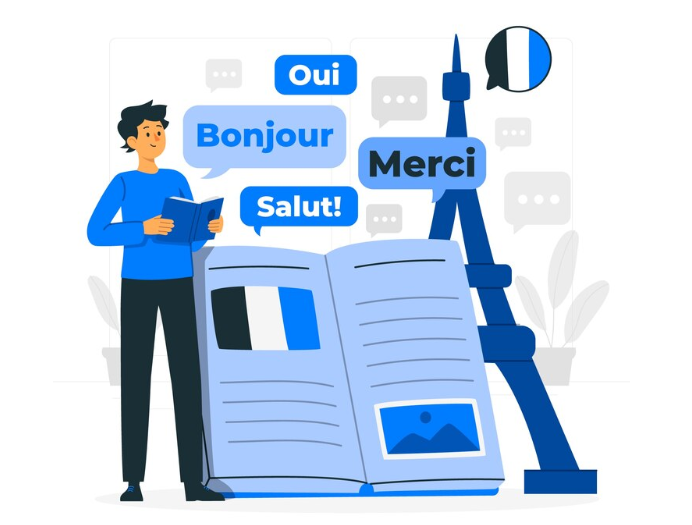
Illustration of a man learning French, chat bubbles with French words surround him

Bonsoir: Good evening

As the day moves into evening the way to say “hello” in French changes, bonsoir becomes the greeting to use, usually from 6 pm onwards.

Salut: Casual hello

Another way of saying ‘hi’ in French is using salut. This greeting is perfect for a more informal conversation. It’s akin to saying “hey” in English and is best used among friends, family, or people your age. It’s a great way to keep things casual and friendly.

Related topic: ‘How are you’ in French: Learn how to say it!

Would you like to learn the pronunciation of these phrases? In the second episode of Season 1 of the Coffee Break French podcast, you can get more insight into them and also learn other useful phrases. 

Listen to it now:

Bonne nuit: Good night

When it’s time to bid someone goodnight, bonne nuit is the phrase to use. This greeting is reserved for late at night when people are heading to bed. It conveys a sense of finality and well-wishing for a good night’s rest.

Bonne journée and bonne soirée: Wishing well

After saying ‘hi’ in French, you might want to wish someone (have) “a good day”, right? Well, to do that you can say bonne journée. This phrase is often used when parting ways in the morning or afternoon, conveying your hope that the person has a good day ahead.

Similarly, bonne soirée is used to wish someone (have) “a good evening”. It’s typically said when you’re leaving in the evening and want to wish the other person well for the rest of the night.

Au revoir: Goodbye

After you say ‘hi’ in French you also need to know how to say goodbye. But how do you say goodbye in French? Well, when it’s time to go, au revoir is the standard way to do it. It’s a polite and versatile phrase suitable for most situations. 

Whether you’re leaving a social gathering or ending a business meeting, au revoir fits the bill.

À demain: See you tomorrow

If you plan to see the person the next day, à demain is a perfect farewell. It means “see you tomorrow” and adds a sense of anticipation for the next meeting.

À bientôt: See you soon

To express that you hope to see someone again soon, use à bientôt. It’s a friendly and warm way to indicate that you look forward to the next encounter.

Conclusion

Getting to grips with these French greetings will not only enhance your language skills but also help you when meeting with French speakers. From the versatile bonjour and bonsoir to the friendly way to say ‘hi’ in French – salut – as well as à bientôt, these phrases will ensure you make a positive impression in any interaction. 

So, practise these greetings, and soon, they’ll become a natural part of your everyday conversations. By integrating these key phrases into your vocabulary, you’ll be well-equipped to navigate the French-speaking world with more confidence and ease. How about learning how to say where you are from in French? Read the blog post we prepared to help you with that now!

‘How are you’ in French: Learn how to say it!

When you start learning a language, either for business or pleasure, it is important to know a few basics. Whether you are visiting a French-speaking country to attend a conference, enjoying a relaxing time by the beach or greeting your friend, being able to say ‘hi’ or ‘how are you’ in French is essential. 

After all, everyone likes to be polite, and when you initiate a conversation with the locals in their native tongue, every interaction tends to run smoothly. To help you with that, in this article, you will learn how to say hi, ask people how they are doing and also reply to them in French. 

Keep reading to find it out!

How to say ‘hi’ in French?

First things first… Before you need to ask ‘how are you’ in French, you must start the conversation. And to do that we usually use a greeting like ‘hi’ or ‘hello’, right? But how do you say it in French?

The simplest way possible is saying salut, which means hi or hello. This format is a casual way to greet friends, peers, or acquaintances. So you could say something like that to greet someone: 

  • Salut ! Hi/Hello!
  • Salut, Sarah ! Hi/Hello, Sarah!

How to say ‘how are you’ in French?

Well, now that you are already familiar with the way you can start a conversation, it is time to learn how to say ‘how are you’ in French. There are several ways to inquire about someone’s well-being… Let’s check some out: 

Comment ça va ? 

This is perhaps the most standard and widely used way to ask ‘how are you’ in French. It translates directly to ‘How’s it going?’ and is suitable for both formal and informal situations.

Ça va ?

It is a shorter version of the phrase we have above. This is a more casual way of greeting people. It is like asking ‘You good?’, but it literally means ‘That’s going?’. It’s commonly used among friends in informal settings.

Ça roule ? 

This expression is something like slang in French and is more commonly used among young people. Therefore, it is a very colloquial way of asking ‘how are things?’. Usually, you will hear close friends asking each other that.

Would you like to learn the pronunciation of these phrases? In the first episode of Season 1 of the Coffee Break French podcast, you can get more insight into them and also learn other useful phrases. Listen to it now: 

Illustration of four people talking to each other

 How do you answer ‘how are you’ in French?

Very good! Now you already know how to say hi and ‘how are you’ in French. But how can you answer someone’s reply to your questions? In a casual situation, they will probably do it by adding et toi ?, which means what about you? at the end of their answer.  

Let’s figure out some answers that people might give you and you might give them:  

Ça va bien 

This response translates to ‘I’m doing well’ and is a pretty straightforward way to reply in situations where you’re feeling good.

Ça va très bien

If you want to say you are doing even better, you can say ça va très bien. As expected, that means that things ‘are going very well’. 

Je suis en forme

This is a more complex structure, but we will make it simpler for you. Je suis means ‘I am’ and en forme means ‘on form’. Therefore, with this statement, you say you are on form and feeling good. 

In case learning more French is on your plans, be aware that ‘je suis’ is a very important phrase and you will come across it several times! After all, you use the structure ‘I am’ to express a lot of important things, like your nationality, your age and lots more.

Ça ne va pas

The same thing as ça va, isn’t it? But it means the complete opposite – ‘things aren’t going well’. You might have noticed that we have ‘ne …. pas’ in this case. We use these terms to make something negative in French.

Your French 101 session is over for today!

By learning how to say ‘hi’ and ‘how are you’ in French, you’ll be better equipped to initiate conversations and engage with French speakers. After all, it is not only a polite gesture but also an essential skill for effective communication.

Remember, language learning is a journey, and every word and phrase you learn brings you one step closer to fluency. So, practise these questions and responses and listen to the podcast we have in this blog post to improve your pronunciation. 

And if you want to keep improving your basic vocabulary, check out this article on the different ways of greeting people in France depending on the time of day!

 

Countdown to Coffee Break French

CbflogoOnly 4 more days to go until the latest podcast from Radio Lingua is launched. Episode one of Coffee Break French launches on Wednesday 26th September at 18:00 French time. We’ll be in Paris for the launch and we’ll be bringing you a video presentation about what you can expect from the series. In the meantime, you can subscribe to the feed in iTunes so that you receive the first episodes automatically. À très bientôt!

Coffee Break Spanish wins prestigious award

Eal2007Coffee Break Spanish has won a European Award for Languages. The award recognises “creative ways to improve the quality of language teaching, motivate students and make the best of available resources”. It’s a Europe-wide initiative supported by the European Commission. The UK co-ordinator of the initiative is CILT, the National Centre for Languages. In total 15 initiatives were recognised involving language-learners of all ages. According to the judges, “the success of Coffee Break Spanish across the world shows that podcasting can promote language awareness and competence regardless of geographical location”. Kara and I will be at the Millennium Stadium in Cardiff on 20 November to accept the award. We’d like to take this opportunity to thank everyone for their support of Coffee Break Spanish, and we’re looking forward to the new season beginning in a few weeks. All the Coffee Break Spanish news can be found at www.coffeebreakspanish.com.

Final preparations for the launch of Coffee Break French

Final preparations are underway for our launch of Coffee Break French next week. The French team is heading out to Paris this weekend in preparation for the launch. The Coffee Break French feed is already live and you can subscribe to it in iTunes or via the website. Prior to the launch we’ve been releasing promo shows about Coffee Break French and there will be another one of these later this week explaining what the course will involve. Coffee Break French goes live at 18h00 on Wednesday 26th September when we’ll launch with a video introduction from Paris. While in Paris we’ll also be working on something else, but at this stage we’ll have to keep that top secret! More information in the coming months!

Coffee Break Spanish picks up TMN Online Excellence Award

Tmn_editors_award2007_2
We’re delighted to find out today that Coffee Break Spanish has won one of The Morning News Editor’s Choice Awards for Online Excellence. Here’s what they said about us:

We’ve been meaning to learn Spanish for años, but the problem with most audio language lessons is that, except for the parts in another language, the hosts’ monotone dialogue kicks in our ADD. Not so with Mark and Kara, the charming hosts at Coffee Break Spanish. Because they’re Scottish—and therefore have the world’s most appealing accents—the parts in English and en español are never a bore. Additional reading is available via download for those students who want an enriched listening experience, but the lessons are so well-designed that you won’t lose out if you choose only the bare-bones path the first time around.

Apparently we’re a “best-in-class approach to language lessons”! Many thanks to The Morning News!

Coffee Break Spanish merchandise now available!

ButtonmainstoreListeners can now purchase original Coffee Break Spanish merchandise in the Radio Lingua Store. Items include various ranges of t-shirts and other clothing featuring Spanish language slogans and the Coffee Break Spanish logo. We also have a range of gift items including the very useful Coffee Break Spanish clock which will help you to tell the time in Spanish.
Launch of Coffee Break Spanish

We are delighted to announce the launch of our new podcast, Coffee Break Spanish, aimed at listeners who want to acquire some basic Spanish, but who have very little time to spend learning. By subscribing to Coffee Break Spanish, listeners will receive weekly 15-minute programmes introducing them to basic Spanish and equipping them with enough Spanish to cope on a trip to a Spanish-speaking country, or to converse with Spanish-speaking friends. The show is hosted by teacher Mark, and listeners are encouraged to join student Kara in repeating and practising the language covered.

There are additional materials available which offer pdf guides to the language covered in each lesson, beautifully designed flashcards for your iPod or other compatible media player, and a “top-up” podcast which reviews the vocabulary covered with a musical background. The podcast also features a community forum where users can post questions or practise their newly-acquired language skills with Mark and Kara.

Subscribe now to Coffee Break Spanish!