Spanish WOTD Review – 8 March 2013

Apologies for the delayed publication of this episode which is due to a technical problem we’ve had with the site over the past week.

We’ve been publishing a daily word on Facebook and Twitter and each day we’ve asked our Facebook friends and Twitter followers to post a comment using the word of the day, thereby practising their language skills. Last week our theme was eating out in restaurants and as usual the Radio Lingua community has come up with some excellent examples of this week’s words: la cuenta, la carta, el postre, pedir and reservar.

Friend us on Facebook | Follow us on Twitter | iTunes link

Episode 306 – Q&A Spanish

In this week’s episode of Q&A Spanish we answer questions from listeners Kendal, Chris and Sue. Topics include how to cheer at sports games in Spanish, how to describe correctly stockings / tights / pantyhose (!) and how to talk about how long you’ve been doing something. As usual our experts JP and Nahyeli are on hand to answer these questions.

Use the player below to listen to this week’s episode:

If you have a question for our experts, you can get in touch with the Q&A Spanish team at the Q&A Spanish page. Remember that we welcome all questions, even if you’re just starting out with Spanish! Don’t forget too that you can leave us voicemail by clicking on the tab at the right of this page!

iTunes link | RSS feed

On Location Swedish – 15 Mar 2013

130315-ailieTja! Well, the past weekend it was, as promised, practically summer in Sweden. OK, that might be a slight exaggeration – but I’m pretty sure at some point over the weekend thermometers were definitely reaching that ultimate high of 6°C! Definitely shorts and t-shirt weather, I think you’ll agree. My best friend was returning from a short break in Berlin, where he’d been having a sort of ‘reunion’ with the other teaching assistants he met whilst doing a Comenius placement in France (Comenius being the equivalent of Erasmus except the EU aids language teaching placements instead of university places), and so we decided to make the most of the warm weather in Stockholm instead of heading straight back to Uppsala.

Whilst we were wandering around the up-market area of Östermalm, the conversation turned to the differences between all the education systems we had encountered in our lives. Something which quite starkly highlights the differences, we felt, is the ways in which pupils address their teachers; for example, in Sweden it is entirely normal to call teachers by their first name, something pretty much undreamt of in Britain and certainly in France. In Sweden, schooling is compulsory from the age of 7 (compared to 6 in France and 5 in Scotland), although children can be enrolled in a dagis or förskola (preschool or nursery) from as early as 1 year old. Like in the UK, Swedish schools operate on a two level system,  that is to say you find grundskola, which is the compulsory “primary” school between the ages of 7-16, with the vast majority of pupils electing to go on to gymnasium, the three-year “secondary” school. In a slight similarity with, for example, the French system, pupils at gymnasium will choose a program and orientation to follow, some more vocational, some more academic, to prepare them better for högskola (lit. “high school”, although the closest British equivalent is “college”), for university or for work.

During this discussion, my friend used a phrase he had read whilst doing external reading for his Swedish literature course, in which the author used the phrase “med utbildningen i ryggen”. This literally translates as “with the education in/on the back” – so you can imagine this produced a rather confused look on my face. What it actually equates to is “with a good education behind you” or “to have solid education ‘in the bag’”; which makes a bit more sense! And, slightly different to this, a Swedish friend later told me that in changing “ryggen” to “ryggmärgen” (lit. “spinal cord”), it would mean that you know all the things you’ve learnt “by heart”…and it got me to thinking, where on earth do languages take their inspiration from what parts of the body are associated with knowing these things? Hearts, spinal cords, backs… Who knows! And with that, I’m going to enjoy the fact that it still isn’t quite dark yet (it’s 17:00), so until next time, ha det så bra!

A beginner’s guide to places in town in German

CBG 1-07

If you’re visiting a German-speaking area, familiarising yourself with common places and their names can make navigating around much easier. Therefore, in this blog post, we will be focusing on essential phrases and key places in town in German.

So, whether you’re planning a trip or simply expanding your language skills, learning these terms will help you feel more connected to the culture and more confident in your interactions. 

Don’t forget to press play and listen to the podcast to help your pronunciation of this new vocabulary.

Important places in town in German

Let’s get started and talk about key places in town in German:

  • der Bahnhof (m) train station
  • der Strand (m) beach
  • der Supermarkt (m) supermarket
  • die Bank (f) bank
  • die Apotheke (f) pharmacy
  • das Hotel (n) hotel
  • das Stadtzentrum (n) city/town centre

Note the places in town are listed with the word for “the” depending on whether they are masculine (m), der, feminine (f), die, or neuter (n), das, in the nominative form. Knowing the names of these locations will help you get around and find what you need.

Wo ist…? Where is…?

Now that you are aware of places in town, how can you ask for directions in German? You can use the phrase ‘Wo ist…?’ which means ‘Where is…?’. For example:

  • Wo ist der Supermarkt? Where is the supermarket?
  • Wo ist die Apotheke? Where is the pharmacy?
  • Wo ist das Hotel? Where is the hotel?

Pairing Wo ist…? with the names of places in town in German will make it easy to ask for directions.

Asking for help in town

Können Sie mir helfen? Can you help me?

This phrase means “Can you help me?” It’s incredibly useful when you need to ask for directions or assistance. It’s in the formal form, to be polite, used with people we don’t know or those in authority.

Asking for a location

Entschuldigung, können Sie mir bitte helfen? Wo ist der Bahnhof? Excuse me, can you help me, please? Where is the train station?

Try out this phrase — German speakers will appreciate your effort to speak their language when asking for places in town in German.

Checking the map

If you have a map, this question is a lifesaver: “Can you please show me on the map?” It helps you pinpoint the exact place in town you need. For example:

  • Entschuldigung, können Sie mir bitte auf der Karte zeigen, wo das Stadtzentrum ist? Excuse me, can you please show me on the map where the city centre is?

This phrase is particularly useful if you’re feeling a bit lost and need more precise guidance to find the place in town you are looking for.

Summary

When you’re in a German-speaking town, these phrases and place names will help you find your way. Make sure you practise these questions and use them on your next trip to a German-speaking country:

  • Können Sie mir helfen? Can you help me?
  • Wo ist der Bahnhof? Where is the train station?
  • Können Sie mir bitte auf der Karte zeigen? Can you please show me on the map?

Learning about these places in town in German will boost your confidence and make exploring the town much easier. Remember, practice makes perfect, and the more you use these phrases, the more natural they’ll become.

With this newly found vocabulary, you are already able to speak a little German. If you need more tips for navigating the German language, check out the blog post we prepared on the subject!


On Location Italian – 14 March 2013

130314-nicoleBuongiorno a tutti and welcome to On Location Italian! Now that we are into the month of March the cold, snowy days of winter are fading into the distance and leaving the way for some long awaited rays of sunshine and the clear blue skies of spring to take over. It therefore seemed the perfect season to visit the fattoria (“farm”) run by a friend that I have made here in Verona. So earlier in the week I took the short car journey ride with a group of friends to the beautiful fattoria just on the outskirts of Verona.

Now before I tell you about all the different animals I came across at the fattoria I have a slight confession. In contrast to all the controversy surrounding the horse meat scandal back home, here in Verona the eating of horse is perfectly acceptable and commonplace and you will struggle to find a restaurant that doesn’t sell cavallo (“horse”). I personally have never been able to bring myself to try a piece of Black Beauty himself. However, and this is where the guilty conscience starts to kick in, I have tried another popular Veronese dish of asino (“donkey”). You can therefore imagine my horror when I turned up at my friend’s fattoria only to discover that he had two donkeys. After making friends with these cute animals I think it is safe to say that whilst happy to embrace the Verona way of life including the cuisine, I will be sure to bypass the dishes containing asino in the future. Despite spending the majority of my time with the donkeys, the fattoria was also home to lots of polli (“chickens”), una capra (“a goat”), un maiale (“a pig”) and due oche (“two geese”). There was also a rooster, the Italian name for which I had to ask my friend. He told me “rooster” in Italian is gallo and shared an expression that his nonna (“gran”) used to tell him when he was growing up: andare a letto con le galline e svegliarsi col gallo, literally translated as “to go to bed with the hens and to wake up with the rooster” or in other words “early to bed, early to rise”.

It was nice seeing another side to Verona and with the good weather and longer nights ahead I hope to return to le colline (“the hills”) to visit my new found donkey friends. I hope you have all enjoyed On Location Italian for this week. A presto!

On Location German – 13 Mar 2013

130313-hollyHallo zusammen, it’s Holly here, back with another blog post. I’m still having a great time over here in Germany and I am constantly learning new words and phrases. A couple that I have learnt recently are überglücklich sein (to be on top of the world) and zu schön, um es in Worte zu fassen (too brilliant for words). I do, in fact, feel on top of the world just now and my year abroad really is too brilliant for words!
Was die Arbeit betrifft (as far as work is concerned) I really feel like I fit in now and I am getting the hang of everything. I run my own Scottish culture Arbeitsgemeinschaft or AG (study group or workshop) which is part of the curriculum at the Gymnasium where I teach. The children can choose from a variety of topics, giving them the opportunity to learn something new that is not in the normal school curriculum, without having to worry about grades.

In my last blog post I told you all that I was going to Berlin. It was amazing and one of the best aspects of this trip was that I didn’t have to pay a huge amount because of the different train tickets that I bought at the beginning of my stay here. Firstly, I bought a Semester ticket through the nearest university to me. This cost €215 per semester and gives me unlimited travel on Nahverkehr (the slower, local transport) in my Bundesland (state in Germany), Nordrhein-Westfalen. In Germany when you enroll at a university you automatically get this ticket as it is covered by your tuition fee. Secondly, I bought a Bahncard 50 which gets me 50% off of all trains in Germany and some in Switzerland and Austria. I would definitely recommend this to any of you who may be thinking of spending a longer period of time in Germany.

We managed to fit a lot into our long weekend away, including der Fernsehturm (The TV Tower), Das Brandenburger Tor (The Brandenburg Gate) and lots of Museen (museums). I also loved Die Berliner Mauer (The Berlin Wall) or “East Side Gallery”. I think that Berlin is a city that everybody should visit at some point in their life

Das reicht für heute – that’s all for today. I’ll be back again soon with more stories from my time in Germany. Bis bald!

On Location Spanish – 12 Mar 2013

¡Buenas a todo el mundo! and welcome to Grace’s On Location Spanish Update. So it appears we find ourselves in March and wondering where the time has gone, ¿verdad? (“am I right?”) As I embark on the homestretch of my busy year here in Valencia, me queda un montón por aprender (“I still have a lot to learn”) and with a busy social calendar for the city in upcoming months, I hope to keep you posted with my news and pictures from the celebrations.

With student huelgas (“strikes”) aplenty and preparations for Las Fallas in place, there is an air of restlessness about campus as we muddle through to our Easter holidays. With that in mind I’d like to tell you about a phrase I’ve heard that nicely expresses that “fed up” feeling:

¡Estoy hasta las narices de todo!
I’m sick and tired of everything.

Having initially translated the phrase ‘hasta las narices de’ as “up to the noses of”, I was reminded of the English expression of “being up to your eyeballs in” something. Checking in with my friend Daniel, madrileño (“Madrilenean”) by birth but lovingly-adopted by the British Isles, he assured me that this was basically correct and that the expression serves pretty well in most contexts where someone is feeling a bit under pressure or overwhelmed.

I hope you all have nothing to be sick and tired of, but if that is the case, you can take some consolation in being able to say it in Spanish. If you’re joining me next time for more On Location Spanish then I hope to tell you a little more about Las Fallas. Until then ¡Hasta la próxima!

Numbers in German: counting from 1 to 10

CBG 1-06

Learning numbers is one of the fundamental steps in mastering any language, and German is no exception. Whether you’re shopping, telling the time or simply counting, understanding numbers in German is essential. 

In this blog post, we’ll explore die Zahlen from 1 to 10, providing tips and examples to help you become confident in using them.

Numbers in German 1-10

Let’s dive right in and start with the basic numbers from one to ten. These form the foundation for all other numbers in German:

  • Eins (1)
  • Zwei (2)
  • Drei (3)
  • Vier (4)
  • Fünf (5)
  • Sechs (6)
  • Sieben (7)
  • Acht (8)
  • Neun (9)
  • Zehn (10)
  • Elf (11)
  • Zwölf (12)

These numbers are straightforward and essential for beginners. Practice them until you feel comfortable, as they will recur frequently as building blocks for larger numbers.

Practical applications of numbers in German 

Knowing numbers in German is essential for everyday activities such as shopping, telling the time, talking about family in German and navigating public transportation. Here are a few practical applications to help you see these numbers in action:

  • Meine Mutter hat zwei Schwestern. My mum has two sisters. 
  • Ich hätte gern drei Kilo Äpfel. I would like three kilograms of apples.

Or you could ask someone ‘Wie viel kostet das?’ to which they would respond: 

  • Es kostet fünf Euro. It cost five Euros.
  • Das kostet fünf Euro. That costs five Euros. 

If you are at a Restaurant, there is also some vocabulary you should be familiar with: 

  • das Trinkgeld tip 
  • Kann ich mit Karte zahlen? Can I pay by card?
  • die Kreditkarte Credit card 

Tips for learning numbers in German

To be on top of your game when it comes to German numbers, there are some tips you can use – that apply to this topic or any other:

  • practice regularly, as repetition is key to fixate newly found vocabulary. You can use flashcards or practice exercises to reinforce your knowledge;
  • listen and repeat, which helps with pronunciation and comprehension;
  • use real-life scenarios, apply what you learned if you are travelling or even watching series or movies in German, and try to identify and understand the numbers being used;
  • finally, remember to periodically review what you’ve learned to ensure it stays fresh in your mind.

Do you see? Mastering numbers in German is not as hard as it seems and is a crucial step in becoming proficient in the language. By using them, you can quickly gain confidence in using numbers in various contexts.

To learn your way around town, check out the article and podcast we prepared on asking for directions in German

Episode 305 – Q&A Spanish

It’s time for a new episode of Q&A Spanish. In this episode JP and Nahyeli answer a question from Andrew about the vosotros form which he’s noticed in a novel he’s reading; there’s a question from listener Chris who wants to know the difference between recordar and acordarse de, both of which mean “to remember”; and finally Ross wants to know the difference between más bien and mejor. As usual JP and Nahyeli provide answers to these questions through their explanations and examples.

Use the player below to listen to this week’s episode:

If you have a question for our experts, you can get in touch with the Q&A Spanish team at the Q&A Spanish page. Remember that we welcome all questions, even if you’re just starting out with Spanish!

iTunes link | RSS feed

On Location Swedish – 1 Mar 2013

130301-ailieHej! Hur är läget? (“How’s it going?”) With March coming in now, we are finally starting to hope for a bit of snow melt and the return of some sunshine here in Uppsala, although I think it will still be a few weeks before we see much real improvement. I am assured that Sweden in Spring will be lovely, but I’ve yet to see any evidence of that!.  Anyway, this week I wanted write about the act of being polite in Swedish. When I first started learning Swedish I can remember being very surprised at the lack of the word for “please”, thinking it very forward thinking and Scandinavian, and also very difficult for a well-mannered Brit to get used to it! What I did not realise at that time is the myriad of ways Swedish has not only for generally being polite, but more specifically for expressing thanks. Also, I have found that varying the way you say “thank you” in Swedish does actually make you sound more Swedish, always helpful when you are trying to pass yourself off as a native!
So, starting with the basics: tack (thank you), can and should be said at just about any possible opportunity, and can be used in place of “please”, as in “En kaffe, tack” (“A coffee, please”). Building on this, you get to tack så mycket (thanks so much), and tackar (thanks), which I like to think of as “intermediate” in the saying thank you scale. So what’s “advanced” in that case? The ultra-fancy “tack ska du ha”, literally translating as “thanks shall you have”, or “thank you very much”, and which often ends up sounding something like “tack ska-oo-aa”.

But what does one reply to all these expressions of thanks? Well, it depends on the situation. “Varsågod” is most often used like “you’re welcome”, especially after being thanked for being something (as it can also be used as “here you go”). In response to thanks for doing something for someone – giving directions, helping someone with their luggage on the train, that sort of thing – the two most common phrases in my experience at least are “ingen fara” (“no worries”), and “det är lugnt” (“it’s no bother, it’s cool”).

One final note on politeness in Swedish, this one concerning mealtimes: the Swedish equivalent of “bon appétit” (although it is something you almost solely hear waiters and waitresses saying to restaurant customers), smaklig måltid. And I have to say, this is one of my favourite Swedish phrases – literally translated, it means “tasty mealtime!” So, until next time, hej då!

On Location Italian – 28 Feb 2013

130228-nicoleBuongiorno a tutti and welcome to On Location Italian. It’s Nicole here writing to you all once again from Verona, Italy. One of the highlights of spending a year abroad is when your loved ones from back home pay you a visit and you are finally able to show them around the beautiful city and region it has been your privilege to be living and studying in. With the female members of my family having already made the trip, it was the turn last week of my brother and dad to spend some time here.
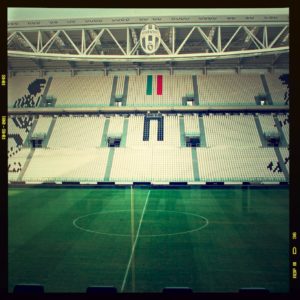
After showing them around the sights of Verona, since my brother has from childhood been a huge Juventus tifoso (“fan”), it was only fitting that we caught the train to the football team’s home city of Torino (“Turin”). It was my second time visiting the city now up there on my list of favourite European cities and in my view rather underrated in comparison to other major cities such as Rome, Venice and Milan.

Unfortunately we were not able to get hold of tickets for a Juventus partita (“match”). We were able however to take a visita guidata (“guided tour”) of lo stadio (“the stadium”), getting up close and personal with all areas including la tribuna (“the stands”), la tribuna d’onore (“the VIP section”), and lo spogliatoio (“the dressing room”). To make up for missing the match, my brother, dad and I sat at a local bar where the Juventus match was being shown live. Although not a massive football fan myself I did take the opportunity to pick up phrases I heard being used throughout the game. The most common of these amongst the Juve tifosi (“fans”) was Forza Juve, meaning “Come on Juve!” I also heard fallo di mano, which means “hand ball” with fallo being translated as “foul”. Other phrases I heard were calcio d’angolo (“corner kick”), calcio di punizione (“free kick”) and fuorigioco (“offside”).

With my dad and brother back in Scotland, I am now back to my usual pastimes which are normally enjoyed in an environment somewhat less male-dominated than football but surprisingly I loved learning about il calcio italiano (“Italian football”) and spending some quality time with my family. I hope you have all enjoyed On Location Italian and I will be back soon. A presto!

On Location German – 27 Feb 2013

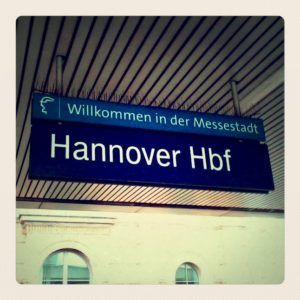
130227-danielHallo zusammen! It’s Daniel here for another On Location German blogpost! I now have ein neuer Stundenplan (“a new timetable”), which now allows me more opportunities to travel! (reisen=”to travel”.) So last weekend I took a trip to Hannover in the state of Niedersachsen, (“Lower Saxony”) which isn’t very far from here in Herford. Hannover city centre is very open with long, wide streets which make the streets of Scottish cities look small. Then again, most German cities make Scottish cities look small! There was only one problem during the trip:
‘Als ich am Bahnhof angekommen bin, dachte ich, dass meine Fahrkarte von der Bildfläche verschunden war!’
(“As I arrived at the train station, I thought that my ticket had vanished into thin air!”)

Von der Bildfläche verschwinden’ is German for “to vanish into thin air.”

It did turn out that I had put it in the wrong pocket… but we learn from out mistakes, right? Anyway, when I finally got to Hannover after being reacquainted with my ticket, I didn’t hesitate to find my hotel so I could take off my backpack. (zögern=”to hesitate”) Then after a weekend of Einkaufen (“shopping”), ungesundes Essen (“junk food”) and a trip to the Kino (“cinema”), it was time to go back to Herford. Luckily I didn’t lose my ticket on the way back!

The moral of the story is: ‘behalte deine Fahrkarte im Auge!’ (“Keep an eye on your ticket!”)

Until next time! Bis zum nächsten Mal!

Daniel.

On Location Spanish – 26 Feb 2013

130226-iain¡Bienvenidos a On Location Spanish! It’s Iain here with another update from my Erasmus at the Universidad de Salamanca.
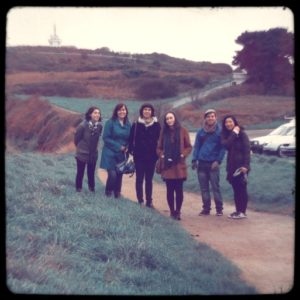
As February marches on, you’ll be glad to hear that: estamos en clase de nuevo (“we’re in class again”), grappling with that most unique of challenges of matching my expected credits required by my home University with the number of credits actually available from the classes here at USal. Such is the life of an Erasmus student! Much like last semester, I’m taking a mixture of language and business classes. In my phrase, I used de nuevo to mean “again”. I picked this little phrase up from my French classmate Thibaud, who mentioned that his Spanish teacher at High School in Paris used to say it all the time. It’s interesting to see that on Erasmus, it’s not just the Spanish native speakers that are teaching me the language!

With the arrival of the new semester, la comidilla de la vecinidad (“talk of the town”) is the hundreds of new international students beginning their exchanges here. It really adds to the cultural “melting pot” that makes Salamanca known worldwide as an excellent base to develop both your Spanish knowledge and an excellent social life.

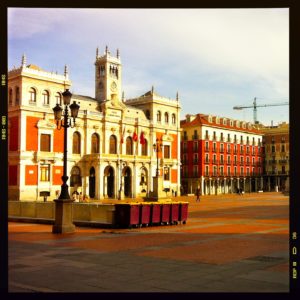
I’m glad to have a full semester ahead of me to continue working on my Spanish skills. It also allows me to see more of the Iberian Peninsula and its culture. We’ve recently visited Valladolid, an industrial town to the north of Salamanca. Also, a huge part of modern Spanish culture is defined by sport, and to that end I’ve managed to get hold of some tickets for the Formula One Gran Premio (“Grand Prix”) race in Barcelona in May. I can’t wait!

¡Hasta luego seguidores!

On Location French – 25 Feb 2013

130225-roseSalut tout le monde! It’s Rose here with another blog post from France. This article comes after realising how quickly my year abroad here in St Brieuc is going in. It’s already nearing the end of February, and my contract at school finishes in April. With this in mind, myself and a few friends decided il faut profiter du temps qui nous reste – we have to make the most of the time left to us. So, last weekend we visited the coastal town of Perros Guirec. Further north in Brittany than Saint Brieuc, Perros Guirec is well known for le granit rose, the pink-coloured rocks that make up the beach and coast here. It was nice to spend a calm weekend here, and opened my eyes to different environments. It’s easy to think weekends away have to involve visiting somewhere bigger, but sometimes escaping to a nearly deserted beach can do the world of good.
Just as we arrived on Friday evening though, my phone ran out of credit. Being a small town, I couldn’t hunt down a phone shop on Saturday, and as everything is closed on Sundays here, it was after school on Monday afternoon before I could finally top up my phone. When I arrived in France I bought a cheap mobile phone, un portable. There was no point taking out a contract – un abonnement, as I’m only here for seven to eight months. Instead I opted for “pay as you go” top-ups, les recharges. You can pick different amounts but I usually opt for the one with SMS et appels illimités, unlimited texts and minutes. Making sure my phone is topped up tends to be the least of my worries though. Instead, deciphering texts from my French friends and flat mates can be a lengthy and painstaking process. Just as we have ‘text-speak’ in English, so too in French exist acronyms such as Slt in place of salut, or c rather than c’est. Tkt is one that particularly puzzled me until I was forced to ask my friend what she meant when she kept using it. It’s short for t’inquiète pas – don’t worry, or no problem. Finally, you’re not worth your salt if you don’t finish a text in French without Bz, short for bisous or kisses, like leaving an X at the end of a text in English.

School has also been quite busy for me the past few weeks for two reasons. Firstly, my final year students will sit their baccalaureat, or bac for short, in June, exams which determine if they can go onto university. This week they have been doing what is called les bacs blancs. This literally means ‘the white baccalaureat,’or practice exams. Secondly, the whole school has been busy preparing for la semaine des portes ouvertes, open-doors week at the school. This occurs around the same time every year in France, where prospective pupils and parents can visit schools in the area. I hope you enjoyed reading this post, and à la prochaine!

French WOTD Review – 20 Feb 2013

We’ve been publishing a daily word on Facebook and Twitter and each day we’ve asked our Facebook friends and Twitter followers to post a comment using the word of the day, thereby practising their language skills. This week, in honour of St Valentine’s Day, we’ve focused on the topic of love and we’ve shared the following words and phrases with our community: l’amour, tomber amoureux, les fleurs, je t’aime and un indécrottable romantique. As usual, the Radio Lingua community has come up with some excellent examples of these words in sentences, and that’s what we’re looking at in this episode of the show.

Follow us on Twitter | iTunes link

Spanish WOTD Review – 20 Feb 2013

We’ve been publishing a daily word on Facebook and Twitter and each day we’ve asked our Facebook friends and Twitter followers to post a comment using the word of the day, thereby practising their language skills. Last week our theme was love, in honour of St Valentine’s Day, and as usual the Radio Lingua community has come up with some excellent examples of this week’s words: enamorarse, las flores, una cita, el amor and un beso.

Friend us on Facebook | Follow us on Twitter | iTunes link

Episode 304 – Q&A Spanish

In this episode of Q&A Spanish JP and Nahyeli answer questions from listeners Marta, Steve and Joe. Marta needs help with translating “to enjoy” and she also wants to know more about the difference between gracioso and divertido. Joe is wondering about buying a ticket for a sporting event: should he buy un boleto, un billete or something else? Steve wants help saying “it’s no problem” if someone bumps into him. JP and Nahyeli have lots of advice and examples in their answers.

Use the player below to listen to this week’s episode:

If you have a question for our experts, you can get in touch with the Q&A Spanish team at the Q&A Spanish page. Remember that we welcome all questions, even if you’re just starting out with Spanish!

iTunes link | RSS feeda

Family in German – essential vocabulary for beginners

CBG 1-05

Learning how to talk about family is an important step in mastering any new language, and German is no exception. Whether you’re planning a trip to Germany, studying the language for fun, or connecting with German-speaking relatives, knowing the essential vocabulary for family in German will help you communicate more effectively. 

In this blog article, you will find key vocabulary and phrases related to the theme. So, keep reading and don’t forget to press play to listen to the podcast episode and master your pronunciation. 

Basic terms for talking about family in German

If you are wondering ‘What is father in German?’, ‘How to say mum in German?’ or ‘How to say sister in German?’, fear not! We will start with the basics. Here are some of the most common vocabulary you need to have to talk about your family in German: 

  • der Vater the father
  • die Mutter the mother
  • das Kind the child
  • der Sohn the son
  • die Tochter the daughter
  • der Bruder the brother
  • die Schwester the sister
  • der Großvater the grandfather
  • die Großmutter the grandmother
  • der Enkel the grandson
  • die Enkelin the granddaughter
  • der Onkel the uncle
  • die Tante the aunt
  • der Cousin the (male) cousin
  • die Cousine the (female) cousin

If you want to talk about your whole family, your parents or your grandparents, you can use one of these words:

  • die Familie the family
  • die Eltern the parents
  • die Kinder the children
  • die Großeltern the grandparents

Introducing family members in German

You already know how to introduce yourself in German, but to be able to introduce your family in German, you will need the terms you learned in the previous section and how to say ‘my’. As with anything in the language, this possessive pronoun changes  according to the noun gender and case: 

  • meine Mutter my mom
  • mein Bruder my brother
  • meine Kinder my children

It is worth noting that for feminine and plural words, we use meine, and for masculine and neuter words, we use mein. Now that you are familiar with how to say ‘my’, you can form phrases using the expression ‘das ist’. 

The good news is that this expression does not change and it’s used to introduce males and females in the singular. Check it out: 

  • Das ist mein Vater. This is my father.
  • Das ist meine Cousine. This is my cousin. 
  • Das ist mein Kind. This is my child.

Telling how someone else is called

To tell someone’s name, you will use the same verb we learned to say ‘I’m called…’ in German: the verb heißen. For example: 

  • Mein Vater heißt Hans. My father is called Hans.
  • Meine Mutter heißt Nicole. My mother is called Nicole.
  • Meine Tochter heißt Janina. My daughter is called Janina.

You can also say: 

  • er heißt …. he is called …
  • sie heißt … she is called …

For talking about your father or your mum and daughter, without naming their relation to you. And don’t forget that the best way to solidify your newly found vocabulary of family in German is through practice. Try presenting your relatives and writing sentences to consolidate what you learned today.

But, what if you have more than one brother or sister? What if you want to say how many cousins you have? You’ll need to know the numbers from 1 to 10 in German! Check out the blog post on the subject!

Episode 303 – Q&A Spanish

In this week’s episode of Q&A Spanish, JP and Nahyeli answer questions from listeners Andrew, Eimar and Suzanne. Topics covered include the difference between hasta la semana que viene and para dentro de una semana; ; the difference between sino and pero; and how best to translate two phrases: “to bump into someone” and “no cheating”. As usual, our experts provide lots of examples to help Andrew, Eimar, Suzanne and the whole Radio Lingua community understand the answers.

Use the player below to listen to this week’s episode:

If you have a question for our experts, you can get in touch with the Q&A Spanish team at the Q&A Spanish page. Remember that we welcome all questions, even if you’re just starting out with Spanish!

iTunes link | RSS feeda

On Location Swedish – 15 Feb 2013

130215-ailieHej! I have to admit that this week I have left writing this article a little late – something which Swedes, with their sense of punctuality which could rival the Swiss or Germans, would seriously frown upon! Several Swedish friends told me separately that they grew up with the motto from their parents, that if one is going to be anything more than 3 minutes late, it probably is not worth showing up at all. But in this case, my being late is what led me to the idea for this week’s article, namely, tid (time). Telling time and phrases around it are, I find, always one of the most difficult things when learning a new language, and so I would like to dedicate a little of my time today to talking about it.
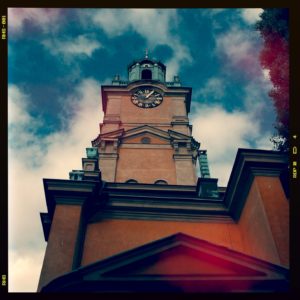
Before going to Sweden, I had been told that like in most European countries, that in Sweden I should use the 24-hour clock (and had been dreading saying “sjutton” (17), for 5pm, as the “sj” sound, a rushing of air out of your mouth like you’re blowing but haven’t closed your lips enough, is nigh-on impossible and non-Swedes in general can only manage at best a half-decent impression). However on arriving in Uppsala, in conversation at least, I learnt that using 24-hours is deemed unnecessary. It’s pretty obvious when you say, “Jag ska till skolan klockan 10” (I’m going to school (here, ‘university’, at 10) that you mean in the morning, and you aren’t planning on heading to classes at 10pm. “Klockan”, meaning “the clock” and “o’clock” and in writing is usually shortened to kl., is used to preface any time, for example, “Jag vaknade kl. 8” (I woke up at 8), “han äter lunch kl. kvart över 12” (he eats lunch at quarter past 12),  “Vi ses kl. halv 10” (See you at half 9).

This last example throws up one thing which I constantly found difficult! In English, saying for example “half 10”, means of course, 10.30. In Swedish, like in German, the system is to “minus” the half from the following hour – so, halv 10 (lit. “half 10) actually means 9.30. I imagine it this way, in English we think of “half past 10”, in Swedish “half before 10”. One last phrase, to round of this lesson in time (and a personal favourite of mine”: att tappa tid, meaning to waste or lose time. “att tappa” can also be used to mean “to drop”, and so for me “tappa tid” has this image of time slowly dropping away from one’s grasp. And on that, somewhat philosophical, note;

Jag tappar ingen tid och säger ”hej då” till just nu!
I’ll waste no time and say “bye” for now!