Come si fa il tiramisù? Learn Italian vocabulary while preparing one of Italy’s favourite desserts

Tiramisù is one of the most beloved Italian desserts worldwide. Creamy layers, a hint of coffee, and a touch of cocoa make this dolce irresistible. But come si fa il tiramisù? But how do you make tiramisu

If you’ve ever wanted to prepare this iconic dessert like a true Italian, you’re in the right place. In this blog post, based on lesson 39 of Coffee Break Italian Season 1, we’ll guide you through the step-by-step process, introducing key vocabulary and tips from an Italian kitchen. You can listen to the episode to learn how to pronounce the new words and discover more vocabulary!


What is tiramisù?

Before we dive into come si fa il tiramisù, let’s talk about what makes this dessert so special. Tiramisù, which means ‘cheer me up’,  is a layered dessert made of mascarpone cream, coffee-soaked sponge biscuits and cocoa powder. 

This dish originated in Italy’s Veneto region and has become a symbol of Italian culinary excellence. Tiramisù is not just a dessert; it’s a culinary experience for any tourist or Italian learner. 

Related topic: How to order food in Italian: key vocabulary for beginners

Come si fa il tiramisù? Step-by-step instructions

Let’s get to the heart of the matter: come si fa il tiramisù?  Here’s a simple, step-by-step recipe inspired by the conversation between Francesca, Katie, and Anna (Francesca’s mum) that you can listen to in the episode:

1. Gather your ingredients

To make tiramisù, you’ll need the following ingredients:

  • 4 uova fresche
  • 100g di zucchero
  • 500g di mascarpone
  • 300ml di caffè forte (cooled)
  • 200g di savoiardi (sponge fingers)
  • cacao amaro in polvere unsweetened cocoa powder

2. Separate the eggs

Begin by separating the egg yolks i tuorli from the egg whites gli albumi. Place them in two separate bowls.

3. Prepare the mascarpone cream

  • Add the sugar to the bowl with the egg yolks. Whisk until the mixture is pale and creamy.
  • Gradually fold in the mascarpone cheese to create a smooth cream.

4. Whip the egg whites

In the second bowl, whip the egg whites until they form stiff peaks. Gently fold them into the mascarpone mixture. This creates the light, fluffy cream that’s a hallmark of tiramisù.

5. Assemble the layers

  • Pour the cooled coffee into a shallow dish. Dip each savoiardo briefly into the coffee, ensuring it’s soaked but not soggy.
  • Layer the soaked biscuits at the bottom of your serving dish.
  • Cover the biscuits with a layer of mascarpone cream.
  • Repeat the process, alternating between savoiardi and cream, until the dish is full.

6. Add the finishing touch

Dust the top layer with unsweetened cocoa powder using a sieve. Refrigerate the tiramisù for at least 4 hours, allowing the flavours to meld together.

Tips for making the perfect tiramisù

Making tiramisù is an art form, and these tips will help you perfect it. First and foremost, it’s important to use fresh ingredients. Fresh eggs and high-quality mascarpone cheese make all the difference in achieving the delightful creamy texture and rich flavour that tiramisù is known for.

Another important tip is to avoid over-soaking the biscuits. A quick dip in coffee is sufficient to provide the necessary flavour without making them soggy. Additionally, remember to let your tiramisù rest. Refrigerating allows the flavours to blend, so don’t skip this essential step. 

Now that you know come si fa il tiramisù, why not try making it yourself? Whether you’re preparing it for a dinner party or just as a treat for yourself, this dish is sure to impress.

And, if you want to learn how to talk about things that happened to you on a trip to Italy or about all the nice things you learned on Coffee Break Italian Season 1, make sure to check out the blog post about the past tense in Italian!

 

Episode 30 – Season 4 – Coffee Break Spanish

Over the last few lessons of Coffee Break ​Spanish Season 4, we’ve seen Rory, María and Alejandro figure out what to do with the treasure they found at the bottom of the ocean. Their discovery has now made the newspapers in Mallorca, and in lesson 30 we’re taking a look at one of the newspaper articles​. This provides a fantastic opportunity for you to look at different styles of writing, as this journalistic text is possibly much more formal than what you may be used to. Mark is on hand to explain everything.

Medicine in Italian: basic vocabulary for beginners

If you’re travelling to Italy or Switzerland and suddenly feel unwell, knowing how to describe your symptoms and ask for medicine in Italian can be incredibly helpful. To help you get by when visiting a pharmacy, speaking to a doctor, or asking for advice from a local friend, we prepared this article with a couple of phrases and vocabulary that can make all the difference for beginners! 

With this vocabulary in hand, you will also be able to confidently handle minor health concerns while enjoying your time abroad! And don’t forget – to perfect your pronunciation and practise what you’ve learned, listen to the podcast below! 

Describing your symptoms in Italian

You’ll need to explain what’s wrong before you can get the right medicine in Italian. In order to do that, you will need to know the Italian words for body parts. If you are already familiar with the basic ones, then it shouldn’t be too hard to describe your symptoms. 

In any case, let’s review some essential phrases:

  • Non mi sento molto bene. I don’t feel very well.
  • Mi fa male la testa. I have a headache.
  • Ho mal di gola. I have a sore throat.
  • Ho la febbre. I have a fever.
  • Mi fa male lo stomaco. I have a stomachache.
  • Ho la tosse. I have a cough.
  • Ho il raffreddore. I have a cold.
  • Ho un’allergia. I have an allergy.

If you need to describe how long you’ve had your symptoms, you might hear someone say, Da quanto tempo si sente così? How long have you been feeling like this?’ to which you can respond, ‘Da due giorni più o meno. For about two days, for example.

Asking for medicine in Italian

Once you’ve described your symptoms, you may need to ask for medication from a pharmacist in an Italian pharmacy. Here’s how you can ask for medicine in Italian:

  • Posso avere qualcosa per il mal di testa? Can I have something for a headache?
  • Ha qualcosa per il raffreddore? Do you have something for a cold?
  • Vorrei delle pastiglie per la gola. I’d like some throat lozenges.
  • Mi può consigliare qualcosa per la febbre? Can you recommend something for a fever?

While most health concerns can be managed with over-the-counter medicine, sometimes you may need to see a doctor. Here are a few emergency phrases to know:

  • Mi serve un dottore. I need a doctor.
  • C’è un ospedale vicino? Is there a hospital nearby?
  • Ho bisogno di aiuto! I need help!
  • Ho un’allergia a… I am allergic to…
  • È un’emergenza! It’s an emergency!

Knowing how to ask for medicine in Italian and describe your symptoms can help make your adventure smoother and ensure you get the right treatment when needed. Even if you just speak the basics, making an effort to communicate in Italian will be greatly appreciated by locals and pharmacists alike.

Would you like to feel even more confident using Italian in everyday situations or when reading an authentic Italian tiramisù recipe? Check out our blog post, which includes an authentic tiramisù recipe  that you can try at home while revising some key vocabulary!

CBI 1:37 | Ho qualche domanda…

When you’re travelling, one of the most common situations encountered is that you need to ask for information. In this episode of Coffee Break Italian Mark is asking for information in his hotel in Stresa. You’ll review some of the language areas already covered and learn new words and phrases through the conversation.

Shopping in Italian: a review of key vocabulary

Imagine strolling through chic Milan boutiques, exploring Roman markets, or picking up souvenirs in charming Tuscan towns … Would you know the essential vocabulary for shopping in Italian?

It might seem silly, but being able to communicate the basics helps you connect with locals and ensures you find exactly what you’re looking for while leaving a good impression – especially in small villages where English is not so widely spoken. To help you with that, in this blog post, we’ll dive into useful phrases and tips for shopping in Italian, inspired by lesson thirty-six from Coffee Break Italian Season 1. 

If you want to learn how to pronounce these sentences and words better and listen to locals speaking the language, make sure to listen to the episode below:

Essential phrases for shopping in Italian

While many Italians, especially in tourist hotspots, speak English, being able to communicate in Italian can enhance your shopping experience. Speaking the local language makes interactions smoother, from understanding discounts to ensuring the right fit. 

With that in mind, let’s review some key vocabulary for going shopping in Italian:

Starting the conversation

If you are familiar with some of the essential Italian phrases for shopping, you already know that you should greet the shop assistant when you enter the shop and that you should use the word vorrei to ask for something specific. 

But let’s review how to say that you are just window shopping: 

  • Sto solo guardando. I’m just looking. 
  • Stiamo solo guardando. We’re just looking.

In addition, shopkeepers often start with the polite question, ‘Desidera?’ ‘Can I help you?’ to which you can respond with or no or even use the phrase we mentioned before. 

Trying on clothes

The next topic about shopping in Italian that deserves a brief review is the vocabulary for trying on clothes. We will use a piece of vocabulary we mentioned on the last topic for that as that word is used to make polite requests: 

  • Vorrei provare questa xxx. I would like to try on this xx (item of vocabulary).

The shop assistant may ask you for your size by saying che taglia?, to which you can respond with porto una S o una M I wear a small or a medium, for example. When something feels a bit too loose, you can then say C’è una taglia più piccola? Is there a smaller size?.

Clothes in Italian 

To be able to ask for specific clothing items, you need to know what they are called. For that reason (and also to help you review some of this important vocabulary), here are the names of some common items:

  • la maglietta t-shirt
  • la camicia shirt
  • i pantaloni pants
  • i pantaloncini shorts
  • il vestito dress 
  • la gonna skirt
  • il maglione sweater
  • le scarpe shoes
  • gli stivali boots

Asking about prices

A staple question when shopping is Quanto costa? How much does it cost? For simplicity, you can also use Quant’è?. As you can imagine, people will answer using numbers in Italian, so you should be familiar with them too!

When you are hunting for bargains or shopping during Italy’s famous saldi sales, you can then say: 

  • È scontato/a? Is it discounted?

At the cash desk

When you’re ready to make a purchase, these phrases come in handy:

  • Lo/la prendo. I’ll take it.
  • Posso pagare con carta di credito? Can I pay with a credit card?

The cashier then might ask you:

  • Vuole una busta? Do you want a bag?

Shopping in Italian is about more than transactions and with these phrases and tips in hand, you’re ready to explore Italy’s vibrant shops and markets confidently. The small efforts to speak the language and put your Italian skills to the test will make your shopping adventure much more fulfilling.

You need to keep practising to improve your Italian skills, right? So check out the blog post we prepared on how to ask for information in Italian at the hotel reception!


Episode 29 – Season 4 – Coffee Break Spanish

In this episode Rory is updating Alejandro on the latest developments about the treasure they have found. María has now spoken to her professor and they’ve made a plan to notify the authorities. In this episode we see a number of interesting language points including a discussion on the use of the verb salir when talking about “appearing” in the press or on TV. All these langauge points are discussed by Mark and Carmen, and there’s also some exciting news about the Podcast Awards.

Italian phrases to know when travelling

Italy is a dream destination for many travellers, offering breathtaking landscapes, rich history, delicious food, and vibrant culture. And, when visiting this country, being able to communicate with the locals can make your experience even better. With that in mind, let’s check some  Italian phrases to know when travelling!

This blog post is based on lesson 35 of Coffee Break Italian Season 1, in which we cover a conversation at breakfast about what to see and do. So, make sure to listen to it while or after reading this blog post!

Getting around

When you think of Italian phrases to know when travelling, the ones you might have under your belt are the ones for getting around the new city. In the episode, there are some interesting examples like:

  • Ecco una cartina della città. Here’s a map of the city.
  • Questo è l’ufficio del turismo. This is the tourist information office.
  • Cosa si può visitare? What is there to see?
  • Dove potreste…? Where could you (plural)…?
  • È aperto oggi? Is it open today?

If you’re looking for directions in Italian or local recommendations, these will come in handy:

  • C’è un mercato dove potete trovare diversi regali e oggetti di artigianato. There’s a market where you can find all sorts of gifts and handmade crafts.
  • Il palazzo apre tutti i giorni alle nove  e chiude alle cinque  e mezzo. The palace is open every day from 9 to 5:30.
  • Quanto costa l’ingresso? How much is the entrance fee?

Enjoying local events and culture

Following the list of Italian phrases to know when travelling, we have some related to enjoying cultural experiences, from art exhibits to music festivals. If you’re looking for entertainment, these phrases can be useful in several different situations:

  • Cosa possiamo fare stasera? What can we do tonight?
  • C’è anche un festival di musica jazz. There’s also a jazz festival going on.
  • Ci sono molti concerti gratuiti. There are lots of free concerts.

Eating and trying local dishes

Italian cuisine is world-famous, so trying local dishes is a must. Here are some useful Italian phrases to know when travelling to help you talk about food and enjoy your meal:

  • Ci sono molti ristoranti tipici. There are lots of authentic restaurants.
  • Potete assaggiare ottimi piatti regionali e anche italiani. You can try some fantastic regional and Italian dishes.
  • Posso avere il conto, per favore? Can I have the bill, please?
  • Mi consiglia un piatto tipico? Can you recommend a traditional dish?
  • Sono vegetariano/vegetariana. I’m a vegetarian.

When travelling in Italy, making an effort to speak the language – even just a little – can make a huge difference. Italians love it when visitors try to communicate in their language, and it can lead to more authentic and meaningful experiences. So before you take off on your Italian adventure, take a little time to learn these essential Italian phrases to know when travelling.

If you would also like to learn some Italian vocabulary for going shopping, make sure to check out the blog post we prepared to help you with it! 

Episode 28 – Season 4 – Coffee Break Spanish

It’s the morning after the night before, and Rory, María and Alejandro realise that they have some important decisions to make regarding the ‘tesoro’ that they’ve found off the coast of Mallorca. We join them in this episode to listen in on the conversation they have the morning after, in which they discuss the options open to them having found the treasure. Their conversation, as ever, contains many useful language points and Mark and Carmen are on hand to discuss them.

Coffee in Italian: exploring language during breakfast

Coffee is more than just a beverage in Italy; it’s a cultural ritual, a daily indulgence, and a symbol of connection. Understanding the language surrounding coffee in Italian enhances your travel experience and provides insight into Italian culture. 

In this blog post, we’ll explore how to navigate conversations about coffee during breakfast at a hotel, interact with waiters, and practise essential phrases for ordering food. To make the most of your learning experience, listen to the podcast and discover how to pronounce words and even more vocabulary!

The basics of coffee in Italian

Once you’ve checked into your hotel in Italy and had a great night’s sleep, you will probably go for a delicious breakfast, which brings us to some essential vocabulary – or the basics of coffee in Italian. Check it out:

  • un caffè an espresso, the standard coffee in Italy
  • un caffè macchiato an espresso with a dash of hot milk
  • un cappuccino an espresso with steamed milk and a layer of foam, typically enjoyed in the morning
  • un latte macchiato steamed milk “stained” with a shot of espresso.

Additionally, since you may discover other drink options during breakfast at a hotel stay (which is the theme of our podcast episode), here are some additional keywords: 

  • una spremuta di arancia freshly squeezed orange juice, another popular breakfast choice.
  • un succo a juice
  • tea

If you are wondering how to say breakfast in Italian, the word for it is colazione. If you need to, you can say il menù the menu.

How to order coffee in Italian?

Ordering a drink in Italian is straightforward, but it’s worth learning specific phrases to ensure smooth communication:

  • Per me un caffè macchiato, per favore. For me, a macchiato, please.
  • Cosa avete come succo di frutta? What fruit juices do you have?
  • Prendo un succo alla pera. I’ll have a pear juice.

If something is unavailable, the waiter might say:

  • La spremuta di arancia è finita. The orange juice is finished.

This is your cue to explore other options like succo alla mela apple juice or succo all’ananas pineapple juice.

Making choices 

When dining or having breakfast, you’ll encounter options to sit dentro inside or fuori outside. You can express your preference by one of these options by saying:

  • Preferisco stare in terrazza. I prefer to be on the terrace. (outside)
  • Prendiamo qualcosa dal buffet. We’ll take something from the buffet. (inside)

Once you’ve made your choice, the server might respond with:

  • Servitevi pure. Help yourselves.

Essential breakfast phrases in Italian

Having breakfast in Italy is a delightful experience and knowing essential breakfast phrases in Italian will help you start your day smoothly and enjoy the local flavours. Here are some must-know expressions:

  • Per colazione, prendo un cornetto. For breakfast, I’ll have a croissant.
  • Cosa avete per colazione? What do you have for breakfast?
  • Un cappuccino e una brioche, per favore. A cappuccino and a brioche, please.
  • Il menù, per favore. The menu, please.

Enjoying coffee in Italian and knowing what to expect at a breakfast scenario in a hotel is a way to experience the culture, connect with locals, and practise your language skills. For example, learning menu terms and conversation tips will help you enjoy Italy’s café culture like a local.

For more tips on learning Italian and handling everyday situations, check out our blog post on essential Italian phrases for travellers!

How do you say ‘hotel’ in Italian? A simple guide to check in and address issues with your accommodation

Travelling to an Italian-speaking country is an exciting adventure, and one of the first things you’ll need to do upon arrival is check into your hotel. But how do you say ‘hotel’ in Italian and how do you report if there is anything wrong with your accommodation?  

Knowing a few key phrases can make your stay more enjoyable and stress-free. In this guide, we’ll walk you through the basics of checking into your hotel in Italian and how to address common issues you might encounter during your stay.

Try listening to the podcast before or after reading this blog post to master the pronunciation of all these new words!

<H2> How do you say ‘hotel’ in Italian and how to check in into one 

First things first… How do you say ‘hotel’ in Italian? Well, the answer is l’albergoThat is one very important thing to know before booking a hotel in Italy. 

But what do you do when you are already there and wondering how to check into a hotel in Italian? Here are some phrases to help you navigate the check-in process:

  • Buongiorno, ho una prenotazione. Good morning, I have a reservation.
  • Il mio nome è [Your Name]. My name is [Your Name].
  • A che ora è il check-in? What time is check-in?
  • Potrei avere la chiave della mia camera, per favore? Could I have my room key, please?
  • Qual è il numero della mia camera? What is my room number?

These phrases will help you get through the initial check-in smoothly. If you need help with your luggage, you can also ask:

  • Potrebbe aiutarmi con i bagagli? Could you help me with the luggage?

Common issues at the hotel and how to address them

We know that even in the most well-run hotels, you might encounter a few issues. Knowing how to address these in Italian can be very helpful. Here are some common scenarios:

  • If your room isn’t ready, you can say: La mia camera non è pronta. Cosa posso fare? My room isn’t ready. What can I do?
  • If you need an extra pillow or blanket: Potrei avere un cuscino / una coperta in più, per favore? Could I have an extra pillow/blanket, please?
  • If there’s a problem with the room: C’è un problema con la mia camera. Potrebbe mandare qualcuno ad aiutarmi? There’s a problem with my room. Could you send someone to help me?
  • If you need to change rooms: Potrei cambiare camera, per favore? Could I change rooms, please?

Vocabulary for checking out of the hotel

When your stay is over, you’ll need to check out of your albergo. Here’s how you can do it in Italian:

  • Vorrei fare il check-out, per favore. I’d like to check out, please.
  • Potrebbe chiamarmi un taxi, per favore? Could you call me a taxi, please?
  • Grazie per l’ospitalità! Thank you for the hospitality!

Now if someone asks you how do you say ‘hotel’ in Italian or how to check into a hotel in Italian, you already know! By learning a few key phrases in Italian, you can ensure a smooth and pleasant experience during your stay in a foreign country.

What about having breakfast in the hotel? If you want to remember or learn some new breakfast vocabulary in Italian, check out the blog post and podcast episode we prepared for you!

Episode 27 – Season 4 – Coffee Break Spanish

In the latest episode of Coffee Break Spanish, Rory, Alejandro and María make a major discovery in the search for the sunken treasure and we join them at this crucial point in the story. As usual, the text is rich in idiomatic expressions and complex grammar points, and you can join Mark and Carmen as they discuss the language used.

Common Italian phrases for travel: a guide for arriving in Italy

Travelling to Italy is an exciting adventure filled with stunning architecture, delicious cuisine, and a rich cultural experience. To make the most of your trip, it’s essential to familiarise yourself with some common Italian phrases for travel.

If you need guidance for arriving in Italy, this blog post will help you communicate effectively and confidently during your journey. To learn about the pronunciation of this new vocabulary, listen to the podcast below!

Essential vocabulary for your arrival

When you arrive in Italy, it’s a great idea to plan your day ahead. This way, you can make the most of your adventure and get a chance to practise your language skills! Knowing some common Italian phrases for travel can be helpful, as locals might share some tips with you. 

Asking for information

Here are some common Italian phrases for travel you might hear when asking for information or responding to questions at an information desk at the airport or train station: 

  • Qual è il modo migliore per spostarsi? What is the best way to get around?
  • Se preferisce non guidare, la cosa migliore da fare è prendere un autobus. If you prefer not to drive, the best thing to do is take a bus.
  • Quanto tempo ci vuole per arrivare al centro storico? How long does it take to get to the historic centre?
  • Ci vogliono cinquanta minuti. It takes fifty minutes.
  • Possiamo visitare molti luoghi in una sola giornata? Can we visit many places in one day?
  • Dovremmo prenotare in anticipo? Should we book in advance?
  • Si deve prendere… One must take (buy) / You have to take (buy)

Expressing gratitude and emotion

Besides the essential greetings in Italian, expressing emotions is also a vital part of communication and also a part of common Italian phrases for travel. For example, if you want to apologise, you can say mi dispiace, which means I’m sorry.

If something unfortunate happens, you might express your feelings with che peccato, meaning what a shame. On a brighter note, when you’re really happy about something, you can say che bell,o which translates to how nice. Don’t forget to express your gratitude with grazie molte or grazie mille, both meaning thank you very much

And if someone thanks you, a friendly response would be di niente, which means it’s nothing or you’re welcome.

Italian phrases for transportation

When you’re travelling in Italy, knowing a few common phrases related to transportation can make your journey much easier! There are various modes of public transport in Italy and these handy phrases will help you get around:

  • Si deve prendere il biglietto. You must take (buy) the ticket.
  • Dove si trova la stazione ferroviaria? Where is the train station?
  • C’è un taxi disponibile? Is there a taxi available?
  • È possibile noleggiare una bicicletta qui? Is it possible to rent a bicycle here?

Tips for learning common Italian phrases for travel

To learn common Italian phrases for travel, start by practising your pronunciation with enjoyable tools like language apps or podcasts, which can make the process fun. As you can imagine, Coffee Break Italian Season 1 is a great way to get familiar with common travel phrases. If you choose to subscribe to the premium version, you’ll find even more resources, including bonus lessons and transcripts, which can deepen your learning experience.

Writing phrases on flashcards and reviewing them regularly can really help reinforce your understanding, and I know how satisfying it can be to see your progress. Having a small phrasebook with you can also provide reassurance during your journey, giving you quick access to helpful phrases when you need them most.  

And when you arrive in Italy, remember to check out the article we’ve prepared on vocabulary for checking into a hotel in Italian. It’s designed to help you feel more comfortable navigating your new surroundings!

5 basic Italian phrases for travel

Travelling to Italy can be a dream come true, with its rich history, stunning landscapes, and vibrant culture. However, knowing a few basic Italian phrases for travel can be incredibly helpful to make the most of your trip. 

Not only does it show respect for the local culture, but it also enhances your travel experience, making it easier to navigate through various situations. In this blog post, we’ll explore essentials for travellers. Don’t forget to listen to the podcast to learn how to pronounce the new vocabulary!

1. At the airport

You already know basic Italian greetings, so we thought of cutting to the chase and starting with the basic Italian phrases for travel. Since almost every journey starts at an airport, we can begin there. 

For example: 

  • sono all’aeroporto I am at the airport
  • siamo all’aeroporto we are at the airport
  • sono in aereo I’m on the plane
  • siamo in aereo we’re on the plane 
  • andiamo in Italia we’re going to Italy
  • il volo the flight 
  • agli arrivi at the arrivals
  • siamo arrivati/e we have arrived 
  • abbiamo i bagagli we have the luggage / bags 

2. In Italy

When you arrive in Italy, one of the basic Italian phrases for travel you might want to be able to say is how happy you are to be there with your family or friends: ‘Sono così felice che siamo qui in Italia

You can also say: 

  • sono molto felice di essere qui I am very happy to be here
  • è un bellissimo paese it is a beautiful village

3. At a coffee or restaurant

When visiting Italy, enjoying the local cuisine and coffee culture is a must. To make your dining experience smoother, here are some useful Italian phrases to use at a coffee shop or restaurant:

  • Un tavolo per due, per favore A table for two, please
  • Il menù, per favore The menu, please
  • Vorrei… I would like…
  • Il conto, per favore. The check, please.
  • Posso avere un caffè? Can I have a coffee?

4. Asking for directions

Navigating a new city can be challenging, but knowing some basic Italian phrases for travel and asking for directions can make your life much easier. Here are some essential expressions to help you find your way: 

  • Dov’è…? Where is…?
  • A sinistra / A destra / Dritto To the left / To the right / Straight ahead
  • È vicino? / È lontano? Is it near? / Is it far?
  • Può aiutarmi? Can you help me?

5. Shopping 

Maybe you are already familiar with some phrases you can use when shopping in Italian, but if you do not know or want to remember them, here are some useful key phrases:

  • Quanto costa? How much does it cost?
  • Posso pagare con la carta di credito? Can I pay with a credit card?
  • Dove posso trovare [item]? Where can I find [item]?
  • Mi può aiutare? Can you help me?

Learning these basic Italian phrases for travel will greatly enhance your experience, making it more enjoyable and less stressful. Whether you’re asking for directions, ordering food or going shopping, these phrases will help you navigate through Italy with confidence.

To learn more vocabulary regarding public transportation in Italian, check out the blog post we prepared on the subject!


Episode 26 – Season 4 – Coffee Break Spanish

It’s time for another episode in our series for advanced Spanish learners. Join Mark and Carmen as they discuss the latest developments in our story featuring María, her Scottish boyfriend Rory and his Argentinian friend Alejandro as they embark upon the search for sunken treasure off the coast of the island of Mallorca. The text, as ever, is rich in idiomatic expressions, complex grammar points, and useful vocabulary which you’ll be able to put into use in your own speaking and writing.

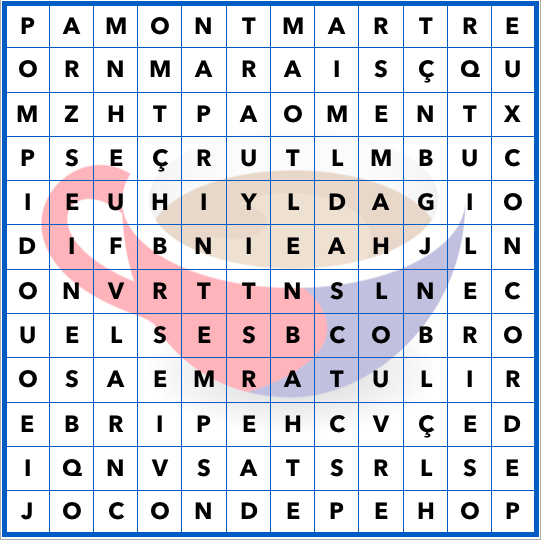
Coffee Break French One Second Search 04

Welcome back to the One Second Search – a fun activity to test your French vocabulary. In our most recent newsletter we included a beautiful video about the sites of Paris and so this grid is filled with words associated with the capital; try to think of tourist attractions and the different areas of the city.

Here’s your challenge:

1. Look at the word grid below which is filled with words you would associate with Paris.

2. When you have found a word, try to find out an interesting fact about it.

3. Post a comment to share your findings with everyone else.

Qu’est-ce que vous préférez faire à Paris? Dites-le-nous!


Coffee Break Italian One Second Search 02

One Second Search

Welcome back to the One Second Search!

Following on from the article we shared with you in our Newsletter, today the grid is full of different types of Italian coffee – what’s your favourite?

Your challenge:

1) Look at the word grid below which is filled with the Italian names for different coffees – there are sei to find (please don’t post them all in a comment as it will spoil the fun for others!)

2) Tell us what your favourite coffee is by posting a comment. You can use the phrases mi piace… or preferisco…

In bocca al lupo!

Episode 25 – Season 4 – Coffee Break Spanish

Mark and Carmen are back with another episode of Coffee Break Spanish Season 4. In this episode we’re reading María’s diary entry following the first day of the dive for the missing treasure. Language points covered include the imperfect subjunctive following antes de que, the words madrugar and trasnochar, and the subtle difference between pasar miedo and tener miedo.

Episode 24 – Season 4 – Coffee Break Spanish

It’s time for a new lesson of Coffee Break Spanish and we join Rory and María again for the latest instalment in the story of their search for the sunken treasure. This lesson continues our advanced series for Spanish learners, and Carmen and Mark are on hand to discuss the complex language points throughout the lesson.

Episode 23 – Season 4 – Coffee Break Spanish

We join María for her latest diary entry in which she updates us on the latest developments in the plans for the search for the sunken treasure. As usual, there are many interesting language points, and in this preview episode Carmen and Mark discuss one in particular: the use of the ‘vosotros’ imperative form in the positive and negative. For further discussions in the extended version, a full transcript and bonus listening materials, see below.

Episode 22 – Season 4 – Coffee Break Spanish

In the latest episode of Coffee Break Spanish we eavesdrop on a conversation between Rory and Alejandro in which they continue to plan their search for the missing treasure. This episode gives us further opportunities to experience more Argentinian Spanish, and Mark and Carmen are on hand to discuss the grammar and idiomatic expressions contained in the episode.