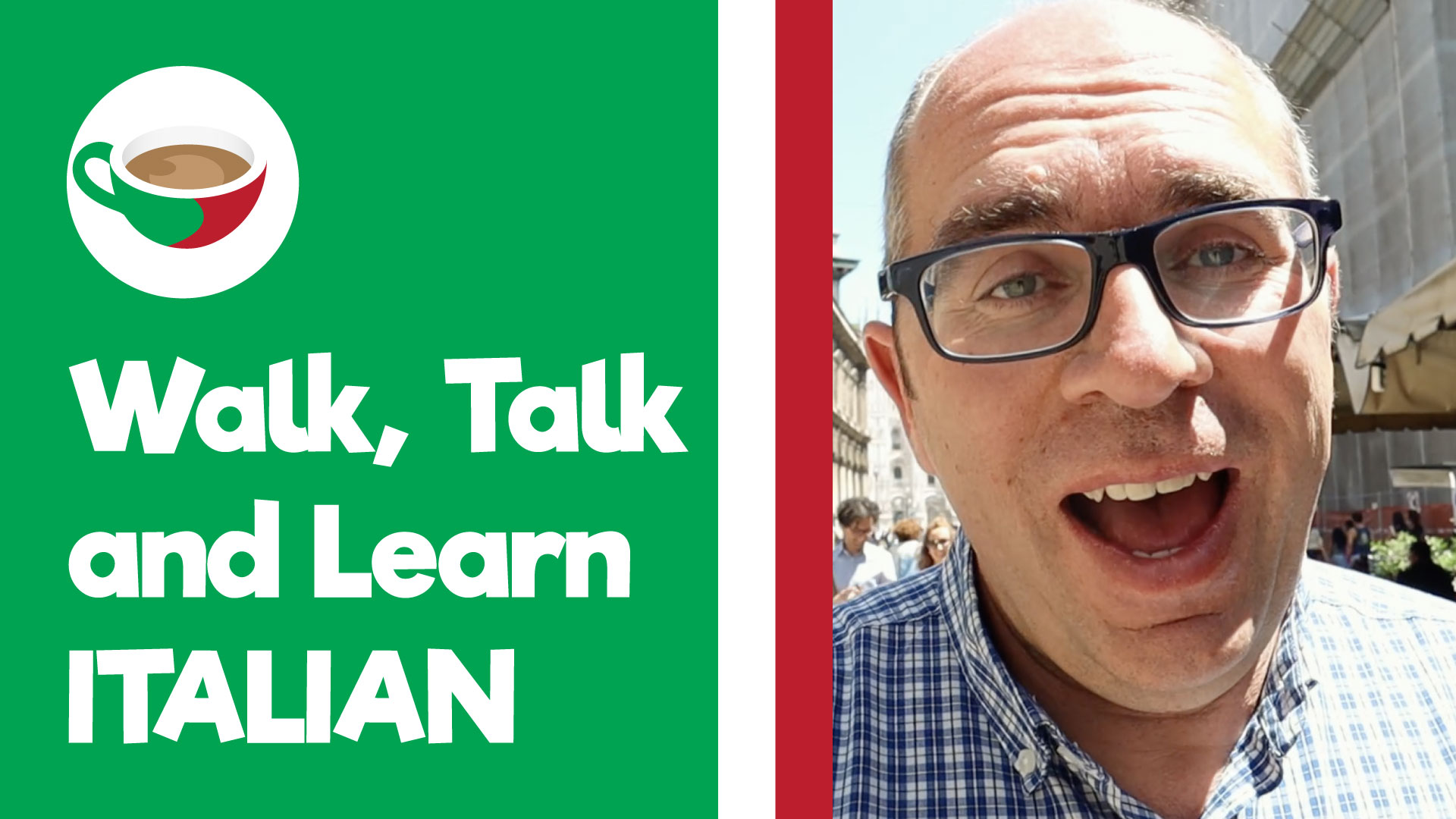
Coffee Break Travels: on the road in Pornic with Pierre-Benoît

Coffee Break French host Pierre-Benoît invites Mark to join him for a guided tour of his home town, Pornic, in the Loire Atlantique area of France. Put your French to the test with this video, all in French. We’ve provided subtitles in both French and English to help you understand everything.

Mark and Pierre-Benoît visit the Nouveau Port, the Pottery Works, Pierre-Benoît’s favourite beach, and the old harbour in the centre of Pornic where they enjoy an ice-cream at La Fraiseraie. Links below:

Faïencerie de Pornic: https://www.faiencerie-pornic.fr
La Fraiseraie: https://www.lafraiseraie.com
Site officiel de Pornic: http://www.pornic.fr
Loire-Atlantique: https://tourisme-loireatlantique.com

CBC 1.29 | Describing people in Mandarin Chinese

In this episode you’ll learn how to describe people in Chinese. You’ll learn various adjectives to describe people physically and talk about hair and eye colour. We’ll put this to the test by challenging you to identify some famous people from their descriptions in Chinese, and you’ll be able to see how much you’ve understood of the lesson.

¿De dónde eres? – Saying where you’re from in Spanish – Coffee Break Spanish To Go Episode 1.03

To say “I am from…” in Spanish you say soy de…. In this episode of Coffee Break Spanish To Go, Marina asks the question, ¿De dónde eres? (informal) or ¿De dónde es usted? (formal). You can use the answers of our interviewees to help you learn to say where you’re from in Spanish.

In the first part of the video, watch the interviews without subtitles and try to understand. In the second part of the video, we’ve provided subtitles in Spanish at the top of the screen. You can choose to turn on subtitles in English using the Subtitles/CC button.

In this first series of Coffee Break Spanish To Go, Marina is in the city of Málaga, in the south of Spain, and in each episode she’ll ask passers-by one question. Of course, that one question will result in many answers, and it’s through these answers that you can practise your Spanish and build your vocabulary.

Coffee Break Spanish To Go will be published every two weeks on YouTube, and each Season will be filmed in a different part of the Spanish-speaking world. If you’d prefer not to wait for all 10 lessons of Season 1 to be published, you can access downloadable versions of the videos along with audio versions and lesson notes / transcripts in the Coffee Break Academy: click here for more information.

Coffee Break Spanish To Go is based on the popular podcast series and online course Coffee Break Spanish. For access to the free podcasts, please click here.

CBC 1.28 | Talking about your likes and dislikes in Chinese

In this episode of Coffee Break Chinese you’ll learn to talk more about yourself, specifically by talking about your job, where you work, what you do and where you’d like to work if you didn’t have your current job! Crystal provides some interesting information about Chinese work ethic, and you’ll be able to practise your Mandarin with the help of a conversation about jobs.

Making suggestions in French using “si” + the Imperfect – Walk, Talk and Learn French Episode 003

There’s a really easy way to make a suggestion in French using si + the imperfect tense. You’ll learn how to do just that in this episode of Walk, Talk and Learn. Mark explains an advert from the Italian Tourist Board in Paris which reads et si vous redécouvriez l’Italie?

Making a suggestion is a simple as combining the word si, meaning “if, with the imperfect tense. You can use this construction in sentences such as “what about going to the cinema?” or “do you fancy eating out tonight”. You’ll learn how to use the construction, and Mark will test your understanding of it with some translation challenges against the clock.

Make sure you subscribe to Coffee Break Languages on YouTube to be notified when we post new videos!

Mamma Mia Parody! The Story of a Language Learner

Here at Coffee Break Languages the whole team loves ABBA and we’re excited about the launch of Mamma Mia – Here We Go Again. In fact, we were so excited about the new film, we decided to make a parody of Mamma Mia, telling the story of a language learner. Make sure you switch on captions so that you can sing along!

We hope you enjoy this parody, that you have a laugh and that you sing along to the songs! The message is of course that learning a language can help you in so many ways, and we’d like to say Thank You For The Language – and to ABBA for making brilliant music!

The Coffee Break Team would like to thank everyone involved in this video.

Let us know what you think in the comments, and don’t forget to like the video and share it with your language-loving friends and fellow ABBA fans!

¿Cómo estás? – Asking “how are you?” in Spanish – Coffee Break Spanish To Go Episode 1.02

To ask “how are you?” in Spanish you can say ¿cómo estás?, or in a more formal situation, ¿cómo está usted? In this episode of Coffee Break Spanish To Go, Marina asks this question to passers-by in the streets of Málaga. You can use the answers of our interviewees to help you learn to introduce yourself in Spanish.

In the first part of the video, watch the interviews without subtitles and try to understand. In the second part of the video, we’ve provided subtitles in Spanish at the top of the screen. You can choose to turn on subtitles in English using the Subtitles/CC button.

In this first series of Coffee Break Spanish To Go, Marina is in the city of Málaga, in the south of Spain, and in each episode she’ll ask passers-by one question. Of course, that one question will result in many answers, and it’s through these answers that you can practise your Spanish and build your vocabulary.

Coffee Break Spanish To Go will be published every two weeks on YouTube, and each Season will be filmed in a different part of the Spanish-speaking world. If you’d prefer not to wait for all 10 lessons of Season 1 to be published, you can access downloadable versions of the videos along with audio versions and lesson notes / transcripts in the Coffee Break Academy: click here for more information.

Coffee Break Spanish To Go is based on the popular podcast series and online course Coffee Break Spanish. For access to the free podcasts, please click here.

Giving negative commands in Italian – Walk, Talk and Learn Italian Episode 002

Don’t read this! Don’t look at me! Don’t say a word! Don’t watch this video. Well, do watch this video if you want to know how to use negative commands in Italian! Join Coffee Break Italian hosts Francesca and Mark for this latest episode of Walk, Talk and Learn Italian.

This episode is based on a notice Mark encounters at the Castello Sforzesco in Milan which states non somministrare cibo ai gatti – don’t give food to the cats. Francesca will explain exactly how negative commands work in Italian, and you’ll find out that for the most part it’s very straightforward because you can use an infinitive. Don’t miss this episode!

Coffee Break French Masterclass – September 2018

We’re delighted to announce that the Coffee Break French Masterclass will open its doors once again on 1st September 2018, ready to begin the new 6-month course which runs until 28 February 2019.

Registration will begin on 1st August 2018. Spaces on the course are limited, so in order to get on our notification list, please enter your details in the form below. We’ll remind you as soon as the course is available for registration.

To find out more about the Masterclass and what’s involved, please click here for the Coffee Break Academy.

“Merci de” or “merci pour”? Walk, Talk and Learn French Episode 002

Is it merci de … or merci pour…? How do you thank someone for something in French? Join Mark from Coffee Break in this Walk, Talk and Learn French video and learn exactly when to use merci de and when to use merci pour.

This video was based on the phrase Roland Garros vous remercie d’avoir utilisé les transports en commun, meaning “Roland Garros thanks you for using public transport. In the video Mark explains that you can, in fact, use both prepositions de and pour with the word merci, or the verb remercier, but they are used in specific situations. You need to understand what it is you’re thanking someone for in order to know when to use which expression.

Make sure you subscribe to Coffee Break Languages on YouTube to be notified when we post new videos!

Using “da” + infinitive in Italian – Walk, Talk and Learn Italian Episode 001

You can use the preposition da with an infinitive in Italian to talk about something that has to be done, or that is worth doing. Join Coffee Break Italian hosts Francesca and Mark for this first episode of our new series, Walk, Talk and Learn Italian.

This episode is based on an advert Mark sees in Milan: Hai un immobile da affittare? Dovevivo, il tuo inquilino ideale. This phrase means “Do you have a property to rent out? Dovevivo, your ideal tenant.” As Francesca explains, da + infinitive can be translated in a number of ways. For example, in the phrase ho molto da fare, you can simply translate da as “to”: “I have lots do to”. In other examples, da takes on the meaning of “it’s worth doing something”, for example, Milano è una città da vedere: Milan is a city worth seeing. All will be explained in this episode of Walk, Talk and Learn!

Introducing Walk, Talk and Learn Italian

As we WALK around the streets of Italy, we’ll TALK about the language we see around us, and you’ll LEARN more Italian! Walk, Talk and Learn! Welcome to this new series from the Coffee Break Italian team in which we’ll be helping you build your understanding of Italian and increase your vocabulary through our regular videos. In each episode of Walk, Talk and Learn, we’ll be focusing on a word or phrase in a sentence which we’ve found on a poster, an advert or a menu we’ve found out and about in the streets of Italy.

Meet the team: Pierre-Benoît


My name is Pierre-Benoît Hériaud and I feel very proud, privileged and honoured to say that I have been working with Radio Lingua since the very beginning! ☺

What is your role in Coffee Break?

I have contributed to and helped with creating, producing and recording material for all 4 seasons of Coffee Break French. Our advanced podcasts : 40 episodes of « La Vérité éclate toujours » as well as our first series of 10 episodes of « Il était une fois » have been launched and I am currently working with the team on more exciting material for our new platform  “Coffee Break TV “.

What experience have you had speaking and learning other languages?

I studied English and Spanish at the University of Nantes (France) and moved to Scotland when I was 20 and worked as a French assistant in Ayrshire. I settled in Scotland and for the last 35 years, I have been teaching French & Spanish in a secondary school.

I love teaching and I love learning. Every day is a new experience because every class is different and every single person will leave the class with a little more knowledge of the target language. Being involved in Coffee Break allows me to have a wider audience and there is definitely something gratifying and rewarding to know that people have learned, progressed and felt more confident in the language they study, thanks to all the Coffee Break French material that has been published.

I enjoy meeting our listeners in person at different shows. In the past, we’ve attended The Language Show and The France Show in London and our latest one was Destinations. It is lovely to chat to learners and find out what CBF means to them.

Watch Pierre-Benoît in action at the France Show in this video.

[youtube https://www.youtube.com/watch?v=bk0rIFDL3B4?start=82]

What are your favourite memories of working with Coffee Break?

PASS! Far too many, but it’s been a good laugh and I have enjoyed every single moment working with the team. I guess the most recent one being on the Coffee Break stand at the Destinations Show in London, winding up my younger colleagues and on a more serious note, getting to meet customers and hear how they’ve enjoyed learning French with CBF.

It’s also good to go back to “one’s humble roots” and I can’t help thinking back to the days when Mark started Coffee Break French and came to Pornic to record in my town and even in my house! I believe many episodes feature the voices of my father, my sisters and even my nieces! I guess I’m part of the Coffee Break family just like Mark is part of the Hériaud family.

Where would your ideal coffee break be, and with whom?

It would have to be while teaching Jennifer Lopez how to speak French! Or perhaps an espresso with Laurent Gerra – you are guaranteed to have a good laugh.. L’espoir fait vivre…

Not quite a coffee break, but I certainly enjoy a “music break”, so here’s a video of Mark and me performing a couple of our favourite songs, Francis Cabrel’s Petite Marie and Billy Joel’s She’s Always a Woman, recorded in a Facebook live session while in London for the France Show.
[youtube https://www.youtube.com/watch?v=21wVKQbdH8Q]

What’s your best language-learning tip?

Keep practising – as often as possible and do not get discouraged! I still make mistakes in English, in Spanish –  in French! We all do… Keep going!

Quick-fire round

  • Favourite language: French & English
  • Favourite word/phrase in the language: Pas d’lézard!
  • Favourite film: in English – As Good As It Gets; in French: Le Prénom
  • Favourite destination: anywhere… with nice people.

Any further thoughts?

All the best to all our listeners around the world with their language learning. Keep practising … et surtout, ne vous découragez pas !

Football lingo: 10 terms from around the world that every fan should know

A soccer ball resting on a grassy field in front of a goal net at sunset, with silhouettes of players in the background.

Football. Soccer. Whatever you call it, it’s the world’s most popular sport, uniting billions across continents. As a global game, it has a global language — or rather, languages. While the rules are universal, the terms used to describe actions on the pitch can differ significantly depending on where you are in the world, and that is why you need to know some football lingo.

This article will explore 10 terms from various countries, giving you a deeper understanding of the beautiful game. Are you ready to understand the difference between a golazo and a sukkerbold? Keep reading!

1. National Nicknames

Let’s start with the basics on your football lingo list: the national football teams’ nicknames. You may already know La Albiceleste (Argentina), Les Bleus (France) and La Furia Roja (Spain), but what about Les Aigles de Carthage (Tunisia), Vatreni (Croatia) Los Canaleros (Panama) or even Socceroos (Australia)?

Of course, we cannot forget to mention Canarinho (Brazil) – who has won the World Cup five times and has participated in every championship to date – and the traditional Gli Azzurri (Italy). Fans all over the world scream their nicknames when a goal is scored, so make sure to memorise these football lingo essentials.

2. Tiki-taka (Spanish)

We are sure you already know this word from our football lingo list, but in case you don’t, tiki-taka refers to a style of play that involves highly accurate short passing (pases y paredes) and guarantees retaining possession of the ball. More than that, tiki-taka is about patient build-up play and creating scoring opportunities through teamwork rather than long balls or individual brilliance.  

While the term’s exact origins are debated, it gained widespread recognition during Barcelona’s dominant era under Pep Guardiola in the late 2000s and early 2010s, becoming synonymous with their mesmerising style of play.

3. Panenka (Czech)

From one technique to another, Panenka refers to a penalty kick in which the ball is gently chipped into the goal after the goalkeeper has dived to one side of the goal. Coined by Czech former footballer Antonín Panenka, this kick can be obtained by giving a subtle touch underneath the ball, causing it to rise and fall within the centre of the goal, thus deceiving the goalkeeper.

Italians also call this penalty kick cucchiaio. Francesco Totti, the historic captain of AS Roma, coined the term. Have you ever seen a Panenka live? 

4. Zondagsschot (Dutch)

Sometimes, when you watch your favourite football team play – especially during a crucial match – you pray for them to score a miraculous goal. That’s what a Zondagsschot is! 

Literally translated as Sunday shot, this footballing term refers to a shot that a player would almost surely miss but unbelievably goes in despite all previsions. We are sure that you have seen some Zondagsschot in your lifetime!

5. Pipoqueiro (Portuguese)

Imagine the tension of a penalty shootout. The stadium is silent, all eyes on the player stepping up to the spot. If that player falters, missing the crucial penalty, they might be labelled a pipoqueiro in Brazil. 

The word pipoqueiro literally means popcorn man. It is a curious football lingo term for a player who doesn’t perform well in important games, like semi-finals or finals. A pipoqueiro is a player who cracks under pressure. Just like popcorn popping unpredictably, a pipoqueiro is seen as unreliable in high-stakes situations, unable to deliver when the team needs them most.

As you can imagine, nobody wants to be that player!

6. Enganche (Spanish)

In Argentina, the term enganche refers to the playmaker or attacking midfielder, a key player in the team’s offensive game. This position involves connecting different parts of the attack and often acts as the bridge between the defence and forwards. 

Typically positioned centrally, the enganche influences the game by creating attacking plays and delivering precise passes that can lead to goals. This role is essential for maintaining the team’s rhythm and flow and ensuring that the attacking strategy stays strong throughout the match.

Example of this football lingo term in use:

  • Riquelme was one of the greatest enganches of all time.

7. Sukkerbold (Danish)

From popcorn to sugar, here’s another word that associates food with football lingo. The Danish expression sukkerbold stands for an exceptional cross right at the target man. We are not really sure why the Danes call it a sugar ball, but it’s definitely sweet to see footballers play well.

8. Bouffer la feuille (French)

No football fan wants to witness this when their team is playing. Bouffer la Feuille is a French expression used when a player misses an easy goal and a potential victory. Literally meaning to fluff the sheet, it refers to the score sheet, which notes scored goals, the various cards dealt, and the participating players. The captain usually signs this document at the end of every match.

We are sure that si quelqu’un bouffe la feuille nobody will be happy (but if you think of it in French, you might be less angry about it).

9. Den sterbenden Schwan (German)                                                                                                          

This football lingo word will make you laugh. Do you know what a diver is? It’s a player who takes flight in the opponent’s box too easily and dramatically. Germans describe this kind of player as a Schwalbe, a swallow, and if a player is too much of a diver, they will accuse him of playing den sterbenden Schwan, the dying swan.

Let’s face it: sometimes players can’t help but over-act as if they were playing in an opera when they dive. And it can be annoying. But, if you think of it as part of the famous Tchaikovsky’s ballet, you may enjoy their performance.

You may enjoy Die Lustigsten Schwalben der Welt

10. Tólfan (Icelandic)

This football lingo term is one that became popular a couple of years ago when Iceland participated in the UEFA Euro 2016. This Nordic island made a name for itself during that championship thanks to its Tólfan, the 12th Man that is the Icelanders and their Viking chant. The supporters clapped and shouted HUH! in unison, starting off slow and gradually building the pace. It’s very intimidating for those playing against Iceland!

The Viking Thunder-Clap has accompanied the national team and many other teams around the world since then!

Football’s global appeal is undeniable, and its diverse lingo reflects the rich cultural tapestry of the sport. From Brazil’s pipoqueiro to Denmark’s sukkerbold, each term adds a unique flavour to how the game is understood and celebrated around the world.

Now that you’re familiar with football lingo, why not dive into another exciting sport: tennis? We’ve put together a blog post to help you learn all the essential French tennis terms, from the basics like tennis, to love and deuce!

¿Cómo te llamas? – Introducing yourself in Spanish – Coffee Break Spanish To Go Episode 1.01

To say “my name is…” in Spanish you say me llamo… In this episode of Coffee Break Spanish To Go, Marina asks the question, ¿Cómo te llamas? (informal) or ¿Cómo se llama usted? (formal). You can use the answers of our interviewees to help you learn to introduce yourself in Spanish.

In the first part of the video, watch the interviews without subtitles and try to understand. In the second part of the video, we’ve provided subtitles in Spanish at the top of the screen. You can choose to turn on subtitles in English using the Subtitles/CC button.

In this first series of Coffee Break Spanish To Go, Marina is in the city of Málaga, in the south of Spain, and in each episode she’ll ask passers-by one question. Of course, that one question will result in many answers, and it’s through these answers that you can practise your Spanish and build your vocabulary.

Coffee Break Spanish To Go will be published every two weeks here on YouTube, and each Season will be filmed in a different part of the Spanish-speaking world.

If you’d prefer not to wait for all 10 lessons of Season 1 to be published, you can access downloadable versions of the videos along with audio versions and lesson notes / transcripts in the Coffee Break Academy.

Coffee Break Spanish To Go is based on the popular podcast series and online course Coffee Break Spanish. For access to the free podcasts, please click here.

Using the French Subjunctive with “pour que” – Walk, Talk and Learn French Episode 001

Are you not sure when to use the subjunctive in French? Join Mark from Coffee Break in this “Walk, Talk and Learn French” video and learn about using the subjunctive after the subjunctive trigger pour que, meaning “so that”. This video was filmed at the 2018 Roland Garros tennis tournament and is based on the tournament’s slogan Pour que nos émotions ne meurent jamais, “so that our excitement never dies”.

In this video, Mark explains that pour que is one of the triggers for the subjunctive. However, while meurent is the subjunctive, it’s interesting to note that it’s actually the same as the indicative form of the verb. Mark goes through the full conjugation of mourir (“to die”) in both the present indicative and the present subjunctive, and he talks about how the present subjunctive is formed by taking the ils/elles plural form of the present indicative and adding the subjunctive endings. Note that mourir is an irregular verb.

Make sure you subscribe to Coffee Break Languages on YouTube to be notified when we post new videos!

CBC 1.27 | Talking about your job in Chinese

In this episode of Coffee Break Chinese you’ll learn to talk more about yourself, specifically by talking about your job, where you work, what you do and where you’d like to work if you didn’t have your current job! Crystal provides some interesting information about Chinese work ethic, and you’ll be able to practise your Mandarin with the help of a conversation about jobs.

CBF-ER 1.10 | Au Pays du Citron

In this final episode of our first season of En Route avec Coffee Break French, Mark is back in Menton, talking to some of the locals. We’ll find out more about the type of people who visit Menton from the hotel manager, we’ll learn about Menton’s connection to the artist Jean Cocteau, and we’ll discover how the local dialect is being maintained. As usual, this episode is presented in a combination of French and English, and the aim of the episode is to help you learn more about the area and about the French language, while practising your listening skills with engaging content from a variety of speakers with different accents and speeds of delivery.

Listen to the lesson

The audio lesson is free, as are all the main audio lessons of En Route avec Coffee Break French. Use the audio player above to listen to the lesson, or subscribe in Apple Podcasts to receive this lesson and all future lessons automatically. If you can’t see the player above, click here to access the lesson.

Accessing the Premium Version

thumb-cbf-enroute-season1
In the full course of En Route you’ll get access to every episode as it’s released. The premium version includes additional materials which will help you move forward more effectively with your French studies:

  • transcripts: read every word of French included in the conversations;
  • vocabulary lists: in addition to the transcripts, we’ll provide vocabulary lists to help you understand everything that’s said;
  • bonus audio materials: where an edited version of an interview is included in the main lesson, we’ll provide the full recording in the course to allow you to develop your comprehension skills further;
  • exclusive video content: in addition to recording interviews in the south of France, the Coffee Break Team also filmed some video content and this video material is included in the course. Please note that these are not video versions of the interviews.

The En Route course can be accessed on the Coffee Break Academy.

Subscribe links

Subscribe on Apple Podcasts | RSS Feed | Purchase full course