The Wonderful World of Emoji

You may be familiar with Coffee Break French, Coffee Break Spanish and indeed our other Coffee Break German, Italian, Chinese and Swedish editions, but what about Coffee Break Emoji? With millions of “fluent” users around the world, Emoji is here to stay, and what better day to write about this interesting language of pictures than on 17th July, World Emoji Day?

Before we get started, let’s clarify one thing: Emoji is the word used for the “language”, and it is made up of individual images, or “emojis”, so we’ll be using both Emoji and emojis throughout this article ? Read on for more information about the origins of Emoji.

Origins

Interestingly, the word emoji is made from a combination of two Japanese words; e (絵) meaning “picture”, and moji (文字) meaning “character”. Created by Japanese interface designer Shigetaka Kurita in 1999, the 176 original emoji designs were only the beginning of what was to become a worldwide phenomenon in a matter of a few years.

In the beginning the Emoji keyboard was only released in Japan on iPhones, but the success of these small pictorial symbols representing words, emotions and much more led to the release of the Emoji keyboards to the rest of the world. At the time of writing there are over 3000 emojis, and no doubt this figure will continue to grow. The use of Emoji has truly dominated the online world of communication, whether simply to enhance a sentence, or convey emotions which can’t be expressed easily in words, or even write full sentences using nothing but emojis!

Lending even more kudos to the “language”, the “Face with Tears of Joy” emoji (you know the one… ?) was named “Word of the Year” by the Oxford English Dictionary in 2015 and, in 2017, Emoji hit the big screen with the release of The Emoji Movie.

How popular is Emoji?

Whether you’re a regular user of emojis, or you tend to be more of a recipient of image-laden messages, you’ll be ? (blown away) by some of the staggering statistics mentioned on the official World Emoji Day website.

  • Did you know that over 900 million emojis are sent every day without text on Facebook Messenger?
  • Every day more than 700 million emojis are used in Facebook posts.
  • Already by mid-2015, half of all Instagram comments included an emoji.

Pretty ?  (mind-blowing), no?

Japanese origins

Of course, any language carries with it a huge amount of cultural significance, and Emoji ticks this box too. Given its Japanese origins, we can even learn something about Japanese culture through some particularly interesting emojis. Here are some examples, as explained by the Emojipedia, the self-professed “Home of Emoji Meanings”.

  • ?  – This emoji is a Shoshinsha Mark and it is the symbol used in Japan by learner drivers. It’s almost the equivalent of the “L Plate” that we use in the UK, but in Japan, drivers must continue to display their Shoshinsha Marks for a year after passing their test.
  • ㊗️ – This emoji features the Japanese character 祝 which is linked to the word meaning “celebrate” or “congratulate” and is therefore used to mean “congratulations”.
  • ?  – This emoji represents a Japanese Post Office. If you’re familiar with the Japanese Katakana syllabary, then you’ll recognise the character テ which is pronounced as te from the word teishin (逓信 “communications”).
  • ?  – Again, if you look closely into this cherry blossom emoji, you should see some Japanese text. Traditional Japanese texts were written vertically from right to left, so the words in this emoji are 大変よくできました (taihen yoku dekimashita) which means something along the lines of “very well done” or “you did very well”. According to Emojipedia, teachers in Japan use this as a stamp on high quality work and this is definitely one of our favourites!

And if you’re feeling hungry then there is plenty of inspiration in the Food and Drink section of Emoji with a distinct Japanese flavour:

  • ?  Bento Box – A traditional Japanese lunch box with different compartments.
  • ?  (Slice of) Narutomaki – A Japanese fishcake.
  • ?  Dango – A Japanese dumpling.
  • ?  Oden – A skewer of Japanese Oden, which includes ingredients such as boiled eggs and fishcakes.
  • ?  Sushi – Japanese Sushi, rice with two pieces of raw fish on top.
  • ?  Rice Cracker – Senbei (rice cracker) with a sheet of Nori (seaweed).

A global “language”

Given that Emoji is becoming an international “language” used by an ever-increasing number of people, it’s not surprising that the most popular emojis vary from country to country. While the simple smile ?  tops the list almost everywhere, an interesting survey looked at the second-favourite emojis of survey participants in various countries around the world. It seems that the UK, the USA, Jamaica and Trinidad all share ?  as their second-favourite emoji; Canada and New Zealand very much enjoy a classic ❤️; South Africa prefers ?.; and it’s a win for ? in Australia. This survey dates from 2018, so let us know in the comments where you’re from and if you have a favourite emoji at the moment.

Does all this sound familiar?

As we’ve seen, Emoji is, in its own way, a form of language. But does the idea of communicating through pictures and symbols remind you of anything? It could be said that this is nothing new: the Hieroglyphs of the ancient Egyptians conveyed meaning through images as far back as 3200BCE and they’re often compared to the use of emojis in present-day communications.

However, although aspects of the two are similar, the fact remains that hieroglyphs are much more complex than simple pictures and they could be combined to create other words. As effective as emojis are at helping us show whether we are ? or ?, have a ? or a ?, or are in a ✈️ or a ?,, they can’t really convey grammatical constructions or complex information. Nevertheless, they are great fun, and a fantastic addition to the languages we speak!

We hope that you’ve learned something new from this article, and are now an Emoji expert. Leave a comment below if you have a favourite emoji, or let us know if you’re celebrating World Emoji Day! ?

TFT: La cura

Ciao, come state? This week’s Tune for Tuesday is one of Coffee Break Italian Francesca’s favourite songs! La cura was a collaboration between Sicilian philosopher Manlio Sgalambro, who wrote the lyrics, and Sicilian musician, filmmaker and painter, Franco Battiato. Battiato’s experimental musical style – a fusion of various genres – and his collaboration with Sgalambro on numerous albums made him one of Italy’s most popular artists from the 1970s up until today. In 1984, he represented Italy in the Eurovision Song Contest, performing with Italian singer, Alice.

We hope you like listening to La cura, and take the time to switch off and enjoy the poetry and the music. If you’re not an Italian learner, we recommend looking up a translation of the lyrics online so that you can fully appreciate the beauty of the words. And for Coffee Break Italian learners, this song contains plenty of examples of the future tense. Let us know in the comments which ones you could pick out!

To hear the lyrics sung more slowly, we recommend watching the YouTube video below and selecting a slower playback speed by clicking on the settings symbol. If you’d like to read the lyrics while you’re listening to La cura, you can find them by clicking here.

Welche Sprachen sprichst du? Talking about languages – Coffee Break German To Go Episode 8

To ask “which languages do you speak?” in German you can say welche Sprachen sprichst du?, or in a more formal situation, welche Sprachen sprechen Sie? In this episode of Coffee Break German To Go, Julia asks this questions to interviewees in the streets of Berlin. You can use the answers of our interviewees to help you learn to answer this question yourself.

In the first part of the video, watch the interviews without subtitles and try to understand. In the second part of the video, we’ve provided subtitles in German at the top of the screen. You can choose to turn on subtitles in English using the Subtitles/CC button.

In our first series, Julia is in the city of Berlin, and in each episode she’ll ask passers-by one question. Of course, that one question will result in many answers, and it’s through these answers that you can practise your German and build your vocabulary.

If you’d prefer not to wait for all 10 lessons of Season 1 to be published, you can access downloadable versions of the videos along with audio versions and lesson notes / transcripts in the Coffee Break Academy.

Coffee Break German To Go is based on the popular podcast series and online course Coffee Break German. For access to the free podcasts, click here.

Meet Gail, Coffee Break French and German learner

Tell us who you are, where you live, your nationality and how long you’ve been learning a language with us.

I am Gail, originally from Glasgow in Scotland but living in Switzerland for the last 7 years. I have been learning with CB courses for about 6 years.

Which language or languages are you learning with Coffee Break?

French and German

What experience have you had speaking and learning other languages?

I did 4 years of German at school but never really got into it. When I moved to Italy to teach in an international school, I did Italian evening classes and learned just by listening and being forced to use it as English is not so common in Italy. I then moved to Switzerland for a new job where I stared to learn French. That is when I started using Coffee Break French. I took a 3 month intensive course there as well and topped up and practised with CBF. I then moved to the German speaking part of Switzerland again for a new job but continued French as I arrogantly thought I’d be fine with my German from school. A year in and with many local friends, I started learning German, not out of necessity as everyone speaks English but because I felt I should. So I started Coffee Break German. I have also taken evening classes and summer courses. It’s challenging as Swiss German is very different to High German. I understand somewhat but definitely feel better about my skills when I go to Germany.

What are your favourite memories of learning a language?

The coolest thing is knowing some vocabulary that perhaps you would not pick up in a normal class and using it to people’s surprise. The lessons where Mark looks at interesting language points in the dialogue is really useful for expanding that vocabulary.

Where would your ideal coffee break be, and with whom?

Having a conversation in French with a former French colleague who I used to only be able to speak to in English. I think they would be impressed!

What’s the best language-learning tip you have found works for you?

To listen to lessons rather than read from a book, or do both. It’s important for pronunciation and I remember it better. Also, you need to use the language – once you use a word you will remember it.

Quick Fire Round

• Your favourite language: French
• Your favourite word or phrase in the language: Donc
• Do you have a favourite film, TV show, book or singer in the language? Singer, M. Pokora
• Your favourite destination to practise your language: French part of Switzerland

Please finish off with a message to your fellow members of the Coffee Break community and the Coffee Break Team.

Coffee Break courses bring language learning to life!

What is one way to make learning fun? Learn a language through laughter!

Coffee cup with a notebook beside it.

Every July, the province of Quebec, Canada, becomes the hub of laughter as the largest international comedy festival in the world, Juste Pour Rire Just for Laughs, takes over Montreal. What started in 1983 as a two-day comedy event is now a huge platform for both francophone and other comedians from all over the world. But have you ever considered what is one way to make learning fun? Or how comedy could help you learn a language?

As language learners, we can gain a lot from watching comedy in the language we’re learning. Humour is a huge part of everyday life all over the world, and being able to understand and make jokes in another language requires a good understanding of both the language and the culture.

We prepared this text to help you understand the benefit of laughing when learning and share some jokes with you in the languages you’re learning. Keep reading to find out more!

Why is humour great for language learning? 

Humour is deeply embedded in every culture and is often one of the most challenging yet rewarding aspects of learning a new language. To understand a joke, you need more than vocabulary – you need to grasp the cultural references, idiomatic expressions, and double meanings that make it funny.

Related topic: Get your ducks in a row with these 10 interesting international idioms

That is why this level of comprehension often feels like a milestone. For many language learners, the first time they understand a joke or wordplay in a foreign language is a moment of true accomplishment. It means they’ve memorised words and grammar and begun to think like a native speaker! 

Another benefit? Laughter and positive emotions improve memory retention. Studies have shown that when you’re having fun, your brain is more receptive to learning. Incorporating humour into your language study sessions helps you stay motivated, making it more likely that you’ll stick with it in the long run.

What is one way to make learning fun? Simply put, add a dash of laughter to the mix.

Examples of language learning through jokes

In a more practical way, what is one way to make learning fun? With jokes! Usually, they demonstrate how playing with words can reinforce your understanding of grammar, double meanings, and cultural nuances:

A Spanish chiste

We’ll begin with un chiste in Spanish:

  • ¿Qué hace el tiburón perezoso que tiene que atrapar la cena? What does the lazy shark do when he has to catch his dinner?

La respuesta es… The answer is…: ¡Nada!

Remember that nada has a double meaning, un doble significado. Nada can be translated as:

  1. ‘nothing’
  2. ‘he/she/it swims’ (from the verb nadar)

A French blague

Next, we have une blague in French:

  • Pourquoi le hibou est-il l’animal le plus heureux ? Why is the owl the happiest animal?

La réponse, c’est… The answer is…

  • Car sa femme est chouette ! Because his wife is chouette!

Une chouette is another word for owl, but the adjective chouette translates as great.

An Italian barzelletta

Now, are you ready for an Italian barzelletta?

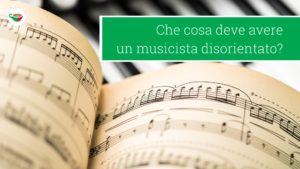
  • Che cosa deve avere un musicista disorientato? What does a confused musician need?

La risposta è… The answer is…

  • Un piano!

Un piano also has more than one meaning:

  1. ‘a plan’
  2.  the musical instrument

A German Witz

And unfortunately, we decided not to include a German Witz …

… because German jokes are the Wurst!

Wurst (f) = sausage

We hope you’ve enjoyed these chistes, blagues, barzellette, Witze and can see how jokes can really test your knowledge of a language, and are therefore a great way to practise!

So, next time you’re struggling to stay motivated, remember that one way to make learning fun is by letting humour guide your journey. Start with a joke, watch a comedy show, or challenge yourself to come up with a clever pun. 

And if you would like to learn a language by using your favourite songs, check out the blog post we prepared with some amazing tips to help you with that!

TFT: Le blues du businessman

Salut ! This week’s Tune for Tuesday comes from Céline Dion, from French-speaking Quebec in Canada. Although well-known for her hits in English, she mainly sings in French. Her cover of Le blues du businessman, originally performed by Claude Dubois in 1978, was a major hit throughout French-speaking Canada and France, and still is today. Have a listen to it throughout the week – you’ll be surprised how quickly you’ll begin to understand more of the lyrics! While you’re listening, see if you can spot the repeated use of the conditional perfect tense – “J’aurais voulu” – meaning “I would have wanted”!

Even if French isn’t your language, we hope you enjoy this song and listen to some of the others in a range of languages in our Spotify and YouTube playlists below.

If you’d like to hear Le blues du businessman sung more slowly, we recommend watching the YouTube video below and selecting a slower playback speed by clicking on the settings symbol. We cannot publish the lyrics due to copyright reasons, but you can find them by following this link. Try reading them while you listen to the song, to help you recognise the words you’re hearing.

CBF Mag 1.05 | Destination Québec

In this episode of the Coffee Break French Magazine, we’re heading to the French-speaking area of Quebec in Canada and finding out more about how the French spoken there is different from the French spoken in France. We also look at the very useful expression il s’agit de, and learn about how to use this expressions.

In each episode of this 10-lesson season for intermediate learners, you can build your vocabulary, increase your understanding of grammar and learn to use the French language in a more natural way. This series is aimed at learners who have completed at least Season 1 and Season 2 of Coffee Break French.

¿Cuál es tu deporte preferido? – Talking about sport in Spanish – Coffee Break Spanish To Go Episode 10

In this episode of Coffee Break Spanish To Go, we’re talking about los deportes, sports. Marina asks the question ¿Cuál es tu deporte preferido?, “what is your favourite sport”, and you can use the answers of our interviewees to help you learn to introduce yourself in Spanish.

In the first part of the video, watch the interviews without subtitles and try to understand. In the second part of the video, we’ve provided subtitles in Spanish at the top of the screen. You can choose to turn on subtitles in English using the Subtitles/CC button.

In this first series of Coffee Break Spanish To Go, Marina is in the city of Málaga, in the south of Spain, and in each episode she’ll ask passers-by one question. Of course, that one question will result in many answers, and it’s through these answers that you can practise your Spanish and build your vocabulary.

Coffee Break Spanish To Go will be published every two weeks here on YouTube, and each Season will be filmed in a different part of the Spanish-speaking world.

If you’d prefer not to wait for all 10 lessons of Season 1 to be published, you can access downloadable versions of the videos along with audio versions and lesson notes / transcripts in the Coffee Break Academy.

Coffee Break Spanish To Go is based on the popular podcast series and online course Coffee Break Spanish. For access to the free podcasts, please click here.

How to use the Past Historic in French – Walk Talk and Learn French Episode 5

The Past Historic (in French passé simple) is a special tense used mostly in written French to relate narrative events in the past. In this episode of Walk, Talk and Learn, Mark spots an example of the Past Historic on a film poster, and he explains the full conjugation of the Past Historic of regular verbs, and of the common verb être.

Make sure you subscribe to Coffee Break Languages on YouTube to be notified when we post new videos!

Meet Liane, Coffee Break Spanish learner

Tell us who you are, where you live, your nationality and how long you’ve been learning a language with us.

I’m Liane from Australia . I’ve been following Coffee Break Spanish for about 3 years.

Which language or languages are you learning with Coffee Break?

Spanish

What experience have you had speaking and learning other languages?

At the moment I am walking the Camino de Santiago in Spain. I am enjoying trying to communicate with the wonderful Spanish people and during the walk I’m listening to Coffee Break Spanish podcasts!!

What are your favourite memories of learning a language?

It is really wonderful when I can understand people and then get my message across. The best situations are where they don’t speak any English at all and we have to fumble through with my very bad Spanish, but it is fun and they are very grateful for my efforts! In the Camino we stay we have to organise our bags and getting food etc. great opportunities to speak Spanish!!

Where would your ideal coffee break be, and with whom?

Speaking with hairdressers, staff in restaurants and accommodation places.

What’s the best language-learning tip you have found works for you?

Don’t listen to slow Spanish, listen at the normal speed because that’s how people talk! Also, don’t try to understand every word, just get the general idea. And finally and most importantly, don’t be afraid to talk!! Just talk! You will make mistakes but it’s okay!!! I love listening to and reading stories at my level.

Quick Fire Round

Your favourite language: Spanish
• Your favourite word or phrase in the language: Zanahoria
• Do you have a favourite film, TV show, book or singer in the language? Short stories for beginners in Spanish
• Your favourite destination to practise your language: Spain

Please finish off with a message to your fellow members of the Coffee Break community and the Coffee Break Team.

Never give up! Learning a new language can take a lifetime and that’s okay. Enjoy the journey!

TFT: 99 Luftballons

Hallo alle zusammen! This week’s Tune for Tuesday comes from German band Nena, who were together between 1981 and 1987. The band is very important to German musical culture, as it was part of the forming of the German New Wave scene (Neue Deutsche Welle). In 1984 their song 99 Luftballons was a huge international success, becoming one of the most popular foreign-language tracks in the history of the US charts.

If you’re a Coffee Break German learner, it’s a good song to listen to, as the vocabulary isn’t too tricky and the lead singer sings fairly clearly. It’s also good practice for your numbers! How many times can you hear her sing “neunundneunzig” (“ninety-nine”)? Let us know in the comments if you think you know! If you’d like to hear the lyrics sung more slowly, we recommend watching the YouTube video below and selecting a slower playback speed by clicking on the settings symbol.

Whichever language you’re learning, we hope you enjoy this song and check out the others in our multilingual Spotify and YouTube playlist below.

For copyright reasons, we cannot publish the lyrics to 99 Luftballons, but you can find them online here.

Coffee Break Language Podcasts Now Downloaded Over 3 Million Times Monthly

For Immediate Release
Glasgow, UK – 2 July 2019

Three Million Free Language Lessons Delivered Monthly by Glasgow-based Podcast Company

Radio Lingua Ltd announced today that the total number of monthly downloads of the Coffee Break French, Spanish, Italian, German and Chinese podcasts has now surpassed three million. Language learners around the world are improving their language skills through these 20-minute, “coffee break”-length podcasts. In each episode, listeners learn the language in a fun and entertaining way, with the help of the experienced teachers and native speakers who host the podcasts.

Hosted by Acast, the hugely popular Coffee Break podcasts have been downloaded over 250 million times since launching in 2006. They are listened to in 196 countries, with 41% of listeners in the United States and 12% in the UK. The total number of downloads over the 30-day period 28 May 2019 until 26 June 2019 was 3,056,588. Every minute of the past 30 days, over 70 learners have started learning a language with an episode of Coffee Break.

The Coffee Break language podcasts have consistently been rated top education podcasts on Apple Podcasts and are among the most popular education podcasts on Spotify. Coffee Break Spanish has won a European Award for Languages and the European Podcast Award, and Coffee Break Italian was voted Smartest Podcast in the 2017 British Podcast Awards.

The team at Radio Lingua believe that language-learning can be done by anyone, any time and anywhere. Founder and CEO of Radio Lingua, Mark Pentleton, said: “it’s no longer a case of having to go out to a conversation class on a cold Tuesday evening in November: you can learn a language where and when it suits you.” Each episode of the podcast aims to feel like a coffee break with a friend, where the friend happens to speak the language and can help you learn.

According to Mark, “podcasting is the perfect medium for language-learning: you can listen as many times as you want, and pause the recording to build your comprehension. By using podcasts as a starting point, you can take advantage of your downtime and do something useful while you’re driving to work, walking the dog or at the gym.” In addition to the podcasts, Radio Lingua also offers a range of online courses and regularly publishes learning materials on social media. A weekly live video show on YouTube, the Coffee Break Catch-up, helps to keep the Coffee Break community up to date with the latest lessons and episodes.

Sophie Herdman, UK content director for Acast, said: “Having the Coffee Break podcasts as part of the Acast family is something we’re really proud of. As anyone who has heard the shows knows, they educate and inform in a really fun way, as well as helping listeners to develop an understanding of other cultures. We’ve been so pleased to see the shows’ fantastic growth over the last few years and we look forward to seeing them continue to inspire language learners around the world.”

Coffee Break Spanish was a ground-breaking podcast, the first of its kind on iTunes when it launched in October 2006. Since then, the team has gone on to produce podcasts in French, German, Italian and Mandarin Chinese. In total, over 600 episodes have been released across the languages. Further languages are planned for future release.

Coffee Break podcasts are available via Apple Podcasts, Spotify, Acast or any other podcast app. New episodes are uploaded regularly and lesson notes and additional materials are available at radiolingua.com.

About Radio Lingua

Radio Lingua Ltd (https://coffeebreaklanguages.com) has been delivering languages education since 2006. Based in Glasgow, Scotland, Radio Lingua produces Coffee Break courses in French, Spanish, German, Italian and Mandarin Chinese, and other short courses in over 30 languages. Working in conjunction with experienced teachers and native speakers, the small core team of 10 employees are dedicated to helping language learners around the world develop a passion for language learning.


Download the full Press Release:
190701-PressRelease-RadioLingua-3MillionMonthly

Coming soon: the Coffee Break German Magazine

Coming in August 2019, the Coffee Break German Magazine will help you build your understanding of intermediate German. In each episode of the Coffee Break German Magazine you’ll pick up new vocabulary, hear further examples of grammar points you already know, and learn new grammar through the discussions in each episode with teacher Andrea and learner Mark. Listen to the preview episode below.

We also need your help! In each episode of the Magazine we’ll be including a question from a listener. To send us your question, click here and record a voice message. We’d love to include a question in every episode of the Magazine, so please send us your questions about the German language! The video below will help to explain how to send us your question.

The Coffee Break German Magazine will launch in August, and in order to receive the first episode as soon as it’s available, just make sure you stay subscribed to Coffee Break German on your favourite podcast app. Don’t forget to follow Coffee Break German on Facebook where we post language activities, cultural points and review materials to help you practise your French. Remember – a few minutes a day can help you build your confidence in the language. Access the Coffee Break German Facebook page here.

CBI Mag 1.05 | Cuciniamo le Orecchiette

We’re heading to the kitchen for this episode and learning about the popular pasta dish, le orecchiette. Mark and Francesca also discuss their recent trip to Milan and Stresa to film some content for the forthcoming Coffee Break Italian To Go video series. There’s also an explanation of how to translate “some” into Italian, based on a listener’s question. After this episode we’re taking a break and we’ll be back with the next episode of the Coffee Break Italian Magazine in August.

Was machst du beruflich? Talking about your job in German – Coffee Break German To Go Episode 7

To ask “what do you do for a living?” in German you can say was machst du beruflich?, or in a more formal situation, was machen Sie beruflich? In this episode of Coffee Break German To Go, Julia asks this questions to interviewees in the streets of Berlin. You can use the answers of our interviewees to help you learn to answer this question yourself.

In the first part of the video, watch the interviews without subtitles and try to understand. In the second part of the video, we’ve provided subtitles in German at the top of the screen. You can choose to turn on subtitles in English using the Subtitles/CC button.

In our first series, Julia is in the city of Berlin, and in each episode she’ll ask passers-by one question. Of course, that one question will result in many answers, and it’s through these answers that you can practise your German and build your vocabulary.

If you’d prefer not to wait for all 10 lessons of Season 1 to be published, you can access downloadable versions of the videos along with audio versions and lesson notes / transcripts in the Coffee Break Academy.

Coffee Break German To Go is based on the popular podcast series and online course Coffee Break German. For access to the free podcasts, click here.

The Coffee Break Catch-up: 27 June 2019

Join Coffee Break Founder and CEO Mark for this week’s Coffee Break Catch-up, our weekly show in which we update you on our latest podcast episodes, blog articles and videos. There are discussions on language learning, and a round-up of some of the cultural events happening around the world.

In this edition:

  • updates on the latest episodes of Coffee Break French, Italian and Spanish, the launch of our One Minute Turkish course on YouTube, and the latest Coffee Break To Go and Walk, Talk and Learn videos;
  • our plans for the summer break and the content you can look forward to over the next few weeks;
  • this week’s Talking Point focuses on how to keep your language practice going after your class ends, or while you’re on vacation;
  • cultural news from around the world.

If you’d like to access all the links for this episode and practise your reading skills in the language you’re learning, click here to sign up for our weekly language and culture newsletter.

TFT: En el muelle de San Blas

¡Feliz martes a todos! Have you heard of Maná? They are a Mexican pop rock group formed in 1986, whose name comes from the Polynesian term for supernatural energy! They have won 4 Grammy Awards and are extremely popular throughout Latin America and further afield. This week’s Tune for Tuesday is their song En el muelle de San Blas. We really like this song and it’s a good test for your Spanish comprehension. Don’t worry if you struggle to follow the lyrics, we recommend finding them online and reading through them while listening to the song.

The lyrics contain many examples of the preterite tense, but also some others. Can you identify any of the other tenses used? Feel free to share some of the examples you’ve found in the comments!

Check out our full Spotify and YouTube playlists below to listen to more songs from around the world and of many different styles.

For copyright reasons, we cannot publish the lyrics to En el muelle de San Blas, but you can find them by following this link: https://genius.com/Mana-en-el-muelle-de-san-blas-lyrics

CBF Mag 1.04 | Au Carrefour de l’Europe

In the latest episode of the Coffee Break French Magazine, we’re heading to the “crossroads of Europe”, the city of Strasbourg in the heart of Alsace. Find out about the traditions, the food, the history and the culture of this beautiful part of the world. There’s also a discussion about how to express necessity using devoir and falloir, in response to listener Steve’s question.

In each episode of this 10-lesson season for intermediate learners, you can build your vocabulary, increase your understanding of grammar and learn to use the French language in a more natural way. This series is aimed at learners who have completed at least Season 1 and Season 2 of Coffee Break French.

Using “ne … plus que” in French – Walk, Talk and Learn French Episode 004

You may be familiar with ne … plus meaning “no longer”, and ne … que meaning “only”, but what about ne … plus que? Do you know what this means? It’s a really useful phrase and in this episode of Walk, Talk and Learn, you’l learn to use it in a variety of situations.

Make sure you subscribe to Coffee Break Languages on YouTube to be notified when we post new videos!

CBS EM 1.10 | Ronda de Preguntas

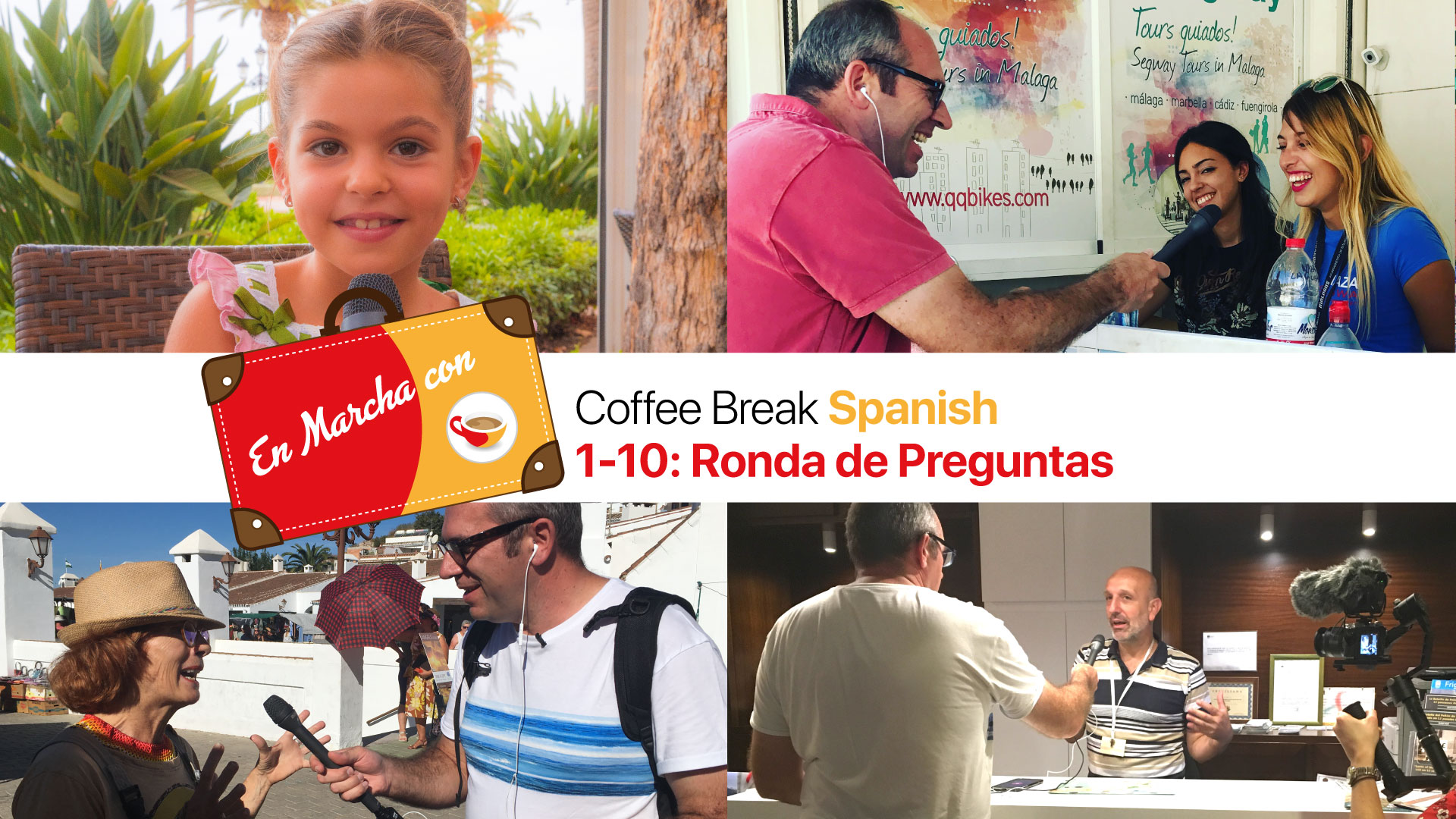
¡Ha llegado el fin de la primera temporada de En Marcha! It’s time for one more episode before we wrap up the series and, in this final instalment, it’s time for some questions. While recording En Marcha, we made sure to ask four key questions to almost everybody we interviewed, and this episode brings all of their answers together! Hear about people’s favourite Spanish destinations, dishes and the tips they have for tourists visiting Spain. ¡Vamos a escuchar las respuestas!