In this episode of Coffee Break French, Gabrielle is writing to Matthieu. There are some great expressions in this lesson’s text, including a few idiomatic ways of saying how long you’ve been doing something, how to talk about working hard – or “like a dog”, and we even manage to include some Disney references and a bit of Edith Piaf! As usual Mark and Pierre-Benoît are on hand to discuss the idiomatic expressions and grammar points.
Understanding relative pronouns in German: a guide for learners
Relative pronouns in German are essential for connecting parts of a sentence and adding extra details. These small words allow you to describe nouns without having to repeat the noun itself.
In this post, we’ll break down how to use relative pronouns in German with helpful examples.
What are relative pronouns in German?
Relative pronouns introduce relative clauses, which provide more information about, for example, a noun. In English, these words are who, which, or that. In German, relative pronouns depend on the gender, number, and case of the noun they describe.
Relative pronouns in German correspond to the definite articles (der, die, das) but adapt to fit their grammatical case. Here’s a quick reference:
| Nominative | Akkusative | Dativ | Genitiv | |
| Maskulin | der | den | dem | dessen |
| Feminin | die | die | der | deren |
| Neutral | das | das | dem | dessen |
| Plural | die | die | denen | deren |
Examples in Context
Let’s explore how relative pronouns in German work in sentences. Each example includes a relative clause that adds information about the noun.
1. Using “der” for masculine nouns
- Gibt es einen Supermarkt, der am Sonntag geöffnet ist? Is there a supermarket that is open on Sundays?
Here, der refers to the masculine noun Supermarkt. It is in the nominative case because it acts as the subject of the relative clause.
- Der Supermarkt, der am Sonntag geöffnet ist, ist sehr praktisch. The supermarket, which is open on a Sunday, is very convenient.
2. Using “die” for feminine nouns
- Die Kirche, die bis 6 Uhr geöffnet ist, ist sehr alt. The church, which is open until 6 o’clock, is very old.
The feminine noun Kirche uses die as the relative pronoun in the nominative case.
- Die Kirche, die neben dem Museum ist, ist bis sechs Uhr geöffnet. The church, which is next to the museum, is open until 6 o’clock.
3. Using “das” for neuter nouns
- Das Haus, das neu gebaut wurde, ist sehr modern. The house, which was newly built, is very modern.
Here, das refers to the neuter noun Haus and is in the nominative case because it is the subject of the relative clause.
- Das Auto, das ich gestern gekauft habe, ist rot. The car which I bought yesterday is red.
In this example, das refers to the neuter noun Auto and is in the accusative case because it is the direct object of the verb gekauft habe I bought.
4. Using “die” for plural nouns
- Aber es gibt auch viele Straßenbahnen, die direkt zum Hauptbahnhof fahren. But there are also many trams which go directly to the main station.
In this sentence, die is used because Straßenbahnen is plural, and it is the subject of the relative clause.
3 key tips for using relative pronouns in German
Firstly, match the gender and number. The relative pronoun must match the gender and number of the noun it describes.
Next, determine the case. The case of the relative pronoun depends on its role in the relative clause. Is it the subject? Or is it an object and requires a different case?
- Der Supermarkt, der geöffnet ist… The supermarket, which is open… (subject in the relative clause – nominative case)
- Der Bus, den wir nehmen… The bus which we are taking… (object in the relative clause – accusative case)
Lastly, keep word order in mind. In a relative clause, the verb always goes to the end:
- Gibt es einen Supermarkt, der am Sonntag geöffnet ist? Is there a supermarket that is open on Sundays?
Practice makes perfect
Relative pronouns are an essential part of German grammar. Becoming familiar with them will help take your German to the next level. Try these couple of sentences to practise:
- Is there a library which is open late?
- The park, which is near my house, is beautiful.
Understanding relative pronouns opens up new ways to describe and connect ideas in German. Keep practising, and you’ll see your skills grow!
To keep your language learning going, why not learn about pharmacy vocabulary in German and see some of these relative pronouns being used in practice? Check out the blog post we prepared.
ANSWERS
- Gibt es eine Bibliothek, die spät geöffnet ist?
- Der Park, der in der Nähe meines Hauses ist, ist schön.
8 key phrases for going shopping in German
Shopping in a German-speaking country can be an amazing experience, whether you’re exploring souvenir shops, browsing local markets or hunting for deals in department stores. To make the most out of this time, knowing the language’s key phrases for going shopping in German is a must.
That is why in this blog post we’ve selected eight useful and practical phrases for navigating the shopping scene with ease. Don’t forget to listen to the podcast to learn how to pronounce this essential vocabulary!
1. Kann ich euch helfen?
When you first enter a store, a friendly greeting sets the tone so don’t forget to use one of the forms of hello in German. That being said, the phrase Kann ich Ihnen helfen? which means, Can I help you? is definitely one that you’ll hear from a shop assistant when you walk into a store. If you are going shopping with a friend, you might also hear the plural form Kann ich euch helfen?
Additionally, the assistant may ask: Suchen Sie etwas Spezielles? Are you looking for something specific?. Again, the plural form would be: Sucht ihr etwas Spezielles?
2. Ich gucke nur
Now that you know what the shop assistant might ask you if you need help, it is also useful to know how to answer that question. In case you’re shopping on your own, you can politely let them know that you’re not ready to buy anything yet by saying Ich gucke nur. I’m just looking.
In some regions of Germany, Ich schaue nur might also be used instead of gucke, but gucken is more commonly heard in everyday conversation.
3. Kann ich das anprobieren?
One of the most useful phrases for going shopping in German for clothes or shoes is Kann ich das anprobieren? which translates to Can I try this on?. This sentence could be especially useful when you find an item that you’re interested in but want to check if it fits before making a purchase.
To this request, the shop assistant may respond with:
- Ja, natürlich! Die Umkleidekabinen sind dort drüben. Yes, of course! The fitting rooms are over there.
- Klar, hier ist eine Umkleidekabine. Sure, here is a fitting room.
4. Passt das? Passen die?
Once you’ve tried on a pair of shoes or clothing, the shop assistant might ask you Passt das? Does that fit? or Passen die? Do they fit? A straightforward answer to this question in German would be:
- Ja, passt perfekt. Yes, fits perfectly.
- Nein, nicht ganz. No, not quite.
If you would like it in a different size, you might use the following phrase.
5. Haben Sie das/die in …
Another key phrase for going shopping in German is Haben Sie das/die in …? Do you have that/them in …?. It is a perfect way to ask about the availability of a product in a specific size, colour, or style. For example, if you are shopping for shoes and want to know if the store has a different size, you might ask:
- Haben Sie die auch in Größe 43? Do you also have them in size 43?
Or if you are expressing preferences, you could say:
- Haben Sie das in einer anderen Farbe? Do you have that in another colour?
- Ich hätte lieber das in Blau. I’d prefer that in blue.
6. Wie viel kostet das? Wie viel kosten die?
Once you’ve found the perfect item, another key skill to shopping in German is being able to ask for the price. Simply ask Wie viel kostet das? which means How much does that cost? or Wie viel kosten die? which is used for more than one item, like shoes.
This is a crucial phrase to know while shopping to avoid any surprises at the checkout.
7. Das/Die nehme ich.
When you’ve decided on your purchase, you can say, Das/Die nehme ich.. This translates to, I’ll take that/them. It’s a great way to let the shop assistant know you’ve made your decision and are ready to check out.
8. Kann ich mit Karte zahlen?
In many German stores, you’ll have the option to pay with a credit or debit card. To ask, Can I pay by card?, you can say: Kann ich mit Karte zahlen? This is an important question to ask when on the counter.
With these phrases under your belt, your shopping experience in German will go smoothly! After all, you’ll be able to navigate any store confidently and make your shopping experience much easier. From asking to try things on to paying for your purchases, you now have the essential vocabulary you need to enjoy your time shopping in a German-speaking country.
Since you already know how to go about shopping, how about learning to navigate any place by being able to ask for tourist information in a German-speaking city? Check out the article we prepared on the subject and also gain more insight into relative pronouns in German!
Season 4 – Lesson 18 – Coffee Break French
It’s time for a new episode of Coffee Break French. This week Sylvie is responding to her mother’s latest email as they’re both looking forward to spending a family weekend in Épinal. As usual Mark and Pierre-Benoît are on hand to discuss the idiomatic expressions and grammar points contained in the text, including the expressions se dépêcher de faire quelque chose, se faire des idées, and the very useful word sacré. Please note that lesson 18 of Season 4 was originally known as lesson 418 of Coffee Break French. We have renumbered the lessons of each season as lessons 1-40 to make things more simple for our listeners.
A definitive guide to tu and vous

For learners of French, and indeed many other languages, it’s often difficult to know how to address people, since there are two different forms of the word for “you”: tu and vous. Back in Coffee Break French lesson 3 we introduced this concept, and in our mini soap opera in lessons 71-80 we discussed it too in lesson 76.
We’ve come across a wonderful flow chart on how to use correctly the tu and vous form in French which has been doing the rounds on social media in the past few days. Created by the author William Alexander whose forthcoming book “Flirting with French: How a Language Charmed Me, Seduced Me, and Almost Broke My Heart” (which we can’t wait to read!), the flow chart explains exactly when you should opt for tu and when you should stick with vous. Although the author’s tongue was obviously firmly in cheek, it’s very accurate! Please have a look at the original which you can find on the LA Times site and let us know what you think in the comments below, and if you’re interested in pre-ordering the book, here are the Amazon.com and Amazon.co.uk links!
6 Useful phrases to navigate with a map in German
Planning a trip to a German-speaking country? Well, then you must understand that knowing how to use a map in German can make your travels much smoother. Especially if you are in a smaller town with limited connection!
From understanding directions to locating landmarks, mastering these key phrases will help you find your way out and about like a pro. Don’t forget to listen to the podcast to learn more about pronunciation and listen to some of this new vocabulary being used in practice.
1. Haben Sie eine Stadtkarte / eine Karte?
After checking in at your hotel using your German vocabulary, you are ready to explore the town or city you are visiting. The first thing you’ll likely need upon arriving in a new place is a Stadtplan city map or Karte map especially if you are in a smaller town or visiting a tourist attraction.
To ask for that, you can use this simple structure:
- Entschuldigung, haben Sie einen Stadtplan von Bamberg? Excuse me, do you have a city map of Bamberg?
Similar to asking for a map of a city, you might also need a map when navigating national parks, estates or other tourist attractions. In this case, you can simply ask for a Karte map to help you navigate the terrain.
- Entschuldigung, haben Sie eine Karte von dem Park? Excuse me, do you have a map of the park?
2. Wo finde ich das auf der Karte?
If someone gives you directions in German, this phrase will help you match their instructions to your map. It’s especially useful for pinpointing exact locations.
- Wo finde ich den Bahnhof auf der Karte? Where can I find the train station on the map?
This ensures you’re on the right track and helps you avoid getting lost.
3. Können Sie es mir auf der Karte zeigen?
When you’re not sure where to go, locals can be incredibly helpful. If you forgot how to ask where you can find the location, you can use this phrase to ask someone to point out the location on your map in German.
- Können Sie mir das Franziskanerkloster auf der Karte zeigen? Can you show me the Franciscan Monastery on the map?
4. Wie komme ich dorthin?
If, instead of asking someone to show you where something is on the map, you prefer to ask for directions, you can use this phrase to find your way. It is useful if you are walking or using public transportation.
Example:
- Wie komme ich von hier zum Hauptbahnhof? How do I get from here to the main station?
Combine this with your map in German to plan the best route.
5. Wie weit ist es von hier?
This phrase helps you gauge the distance between your current location and your destination. When paired with your map in German, it gives you a better sense of timing and the best way to travel.
A good question could be:
- Wie weit ist es von hier zur Altstadt? How far is it from here to the Old Town?
You can adjust your plans accordingly, whether it’s a quick walk, a longer bus ride or even worth taking a taxi.
6. Können Sie das wiederholen? Ich spreche nicht so gut Deutsch.
This is a very useful sentence to add to your vocabulary, especially if you only speak a little German, as it translates to Can you repeat that? I don’t speak German very well. So, if directions are being explained too quickly, this phrase will help you slow things down and get a better understanding.
Germans appreciate it when tourists make an effort, even if their German isn’t perfect. Alternatively, you can also say:
- Können Sie das bitte wiederholen? Ich habe es nicht verstanden. Can you please repeat that? I didn’t understand.
Learning how to navigate and ask for directions using a map in German not only helps you have a better travel experience but also gives you confidence as you explore! Whether you’re seeking the nearest bus stop or planning a scenic route to a museum, these phrases will ensure you’re prepared.
As always, don’t hesitate to ask locals for help — they’ll appreciate your effort to speak German and may even share hidden gems in the area. And if you need a little help with your shopping vocabulary, make sure to head to our blog post in which we list some key phrases for going shopping in German!
Season 4 – Lesson 17 – Coffee Break French
In this episode of Coffee Break French Season 4, we consider Monique’s latest email as she looks forward to Sylvie’s visit this coming weekend. Mark and Pierre-Benoît are on hand to discuss the idiomatic expressions and grammar points contained in the text, including the expression tous les quatre matins, ce n’est pas la porte à côté, l’essentiel c’est que + subjunctive and lots more. Please note that lesson 17 of Season 4 was originally known as lesson 417 of Coffee Break French. We have renumbered the lessons of each season as lessons 1-40 to make things more simple for our listeners.
10 years of the podcast

According to the Radio Academy, today marks the 10th anniversary of the podcast. Here at Radio Lingua we launched Coffee Break Spanish back in 2006, and were among the first language podcasts available in the iTunes Store. Since then we’ve been at the top of the Education podcast charts in the UK and US ever since, with over 140 million downloads of our language lessons around the world. On this anniversary of our favourite medium, we’d like to wish our fellow podcasters well, and here’s to the next ten years!
German small talk: conversations at the hotel
One of the most challenging yet rewarding aspects of learning a new language is engaging in casual conversations. For those visiting a German-speaking country, mastering German small talk can be a game-changer, especially at a hotel where you can interact with the staff and other customers at breakfast, for example.
In this post, we’ll explore some common phrases and tips for improving your skills and making those everyday conversations easier. Remember to listen to the podcast to see some of this vocabulary used in practice, during a hotel stay!
German small talk essentials
If you speak a little German, making German small talk is something that is definitely among your skills. However, we know that sometimes using the language with the locals can seem like a big task. To help you with that, we have some basic phrases here to make it easier to socialise and make friends:
Check it out:
- Guten Morgen
- Grüß Gott (used in Austria and southern Germany)
- Hallo
Of course, there are other ways to say hello in German depending on the region you are visiting. Once you’ve greeted someone, keeping the conversation flowing is key. Here are a few helpful questions:
- Wie geht es Ihnen? (formal)
- Wie geht’s? (informal)
- Was machen Sie beruflich? What do you do for a living?
At breakfast, you might also use some of this vocabulary:
- Möchten Sie frühstücken? Would you like to have breakfast?
- Das Wetter ist wunderschön heute, nicht wahr? The weather is beautiful today, isn’t it?
- Es ist ziemlich kalt, oder? It’s quite cold, isn’t it?
- Leben Sie hier oder sind Sie zu Besuch hier? Do you live here or are you here for a visit?
To answer, you can use casual expressions like:
- Also… So… (often used to start a thought);
- Ach so! Oh, I see! (shows understanding);
- Ich verstehe. I understand. (a good way to acknowledge what someone is saying)
Ending a conversation politely is as important as starting it. So to wrap it up, you can say:
- Es war nett, mit Ihnen zu sprechen. It was nice talking to you.
- Ich wünsche Ihnen noch einen schönen Tag! I wish you a pleasant day!
- Bis bald! See you soon!
More conversations at the hotel
In our blog post and episode about how to check into a hotel in German, we covered important vocabulary. At the Frühstücksbuffet breakfast buffet, there are some different questions that the staff might ask you.
- Darf ich Ihre Zimmernummer haben, bitte? May I have your room number, please?
- Möchten Sie etwas trinken? Would you like something to drink? (formal)
- Kommt sofort! Coming right away!
To answer this question, you can say:
- Meine Zimmernummer ist… My room number is…
- Ich nehme einen… I’ll take…
- Ich hätte gern… I would like…
And there you have it! Making German small talk at a hotel is not as tricky as it sounds if you know where to start. So next time you find yourself in a German-speaking setting, don’t hesitate to strike up a conversation!
To keep your language learning on track and also learn some important vocabulary for asking for information in German at the Information Office or any other location, even at the hotel, check the blog article and podcast we prepared!
Season 4 – Lesson 16 – Coffee Break French
It’s time for a new episode of Coffee Break French and in this episode we join Matthieu who is replying to Gabrielle’s email. As usual, Mark and Pierre-Benoît are on hand to discuss the expressions and grammar points contained in his text including how to talk about “remembering” things in French using se rappeller and se souvenir de qc, and an interesting use of the expression pour que. Please note that lesson 16 of Season 4 was originally known as lesson 416 of Coffee Break French. We have renumbered the lessons of each season as lessons 1-40 to make things more simple for our listeners.
Useful German travel phrases: a review on how to check into your hotel
Travelling to a German-speaking country is a fantastic way to immerse yourself in the culture and, of course, practice your language skills. And, if you think about it, checking into your accommodation is a big part of it all. That is why in this blog post, we will review some useful German travel phrases to help you review how to check into your hotel, for example.
So, whether you’re reserving a room, asking about views or clarifying a mix-up, these key phrases will ensure your adventure abroad gets off to a smooth start. Don’t forget to listen to the podcast in which we explore some of the key vocabulary to learn how to pronounce these words.
Arriving at the hotel
After a long journey, the first step is to greet the receptionist and mention you would like to check-in in German. As you know, polite greetings and introductions set the tone for a nice stay and conversation and are useful German travel phrases to have under your belt. Here’s how to start:
- Guten Tag. Wir haben ein Zimmer reserviert. Good morning. We have reserved a room.
When the receptionist welcomes you, they might use the phrase:
- Guten Tag. Darf ich Ihren Ausweis haben, bitte? Good morning. May I have your ID, please?
If you’re travelling as a group, it’s a good idea to be ready to clarify the reservation details. For example:
- Wir haben ein Einzelzimmer und ein Doppelzimmer reserviert. We have reserved one single room and one double room.
How to clarify a mix-up at the check-in in German?
Mistakes happen, and sometimes reservations get mixed up. But do you know what German travel phrases to use if there is a problem with the details of your accommodation?
If not, don’t worry! Imagine the receptionist says that you reserved three rooms instead of one Sie haben drei Zimmer reserviert. Ist das richtig? To clarify the error, you just have to say Nein. Ich habe nur ein Zimmer reserviert. If there was a mix-up with your name, you might have to clarify this by saying Nein, Ich heiße [your name], nicht [the wrong name].
The receptionist will acknowledge the error and then probably say ‘Das tut mir Leid!’ and then confirm your details to make sure everything is alright. Once your reservation is confirmed, you might want to inquire about the room’s features, for example, the view:
- Wie ist die Aussicht vom Einzelzimmer? What is the view like from the single room?
To which the person at the reception might say:
- Das Einzelzimmer hat einen Blick über den Platz. The single room has a view of the square.
- Das Doppelzimmer hat einen schönen Blick auf den Fluss. The double room has a beautiful view of the river.
If you’d like to request a different view:
- Ist es möglich, einen Blick auf die Berge zu haben? Is it possible to have a view of the mountains?
Read also: Navigating an airport in German: essential vocabulary and phrases
Practical German travel phrases for payment and logistics
Once you’ve finalised the details of your stay, the receptionist may ask for payment or provide logistical information. As a traveller, it’s essential to be prepared for the payment process when checking into a hotel in Germany.
Most hotels will ask for a credit card to confirm your booking or to settle your bill, such as Ich brauche nur Ihre Kreditkarte. I just need your credit card. Other practical German travel phrases to know include:
- Ihre Zimmer sind im zweiten (dritten) Stock. Your rooms are on the second (third) floor.
- Es gibt einen Aufzug hier auf der linken Seite. There’s an elevator here on the left side.
- Ich wünsche Ihnen einen angenehmen Aufenthalt hier. I wish you a pleasant stay here.
Learning German travel phrases is not just useful — it enriches your travel experience by allowing you to connect with locals. Checking into a hotel is one of the first interactions you’ll have upon arrival, and mastering these phrases ensures a stress-free start to your trip.
So, next time you’re planning a trip to Germany, Austria or Switzerland, take a moment to practice this vocabulary! And if you want to learn more about how to ask for information in a German-speaking city while reviewing some key grammar points, don’t miss out on the blog post we prepared on this topic!
Season 4 – Lesson 15 – Coffee Break French
We’re back with another episode of Coffee Break French and this week we’re joining Gabrielle who’s writing her regular email to Matthieu. Mark and Pierre-Benoît discuss the expressions and grammar points contained in her text including verbs which require particular prepositions, such as se dépêcher de faire qc, promettre de faire qc, and lots more. Please note that lesson 15 of Season 4 was originally known as lesson 415 of Coffee Break French. We have renumbered the lessons of each season as lessons 1-40 to make things more simple for our listeners.
Season 4 – Lesson 14 – Coffee Break French

In this week’s edition of Coffee Break French, Mark and Pierre-Benoît discuss Sylvie’s latest email and cover a number of interest points of vocabulary and grammar including the expression tant que tu y es, the verb s’emballer, and the concept of jours de RTT. Please note that lesson 14 of Season 4 was originally known as lesson 414 of Coffee Break French. We have renumbered the lessons of each season as lessons 1-40 to make things more simple for our listeners.
Public transport in German – essential phrases for using transport in German-speaking places
Travelling in German-speaking places can be much easier when you know some basic German phrases. This blog post will help you understand public transport in German and how to use common expressions for navigating a city, asking for directions, and using public transport.
Don’t forget to tune into our podcast episode for insights on pronunciation and culture. Listen to it now:
Getting to the city centre using public transport in German
Let’s look at what you might say if asked how you are spending your day and describing what transport you might need to use.
- Wir fahren in das Stadtzentrum. We are going to the city centre.
Use this phrase when travelling to a city’s central part. We use the accusative in das because this sentence indicates movement.
- Wir fahren nach Berlin. We are going to Berlin.
Nach is used for going to cities and countries, meaning “to”.
Asking for directions
Knowing how to ask how best to reach a location is very useful. You want to be sure you are on the right bus or train and to ask for directions if you need them.
- Gibt es einen Bus dorthin? Is there a bus going there?
This is helpful when asking if public transport is available to your destination. Note that the accusative case is used for the direct subject of the question, einen Bus.
- Wo genau im Stadtzentrum? Where exactly in the city centre?
Use this to ask for more specific directions within the city centre. You can see how a compound noun is formed with Stadtzentum = Stadt + Zentrum and the gender of the compound word is decided by the last part of the compound word, in this case, neuter.
Useful words for navigating public transport in German
When you’ve asked for directions or for information about public transport, it’s important to be able to understand what you’re told. Let’s look at some expressions you may hear:
- Die Fußgängerzone The pedestrian zone
This area is only for walking, with no cars allowed and is another example of a compound word.
- Mein Hotel ist zwischen dem Hauptbahnhof und der Fußgängerzone. My hotel is between the main train station and the pedestrian zone.
This helps describe the location of your accommodation. Hauptbahnhof is yet another compound noun.
- Nehmen Sie den Bus zum Hauptbahnhof. Take the bus to the main train station.
You may hear this being given as instructions or directions on how best to get to the main station.
- Der Bus zum Flughafen fährt alle 15 Minuten. The bus to the airport leaves every 15 minutes.
You will hear this expression when asking about how regularly transport leaves.
- Gehen Sie rechts / links. Go right / left.
Simple instructions for navigating. Directions such as these may follow one another to give a longer set of instructions.
Using public transport
You may see signs and notices displaying information at a bus stop or in a station. Understanding them can make using public transport much easier. There are also questions you may want to ask to check how best to reach a location.
- die Bushaltestelle The bus stop
Important to identify where to catch a bus.
- Die Bushaltestelle ist auf der linken / rechten Seite. The bus stop is on the left / right side. This is another compound noun.
- der Fahrplan the timetable
This tells you the bus or train schedule. Another compound word.
- Dort sehen Sie den Fahrplan. There you can see the timetable.
Use this when showing someone where to check schedules.
- Kann man auch mit einem Taxi fahren? Can one also take a taxi?
A good question when exploring transportation options. This is a very useful construction as nearly all forms of transport are masculine, so they follow this same pattern:
- Kann man auch mit einem Bus / Zug / Fahrrad / Auto fahren? Can one also take a bus / train / bike / car?
Travelling by tram sees a slight change as the word for tram, Straßenbahn, is feminine: Kann man auch mit einer Straßenbahn fahren? Can one also take a tram?
Talking about the trip
If you want to find out the cost of a journey by public transport or how long it may take, look at the sentences below to help you work out how to form what you’d want to say about your trip.
- die Fahrt The ride/journey
General term for a trip by vehicle.
- Die Fahrt dauert ungefähr zwanzig Minuten im Taxi / im Bus / in der Straßenbahn / im Zug. The ride takes about twenty minutes by taxi / bus / tram / train.
Note the difference again here with Straßenbahn as a feminine noun; it is in der Straßenbahn, not im.
- Es kostet mehr / weniger als der Bus. It costs more / less than the bus.
We are seeing the comparative used here, more than and less than. It is often formed by adding -er to the adjective, in the case of regular adjectives:
- wenig > weniger
You can use different adjectives to apply to different aspects of transport:
- bequem / schnell / teuer / billig – comfortable / fast / expensive / cheap.
To form the comparative: bequemer / schneller / teurer / billiger
- Ein Taxi ist bequemer als den Bus, aber ein Taxi ist teurer. A taxi is more comfortable than the bus, but a taxi is more expensive.
You can use these adjectives to describe different ways of travelling.
- Die Fahrt dauert länger mit dem Bus,… The ride takes longer by bus, …
- …weil der Bus oft halten muss. because the bus has to stop often.
Asking about prices
It’s important to know the price of your journey on public transport. You don’t want to overpay, and you want to know you have the right ticket for your trip.
- Wie viel kostet ein Busticket…? How much does a bus ticket cost?
You can add your destination to the end of this question
- …ins Stadtzentrum? to the city centre?
- Ein Taxi kostet ungefähr zwanzig Euro. A taxi costs about twenty euros.
These phrases are useful for travelling around German cities. Practise using them, and you’ll navigate public transport and ask for directions with more confidence. Gute Reise! Have a good trip!
Why not keep practising essential phrases in German for travel? Check out the blog post we prepared with more vocabulary and examples to help you feel ready for your next adventure!
Season 4 – Lesson 13 – Coffee Break French
It’s time for a new episode of Coffee Break French and this week we’re joining Monique who is replying to Sylvie’s latest email. Mark and Pierre-Benoît discuss a number of tricky grammar points and interesting areas of vocabulary, providing lots of examples along the way. Please note that lesson 13 of Season 4 was originally known as lesson 413 of Coffee Break French. We have renumbered the lessons of each season as lessons 1-40 to make things more simple for our listeners.
Navigating an airport in German: essential vocabulary and phrases
Knowing the basic airport terms in the language will make the journey smoother if you are travelling to a German-speaking country or even just on a layover flight. In this blog post, we will review some essential vocabulary for navigating an airport in German, giving you more confidence as you travel.
Remember to listen to the podcast episode, which focuses on useful vocabulary and phrases related to travel. You’ll gain insight into pronunciation and also interesting, fun facts from our cultural correspondent.
Airport in German: key vocabulary and phrases
If you speak a little German, we are sure that you would feel comfortable ordering a drink, presenting yourself and asking for directions. But when you are at the airport, you might feel a little bit more nervous to have basic interactions or even read the signs.
To help you with that, we have here some basic phrases that will help you navigate an airport in German. Check them out:
- der Flughafen the airport
- der Flug the flight
- das Gepäck the luggage
- der Reisepass the passport
- die Sicherheitskontrolle the security check
- das Terminal the terminal
- der Flugsteig the gate
- das Ticket the ticket
- der Abflug the departure
- die Ankunft the arrival
Knowing these basic words will make it easier to find your way around the airport. For example, when looking for the gate, you can ask, Wo ist der Flugsteig? Where is the gate?.
Now that you are familiar with this essential vocabulary, let’s have a look at some useful phrases:
- Ich möchte einchecken. I would like to check in.
- Wie lange dauert die Sicherheitskontrolle? How long is the security check?
- Wann geht mein Flug? When does my flight leave?
- Wo ist das Gepäckband? Where is the luggage carousel?
- Kann ich meinen Flug umbuchen? Can I reschedule my flight?
- Ich fliege nach Berlin. I’m flying to Berlin.
- Wir fliegen morgen früh. We’re flying early tomorrow.
Moreover, if you want to wish someone (or a group of people) a good journey, you could say Ich wünsche dir (euch) eine gute Reise.
Talking about your trip
With this vocabulary and essential phrases for navigating an airport in German, you can also start thinking about how to answer questions about your trip or talk about it in general. One phrase you might hear is Kennst du…?, which translates to Do you know…? It’s often used when people ask if you’re familiar with a city or landmark.
For instance, Kennst du das Goldene Dachl? means Do you know the Golden Roof?, a well-known tourist spot in Innsbruck. If you’ve visited before, you could respond with Ja, ich war letztes Jahr in Innsbruck. Yes, I was in Innsbruck last year and so on!
You could also say:
-
- Ich bin hier für fünf Tage. I’m here for five days.
- Ich freue mich auf meinen Aufenthalt. I’m looking forward to my stay.
- Ich freue mich, das Museum zu besuchen. I’m looking forward to visiting the museum.
Being familiar with this basic travelling vocabulary will make navigating der Flughafen much easier and give you the opportunity to talk about your trip. Whether you’re boarding a flight or going through security, being prepared with the right words and phrases will reduce stress and help you feel more at ease.
And, once you arrive in the German-speaking country, you might want to ask for information and directions at a help desk in German. Read the blog post we prepared to help you with that and be extra prepared for your next trip!
Season 4 – Lesson 12 – Coffee Break French
In this week’s episode of Coffee Break French, Matthieu recounts his version of events on the platform of the RER. As usual there are lots of interesting expressions and tricky grammar points, and Mark and Pierre-Benoît will be discussing the language used in the text to help you understand and improve your French. Through examples and explanations, Mark and Pierre-Benoît will help you to understand the French used by our characters in their texts, and you’ll be able to build your range of expression, increase your vocabulary and deepen your understanding of complex grammatical concepts. Please note that lesson 12 of Season 4 was originally known as lesson 412 of Coffee Break French. We have renumbered the lessons of each season as lessons 1-40 to make things more simple for our listeners.
Coffee Break German goes to Innsbruck
Introduction
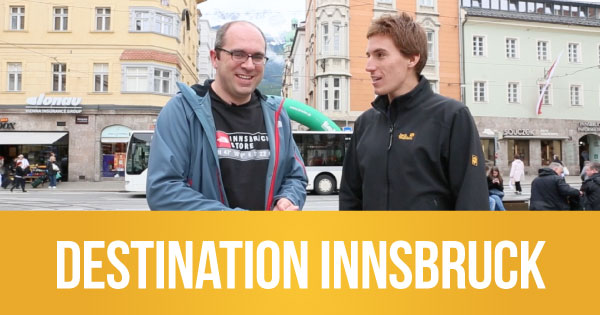
Lessons 31-40 of Coffee Break German have been recorded in Innsbruck, Austria. In this short video introduction to these lessons, Mark joins Thomas in the Marienplatz to talk about what is coming up in this next batch of lessons.
Season 4 – Lesson 11 – Coffee Break French
We’re back with a new episode of Coffee Break French and this time we’re joining Gabrielle who is writing to her friend Matthieu. Mark and Pierre-Benoît discuss the language used in the text including the word dont , the phrase profiter de quelque chose pour faire autre chose and the past historic tense. Through examples and explanations, Mark and Pierre-Benoît will help you to understand the French used by our characters in their texts, and you’ll be able to build your range of expression, increase your vocabulary and deepen your understanding of complex grammatical concepts. Please note that lesson 11 of Season 4 was originally known as lesson 411 of Coffee Break French. We have renumbered the lessons of each season as lessons 1-40 to make things more simple for our listeners.
Season 4 – Lesson 10 – Coffee Break French

We turn again to Sylvie in this episode and listen to her email in which she responds to her mother’s email. As usual Mark and Pierre-Benoît are on hand to discuss the language contained in the email. After presenting Sylvie’s email, Mark gives a summary of the main narrative points of the text, and then Pierre-Benoît discusses the four language points he has chosen from the text. Through examples and explanations, Mark and Pierre-Benoît will help you to understand the French used by our characters in their texts, and you’ll be able to build your range of expression, increase your vocabulary and deepen your understanding of complex grammatical concepts. Please note that lesson 10 of Season 4 was originally known as lesson 410 of Coffee Break French. We have renumbered the lessons of each season as lessons 1-40 to make things more simple for our listeners.