In lesson 2 of A Flavour of German you’ll learn some interesting phrases used to talk about the time using idiomatic German
How to check into a hotel in French?

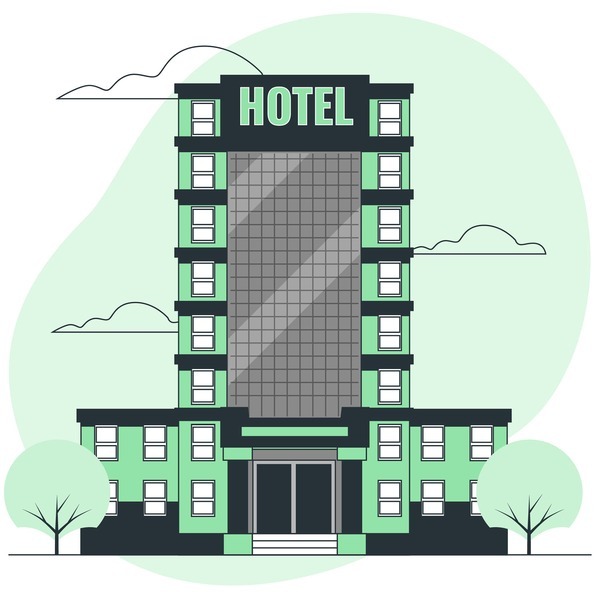
Checking into a hotel in French-speaking regions can be a smooth and pleasant experience if you are familiar with the essential vocabulary and phrases. This blog post will help you navigate the process of checking into a hotel in French, ensuring you can communicate your needs clearly and effectively.
Arriving at the hotel
Upon arriving at the hotel in French-speaking areas, the receptionist will typically greet you and ask for your reservation details. You might hear:
- Bonjour, vous avez une réservation ? Hello, do you have a reservation?
- Comment vous appelez-vous ? What is your name?
Your response could be:
- J’ai une réservation I have a reservation
- Nous avons une réservation We have a reservation
- Je m’appelle [your name]. My name is [your name].
- J’ai une réservation au nom de [your last name]. I have a reservation in the name of [your last name].
Asking for a room
If you haven’t made a reservation, you can ask for a room:
- Je voudrais une chambre. I would like a room.
- Une chambre pour une personne. A single room.
- Une chambre pour deux personnes. A double room.
Depending on your needs, you might specify:
- Une chambre pour deux personnes à un lit. A double room with one bed.
- Une chambre pour deux personnes à deux lits. A twin room.
Discussing the duration of your stay
The receptionist might ask how long you plan to stay:
- Pour combien de nuits ? For how many nights?
- Pour une nuit. For one night.
- Pour deux nuits. For two nights.
- Pour une semaine. For one week.
Inquiring about amenities and services
You may need to ask about what is included in your stay:
- Est-ce que le petit déjeuner est compris ? Is breakfast included?
- C’est combien par nuit ? How much is it per night?
- Avez-vous une carte de crédit ? Do you have a credit card?
For example:
- Est-ce que le petit déjeuner est compris ? Is breakfast included?
- C’est combien par nuit ? How much is it per night?
Would you like to learn the pronunciation of these phrases? In episode 22 of Season 1 of the Coffee Break French podcast, you will learn how to pronounce properly the phrase to check into a hotel in French. You will also get more insight into these phrases and learn other useful phrases. Listen to it now:
Additional useful phrases
Here are some additional phrases that might be helpful when checking into a hotel in French:
- Je n’ai pas de réservation. I don’t have a reservation.
- Nous n’avons pas de réservation. We don’t have a reservation.
- Avez-vous une chambre disponible ? Do you have a room available?
- C’est complet. We’re full.
- Avez-vous un ascenseur ? Do you have an elevator?
- Le petit déjeuner est servi à quelle heure ? When is breakfast served?
- Le petit déjeuner est servi de 07h00 à 09h30. Breakfast is served from 7:00 am to 9:30 am.
Practical application
Let’s see how this might look in a real-life scenario when checking into a hotel in French:
- Receptionist: Bonjour, vous avez une réservation ?
- You: Bonjour, oui, j’ai une réservation au nom de Dupont.
- Receptionist: Très bien, monsieur Dupont. Pour combien de nuits ?
- You: Pour trois nuits, s’il vous plaît.
- Receptionist: D’accord. Est-ce que le petit déjeuner est compris ?
- You: Oui, le petit déjeuner est compris.
- Receptionist: Parfait. Voici votre clé. Votre chambre est au troisième étage. Avez-vous des questions ?
- You: Oui, est-ce que vous avez un ascenseur ?
- Receptionist: Oui, l’ascenseur est juste à gauche. Bon séjour !
- You: Merci beaucoup !
By familiarising yourself with these phrases, you will find it much easier to check into a hotel in French-speaking areas. Understanding and using these key terms can significantly enhance your travel experience, making your stay more enjoyable and stress-free. Bon voyage !
Do you want to keep improving your French skills and discuss any issues you might have during your stay at the hotel? Then check out the article we prepared to help you ask for help if there is a problem with your room.
Lesson 06 – One Minute Luxembourgish
In lesson 06 of One Minute Luxembourgish you’ll learn to introduce yourself.
Download episode | Subscribe in iTunes | RSS Feed | Bonus Materials
Special message for Norwegian learners from teacher Dag
17th May is celebrated as National Day in Norway and Dag, our Norwegian teacher, recorded this special message for Norwegian learners across the world. Gratulerer med dagen!
Weather in French – Key vocabulary and expressions

Whether you’re planning your day, making small talk, or simply curious about the forecast, knowing how to talk about the weather in French can be incredibly useful. If you are not familiar with the subject, this guide will cover essential phrases and terms.
Keep reading and find out how to describe the weather!
Key vocabulary for weather in French
Let’s start with some basic vocabulary that will help you understand and describe the weather:
- Le temps The weather
- Quel temps fait-il ? What’s the weather like?
- Aujourd’hui Today
- Demain Tomorrow
- Les prévisions The weather forecast
- La météo The weather forecast on television
Describing the weather in French
When discussing the weather, it’s important to know how to describe different weather conditions. Here are some common phrases:
- Il fait beau It’s nice weather
- Il fait mauvais It’s bad weather
- Il fait froid It’s cold
- Il fait chaud It’s warm/hot
- Il fait du vent It’s windy
- Il pleut It’s raining
- Il neige It’s snowing
Degrees of intensity
To add more detail to your descriptions, you can use adverbs to express the intensity of the weather:
- Il fait très beau It’s very nice weather
- Il fait très chaud It’s very hot
- Il fait très froid It’s very cold
- Il fait assez beau It’s quite nice weather
- Il fait assez froid It’s quite cold
- Il fait vraiment froid aujourd’hui It’s really cold today
Expressing extreme weather
Sometimes, the weather can be quite extreme. Here are some phrases to describe such conditions:
- Il pleut des cordes ! It’s pouring; it’s raining cats and dogs
- Quel temps magnifique ! What wonderful weather!
- Quel temps affreux ! What awful weather!
- Il y a du vent It’s windy – an alternative to il fait du vent
Talking about future weather
Knowing how to talk about future weather conditions is also useful. Here are some phrases to describe what the weather will be like tomorrow:
- Quel temps fera-t-il demain ? What will the weather be like tomorrow?
- Il fera beau It will be nice weather
- Il fera chaud It will be warm/hot
- Il fera froid It will be cold
- Il fera du vent It will be windy
- Il fera mauvais It will be bad weather
- Il pleuvra It will rain
- Il neigera It will snow
Would you like to hear this weather vocabulary pronounced? Listen to episode 21 of Season 1 of the Coffee Break French podcast for more insights and useful phrases to talk about the weather in French.
The seasons in French
Understanding how to talk about the seasons is a vital part of discussing the weather in French. Each season has its own typical weather patterns, and knowing the vocabulary will help you describe these changes throughout the year.
Le printemps
- Au printemps, il fait souvent beau. In spring, the weather is often nice.
- Il pleut fréquemment au printemps. It rains frequently in spring.
L’été
- En été, il fait très chaud. In summer, it is very hot.
- Il y a beaucoup de soleil en été. There is a lot of sunshine in summer.
L’automne
- En automne, il fait souvent frais. In autumn, it is often cool.
Les feuilles tombent en automne. The leaves fall in autumn.
L’hiver
- En hiver, il fait froid et il neige. In winter, it is cold and it snows.
- Il fait sombre tôt en hiver. It gets dark early in winter.
Mastering the vocabulary and phrases related to the weather will make your daily interactions smoother and more engaging. This French language review has covered the basics, helping you understand and describe the weather confidently. Keep practising these phrases, and soon discussing the weather in French will become second nature. Bonne chance !
Interested in advancing your French and learning how to book a hotel? Check out our article designed to help you make hotel reservations in French.
Lesson 10 – One Minute Norwegian
In lesson 10 of One Minute Norwegian you’ll learn a few useful phrases all learners like to know in Norwegian including “Happy Christmas”, “cheers” and “I love you”!
Download episode | Subscribe in iTunes | RSS Feed | Bonus Materials
Lesson 09 – One Minute Norwegian
In lesson 09 of One Minute Norwegian you’ll learn to ask people how they’re feeling and answer the question yourself.
Download episode | Subscribe in iTunes | RSS Feed | Bonus Materials
New Coffee Break French Season Passes available
 The Season Pass for unit 2 is now available in our store. Purchase either the Basic Pass which includes the lesson guides (pdf) for lessons 11-20, or the VIP Pass which includes the lesson guides, the enhanced podcasts, and bonus listening material for each lesson. There’s also a special deal on the units 1-2 bundle. Check out our store now, and look out for discount codes in our newsletter or by following us on Twitter.
Coffee Break French unit 2 Season Pass now available
The Season Pass for unit 2 is now available in our store. Purchase either the Basic Pass which includes the lesson guides (pdf) for lessons 11-20, or the VIP Pass which includes the lesson guides, the enhanced podcasts, and bonus listening material for each lesson. There’s also a special deal on the units 1-2 bundle. Check out our store now, and look out for discount codes in our newsletter or by following us on Twitter.
Lesson 05 – One Minute Luxembourgish
In lesson 05 of One Minute Luxmbourgish you’ll learn to say that you’re learning Luxembourgish.
Download episode | Subscribe in iTunes | RSS Feed | Bonus Materials
A Flavour of German – Lesson 01
In lesson 1 of A Flavour of German you’ll learn some interesting phrases used to talk about the weather using idiomatic German
Lesson 08 – One Minute Norwegian
In lesson 08 of One Minute Norwegian you’ll learn to count from one to ten.
Download episode | Subscribe in iTunes | RSS Feed | Bonus Materials
Lesson 04 – One Minute Luxembourgish
In lesson 04 of One Minute Luxembourgish you’ll learn how to say you don’t understand something.
Download episode | Subscribe in iTunes | RSS Feed | Bonus Materials
Lesson 07 – One Minute Norwegian
In lesson 07 of One Minute Norwegian you’ll learn to say it’s nice to meet someone in Norwegian.
Download episode | Subscribe in iTunes | RSS Feed | Bonus Materials
Lesson 03 – One Minute Luxembourgish
In lesson 03 of One Minute Luembourgish you’ll be learning how to say you speak a little Luxembourgish.
Download episode | Subscribe in iTunes | RSS Feed | Bonus Materials
Mastering French pronunciation: a comprehensive guide
Understanding and mastering pronunciation in foreign languages is a crucial step for anyone learning a language. We know French pronunciation can be challenging due to its unique sounds and accents, but with practice and the right techniques, you can achieve fluency.
This guide will review essential aspects of pronunciation, helping you to speak more confidently and accurately. Keep reading for some incredible tips!
3 basic French pronunciation tips
Correct French pronunciation is vital because it ensures clear communication. Mispronouncing words can lead to misunderstandings and hinder your ability to connect with native speakers. That is why we have put together three tips to help you improve your pronunciation skills:
1. Vowel sounds
French vowels can have multiple sounds, depending on their placement in a word and the presence of accents. For example, the letter ‘e‘ can sound like ‘uh‘ (le) or ‘ay‘ (é).
In words like célèbre (pronounced cay-lai-br) or phénomène (pronounced faynomain) the accents on the ‘e’ change the sounds.
2. Silent letters
Many French words have silent letters, especially at the end. For instance, in parle speak, the ‘e‘ is silent.
With this rule, words like petit, pronunced as peti, and petite, pronunced as petit, lose their last letters, and it can be off-putting if you don’t know this rule and you might mix them up.
3. Nasal sounds
French has nasal vowels that are not common in English. These sounds are created by letting air flow through the nose and mouth.
Examples include un one and vin wine.
Key vocabulary for practice
This French language review will incorporate essential vocabulary from our lessons to help you practice pronunciation:
- Bonjour Hello – Focus on the nasal sound in bon.
- Vous êtes combien ? How many people are you? – Practice the silent ‘s‘ in êtes and the nasal sound in combien.
- D’accord OK – Notice the clipped ending, with a silent ‘d.’
- Voulez-vous Do you want – Pronounce the ‘ou‘ as a long ‘oo‘ sound.
- boire to drink – The ‘oi‘ sounds like ‘wah.’
- quelque chose something – Pay attention to the soft ‘q‘ sound and the nasal ‘ose.’
- l’escalope de dinde boneless portion of turkey – Focus on the ‘de‘ and the nasal sound in dinde.
- Tout de suite ! Right away! – The ‘t‘ at the end of tout is silent, and suite is pronounced like sweet.
3 Common challenges in French pronunciation
When practicing your pronunciation, you might face some challenges. Here are 3 things that people find challenging when learning to speak French.
1. Liaison
This is the linking of sounds between words when a word ending in a consonant is followed by a word starting in a vowel. For example, vous avez sounds like vou-zavez.
2. Accent marks
French uses several accent marks that change the pronunciation of vowels. The acute accent (é) makes the ‘e‘ sound like ‘ay,’ while the grave accent (è) gives it a more open sound.
3. Intonation
French intonation rises at the end of questions and falls at the end of statements. Listening to podcasts and watching videos or movies are very good ways to help you practice your pronunciation and will make your speech sound more natural.
Would you like to practice your pronunciation in French? In episode 20 of Season 1 of the Coffee Break French podcast, you can get a comprehensive guide to French pronunciation and also learn other useful phrases. Listen to it now:
Practical conversations for pronunciation practice
Engaging in practical conversations is an effective way to improve your French pronunciation. This French language review provides a sample dialogue to illustrate:
- Waiter: Bonjour, vous êtes combien ?
- Anna: C’est pour deux personnes.
- Waiter: D’accord, suivez-moi, s’il vous plaît.
- Mark: Merci.
- Waiter: Voici la carte. Voulez-vous boire quelque chose ?
- Anna: Pour moi, une limonade.
- Mark: Je prends un verre de vin rouge, s’il vous plaît.
Mastering French pronunciation is a key part of becoming fluent in the language. This French language review has provided essential vocabulary and tips to help you improve your pronunciation.
Remember to practice regularly, paying attention to vowel sounds, silent letters, and intonation. With dedication and practice, you will become more confident in your pronunciation of French. Bonne chance !
Talking about pronunciation… Do you know how to pronounce the name of the seasons in French or how to say that aujourd’hui il fait très chaud ? If not, check the article we prepared and learn how to talk about the weather in French!
Lesson 06 – One Minute Norwegian
In lesson 06 of One Minute Norwegian you’ll learn to introduce yourself.
Download episode | Subscribe in iTunes | RSS Feed | Bonus Materials
Lesson 02 – One Minute Luxembourgish
In lesson 02 of One Minute Luxembourgish you’ll be learning a few more useful words in Luxembourgish.
Download episode | Subscribe in iTunes | RSS Feed | Bonus Materials
French language review: essential phrases for every learner
Learning French can be a rewarding experience, especially when you master the essential phrases that will help you navigate daily conversations. This French language review will cover key vocabulary and phrases that are crucial for anyone learning French.
By the end of this review, you’ll be more confident in your ability to speak and understand French in various contexts!
Basic communication
Let’s start this French language review with some basic phrases that you will find useful in everyday conversations. These phrases are essential for beginners and can help you communicate effectively even if your French is not fluent yet:
- Je parle un peu de français. I speak a little French.
- Je ne comprends pas. I don’t understand.
- Plus lentement, s’il vous plaît. More slowly, please.

Numbers and dates
If you need a reminder on numbers, we have an episode teaching you the numbers from one to ten in French and another episode teaching you the French numbers from eleven and above. Understanding numbers and how to express dates is crucial. Here are some examples for this language review:
- Trente-sept (37)
- Cinq cent douze (512)
- Mille huit cent trente-six (1836)
For dates:
- Aujourd’hui c’est le dix-huit avril deux mille huit. Today is the 18th April 2008.
- Nous sommes le dix-huit avril deux mille huit. Today is the 18th April 2008.
Directions
Directions are very useful to get around in a country. If you need a more complete review of this topic check our episode on asking and giving directions in French.
Asking for directions
When traveling in a French-speaking area, you’ll often need to ask for directions. This French language revision includes essential questions:
- Où est … ? Where is …?
- Où est la banque ? Where is the bank?
- Où se trouve … ? Where can … be found?
Giving directions
Understanding and giving directions is another important aspect covered in this French language review:
- Tournez à droite. Turn right.
- Tournez à gauche et allez tout droit. Turn left and go straight on.
Would you like to learn the pronunciation of these phrases? In episode 19 of Season 1 of the Coffee Break French podcast, you will learn how to pronounce the phrase to of ouf French language review properly. You will also get more insight into these phrases and learn other useful phrases. Listen to it now:
Dining out
Dining out is a common scenario where you’ll need specific vocabulary.
Ordering food
This French language review includes phrases to help you order food and drinks. If you want to learn more on this, check the episode focussing on the French vocabulary to order food:
- Je voudrais … I would like …
- Je voudrais un café. I would like a coffee
- un thé au lait a tea with milk
- un verre de vin a glass of wine
- une bouteille de limonade a bottle of lemonade
- Je voudrais un café. I would like a coffee
For family or friends:
- Pour mon père, un verre de vin rouge. For my father, a glass of red wine.
- Pour ma mère, un café crème. For my mother, a coffee with cream.
Dealing with dietary restrictions
This French language recap also covers how to communicate dietary restrictions:
- Je suis végétarien(ne)L. I’m vegetarian.
- Je mange … I eat …
- Je ne mange pas … I don’t eat …
- Je ne mange pas de viande. I don’t eat meat.
- Je suis allergique à … I’m allergic to …
- Je suis allergique aux fruits de mer. I’m allergic to seafood.
- Je suis allergique aux noix. I’m allergic to nuts.
- Je suis allergique aux produits laitiers. I’m allergic to dairy products.
Handling special requests and compliments
When dining out, you might need to handle specific requests or offer compliments. Here are some phrases from this French language review:
- L’addition, s’il vous plaît. The bill, please.
- C’est délicieux. It’s delicious.
- Ça a été ? Was everything okay?
- C’était délicieux ! It was delicious!
- Mes compliments au chef ! My compliments to the chef!
- Nos compliments au chef ! Our compliments to the chef!
This French language review provides a comprehensive overview of essential phrases that will enhance your ability to communicate in French. Whether you’re navigating daily conversations, asking for directions, or dining out, these phrases will help you feel more confident and comfortable. Keep practicing these expressions, and you’ll soon master the basics of the French language. Bon courage !
Do you want to keep improving your French skills and work on your pronunciation? Then, check the article we prepared to help you with a comprehensive guide to French pronunciation.
Coffee Break Spanish reaches episode 60
We’re delighted that Coffee Break Spanish has now reached episode 60, marking the end of unit 6 of our course. Episode 60 offers some review of episodes 51-59, so we’re testing Kara on her knowledge of the preterite and imperfect tenses! To find out how she gets on, visit the CBS Lesson Library.