The Coffee Break Catch-Up: 19 September 2019

It’s time for another Coffee Break Catch-up in which we update you on our latest podcast episodes, blog articles and videos. This week we’re also featuring a discussion on the topic of motivation in language learning, with some contributions from the whole Coffee Break team!

In this edition:

  • updates on the latest episodes of the Coffee Break French, German and Italian Magazines;
  • Tune for Tuesday and Question of the week;
  • registration is live for the Coffee Break French and Spanish Masterclass courses;
  • news of a work experience opportunity for Scottish school students.

If you’d like to access all the links for this episode and practise your reading skills in the language you’re learning, click here to sign up for our weekly language and culture newsletter.

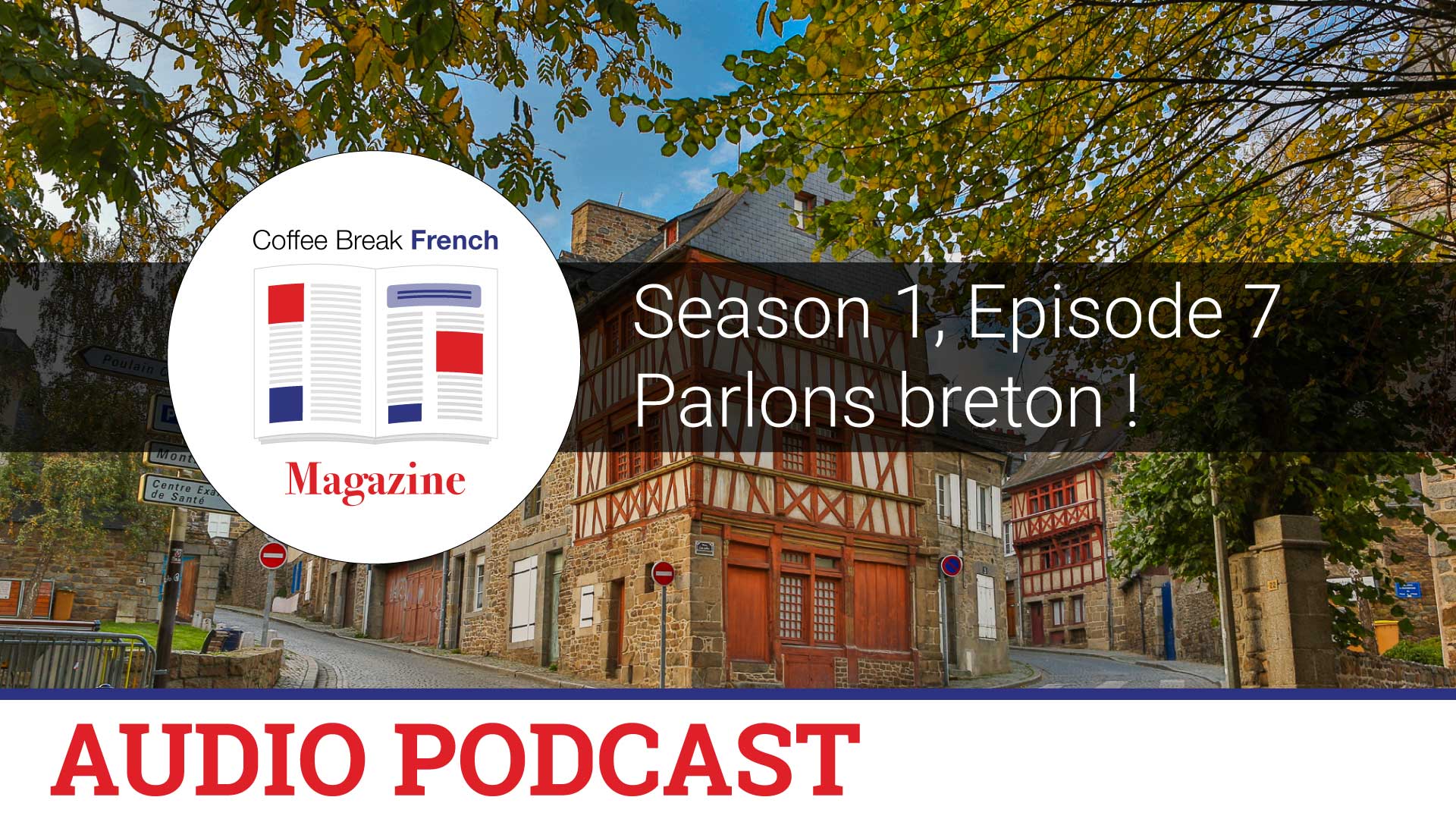
CBF Mag 1.07 | Parlons breton !

We’re heading to north-western France for this episode of the Coffee Break French Magazine to discover more about the Breton language and culture. As ever, you’ll be able to listen to Susie’s text and Mark and Pierre-Benoît are on hand to discuss the text. There’s a question from listener Tomás who wants to know when to use merci de and merci pour, and in our final section we look at two idiomatic expressions which are linked to the word beurre, specifically compter pour du beurre and vouloir le beurre et l’argent du beurre which is the French equivalent of “to have your cake and eat it”.

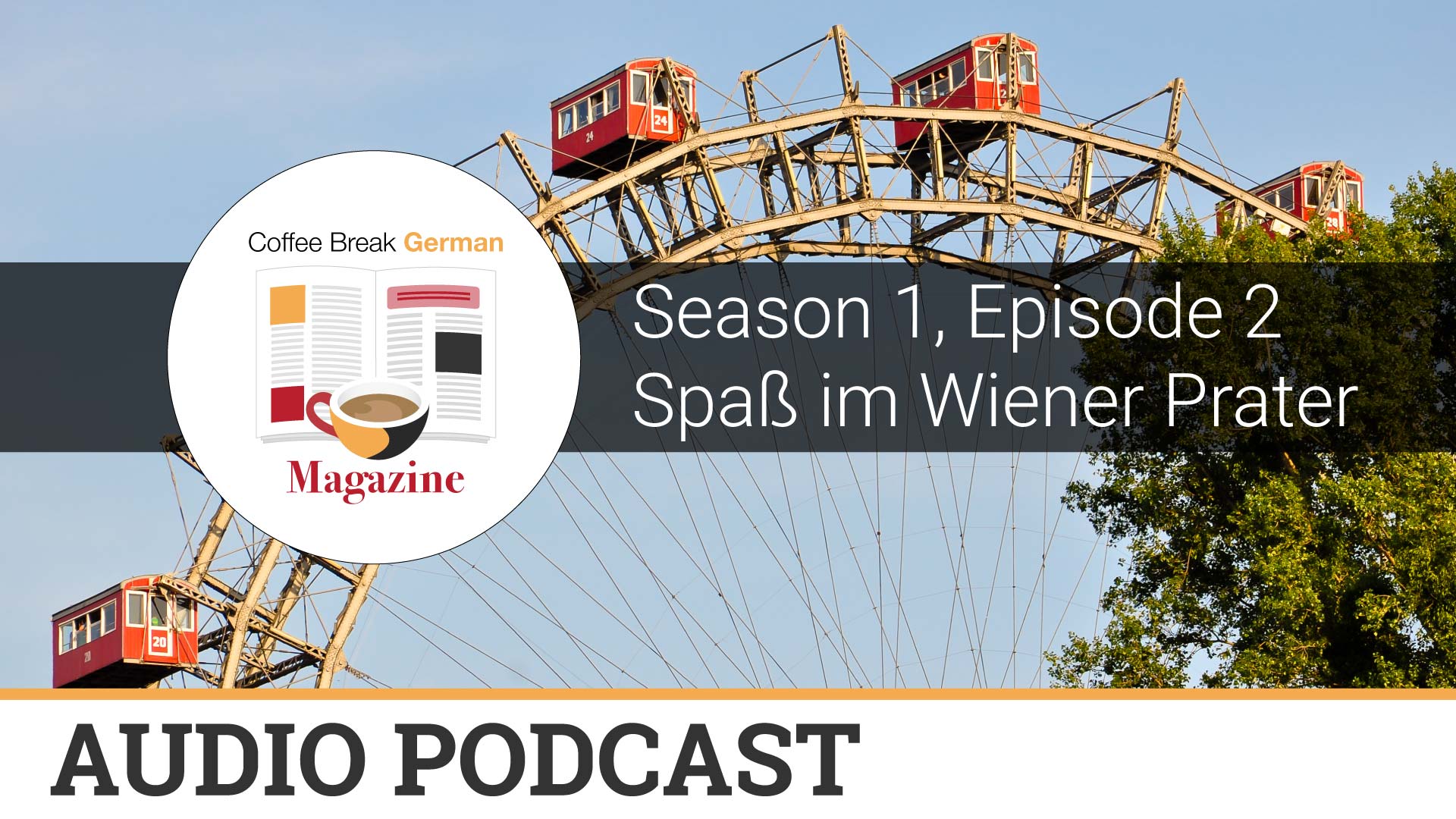
CBG Mag 1.02 | Spaß im Wiener Prater

In episode 2 of the Coffee Break German we’re heading to the Austrian capital, Vienna, where the world-famous Wiener Prater is to be found. This former hunting ground has become the hub of entertainment for Viennese families. As usual Mark and Andrea will be discussing the language featured in our text, and there’s also a question from listener Rena who is looking for advice on how to help her daughter learn German.

The Coffee Break Catch-Up: Italian Special – 12 September 2019

Join Coffee Break Founder and CEO Mark and Coffee Break Italian host Francesca for a special edition of the Coffee Break Catch-Up. In addition to updates on the latest podcast episodes and videos, Francesca answers listeners’ questions live on the show.

In this edition:

  • our brand new video studio;
  • updates on our latest Coffee Break Magazine episodes;
  • news of our latest One Minute Language course available on YouTube;
  • the return of the Coffee Break French Masterclass;
  • cultural news from around the world;
  • live Q&A with Francesca for Italian learners.

If you’d like to access all the links for this episode and practise your reading skills in the language you’re learning, click here to sign up for our weekly language and culture newsletter.

CBI Mag 1.06 | Ti viene voglia di ballare?

It’s time for a new episode of the Coffee Break Italian Magazine and in this episode Francesca and Mark talk about their summer breaks and where they travelled to. The text for this episode focuses on the traditional Italian dance, la Tarantella, and there’s an interesting question from listener Gianna on the difference between restare and rimanere.

The Coffee Break Catch-up: 5 September 2019

It’s time for another Coffee Break Catch-up in which we update you on our latest podcast episodes, blog articles and videos. This week we’re also featuring a discussion on how to learn two languages at the same time and the members of the Coffee Break team shares their wisdom!

In this edition:

  • updates on the latest episodes of the Coffee Break French and German Magazines;
  • news of our latest One Minute Language courses available on our YouTube channel;
  • Tune for Tuesday and Question of the week;
  • the forthcoming Coffee Break French and Spanish Masterclass courses.

If you’d like to access all the links for this episode and practise your reading skills in the language you’re learning, click here to sign up for our weekly language and culture newsletter.

CBF Mag 1.06 | Le Neuvième Art

In this episode of the Coffee Break French Magazine we’re talking “bande dessinées”, comic books. The French-speaking world has produced many famous bande dessinée including Tintin, the Smurfs and Astérix, and they can be a great way to expand your vocabulary and experience.a different reading format. Pierre-Benoît is on hand to explain everything in the text. Mark answers a listener’s question about the use of on and nous, and Susie shares some jeux de mots.

In each episode of this 10-lesson season for intermediate learners, you can build your vocabulary, increase your understanding of grammar and learn to use the French language in a more natural way. This series is aimed at learners who have completed at least Season 1 and Season 2 of Coffee Break French.

CBG Mag 1.01 | Tatort

The Coffee Break German team is back with a new series, the Coffee Break German Magazine. In each episode of this 10-lesson season for intermediate learners you can build your vocabulary, increase your understanding of grammar and learn to use the German language in a more natural way. This series follows on from Seasons 1 and 2 of Coffee Break German.

In the first episode of the series we’ll be focusing on a very important part of life in most German-speaking areas: Sunday night in front of the TV watching the crime series Tatort. We’ll listen to a text on this topic and then teacher Andrea and learner Mark will discuss the language in the text. Also included in the episode is our phone-in Q&A, and our “Sahnehäubchen” with Olivera in which we’re looking at the expression Nullachtfünfzehn.

The Coffee Break Catch-Up: French Special – 29 August 2019

Join Coffee Break Founder and CEO Mark and Coffee Break French host Pierre-Benoît for a special edition of the Coffee Break Catch-Up. In addition to updates on the latest podcast episodes and videos, Pierre-Benoît answers listeners’ questions live on the show.

In this edition:

  • updates on the return of the Coffee Break Magazine podcasts for French, Italian and German;
  • news of our latest One Minute Language course available on YouTube;
  • an announcement about the return of the Coffee Break French Masterclass;
  • cultural news from around the world;
  • live Q&A with Pierre-Benoît for French learners.

If you’d like to access all the links for this episode and practise your reading skills in the language you’re learning, click here to sign up for our weekly language and culture newsletter.

The Coffee Break Catch-up: 22 August 2019

Join Coffee Break Founder and CEO Mark for the first in a new season of our weekly Coffee Break Catch-up in which we update you on our latest podcast episodes, blog articles and videos. There are discussions on language learning, and a round-up of some of the cultural events happening around the world.

In this edition:

  • updates on what’s been happening over our summer break;
  • new episodes of Walk, Talk and Learn French, Coffee Break German To Go and our One Minute Languages series;
  • news of the latest member of the “To Go” family: Coffee Break French To Go coming soon;
  • confirmation of dates for Coffee Break Italian, French and German Magazines;
  • cultural news from around the world.

If you’d like to access all the links for this episode and practise your reading skills in the language you’re learning, click here to sign up for our weekly language and culture newsletter.

Was sind deine Hobbys? Talking about your hobbies in German – Coffee Break German To Go Episode 10

To ask “what are your hobbies?” in German you can say was sind deine Hobbys?, or in a more formal situation, was sind Ihre Hobbys? In this episode of Coffee Break German To Go, Julia asks this questions to interviewees in the streets of Berlin. You can use the answers of our interviewees to help you learn to answer this question yourself.

In the first part of the video, watch the interviews without subtitles and try to understand. In the second part of the video, we’ve provided subtitles in German at the top of the screen. You can choose to turn on subtitles in English using the Subtitles/CC button.

In our first series, Julia is in the city of Berlin, and in each episode she’ll ask passers-by one question. Of course, that one question will result in many answers, and it’s through these answers that you can practise your German and build your vocabulary.

If you’d prefer not to wait for all 10 lessons of Season 1 to be published, you can access downloadable versions of the videos along with audio versions and lesson notes / transcripts in the Coffee Break Academy.

Coffee Break German To Go is based on the popular podcast series and online course Coffee Break German. For access to the free podcasts, click here.

Using adjectives with de/des – Walk Talk and Learn French Episode 007

Knowing when adjectives go before or after the noun can be tricky, and it’s further complicated when you’re using des, the partitive article. Think of how you would say “some new houses” or “some beautiful books”. Do you use des or de? In this episode of Walk, Talk and Learn French, Mark spots an advert which suggests “Vivez des Moments Forts”. He goes on to explain which adjectives come before the noun, which come after, and what happens when you have to use des in this situation.

Make sure you subscribe to Coffee Break Languages on YouTube to be notified when we post new videos!

Was ist dein Lieblingssport? Talking about sports in German – Coffee Break German To Go Episode 9

To ask “what is your favourite sport?” in German you can say was ist dein Lieblingssport?, or in a more formal situation, was ist Ihr Lieblingssport? In this episode of Coffee Break German To Go, Julia asks this questions to interviewees in the streets of Berlin. You can use the answers of our interviewees to help you learn to answer this question yourself.

In the first part of the video, watch the interviews without subtitles and try to understand. In the second part of the video, we’ve provided subtitles in German at the top of the screen. You can choose to turn on subtitles in English using the Subtitles/CC button.

In our first series, Julia is in the city of Berlin, and in each episode she’ll ask passers-by one question. Of course, that one question will result in many answers, and it’s through these answers that you can practise your German and build your vocabulary.

If you’d prefer not to wait for all 10 lessons of Season 1 to be published, you can access downloadable versions of the videos along with audio versions and lesson notes / transcripts in the Coffee Break Academy.

Coffee Break German To Go is based on the popular podcast series and online course Coffee Break German. For access to the free podcasts, click here.

What’s the difference between Mieux and Meilleur? – Walk Talk and Learn French Episode 006

Do you get confused between meilleur and mieux? Are you unclear about the difference between these two words? Do you struggle to know how to translate “better” and “best” into French? In this episode of Walk, Talk and Learn French, Mark spots an advert on a bus shelter in Paris which provides an example of le meilleur, and he goes on to explain that meilleur is an adjective, the comparative form of bon, while mieux is an adverb, the comparitive form of bien.

Make sure you subscribe to Coffee Break Languages on YouTube to be notified when we post new videos!

A Summer Coffee Break Catch-up… from the pool!

Join Coffee Break Languages Founder and CEO Mark for a summer catch-up on all things coffee break … from the pool! In this short video Mark will update you on the latest podcast episodes, videos and blog posts from Coffee Break Languages.

In this edition:

  • updates on the latest podcast episodes available in the Coffee Break French and Italian Magazines;
  • news of forthcoming Coffee Break German and Spanish Magazines;
  • updates on new video content including Walk Talk and Learn French and the Coffee Break To Go series;
  • continuing series on our blog including CoffeeBreaker stories and our Tune for Tuesday.

If you’d like to access all the links for this episode and practise your reading skills in the language you’re learning, click here to sign up for our weekly language and culture newsletter.

The Wonderful World of Emoji

You may be familiar with Coffee Break French, Coffee Break Spanish and indeed our other Coffee Break German, Italian, Chinese and Swedish editions, but what about Coffee Break Emoji? With millions of “fluent” users around the world, Emoji is here to stay, and what better day to write about this interesting language of pictures than on 17th July, World Emoji Day?

Before we get started, let’s clarify one thing: Emoji is the word used for the “language”, and it is made up of individual images, or “emojis”, so we’ll be using both Emoji and emojis throughout this article ? Read on for more information about the origins of Emoji.

Origins

Interestingly, the word emoji is made from a combination of two Japanese words; e (絵) meaning “picture”, and moji (文字) meaning “character”. Created by Japanese interface designer Shigetaka Kurita in 1999, the 176 original emoji designs were only the beginning of what was to become a worldwide phenomenon in a matter of a few years.

In the beginning the Emoji keyboard was only released in Japan on iPhones, but the success of these small pictorial symbols representing words, emotions and much more led to the release of the Emoji keyboards to the rest of the world. At the time of writing there are over 3000 emojis, and no doubt this figure will continue to grow. The use of Emoji has truly dominated the online world of communication, whether simply to enhance a sentence, or convey emotions which can’t be expressed easily in words, or even write full sentences using nothing but emojis!

Lending even more kudos to the “language”, the “Face with Tears of Joy” emoji (you know the one… ?) was named “Word of the Year” by the Oxford English Dictionary in 2015 and, in 2017, Emoji hit the big screen with the release of The Emoji Movie.

How popular is Emoji?

Whether you’re a regular user of emojis, or you tend to be more of a recipient of image-laden messages, you’ll be ? (blown away) by some of the staggering statistics mentioned on the official World Emoji Day website.

  • Did you know that over 900 million emojis are sent every day without text on Facebook Messenger?
  • Every day more than 700 million emojis are used in Facebook posts.
  • Already by mid-2015, half of all Instagram comments included an emoji.

Pretty ?  (mind-blowing), no?

Japanese origins

Of course, any language carries with it a huge amount of cultural significance, and Emoji ticks this box too. Given its Japanese origins, we can even learn something about Japanese culture through some particularly interesting emojis. Here are some examples, as explained by the Emojipedia, the self-professed “Home of Emoji Meanings”.

  • ?  – This emoji is a Shoshinsha Mark and it is the symbol used in Japan by learner drivers. It’s almost the equivalent of the “L Plate” that we use in the UK, but in Japan, drivers must continue to display their Shoshinsha Marks for a year after passing their test.
  • ㊗️ – This emoji features the Japanese character 祝 which is linked to the word meaning “celebrate” or “congratulate” and is therefore used to mean “congratulations”.
  • ?  – This emoji represents a Japanese Post Office. If you’re familiar with the Japanese Katakana syllabary, then you’ll recognise the character テ which is pronounced as te from the word teishin (逓信 “communications”).
  • ?  – Again, if you look closely into this cherry blossom emoji, you should see some Japanese text. Traditional Japanese texts were written vertically from right to left, so the words in this emoji are 大変よくできました (taihen yoku dekimashita) which means something along the lines of “very well done” or “you did very well”. According to Emojipedia, teachers in Japan use this as a stamp on high quality work and this is definitely one of our favourites!

And if you’re feeling hungry then there is plenty of inspiration in the Food and Drink section of Emoji with a distinct Japanese flavour:

  • ?  Bento Box – A traditional Japanese lunch box with different compartments.
  • ?  (Slice of) Narutomaki – A Japanese fishcake.
  • ?  Dango – A Japanese dumpling.
  • ?  Oden – A skewer of Japanese Oden, which includes ingredients such as boiled eggs and fishcakes.
  • ?  Sushi – Japanese Sushi, rice with two pieces of raw fish on top.
  • ?  Rice Cracker – Senbei (rice cracker) with a sheet of Nori (seaweed).

A global “language”

Given that Emoji is becoming an international “language” used by an ever-increasing number of people, it’s not surprising that the most popular emojis vary from country to country. While the simple smile ?  tops the list almost everywhere, an interesting survey looked at the second-favourite emojis of survey participants in various countries around the world. It seems that the UK, the USA, Jamaica and Trinidad all share ?  as their second-favourite emoji; Canada and New Zealand very much enjoy a classic ❤️; South Africa prefers ?.; and it’s a win for ? in Australia. This survey dates from 2018, so let us know in the comments where you’re from and if you have a favourite emoji at the moment.

Does all this sound familiar?

As we’ve seen, Emoji is, in its own way, a form of language. But does the idea of communicating through pictures and symbols remind you of anything? It could be said that this is nothing new: the Hieroglyphs of the ancient Egyptians conveyed meaning through images as far back as 3200BCE and they’re often compared to the use of emojis in present-day communications.

However, although aspects of the two are similar, the fact remains that hieroglyphs are much more complex than simple pictures and they could be combined to create other words. As effective as emojis are at helping us show whether we are ? or ?, have a ? or a ?, or are in a ✈️ or a ?,, they can’t really convey grammatical constructions or complex information. Nevertheless, they are great fun, and a fantastic addition to the languages we speak!

We hope that you’ve learned something new from this article, and are now an Emoji expert. Leave a comment below if you have a favourite emoji, or let us know if you’re celebrating World Emoji Day! ?

Welche Sprachen sprichst du? Talking about languages – Coffee Break German To Go Episode 8

To ask “which languages do you speak?” in German you can say welche Sprachen sprichst du?, or in a more formal situation, welche Sprachen sprechen Sie? In this episode of Coffee Break German To Go, Julia asks this questions to interviewees in the streets of Berlin. You can use the answers of our interviewees to help you learn to answer this question yourself.

In the first part of the video, watch the interviews without subtitles and try to understand. In the second part of the video, we’ve provided subtitles in German at the top of the screen. You can choose to turn on subtitles in English using the Subtitles/CC button.

In our first series, Julia is in the city of Berlin, and in each episode she’ll ask passers-by one question. Of course, that one question will result in many answers, and it’s through these answers that you can practise your German and build your vocabulary.

If you’d prefer not to wait for all 10 lessons of Season 1 to be published, you can access downloadable versions of the videos along with audio versions and lesson notes / transcripts in the Coffee Break Academy.

Coffee Break German To Go is based on the popular podcast series and online course Coffee Break German. For access to the free podcasts, click here.

CBF Mag 1.05 | Destination Québec

In this episode of the Coffee Break French Magazine, we’re heading to the French-speaking area of Quebec in Canada and finding out more about how the French spoken there is different from the French spoken in France. We also look at the very useful expression il s’agit de, and learn about how to use this expressions.

In each episode of this 10-lesson season for intermediate learners, you can build your vocabulary, increase your understanding of grammar and learn to use the French language in a more natural way. This series is aimed at learners who have completed at least Season 1 and Season 2 of Coffee Break French.

¿Cuál es tu deporte preferido? – Talking about sport in Spanish – Coffee Break Spanish To Go Episode 10

In this episode of Coffee Break Spanish To Go, we’re talking about los deportes, sports. Marina asks the question ¿Cuál es tu deporte preferido?, “what is your favourite sport”, and you can use the answers of our interviewees to help you learn to introduce yourself in Spanish.

In the first part of the video, watch the interviews without subtitles and try to understand. In the second part of the video, we’ve provided subtitles in Spanish at the top of the screen. You can choose to turn on subtitles in English using the Subtitles/CC button.

In this first series of Coffee Break Spanish To Go, Marina is in the city of Málaga, in the south of Spain, and in each episode she’ll ask passers-by one question. Of course, that one question will result in many answers, and it’s through these answers that you can practise your Spanish and build your vocabulary.

Coffee Break Spanish To Go will be published every two weeks here on YouTube, and each Season will be filmed in a different part of the Spanish-speaking world.

If you’d prefer not to wait for all 10 lessons of Season 1 to be published, you can access downloadable versions of the videos along with audio versions and lesson notes / transcripts in the Coffee Break Academy.

Coffee Break Spanish To Go is based on the popular podcast series and online course Coffee Break Spanish. For access to the free podcasts, please click here.

How to use the Past Historic in French – Walk Talk and Learn French Episode 5

The Past Historic (in French passé simple) is a special tense used mostly in written French to relate narrative events in the past. In this episode of Walk, Talk and Learn, Mark spots an example of the Past Historic on a film poster, and he explains the full conjugation of the Past Historic of regular verbs, and of the common verb être.

Make sure you subscribe to Coffee Break Languages on YouTube to be notified when we post new videos!