Meet Liane, Coffee Break Spanish learner

Tell us who you are, where you live, your nationality and how long you’ve been learning a language with us.

I’m Liane from Australia . I’ve been following Coffee Break Spanish for about 3 years.

Which language or languages are you learning with Coffee Break?

Spanish

What experience have you had speaking and learning other languages?

At the moment I am walking the Camino de Santiago in Spain. I am enjoying trying to communicate with the wonderful Spanish people and during the walk I’m listening to Coffee Break Spanish podcasts!!

What are your favourite memories of learning a language?

It is really wonderful when I can understand people and then get my message across. The best situations are where they don’t speak any English at all and we have to fumble through with my very bad Spanish, but it is fun and they are very grateful for my efforts! In the Camino we stay we have to organise our bags and getting food etc. great opportunities to speak Spanish!!

Where would your ideal coffee break be, and with whom?

Speaking with hairdressers, staff in restaurants and accommodation places.

What’s the best language-learning tip you have found works for you?

Don’t listen to slow Spanish, listen at the normal speed because that’s how people talk! Also, don’t try to understand every word, just get the general idea. And finally and most importantly, don’t be afraid to talk!! Just talk! You will make mistakes but it’s okay!!! I love listening to and reading stories at my level.

Quick Fire Round

Your favourite language: Spanish
• Your favourite word or phrase in the language: Zanahoria
• Do you have a favourite film, TV show, book or singer in the language? Short stories for beginners in Spanish
• Your favourite destination to practise your language: Spain

Please finish off with a message to your fellow members of the Coffee Break community and the Coffee Break Team.

Never give up! Learning a new language can take a lifetime and that’s okay. Enjoy the journey!

TFT: 99 Luftballons

Hallo alle zusammen! This week’s Tune for Tuesday comes from German band Nena, who were together between 1981 and 1987. The band is very important to German musical culture, as it was part of the forming of the German New Wave scene (Neue Deutsche Welle). In 1984 their song 99 Luftballons was a huge international success, becoming one of the most popular foreign-language tracks in the history of the US charts.

If you’re a Coffee Break German learner, it’s a good song to listen to, as the vocabulary isn’t too tricky and the lead singer sings fairly clearly. It’s also good practice for your numbers! How many times can you hear her sing “neunundneunzig” (“ninety-nine”)? Let us know in the comments if you think you know! If you’d like to hear the lyrics sung more slowly, we recommend watching the YouTube video below and selecting a slower playback speed by clicking on the settings symbol.

Whichever language you’re learning, we hope you enjoy this song and check out the others in our multilingual Spotify and YouTube playlist below.

For copyright reasons, we cannot publish the lyrics to 99 Luftballons, but you can find them online here.

TFT: En el muelle de San Blas

¡Feliz martes a todos! Have you heard of Maná? They are a Mexican pop rock group formed in 1986, whose name comes from the Polynesian term for supernatural energy! They have won 4 Grammy Awards and are extremely popular throughout Latin America and further afield. This week’s Tune for Tuesday is their song En el muelle de San Blas. We really like this song and it’s a good test for your Spanish comprehension. Don’t worry if you struggle to follow the lyrics, we recommend finding them online and reading through them while listening to the song.

The lyrics contain many examples of the preterite tense, but also some others. Can you identify any of the other tenses used? Feel free to share some of the examples you’ve found in the comments!

Check out our full Spotify and YouTube playlists below to listen to more songs from around the world and of many different styles.

For copyright reasons, we cannot publish the lyrics to En el muelle de San Blas, but you can find them by following this link: https://genius.com/Mana-en-el-muelle-de-san-blas-lyrics

CBF Mag 1.04 | Au Carrefour de l’Europe

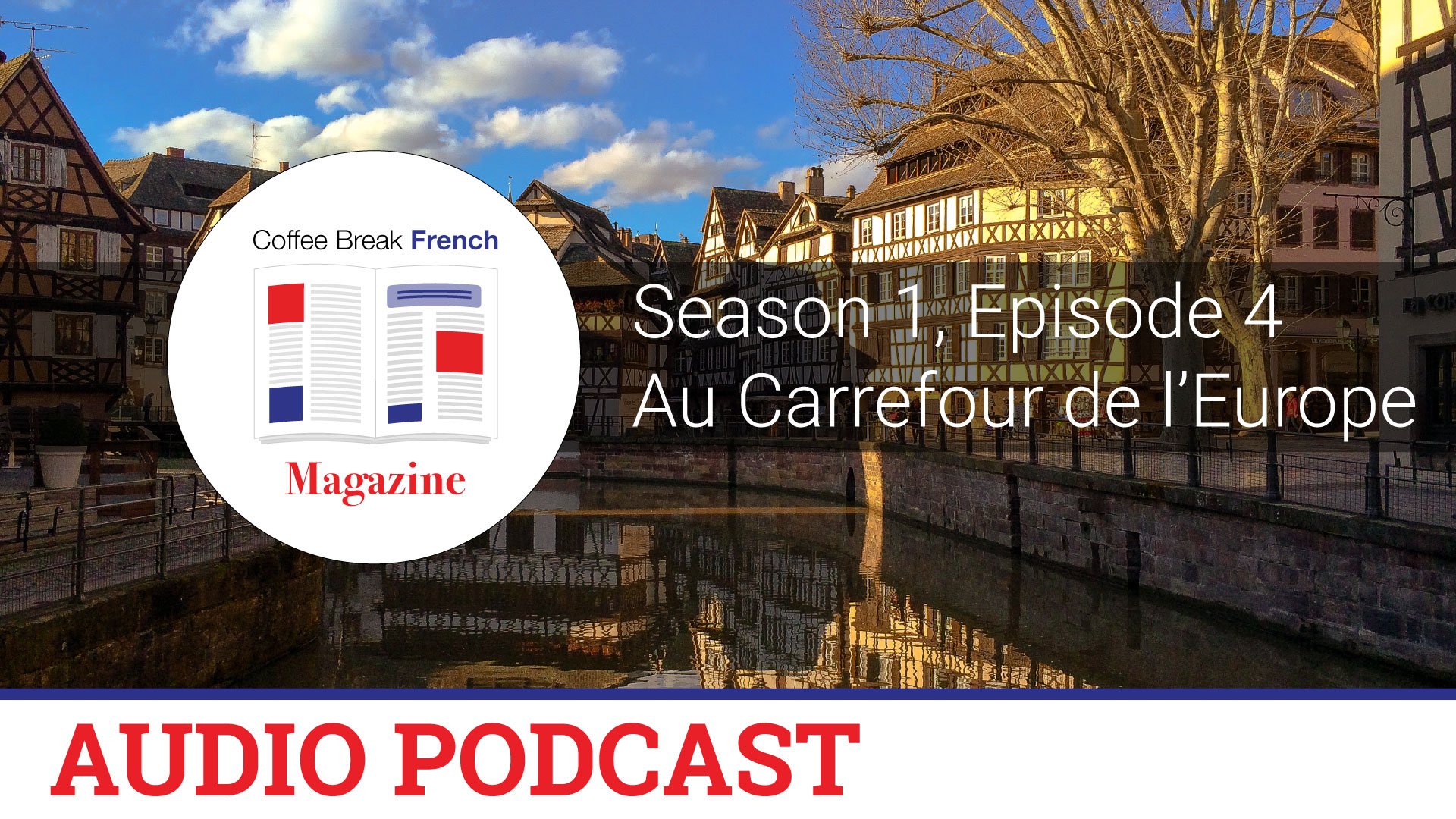
In the latest episode of the Coffee Break French Magazine, we’re heading to the “crossroads of Europe”, the city of Strasbourg in the heart of Alsace. Find out about the traditions, the food, the history and the culture of this beautiful part of the world. There’s also a discussion about how to express necessity using devoir and falloir, in response to listener Steve’s question.

In each episode of this 10-lesson season for intermediate learners, you can build your vocabulary, increase your understanding of grammar and learn to use the French language in a more natural way. This series is aimed at learners who have completed at least Season 1 and Season 2 of Coffee Break French.

CBS EM 1.10 | Ronda de Preguntas

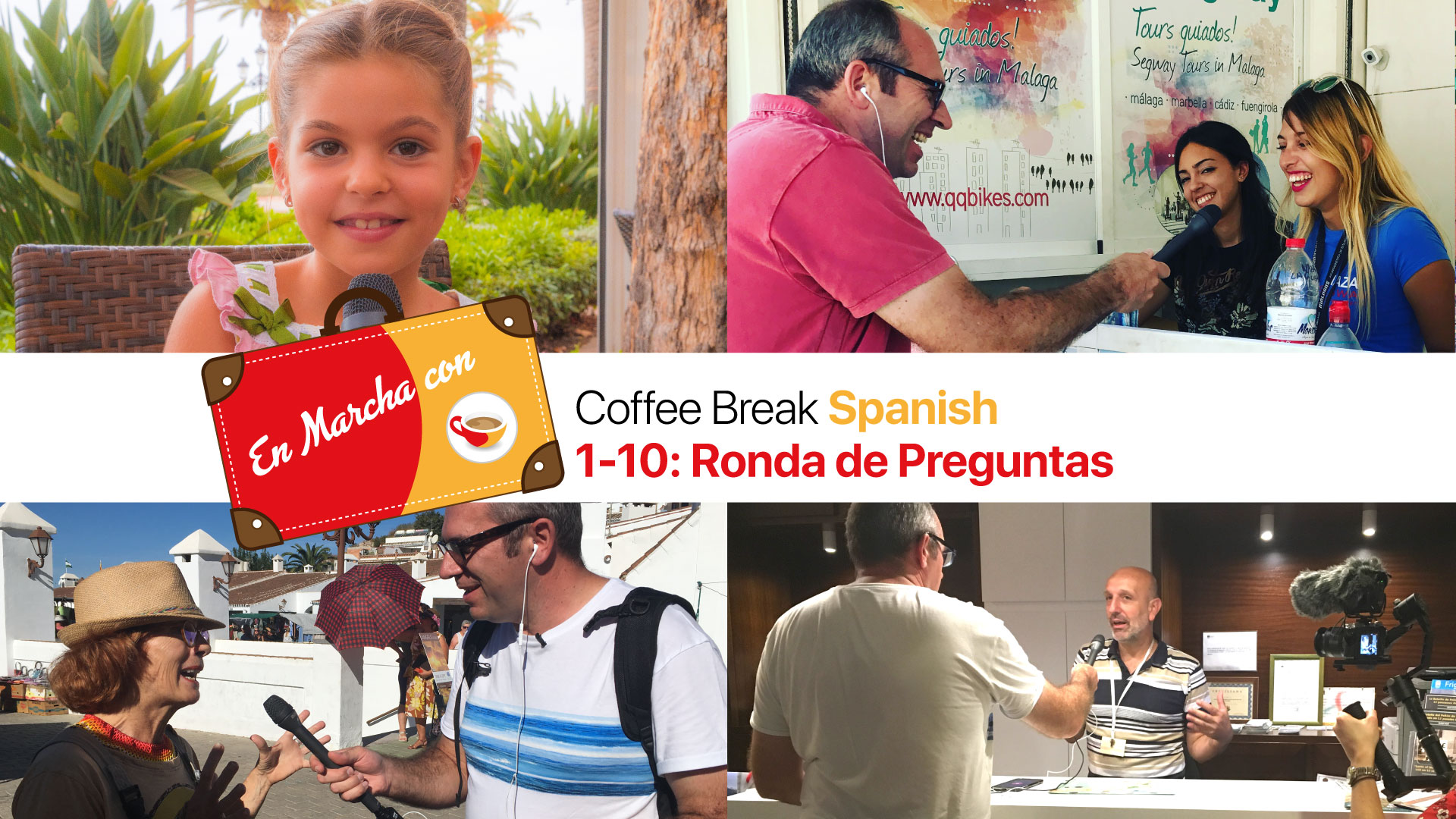
¡Ha llegado el fin de la primera temporada de En Marcha! It’s time for one more episode before we wrap up the series and, in this final instalment, it’s time for some questions. While recording En Marcha, we made sure to ask four key questions to almost everybody we interviewed, and this episode brings all of their answers together! Hear about people’s favourite Spanish destinations, dishes and the tips they have for tourists visiting Spain. ¡Vamos a escuchar las respuestas!


TFT: La Mer

Bonjour ! ¡Hola! Hallo! Ciao! This Friday 21st June is la Fête de la Musique – a celebration of music throughout France. To join in the festivities, we’re launching a new Coffee Break feature – ‘Tune for Tuesday’! Every week our team will select and share a song with you to introduce you to some new styles of music from around the world, while helping you develop your language skills.

Our first ‘Tune’ is a French classic, which you may recognise from its English version. The song is La Mer by Charles Trenet, who is often considered one of the greats of French popular music. This song has been translated into many languages and at the time of Trenet’s death in 2001, it was estimated that there were over 4000 different recordings of it! Have a listen to the song throughout the week – on your way to work or while making your morning coffee – and see how much you can understand by the end of the week.

Each week we will add our Tune for Tuesday to our brand-new Spotify and YouTube playlist to build up a collection of songs from all over the world and in many different languages. Scroll down to follow the playlist and keep up to date!

We’d love to hear if you enjoyed listening to La Mer in the comments below. Happy listening!

Hast du Kinder/Geschwister? Talking about family in German – Coffee Break German To Go Episode 6

To ask “do you have children?” in German you can say hast du Kinder?, or in a more formal situation, haben Sie Kinder? You may also want to ask someone “do you have brothers and sisters?” This would be hast du Geschwister? or more formally haben Sie Geschwister? In this episode of Coffee Break German To Go, Julia asks this questions to interviewees in the streets of Berlin. You can use the answers of our interviewees to help you learn to answer this question yourself.

In the first part of the video, watch the interviews without subtitles and try to understand. In the second part of the video, we’ve provided subtitles in German at the top of the screen. You can choose to turn on subtitles in English using the Subtitles/CC button.

In our first series, Julia is in the city of Berlin, and in each episode she’ll ask passers-by one question. Of course, that one question will result in many answers, and it’s through these answers that you can practise your German and build your vocabulary.

If you’d prefer not to wait for all 10 lessons of Season 1 to be published, you can access downloadable versions of the videos along with audio versions and lesson notes / transcripts in the Coffee Break Academy:
https://coffeebreakacademy.com/p/coffee-break-german-to-go-season1/

Coffee Break German To Go is based on the popular podcast series and online course Coffee Break German. For access to the free podcasts, please click below:
https://coffeebreaklanguages.com/tag/cbg-season-1/?order=asc

To purchase our full online courses on the Coffee Break Academy, click below:
https://coffeebreakacademy.com/courses/category/German

CBS EM 1.09 | Una Aventura Gastronómica por las Calles de Málaga

¡Es la hora del tapeo! There’s no doubt that trying delicious local delicacies is one of the best things about visiting a new place. In this penultimate episode of Series 1 of En Marcha, Mark and the team head off on a gastronomic adventure around the streets of Málaga. Led by knowledgable guides Jaimie and Susanne from the food tour company Devour Tours, we discover the secrets of Málaga’s mouth-watering offering of food and drink, as well as learning more about the concept of tapas. ¡Que aproveche!

The Coffee Break Catch-up: 23 May 2019

Join Coffee Break Founder and CEO Mark for this week’s edition of the Coffee Break Catch-up, our weekly show in which we’ll update you on all things Coffee Break Languages. There are discussions on language learning, and a roundup of some of the cultural events happening around the world.

In this edition:

  • Updates on our latest episode of the Coffee Break Italian Magazine and our One Minute Japanese course on YouTube;
  • news of a special fund-raising project we’re running this week to support Dementia Awareness week;
  • discussion about the development of the English language and the science of etymology, the study of the origins of words;
  • cultural news from around the world.

The Coffee Break Catch-up: 16 May 2019

Join Coffee Break Founder and CEO Mark for this week’s edition of the Coffee Break Catch-up, our weekly show in which we’ll update you on all things Coffee Break Languages. There are discussions on language learning, and a roundup of some of the cultural events happening around the world.

In this edition:

  • looking back at the launch of our Coffee Break French Magazine and some new information about the next edition of the Coffee Break Italian Magazine;
  • News of our One Minute Norwegian course now available on YouTube;
  • there’s a discussion about constructed and artificial languages: would you want to learn Esperanto, Dothraki or High Valyrian?;
  • and we round up some of the cultural highlights happening around the world this week.


CBS EM 1.07 | Una Maravilla de Andalucía

In this 7th episode of En Marcha, Mark and the team head eastwards along the Costa Tropical, to the village of Frigiliana, officially one of the most beautiful villages in Spain. After spending the day finding out about the village through both its residents and its visitors, it’s time to return to Málaga, but not before dropping in on two more villages, one of which offers up an opportunity for Mark to catch up with some familiar faces. For more information about High Five Spanish, our Spanish course for children, please visit http://highfivespanish.com.

Meet Yvonne, Coffee Break Italian learner

Tell us who you are, where you live, your nationality and how long you’ve been learning a language with us. 

Hello I’m Yvonne, an American living in the beautiful state of Vermont. I started using Coffee Break Italian at the end of January 2018, prompted by an upcoming trip to Italy in May. I travelled to a small town where 4 generations of my great grandfathers lived and died and I wanted to be able to communicate with people in the town to hopefully find out more about my family.

What experience have you had speaking and learning other languages?

I had tried to learn French while in high school, but never put it to use. When I decided to try to learn Italian I attempted many avenues. The first was a local class held at a college, unfortunately it proved too advanced for me. I then tried various apps like Duolingo. They helped you learn words, but not understand how the language works. It wasn’t until I started using Coffee Break Italian did I truly start to understand.

What are your favourite memories of learning a language?

I found investing in the video versions very helpful, the ability to see and hear the words made a big difference for me.

Where would your ideal coffee break be, and with whom? 

I would love to speak Italian in Corato, Italy with any potential relative.

What’s the best language-learning tip you have found works for you? 

I listen to Coffee Break Italian while walking on the treadmill ,then practising some of the phrases or words I’ve learned that day, keeping a log of phrases I might need to use when traveling.

Quick Fire Round

  • Your favourite language: Italian
  • Your favourite word or phrase in the language: vino
  •  Do you have a favourite film, TV show, book or singer in the language? Pane e Tulipani
  • Your favourite destination to practise your language: Italy

Please finish off with a message to your fellow members of the Coffee Break community and the Coffee Break Team.

Mille Grazie!

Best age to learn a new language: why every age is the right age to learn a language!

A close-up of a vintage pocket watch partially buried in sand, symbolising the passage of time.

When is the best age to learn a new language? It has been said that to be fluent in a second language, one should start learning by the age of 10. What do you think? 

To us here at Coffee Break Languages, this presents two questions: how do you define “fluent”?; and, is all learning started after this age pointless? Clearly, the answer to the 2nd question is no. 

We reckon the perception of fluency is subjective. For some, it may be considered the ability to translate everything as you hear it and produce language in any situation, seemingly with little effort. For others, it may be understanding the signs they see around them when visiting a foreign city and successfully ordering food and drinks when enjoying time abroad. 

Let’s have a look and see if there’s a best age to learn a new language!

The early years

Is childhood truly the best age to learn a new language? There is no doubt it’s a great opportunity to start learning a language as early as possible. Early exposure to multiple languages often means faster acquisition of pronunciation, grammar, and vocabulary.

After all, we know that young children are like sponges, soaking up new information and, crucially, retaining it readily. For example, children raised in bilingual households don’t consciously study grammar rules – they simply acquire language naturally. 

However, some concepts of foreign languages may be trickier to explain and for them to understand. Additionally, not everyone has the chance to start learning a language at a young age. Does that mean we’ve missed the boat? Absolutely not! 

While children may have the advantage of flexible neural pathways, older learners can benefit from a mature approach, structured methods, and real-world motivation. This shows that while childhood is often thought of as the best age to learn a new language, adults can be just as successful with the right motivation.

Adulthood: motivation and practicality 

As we get older, our reasons for learning a language may be different. As a child at school, language might have been a compulsory subject at school. Later on, we may choose to study a particular field. 

Having another language at your disposal may open more doors to travel to study in other countries. Motivation for language learning can change greatly at this age and stage of life. Often, students relish the opportunity to travel, experience different places and discover other cultures. Another language can make this a whole lot easier. Some say being immersed in the language can facilitate learning.

Getting to know other people in different places can be a huge impetus for wanting to improve language skills. Here at Coffee Break Languages, we love hearing learners’ reasons for taking on the challenge of a new language. And often the reason is love! It can be a huge motivation when there’s an emotional involvement, not to mention the opportunity to practise what you’re learning while being encouraged and knowing your efforts will be appreciated.

Take the story of CoffeeBreaker Amanda, who discovered that the best age to learn a new language is whenever you feel motivated. She started learning Italian to communicate better with her partner. Though the relationship ended, she fell in love with the language itself and continued her studies, discovering the culture and making new friends along the way at Coffee Break Italian. 

This shows that the best age to learn a new language is any age! It’s never too late to start, and that genuine interest and motivation can fuel your progress.

Post-uni and early career

Once we leave the student years behind, our reasons for learning a language often shift. For many adults, the best age to learn a new language is whenever they find a compelling reason to start – be it for love, travel, or career advancement.

You may have started out in a job. Life is good, you’re earning money and might be able to afford holidays now and again. Perhaps you’re travelling more for business or simply enjoying international vacations. You can get more out of your travels if you can speak a little of the language wherever you are. Language skills can make both experiences more enriching!

Being able to order confidently in a Parisian café can feel like a personal victory… Imagine how useful it would be in your line of work to be able to converse with clients in their own language! It’s been shown that having another language in your toolkit can help you advance more quickly in the workplace compared to those who don’t.

According to an analysis performed by Preply in 2024 in the U.S., employees who speak two or more languages were 5% more likely to receive a raise and earned 19% more than those who speak only one language. 

This was the case for another CoffeeBreaker, Daniel, who told us that in his current job he communicates with people from all over the world: “being able to communicate with all of them and speak these languages was what got me the job”. 

Are you fluent yet?

Nobody likes to be called middle-aged, so we just avoided that subtitle for this section! Have you reached a point in life where you may want to devote more time to interests? Perhaps you have more resources and time to travel, not just for work? 

Are you panicking that for the last 20 years, you “always meant to learn Italian but were busy working, raising a family, helping parents, just getting on with life…?” DO NOT PANIC! 

If you’ve been waiting to get started, remember that the best age to learn a new language is whenever you decide to begin. It doesn’t matter one bit if this is the first time you’ve looked at and listened to an Italian (please change to your language of choice) lesson since school. You now have the chance to progress in a language at your own pace, in your own time and for your own reasons. 

Learning a language later in life isn’t just about practical benefits – it’s also an opportunity for personal growth and fulfilment. Imagine ordering your favourite wine in flawless Italian at a Tuscan vineyard or chatting with locals in Spanish while exploring a vibrant market in Mexico. These experiences bring joy, confidence, and a sense of accomplishment.

Learning a language is fun! If you get the building blocks of a language in place, then you can construct anything you need to in time. Plus, studies show that learning a new language at any age can boost cognitive function, improve memory, and even delay the onset of age-related cognitive decline. It’s like exercise for your brain, keeping it active and engaged.

The best age to learn a new language is now!

Am I too late to start? No! As we said in this title, the best age to learn a new language is now! Our reasons for doing so may change over the years, but it’s still always a great thing to do. 

It’s a bit like eating more vegetables, taking more exercise, saving more money, except it’s an awful lot easier to do than those things and can be done at the same time in many cases! We know that making the effort to do things that are good for us always pays off in the long term. 

Getting up early to go to the exercise class might not always be appealing on a dark winter’s morning, but you see friends when you’re there, feel better for having stretched and got your heart rate up, and you know that getting all those endorphins and oxygen flowing around does you good. Learning a language is just like that. 

Mark, the founder of Coffee Break, shares his valuable insights as both a language teacher and a language learner on the concept of a ‘cut of age’ for learning a new language. You can check out below: 

It’s all about communication, talking to people, making connections, maintaining them and having fun. It’s great when you’re in a class, up a mountain with a spectacular view, or in your local French café and you try out your first phrase on a sympathetic native speaker, you’re understood and they reply in French.

There’s your endorphin rush! You understand the response and you’ve had your first conversation in French. Coffee Break Spanish and Chinese learner Fabrice told us about one memorable language experience: 

“When I went to San Diego to get my Chinese visa, the guy was not even looking at me and then, I don’t remember what I said but it was a very small sentence in Chinese, and his face suddenly lit up and he said ‘Oh you know a little bit of Chinese?’ and I said ‘I’m learning, I want to visit your country! He was very impressed. Speaking another language really does make a big difference to people”. 

Do you have colleagues who you’d like to speak to in their native language? Or a son or daughter-in-law who has a different first language from you? Do you have grandchildren who live in another part of the world and you’d like to speak to them in the language they use where they are growing up? Or is learning a language just something you’d like to do? 

So, what do you think is the best age to learn a new language? Which stage are you at? Do you feel you have to be a particular age in order to benefit from language skills? Does it matter that it’s taken 20, 40 or 60 years to become “fluent”? Pas du tout !

The best age to learn a new language is now, regardless of where you are in life. What matters most is your reason for learning and your willingness to embrace the process. In the end, the journey itself is what makes language learning so rewarding, no matter when you begin.

If you are looking for the right resources to get started, check out the Coffee Break Academy and explore our range of courses for learners of all ages!

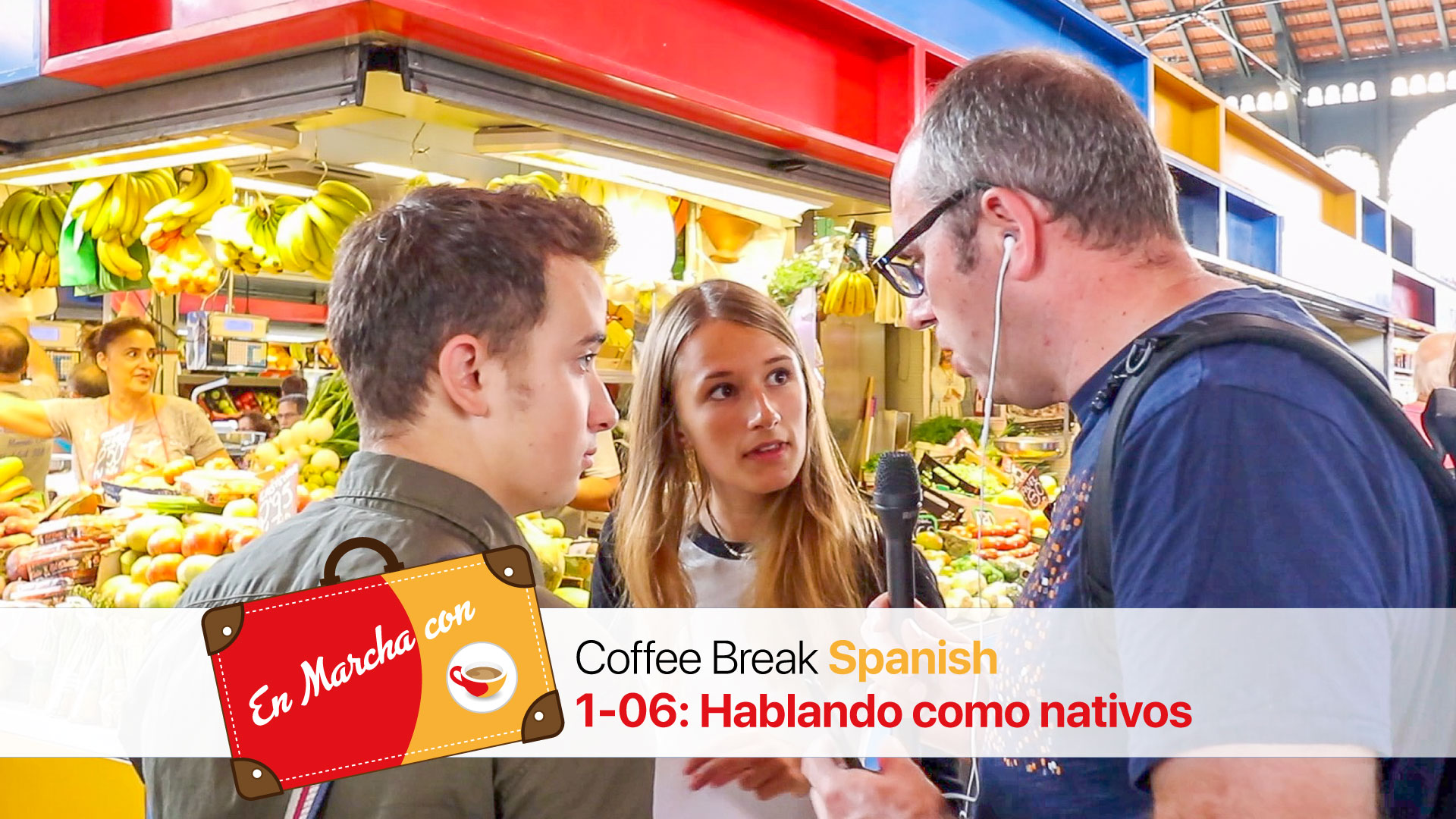
CBS EM 1.06 | Hablando como nativos

How many times have you thought about catching a flight to a Spanish-speaking country to learn Spanish? In this episode, Mark catches up with an old friend, talks to the owner of a language school, and asks some students about their experiences at the school. You might have guessed that this episode focuses on a topic close to Mark’s heart: learning Spanish. But no need to book a flight just yet; this episode, and indeed all episodes of En Marcha, will show that you can still improve your Spanish from the comfort of your own home!

For the full online course which includes transcripts, bonus audio materials, exercises, vocabulary lists and exclusive video content, please click here.

CBS EM 1.05 | Ronda: Ciudad Soñada

It’s time for another day trip to a beautiful city in the region of Málaga and, this time, the team are in Ronda, lovingly nicknamed the ‘city of dreams’. As the home of modern bullfighting in Spain, Ronda presents the perfect opportunity for the team to ask some people about their opinions on this controversial Spanish tradition. This episode will help you continue to build your listening comprehension skills while introducing you to this dreamlike city through a series of interviews with both Ronda locals and fellow visitors.

Meet Daniel, Coffee Break Chinese learner

Working for a multinational software company in Colombia, Daniel is required to speak a number of languages on a regular basis. His language learning journey started at a young age: “When I was younger I went to a bilingual school here in Colombia and afterwards my father moved to Brazil so then I learned Portuguese over there, then I noticed that I was actually good at learning languages and I enjoyed doing so. Thats when I got started with learning languages.” He now speaks an impressive 8 languages (Portuguese, French, Italian, German, Chinese, Japanese, Spanish and English).

While he constantly strives to improve all of the languages he speaks, he is currently focusing on Chinese using Coffee Break. Daniel has also been using Coffee Break to keep on top of his other languages: “Through Coffee Break, I began with French in the beginning. Although I had some notions of French, I improved them (I hope) through the podcasts.Then I went to the Italian podcasts and German as well, and now the Chinese podcasts.”

The traditional ‘textbook’ style of learning does not appeal to Daniel due to his busy lifestyle. He particularly enjoys the fact that he can listen to Coffee Break as and when it suits him: “I love it because I don’t have much time to read and do exercise and so on, so the podcasts are great for that and (they) help a lot for improving listening skills. It’s easy for me to fit into my routine while I’m walking or exercising. I get to listen to the podcasts and learn new things, that’s good. As I have used the podcasts to learn several languages now, I’m quite familiar with the structured method so to speak. I feel comfortable with it.”

Daniel tends to listen to the audio first, without any other materials, and then listens again with the notes and the video lessons when he has time. He stresses the importance of using the lesson notes alongside the audio, particularly when learning Chinese: “Especially with Chinese I think the written part is very important to grasp the language itself. With the others (languages), I think you can manage just through listening and maybe speaking. In previous podcasts, especially with French I remember there were hints given as to how things were written out. With Chinese it’s a lot harder so I do use the premium material. I think that the podcast itself, on it’s own, it’s a challenge.”

Daniel has a particular method which he used to learn all of the languages he speaks: “All of the languages that I speak or that I know, I learned just through using them. They might not be perfect, but as I said I don’t really enjoy or have time to use textbooks. And I think it’s better that way, just getting used to the language and speaking and just throwing yourself our there.”

Fortunately, Daniel’s job has enabled him to learn languages this way as he has regular contact with a variety of different nationalities: “I try to compliment the podcast learning through speaking to native people in my company – it’s multinational so I do have several colleagues in several countries that speak the languages that I speak so I get to practise with them.”

The aspect of language learning that Daniel finds the most challenging is writing and speaking: “With languages like Chinese, you have nothing to relate it to so I think that the written part is very important. Also, you don’t necessarily exercise your speaking skills. You might listen very well and understand everything that’s being said at one time and eventually you can read as well, but the speaking part is a challenge. In Chinese with the tones and so on, it’s tough. What’s easy for me is once I identify the patterns in the language I think I find it easier to build up from there.”

Alongside Coffee Break, Daniel has tried various language learning apps and websites in an attempt to connect with other language learners. He believes that these resources compliment the Coffee Break lessons. He stated: “I wouldn’t replace it (Coffee Break) because they serve different purposes but I think it’s a good compliment.”

It also became apparent that learning all of these languages has opened many doors for Daniel. He explains that in his previous job he had the opportunity to manage a project in Brazil purely due to his knowledge of Portuguese. Now, in his current position, he communicates with people all over the world. He explains: “being able to communicate with all of them and speak these languages was what got me the job.

It is clear that Daniel has had a passion for languages from a very young age. Despite the fact that he speaks an impressive number of languages, he admits that no matter how advanced you are, you never stop learning.

Meet Carol, Coffee Break Spanish learner

Tell us who you are, where you live, your nationality and how long you’ve been learning a language with us. 

I’m a Medical Historian, I’m British and I live in Dorset, and I’ve been learning Spanish with Coffee Break for a year. I back up my Coffee Break lessons with a weekly Spanish class in Bournemouth.

Which language or languages are you learning with Coffee Break? 

Spanish

What experience have you had speaking and learning other languages? 

I learned French at school and have always done ‘top up’ French classes. However, my favourite ‘go to’ place is Las Alpujarras, a region of the Sierra Nevada in southern Spain where the walking is wonderful and where I now have friends. I was ashamed that I couldn’t speak Spanish and decided to do something about it, especially as many of the European students that I have taught have been impressively multi-lingual.

What are your favourite memories of learning a language? 

A highlight for me was being able to truly consider a Spanish person a ‘friend’ because I could miraculously converse with her in her own language (albeit in rather simple Spanish) and share something of her culture. And, of course, being understood in cafés, shops and museums is both satisfying and confidence building. I also love being able to read books by Spanish authors in their original language.

Where would your ideal coffee break be, and with whom?

I’d love to speak to the fabulous Flamenco dancer Sara Baras in the Patio de los Leones (Courtyard of the Lions) in the Alhambra Palace, Granada.

What’s the best language-learning tip you have found works for you? 

I write very short stories and plays in Spanish. These are great for inventing dialogue, working in different tenses, and doing something creative with the language. Needless to say, my reading and writing skills are currently better than my speaking skills although I am learning not to worry overmuch about making mistakes in conversation.

Quick Fire Round

  • Your favourite language: Spanish
  • Your favourite word or phrase in the language: Tinao – roofed area for relaxing outside
  •  Do you have a favourite film, TV show, book or singer in the language? Hija de la Fortuna by Isabel Allende
  • Your favourite destination to practise your language: Las Alpujarras


Meet Amanda, Coffee Break Italian learner

Originally from Australia, Amanda now lives in New York where she moved to work as a lawyer. However, she is now focusing on pursuing a career as a writer. Having Lebanese parents, Amanda can speak Arabic and has also studied Japanese. Amanda started learning Italian for a partner. However, even after the end of that relationship, she continued studying, having fallen in love with the language, culture and her friends at Coffee Break Italian. She is now “enjoying learning a language that you don’t have to learn a whole new alphabet for!”

After only 2 months of studying the language, her progress was put to the test on a trip to Italy. Although she was nervous at first, she managed to understand and follow conversations which boosted her confidence.

Amanda starts by telling us how she discovered Coffee Break Italian: “I was looking up ways to learn Italian then I came across the free podcasts and I started listening to them. I then went to the website and realised that I could purchase the package and get the notes which I found very helpful. There was this news article which had a list of podcasts which are useful for learning a language…which is where I came across it.” 

What Amanda enjoys the most about the lessons is the interaction between the hosts: “I really like the people that are a part of CB Italian, I feel like they’re my friends. I just feel like it’s very easy, even though there is no one there to judge me I feel like they’re patient. It’s not boring, it’s interesting, they seem like they’re having fun. I like the balance between Mark, whose Italian is great but they’ve also got a native speaker for pronunciation which I really appreciate.”

Amanda enjoys learning alongside another learner (featured on the podcast): “It’s good as I can relate to the learner, It’s actually quite comforting when you’re learning a new language to know that you’re not the only one  who can’t pronounce something….if she makes a mistake they leave it in there and correct her but they do it nicely so I then also know that ‘ok it’s not so bad if I make a mistake’. It sounds like they’re having so much fun which is really nice, it’s not boring. And it’s nice to have someone who is a native English speaker but who can speak Italian really well because it almost shows you what you can do but it’s also great having that native Italian speaker for pronunciation and just hearing it, it’s a great way to learn. I think it’s a really great set up.”

Amanda continues: I like the listening but I also appreciate that you can get the notes. I like hearing it and then seeing how (the words are) spelt. Being a native English speaker, I’m not learning a whole new alphabet but then it just helps me when I read it to make sure that I’m pronouncing the sounds that in English would be different. I really appreciate that. Having the notes is helpful if you want to look back on something but I learn more by hearing something and especially with language, I think that’s really important. So I really like that way of learning and because it is such a fun and casual setting, it makes me want to listen to it more than when it’s a bit more sort of in a lecture; it feels more like a chore that way.”

Amanda particularly enjoys the fact that the podcasts fit in around her busy lifestyle: “I can just listen to it on my way to work. In New York everyone is in a rush so I can just start talking to myself in Italian and no one really pays much notice. I can listen to it while I’m walking to work or on my lunch break and repeat it out loud. It’s a great way to be efficient with the time that I have….and then I go back home and look over my notes. It’s a helpful way to reinforce what I’ve just heard to look at them half an hour later.”

Listening to the CB podcasts means the Amanda can learn at her own pace, making her feel more in control of her learning: “I like that I can do this in my own time. It’s great because you’ve got all the online stuff, you can write comments, there’s a community to support you. I like the videos. I’ve also got the YouTube videos with CBI , it’s nice as you can put a face to the name. It just always seems like they’re having a great time. I’ve actually recommended it to a few friends who are learning other languages.”

Coming to terms with differences in the way in which things are said in another language is often difficult to get your head around. However, as Amanda points out, once you are aware of these differences and accept them, it become easier. “The biggest challenge I face is the order of the words because in English you might say: ‘Can you turn the light off?’, and in another language it might be: ‘Light off can you please?’, something like that. That for me is one of the more difficult things because I just want to be able to ask my questions or just speak, but I have to remember the different order. With Italian, it is always remembering that you have to put ‘the’ in front of everything which I think is very unusual but you’ve got to get past what you think is strange or what is unnatural and just let that go.”

As we mentioned earlier, Amanda speaks Japanese and Arabic, both of which are quite different to Italian. Amanda tells us about the key differences. “The thing with those other languages is that you’re learning a whole new script and very different sounds. Even though (Italian) is different to English, it’s still based on Latin so it’s not a difficult language to listen to or be able to pronounce. Arabic is a very difficult language to speak because you make one sound that you think is right and it could be something completely different, so that’s the good thing I think with Italian. The other thing is, because it’s Latin based, I think I underestimated how much easier it would be. It’s easier than those other languages but it’s still not easy, it takes a lot of effort.”

Amanda tells us the story behind one of her favourite Italian words: “It’s funny because there is a TV show called ‘Master of None’ here in the US and the main character is a well known comedian and he spends the first few episodes of the second series in Italy. He comes across the word allora (which just means ‘ok, so’). The way that the actor was saying it was in a very exaggerated way! So, when my friends found out I was learning Italian, they would keep saying this word to me every time I spoke to them. They’re like: ‘Allora, how are you?’, ‘Allora, how’s your Italian going?’ It’s this joke now that has unfortunately surpassed many pretty words, but I laugh every time. It’s a pretty language so I’m definitely happy to be learning it.”

Amanda ends our chat with a message for the Coffee Break team: “I really appreciate the way you guys do it, the way you guys have come up with it. Once I had started learning with CBI I realised that they had won an award for the podcast which they so deserve as it’s so well done! Another thing I like which they do are the scenarios in-between. They teach you words then they speak between themselves in different scenarios, it’s at a nice pace. I think they’ve done a fantastic job with it and I’m very happy I stumbled upon it.”


CBS EM 1.03 | Nos vamos a Córdoba

In this episode, join Mark and the Coffee Break team as they take the train to Córdoba for the day. You’ll hear them asking about what there is to see and do in Córdoba, before heading on a trip into the city’s famous Mezquita-Catedral. The team will also sample some of Spain’s best tortilla, and we’ll hear from other tourists who are spending the day in the city.

For the full online course which includes transcripts, bonus audio materials, exercises, vocabulary lists and exclusive video content, please click here.

Meet Kerstin, Coffee break Italian learner

Tell us who you are, where you live, your nationality and how long you’ve been learning a language with us. 

Hi, my name is Kerstin, I live in Hamburg, Germany, and I’m German. I’ve been learning Italian with you since sometime last summer … so about 9 months or so.

Which language or languages are you learning with Coffee Break?

Italian

What experience have you had speaking and learning other languages? 

I have always liked languages ever since I started to learn English in 5th grade. I added French in 7th grade and Latin in 9th grade (quit Latin after two years though …). I studied English Literature at university, and during my time at university I also learned Swedish because I did my Erasmus year in Sweden and totally fell for the country. Starting to learn Italian was something that happened a bit by accident, I would say. It wasn’t something I had planned to do really.

What are your favourite memories of learning a language?

I love speaking English anywhere any time simply because I can do it effortlessly. It’s so much fun having mastered a foreign language. I love that by learning the language you also learn about the culture and the people. It broadens your horizons, makes you question things, and it feels like exploring new territories. As for my (still very basic) Italian: I was in Bologna on a business trip recently. I checked in at the hotel in Italian, I asked how to get to a supermarket, I ordered food in Italian, I bought stamps at the post office and and cheese at the market in Italian. Everything worked out well and I was soooo proud of myself.

Where would your ideal coffee break be, and with whom? 

I think I already had the perfect coffee break: On the shore in Greenland after we had been hiking on the inland ice shield and while we were waiting for our boats to pick us up again. But if you give me holidays, Italy, sunshine, a nice view and a good cappuccino (even in the afternoon … sorry Francesca!!) I’m pretty happy too!

What’s the best language-learning tip you have found works for you? 

If you are motivated and if you are enjoying what you are doing everything else will follow. Listen to music, look for blogs and podcasts. If you are advanced enough read books and watch films. Like that you learn without even noticing. For learning vocabulary I write flash cards. That’s a bit boring but necessary I guess … Sometimes I talk to myself.

Quick Fire Round

  • Your favourite language: Usually I’d say English, but I go for Italian now.
  • Your favourite word or phrase in the language:
    1. Quindi. Maybe a weird choice but I like the sound of it and I think it is a very useful word. I don’t know much Italian yet but quindi is one of the few words I know to tie two sentences together elegantly.
    2. Sogni d’oro. Just sweet.
    3. Allora. Maybe the most Italian of all words (except ciao …)
  •  Do you have a favourite film, TV show, book or singer in the language? Marco Mengoni and Tiziano Ferro have some really nice songs I think.
  • Your favourite destination to practise your language: I’d love to go to Stromboli one day.

Your final comments

Thank you Francesca and Mark (and Katie and Isla) for the work you put into CBI. I enjoy your lessons A LOT! I wouldn’t have started to learn Italian had I not come across your podcast but you make it really easy. I listen to you while cooking or cleaning, while jogging or on my way to work. And without even noticing I have mastered the A1 level  of a new language … Thumbs up! Grazie mille!