Meet Krissie, Coffee Break French learner

Meet Coffee Break French learner, Krissie, a 21 year old final year Biology student from London. Krissie recently spent some time working with the Radio Lingua team so we caught up with her to discuss her language-learning experience with Coffee Break.

Krissie begins by telling us where her love for French began: “When I was little I really didn’t want to learn French. My grandpa has always had an absolute passion for French. He did a degree when he retired and he absolutely loves it. So, he always tried to get me to learn French when I was younger but I wouldn’t do it because I was an annoying little child. I was forced to do it at school during my GCSEs which my Grandpa loved. I sometimes loved it, sometimes hated it…and then I dropped it to pursue science. The reason I picked it back up again was because I wanted to communicate with my Grandpa more. I used to see him a lot before I went to University and I don’t get to see him that much now so I thought that if I picked up his hobby we would have something to chat about and I could write to him in French.”

Coffee Break French was the first resource Krissie found online after deciding to start learning French again. Impressed with what she heard, Krissie quickly became a loyal customer. Depending on her schedule, she often listens to Coffee Break French during her breaks at university. Sometimes she has time to listen to 3 podcasts a day! “I love listening to them when I walk my dog. If I’m out for an hour I will normally listen to three but when I’m studying I might manage one or two a week and sometimes none at all, but I just fit it around my schedule.”

Krissie mentions that the length of the podcasts make learning French more manageable: “I love it because it’s in such bitesize chunks and you’re only listening for 15/20 minutes at a time. The stuff that you learn is quite condensed so you learn things really quickly.”

A lack of listening practise while studying French at school has made it difficult for Krissie to understand the language when communicating with native speakers. However, since learning with Coffee Break, she feels that her listening skills have improved: “All the Coffee Break French podcasts are listening based so you’re hearing the text and you’re hearing people talk in the language so my listening skills have advanced massively.”

Thanks to her part time job at the London Eye, Krissie has the chance to practise her language skills with the huge number of French tourists that come to visit: “It’s really great to be able to speak to them in their language and they really appreciate it because so few English people speak French. My ability to speak to them has really come on…I’m only at intermediate level so I’ve got a long way to go, but if I ask them to speak slowly and they go easy on me then I can just about manage a simple conversation.”

In terms of overcoming the challenges that come with studying a foreign language, Krissie believes that perseverance is key: “It took me a long time to realise how long it takes to become fluent in another language, or just really confident in a language. To keep going when you know you have such a long journey ahead of you is quite difficult, but since Coffee Break French podcasts are so cheerful all the time, it kind of helps to keep your enthusiasm up.”

Meet Jared, Coffee Break Spanish learner

Tell us who you are, where you live, your nationality and how long you’ve been learning a language with us. 

I’m 25 and from the USA. I live in New York at the moment and I work in organic agriculture. I have been using Coffee Break Spanish since January.

Which language or languages are you learning with Coffee Break?

Spanish

What experience have you had speaking and learning other languages? 

I spent a year backpacking and volunteering on small farms throughout South America. I then went back to Ecuador last winter for three months and did a similar trip.

What are your favourite memories of learning a language?

At the beginning of my trip my Spanish was so poor that I was asking for soap in a store in a small town Colombia by demonstrating washing my armpits and saying ‘sopa, sopa’. By the end of my trip I was fully immersed in conversations at dinner and going out with local friends.

Where would your ideal coffee break be, and with whom? 

I want to speak Spanish and share maté with Lionel Messi in the locker room of the Camp Nou.

What’s the best language-learning tip you have found works for you? 

When I was travelling I would write diaries and have Spanish speakers correct them for me. Now that I’m back in my country I try to maintain a lot of Spanish WhatsApp conversations with friends and listen to Spanish podcasts and music.

Quick Fire Round

  • Your favourite language: Spanish
  • Your favourite word or phrase in the language: Chévere
  •  Do you have a favourite film, TV show, book or singer in the language? 100 Years of Solitude
  • Your favourite destination to practise your language: Colombia

Your final comments

Learning a language is fun because it is a lifetime process. Each day you can learn something new and get a little better.


CBC 1.37 | Jīntiān tiānqì búcuò, wǒmen qù Chángchéng!

We have an exciting episode of Coffee Break Chinese for you today, as Mark and Hongyu have finally made it to Chángchéng, the Great Wall of China. In this lesson you’ll build your understanding of Chinese by reviewing previously learned vocabulary and acquiring new expressions and structures. As usual, Crystal is on hand in the studio to help.

Meet Coffee Break French learner, Asim

Originally from Dumfries in the South West of Scotland, Asim, 36, has been living in London since 2003 working as a specialist pharmacist. He has been learning French for the past 2-3 years, for professional and personal reasons. With a large number of his patients coming from the Congo, Côte d’Ivoire and Senegal, Asim felt that learning French would be worthwhile as it would allow him to communicate with his patients more easily. Moreover, as a keen skier, Asim dreams of moving to the French Alps to start a career building ski chalets. Naturally, learning French is the first step towards achieving his goal. We recently had a chat with Asim to hear more about his experience of learning with Coffee Break.

Prior to learning French with Coffee Break, Asim attended evening classes in London. However, he found that he wasn’t making as much progress as he had originally hoped. This is when he discovered Coffee Break. “I found that a lot of it was dictated to you rather than having the chance to speak and there wasn’t much in the way of listening skills. Then I looked for podcasts so that I could improve my listening skills and CBF stood out. In fact, I think it was virtually the only thing that was there that was pretty much on my level. I’d been using apps and things and I still use apps on top, but none of them do anything for my listening skills.” 

After working through seasons 1-3 of Coffee Break French, Asim is now keen to join the Masterclass in order to help him progress to season 4. Asim is lucky enough to practise his language skills with his French friends and flatmate. “I’ve got loads of French friends as a result of learning French. Actually, all my friends are being taken over by French people, much to the annoyance of my other friends. I’m spending a lot of time learning French and surrounding myself in French culture and French language.”

Speaking of the two week intensive French course he attended in Montpellier in the South of France, Asim believes he gained a great deal not only in the way of language skills, but also in terms of the friends he made. “I absolutely loved it, loved the place, loved the people I met. I became good friends with the people. We would see each other all the time. In those two weeks we covered the equivalent of one year at my evening classes in London.”

One of Asim’s favourite aspects of Coffee Break lessons are how convenient they are for learning on the go. “The podcasts are good as I can do them on the tube, on the underground. There’s no wifi apart from in-between stations so it’s quite good to be able to do that offline.” Alongside listening to Coffee Break during his commute to work, Asim incorporates learning French into other aspects of his life: “Sometimes I do language exchange evenings because there are loads of them in London…(and)….“like I said I organise my holidays based on learning French, for example I went (on a trip) to Mauritius”.

Asim also enjoys listening to the interactions Mark has on the podcasts throughout all four seasons. As a fellow Scot, he particularly enjoys listening to the Scottish accents, especially the banter between Mark and Pierre-Benoît. Overall, Asim appreciates the fact that he can learn alongside another language learner when listening to the podcasts. He adds: “It’s quite touchy feely I guess rather than some of the other stuff that you get out there, it makes you feel rather comfortable.”

Asim dedicates as much time as possible to learning French: “I would do CBF for about an hour a day, five days a week, and then the other hour I would do something else.” To compliment the Coffee Break lessons, he uses a variety of apps which enable him to communicate with French natives, building his vocabulary. On top of this, Asim often listens to the French radio to improve his listening skills.

Speaking of challenges, Asim acknowledges that, while he finds grammar quite straightforward, he struggles with listening and lack of confidence when speaking French: “My biggest problem is listening comprehension. I can speak, but when someone speaks back to me, I’m lost.” His main focus now is to concentrate on his listening skills with Coffee Break. He also has a private tutor which he finds useful: “I’ve got a personal/private tutor as well who I meet up with once a week in the pub for an hour and have a pint and a French lesson, well colloquial French I guess, the common French you can speak rather than textbook French so that’s quite good. I (also) go skiing every year and I make sure it’s in France so I can utilise my French and practise there. I’m gearing up to move to France so that’s why I’m doing all this.” 

When asked if he had a favourite word or phrase in French, Asim mentioned a phrase that his flatmate had taught him: il n’y a pas de quoi which simply means ‘don’t mention it’ in English.

To finish, Asim sums up his thoughts on the Coffee Break style of learning French: “One of my preferred ways (to learn French) is to use Coffee Break French because it’s quite nicely broken down, it’s bitesize I guess and it perfectly ties in with my commute to work. It’s not too intense but at the same time it can be quite tricky.”

We wish Asim all the best for the future and hope that he manages to fulfil his dream of moving to France.

Meet Sarah, Coffee Break French learner

Tell us who you are, where you live, your nationality and how long you’ve been learning a language with us. 

I am a 25 year old actress from England living in London and I’ve been learning with Coffee Break for about a month. I actually started the course last year but didn’t find the time to commit to it properly until last month!

Which language or languages are you learning with Coffee Break?

French

What experience have you had speaking and learning other languages? 

I learnt French for 2 years at school and German for 4 years so I have a very basic understanding of those languages but before this course, I could not hold much conversation in either! Despite always wanting to learn another language, I have never really spent much substantial time abroad in a non-English speaking country, nor have I put much effort into learning! Then a couple of years ago, one of my best friends began dating a Parisian and through him I’ve made some great French-speaking friends and have been spending more and more time in Paris. His sister recently asked me to look after her apartment in Paris for a month while she is away, so it seems that now is a perfect time to learn French! Finally!

What are your favourite memories of learning a language? 

Sending a text in French to one of my new friends in Paris (who is very kind and always messages me in English) for them to reply with shocked face emojis telling me I had written ‘A PERFECT FRENCH SENTENCE!!’. I asked him to keep messaging me in French and he keeps being impressed with my progress!

Where would your ideal coffee break be, and with whom? 

I want to speak perfect French to a journalist on the Cannes red carpet when I am interviewed about one of the featured films I am starring in.

What’s the best language-learning tip you have found works for you? 

I always write the PDF notes out by hand into my own note book after each lesson, which I keep in my handbag, and I make as much pointless text-conversation with my French friend as possible!

Quick Fire Round

  • Your favourite language: French
  • Your favourite word or phrase in the language: So far? C’est ton tour !
  • Do you have a favourite film, TV show, book or singer in the language? Not yet, but I love listening to the song Plus Je t’embrasse. 
  •  Your favourite destination to practise your language: Paris

Your final comments

I am so happy and grateful that Coffee Break exists! You are making me feel like I might actually, maybe, possibly, one day, be able to speak French to someone in Paris without being spoken back to in English!!


Meet Fabrice, Coffee Break Spanish and Chinese learner

This week, we’re chatting to Fabrice, a 54 year old Parisian. Having previously lived in London, he has now settled in America, where he has been living since 1998. As a keen traveller, Fabrice realises the importance of speaking a foreign language when attempting to discover another culture. Having tackled Spanish, Fabrice decided to challenge himself further by learning Chinese with Coffee Break.

We began our chat by discussing Fabrice’s initial impressions of Coffee Break: “The reviews I read were really really good. It was also free – you can’t do worse than that! So, I started listening I think at the gym which was interesting because I’d tried podcasts walking my dog and at the gym before and it never really worked for me, I don’t know why. I think Coffee Break is more like a story. The way Mark explains things makes you listen. It’s not like some other podcasts that just throw a lot of stuff and then that’s it. Mark goes into a lot of detail in everything and that gets your attention, so it’s the only one I’ve been able to use at the gym”. 

When Fabrice started learning Spanish with Coffee Break, he immediately clicked with the method of learning: “I loved the explanations from Mark. He was brilliant at explaining the subjunctive – I know he loves the subjunctive! Even though I’m French so I know what a subjunctive is, but the way he was explaining it was amazing! I loved the stories and how that worked. I was following the lessons almost everyday. Then I got a subscription to the premium version so that I could get the bonus materials, and then I continued with seasons 3 and 4. I’m still at season 4. I wouldn’t say I’m fluent, I’d never say I’m fluent but I’’m pretty good at Spanish now. I believe that Coffee Break Spanish was part of it”. 

With lots of Mexicans where he lives in San Diego, Fabrice decided that learning Spanish would be beneficial: “I thought you know I’m about 15km from the border, I like going there for dinner – it’s cool going to another country just for dinner! Then I wanted to be able to communicate with them, learn their language as when you start learning a language, you start learning the country that goes with it, so that was very important for me. Unfortunately Mexicans, especially Mexicans on the border, speak some kind of Spanglish! It’s hard to follow them, but now I’m able to have a conversation with them (and) I’m able to order food”.

He recalls his trip to Uruguay after learning Spanish with Coffee Break for 8 months: “I dived in and hoped for the best –  and it worked so well! Sometimes it was difficult, like every language when you start saying: Hablo un poquito, they’re like ‘Oh you can speak the language!’, so they start speaking to you in the language! So, I was very very happy with the results”. Encouraged by the success of his trip, Fabrice decided to push himself further by setting himself the goal of sitting the A2 exam: “I passed that then I worked towards the B1 exam. I went to Colombia to take it and I passed, so that gave me confidence. Afterwards I thought, you know what I really enjoy this, I could maybe learn another language, so then I looked at the possible languages”.

After much contemplation, Fabrice decided to start learning Chinese. As Coffee Break Chinese didn’t exist when Fabrice began learning the language, he used other language-learning methods initially. However, when Coffee Break Chinese launched, Fabrice used the lessons as a way of reviewing and consolidating what he’d already learned. He told us all about his method of language learning: “I take one method for about 6 months, then I take another method and I start from the beginning. That gives me different perspectives on learning the language. All these methods are completely different, so it reinforces what I’ve already learned, but the information is a little bit different which is good for my brain…I continue in parallel with two methods so I’ve got 6 months, and 6 months, and then I have a third one and then a fourth one…. I’ve got four methods on the go at the same time. I always start from the beginning, (of any course) that’s how I work….I get a really good foundation with this method”.

Fabrice found the Coffee Break Chinese lessons very user friendly: “When I started Coffee Break Chinese I was very happy to see there were videos, especially with the use of the characters. This time Mark was not a teacher, he was a student so I was wondering if it was going to be slower or faster. The first lessons were obviously very easy for me as I’m a bit more advanced, but hearing Mark struggling with some things reminded me (of myself) struggling on the exact same things. So again I felt that connection which is very important. Another thing about the way I learn is that I need someone to tell me what to do. There is another podcast which I know of, but there is no structure which makes it difficult for me to know where to begin. That’s what I like with Coffee Break, there’s a structure, you’re going from A to B. So, that’s what I do with Coffee Break Chinese. I start with the video then I look at the notes then I go to the bonus material. I sit looking at the notes and then I listen to the video, but then I walk back and forth because it’s too easy to be in front of the computer and pause. I force myself to get that answer as fast as I can. I use Coffee Break Chinese slightly differently to how I used Coffee Break Spanish (which I used at the gym). I really have to concentrate when I’m learning Chinese. Whereas I’m much more confident with Spanish. When I get to intermediate level with Chinese I’ll probably do the same thing, listen at the gym”.

Fabrice attributes the success of Coffee Break to the length of the lessons: “A Coffee Break lesson is about 20 mins or 30 mins and then the bonus materials last about 15 minutes – this is perfect timing. I can’t go beyond 30 minutes. I also like the fact that there’s a break and then 15 more minutes. I really like that timing. I wouldn’t want to have more than that”.

We rounded off our chat by discussing the opportunities Fabrice has gained from learning languages with Coffee Break: “I was actually promoted as I was able to take customer support emails in Spanish, so thanks Coffee Break Spanish for that! My boss is waiting for me to be able to do the same thing in Chinese! The other thing also is that learning a language opens doors to the world. After learning Spanish I’ve had the chance to visit almost every country in South America, discovering new cultures and new people  – I love it! I also went to China for the first time in my life in March this year. I was able to speak Chinese  and they could understand me which was amazing. I knew nothing about Asian culture, but I travelled to 5 different cities in China and absolutely loved it. The people were so nice!”

He recalls a memorable experience: “When I went to San Diego to get my Chinese visa, the guy was not even looking at me and then, I don’t remember what I said but it was a very small sentence in Chinese, and his face suddenly lit up and he said ‘Oh you know a little bit of Chinese?’ and I said ‘I’m learning, I want to visit your country!’ He was very impressed. Speaking another language really does make a big difference for people”.

 

Meet John, a Coffee Break French and German learner

Tell us who you are, where you live, your nationality and how long you’ve been learning a language with us. 

I’m John. I’m British and I live in Ashford in Kent, in easy reach of Channel crossings to France. I started on Coffee Break German some five years ago.

Which language or languages are you learning with Coffee Break? 

French and German

What experience have you had speaking and learning other languages? 

I’m an avid history buff and also a motorcyclist. Combining both interests, I’ve undertaken solo tours of Germany and Austria, visiting museums, battlefields and castles. It was Coffee Break German that gave me the confidence to travel in the former East Germany, where I found few English-speakers in some of the out-of-the-way places I visited.

What are your favourite memories of learning a language? 

Being able to compliment a chef in a remote German hotel on his excellent mustard soup! Making small talk with an Austrian hotel owner and finding out a little about her home village. I recently embarked on Coffee Break French. This is particularly useful in my role as a battlefield tour guide. I’ve just returned home from a trip to France and Belgium guiding Australian school kids around sites of the First World War. One of our coach drivers had no English at all but I was able to successfully get the group from place to place using the French that I’ve learnt so far.

Where would your ideal coffee break be, and with whom? 

I would love to travel back in time to meet Napoleon Bonaparte in Paris to speak in French about his rise from obscurity.

What’s the best language-learning tip you have found works for you? 

Take the opportunity to watch and listen to foreign-language TV and radio broadcasts. When abroad, ‘tune in’ to the locals by listening (without obviously eavesdropping!) to conversations around you.

Quick Fire Round

  • Your favourite language: German
  • Your favourite word or phrase in the language: Das Reinheitsgebot
  •  Do you have a favourite film, TV show, book or singer in the language? Das Boot
  • Your favourite destination to practise your language: Berlin

Any final comments?

Thanks to the Coffee Break team for a really inventive and practical way of getting to grips with everyday language in realistic situations. It builds confidence which will soon be rewarded when you put your learning into practice.


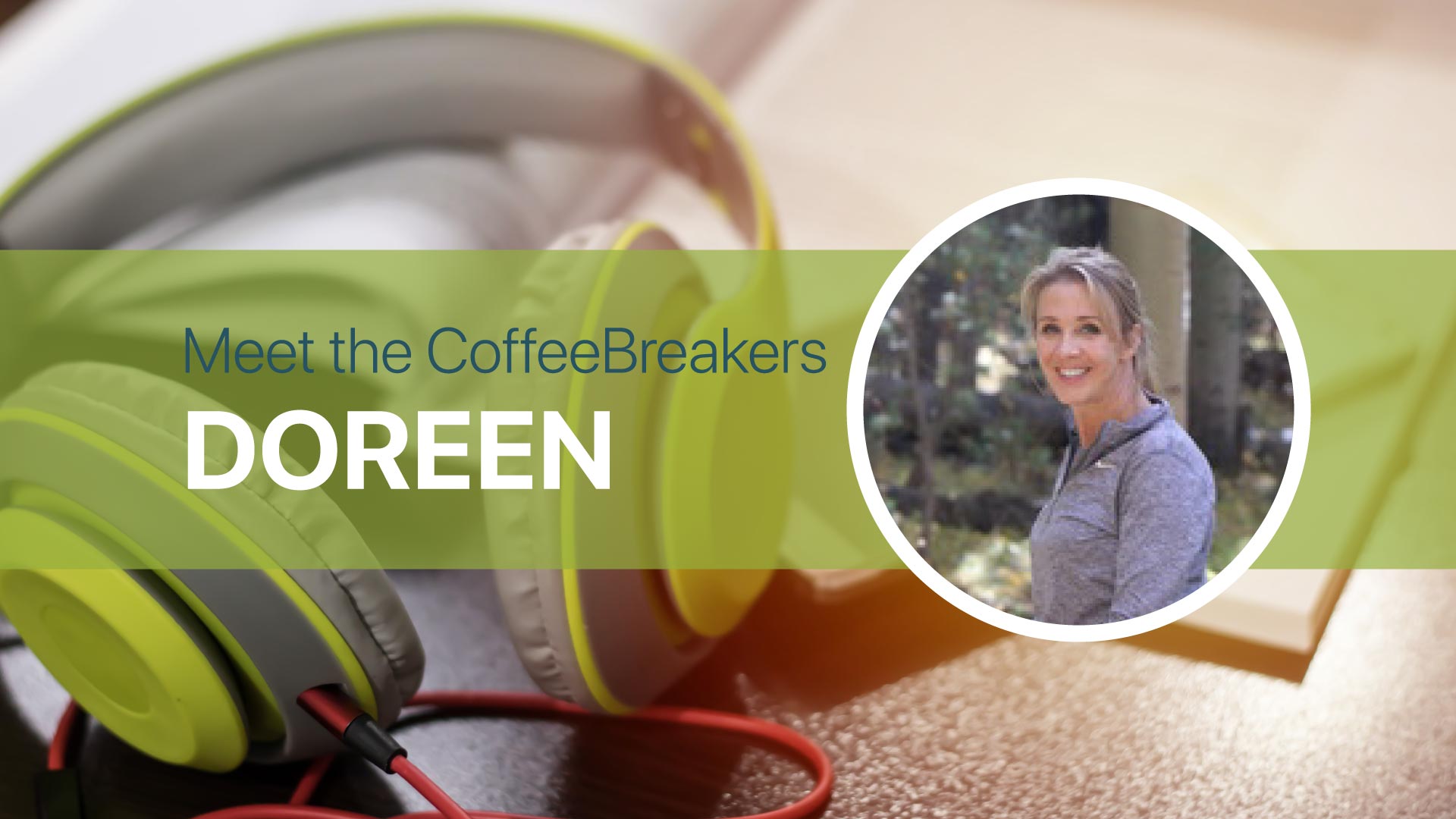
Meet Doreen, Coffee Break Spanish learner

Doreen, from Phoenix, Arizona, has been working as a nurse for almost 30 years. Being so close to the Mexican border, there is a high Hispanic population where she lives. Therefore, a lot of her patients are Spanish speaking, which means that she requires an interpreter to communicate with them.“It’s fine that I have to get an interpreter but I want to be able to communicate with them so that I can calm them down to tell them we’re going to take good care of them and things like that. It’s been frustrating that I haven’t been able to. I’ve never taken a foreign language in my life so, I thought learning Spanish would be useful for this purpose. Also, all of my kids have left home now so I wanted to go back to school and learn a second language or something. However, it just doesn’t work out with my schedule, so when I found Coffee Break online I was pretty excited”. 
Doreen is not only using Coffee Beak Spanish to help breakdown communication barriers in her job, she’s also learning the language for personal reasons. Doreen and her husband often undertake mission trips in Bolivia. While her husband speaks the language, Doreen is often left feeling frustrated due to the fact that she cannot communicate with her host. “They always have an interpreter there but it would be so nice if we could speak the language”. 

On top of this, a Spanish speaking student will be coming to stay with Doreen for a month in the near future. Therefore, she is keen to make the most of the language exchange. “When she comes I’m going to be able to communicate with her. The last time when her mum came it was funny because we had Google translate on our phones – she didn’t know English and I didn’t know Spanish so we kept passing our cellphones back and forth to each other!”

Doreen first discovered Coffee Break while browsing for Spanish courses online. “I found a couple of online courses that weren’t very good and then I discovered Coffee Break Spanish and I really really liked it. The fact that it was online meant that I kept going back to the same lessons over and over again. I didn’t have to put a tape in or a CD in – it was nice, I liked it! I also thought it was funny that Mark was from Glasgow but was speaking Spanish so well. He’s very good!”

As a visual learner, Doreen particularly appreciates the video versions of the lessons which are now available on the Academy. “The new Coffee Break Academy has made learning a lot easier. I didn’t even know about the new Academy as I had put my Spanish aside for a while. However, I picked it up again when we found out our little friend was coming over to live with us for a while and I was really happy with the Academy. I also really like the fact that Academy allows you to write comments or questions. The team has always been so good about responding to me. The Academy is so much easier to access than the old site. I love the videos because the words show up on my screen. I also like how also Mark explains the literal meaning of things….he’s very good. The lessons are also at a very good pace which I really like”.

While Doreen enjoys watching the videos, she listens to the audio version during long car journeys as she is often on the go. “I’m always doing something so I wanted to be able to access lessons either in my car or on my phone and Coffee Break was the best way of doing this. I’ve had people tell me they want to learn Spanish and I always recommend the Coffee Break website. I like the fact that it’s online and that it is possible to print the materials if you have to”. 

Compared to other online language programmes Doreen has used in the past (e.g. cassette tapes!), the Coffee Break method is a lot more convenient. Therefore, the podcasts are the main resource she uses to learn Spanish. Another advantage of Coffee Beak Spanish is the fact that Doreen can learn alongside the learner featured on the audio, Kara. “The other programs I used to use didn’t have a second person like Mark does with Kara. The other person just stated things, followed by a long pause of silence which meant that you didn’t know if you were saying it right. I like Radio Lingua because they have interaction and Kara is learning along with us and that helps me”.

Doreen feels that she is learning at a slower pace than she first hoped. However, having the option to replay and re-listen to her Coffee Break lessons has helped progress more quickly. “I’m amazed at how slowly I’m learning. I go back a second time to listen to the lessons to make sure I’m retaining everything. I probably do each lesson two maybe three times. I think in my younger days I probably could’ve gotten by listening to each lesson once – not anymore!’

Keen to demonstrate her progress with Coffee Break, Doreen shared the Spanish introduction she normally gives to her Spanish speaking patients: ‘‘Soy su enfermera. Me llamo Doreen, estoy aprendiendo español e necesito practicar más”. Although pleased with her progress, she is slightly self conscious about her Minnesota accent. Therefore, she is currently focusing on sounding more Spanish. However, Doreen reveals that in the long term, her dream is to become an interpreter at the hospital: “I’ve worked in the field for so long so it would be great if I could be a Spanish interpreter”. 

To finish, Doreen reflects on her experience of learning Spanish with Coffee Break so far: “I appreciate the support and help. When I email I get an answer within a day or two even though the Radio Lingua team are 8 hours ahead….it’s a really great programme, I really like it, and the Academy is just so much easier”.


CBI 2.34 | La Mia Estate ep4 – Dobbiamo escogitare un piano!

In this latest episode of Coffee Break Italian, join Francesca and Mark for the fourth instalment of our Italian soap opera, La Mia Estate. Preparations are underway for a summer concert at the campsite and Mia, Anna and Giorgio are busy putting the final arrangements in place. Even Riccardo and Maria seem to be getting on well, but things don’t go quite as smoothly at the concert. In additional to lots of useful Italian expressions and vocabulary, you’ll also learn a little about the subjunctive in this lesson.

Coffee Break Travels: on the road in Pornic with Pierre-Benoît

Coffee Break French host Pierre-Benoît invites Mark to join him for a guided tour of his home town, Pornic, in the Loire Atlantique area of France. Put your French to the test with this video, all in French. We’ve provided subtitles in both French and English to help you understand everything.

Mark and Pierre-Benoît visit the Nouveau Port, the Pottery Works, Pierre-Benoît’s favourite beach, and the old harbour in the centre of Pornic where they enjoy an ice-cream at La Fraiseraie. Links below:

Faïencerie de Pornic: https://www.faiencerie-pornic.fr
La Fraiseraie: https://www.lafraiseraie.com
Site officiel de Pornic: http://www.pornic.fr
Loire-Atlantique: https://tourisme-loireatlantique.com

CBC 1.29 | Describing people in Mandarin Chinese

In this episode you’ll learn how to describe people in Chinese. You’ll learn various adjectives to describe people physically and talk about hair and eye colour. We’ll put this to the test by challenging you to identify some famous people from their descriptions in Chinese, and you’ll be able to see how much you’ve understood of the lesson.

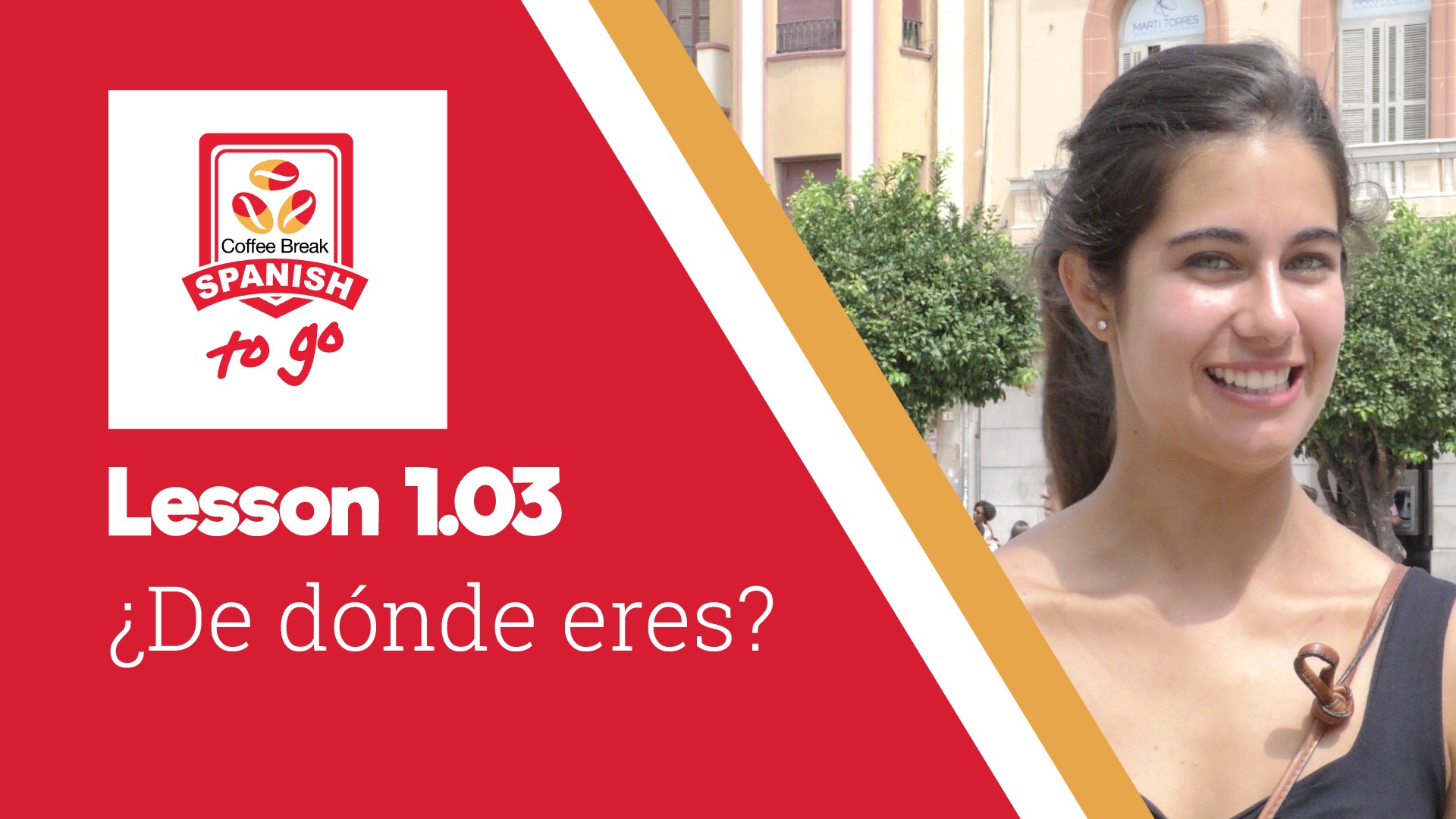
¿De dónde eres? – Saying where you’re from in Spanish – Coffee Break Spanish To Go Episode 1.03

To say “I am from…” in Spanish you say soy de…. In this episode of Coffee Break Spanish To Go, Marina asks the question, ¿De dónde eres? (informal) or ¿De dónde es usted? (formal). You can use the answers of our interviewees to help you learn to say where you’re from in Spanish.

In the first part of the video, watch the interviews without subtitles and try to understand. In the second part of the video, we’ve provided subtitles in Spanish at the top of the screen. You can choose to turn on subtitles in English using the Subtitles/CC button.

In this first series of Coffee Break Spanish To Go, Marina is in the city of Málaga, in the south of Spain, and in each episode she’ll ask passers-by one question. Of course, that one question will result in many answers, and it’s through these answers that you can practise your Spanish and build your vocabulary.

Coffee Break Spanish To Go will be published every two weeks on YouTube, and each Season will be filmed in a different part of the Spanish-speaking world. If you’d prefer not to wait for all 10 lessons of Season 1 to be published, you can access downloadable versions of the videos along with audio versions and lesson notes / transcripts in the Coffee Break Academy: click here for more information.

Coffee Break Spanish To Go is based on the popular podcast series and online course Coffee Break Spanish. For access to the free podcasts, please click here.

CBC 1.28 | Talking about your likes and dislikes in Chinese

In this episode of Coffee Break Chinese you’ll learn to talk more about yourself, specifically by talking about your job, where you work, what you do and where you’d like to work if you didn’t have your current job! Crystal provides some interesting information about Chinese work ethic, and you’ll be able to practise your Mandarin with the help of a conversation about jobs.

Making suggestions in French using “si” + the Imperfect – Walk, Talk and Learn French Episode 003

There’s a really easy way to make a suggestion in French using si + the imperfect tense. You’ll learn how to do just that in this episode of Walk, Talk and Learn. Mark explains an advert from the Italian Tourist Board in Paris which reads et si vous redécouvriez l’Italie?

Making a suggestion is a simple as combining the word si, meaning “if, with the imperfect tense. You can use this construction in sentences such as “what about going to the cinema?” or “do you fancy eating out tonight”. You’ll learn how to use the construction, and Mark will test your understanding of it with some translation challenges against the clock.

Make sure you subscribe to Coffee Break Languages on YouTube to be notified when we post new videos!

Mamma Mia Parody! The Story of a Language Learner

Here at Coffee Break Languages the whole team loves ABBA and we’re excited about the launch of Mamma Mia – Here We Go Again. In fact, we were so excited about the new film, we decided to make a parody of Mamma Mia, telling the story of a language learner. Make sure you switch on captions so that you can sing along!

We hope you enjoy this parody, that you have a laugh and that you sing along to the songs! The message is of course that learning a language can help you in so many ways, and we’d like to say Thank You For The Language – and to ABBA for making brilliant music!

The Coffee Break Team would like to thank everyone involved in this video.

Let us know what you think in the comments, and don’t forget to like the video and share it with your language-loving friends and fellow ABBA fans!

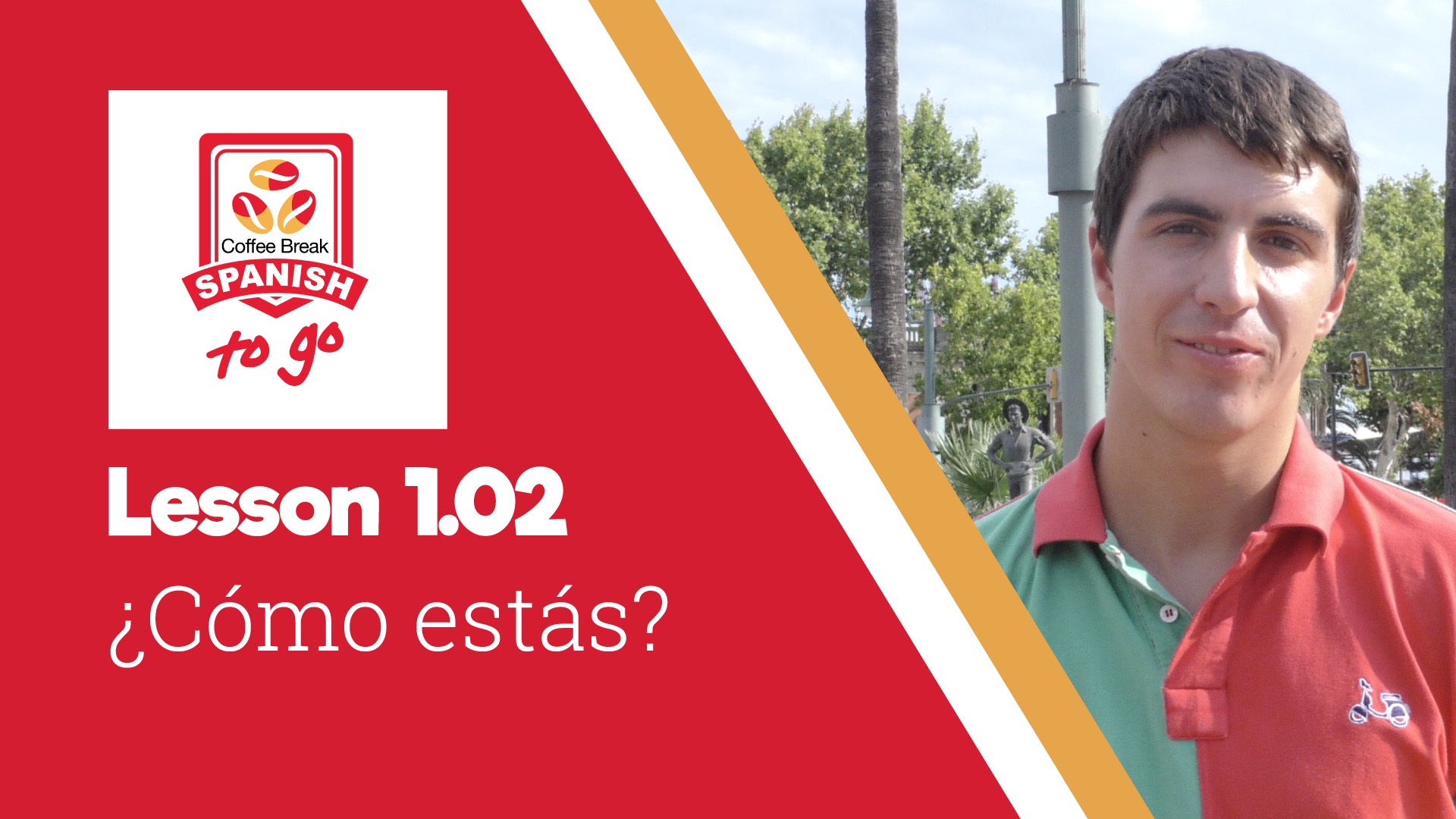
¿Cómo estás? – Asking “how are you?” in Spanish – Coffee Break Spanish To Go Episode 1.02

To ask “how are you?” in Spanish you can say ¿cómo estás?, or in a more formal situation, ¿cómo está usted? In this episode of Coffee Break Spanish To Go, Marina asks this question to passers-by in the streets of Málaga. You can use the answers of our interviewees to help you learn to introduce yourself in Spanish.

In the first part of the video, watch the interviews without subtitles and try to understand. In the second part of the video, we’ve provided subtitles in Spanish at the top of the screen. You can choose to turn on subtitles in English using the Subtitles/CC button.

In this first series of Coffee Break Spanish To Go, Marina is in the city of Málaga, in the south of Spain, and in each episode she’ll ask passers-by one question. Of course, that one question will result in many answers, and it’s through these answers that you can practise your Spanish and build your vocabulary.

Coffee Break Spanish To Go will be published every two weeks on YouTube, and each Season will be filmed in a different part of the Spanish-speaking world. If you’d prefer not to wait for all 10 lessons of Season 1 to be published, you can access downloadable versions of the videos along with audio versions and lesson notes / transcripts in the Coffee Break Academy: click here for more information.

Coffee Break Spanish To Go is based on the popular podcast series and online course Coffee Break Spanish. For access to the free podcasts, please click here.

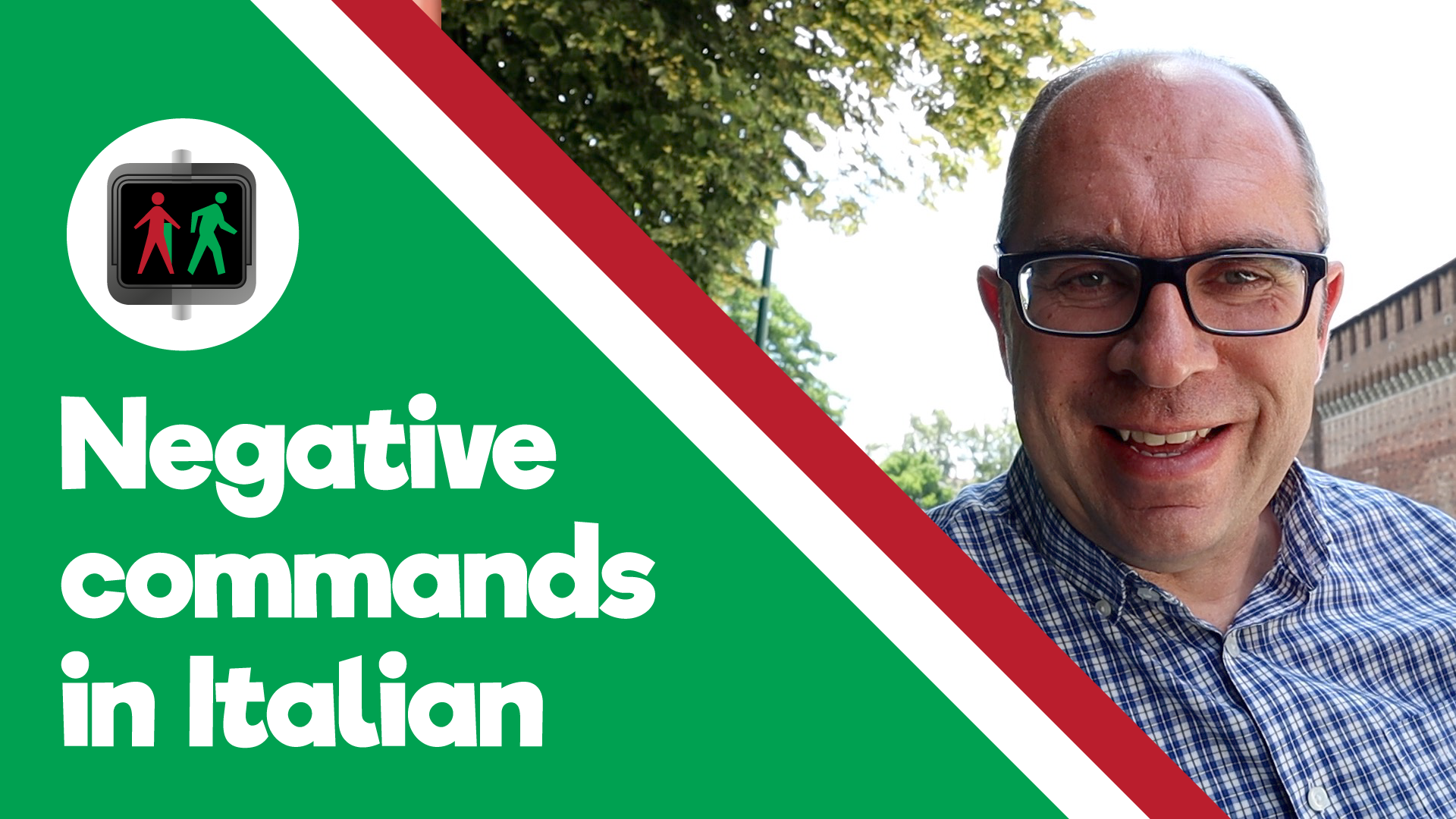
Giving negative commands in Italian – Walk, Talk and Learn Italian Episode 002

Don’t read this! Don’t look at me! Don’t say a word! Don’t watch this video. Well, do watch this video if you want to know how to use negative commands in Italian! Join Coffee Break Italian hosts Francesca and Mark for this latest episode of Walk, Talk and Learn Italian.

This episode is based on a notice Mark encounters at the Castello Sforzesco in Milan which states non somministrare cibo ai gatti – don’t give food to the cats. Francesca will explain exactly how negative commands work in Italian, and you’ll find out that for the most part it’s very straightforward because you can use an infinitive. Don’t miss this episode!

Coffee Break French Masterclass – September 2018

We’re delighted to announce that the Coffee Break French Masterclass will open its doors once again on 1st September 2018, ready to begin the new 6-month course which runs until 28 February 2019.

Registration will begin on 1st August 2018. Spaces on the course are limited, so in order to get on our notification list, please enter your details in the form below. We’ll remind you as soon as the course is available for registration.

To find out more about the Masterclass and what’s involved, please click here for the Coffee Break Academy.

“Merci de” or “merci pour”? Walk, Talk and Learn French Episode 002

Is it merci de … or merci pour…? How do you thank someone for something in French? Join Mark from Coffee Break in this Walk, Talk and Learn French video and learn exactly when to use merci de and when to use merci pour.

This video was based on the phrase Roland Garros vous remercie d’avoir utilisé les transports en commun, meaning “Roland Garros thanks you for using public transport. In the video Mark explains that you can, in fact, use both prepositions de and pour with the word merci, or the verb remercier, but they are used in specific situations. You need to understand what it is you’re thanking someone for in order to know when to use which expression.

Make sure you subscribe to Coffee Break Languages on YouTube to be notified when we post new videos!

Using “da” + infinitive in Italian – Walk, Talk and Learn Italian Episode 001

You can use the preposition da with an infinitive in Italian to talk about something that has to be done, or that is worth doing. Join Coffee Break Italian hosts Francesca and Mark for this first episode of our new series, Walk, Talk and Learn Italian.

This episode is based on an advert Mark sees in Milan: Hai un immobile da affittare? Dovevivo, il tuo inquilino ideale. This phrase means “Do you have a property to rent out? Dovevivo, your ideal tenant.” As Francesca explains, da + infinitive can be translated in a number of ways. For example, in the phrase ho molto da fare, you can simply translate da as “to”: “I have lots do to”. In other examples, da takes on the meaning of “it’s worth doing something”, for example, Milano è una città da vedere: Milan is a city worth seeing. All will be explained in this episode of Walk, Talk and Learn!