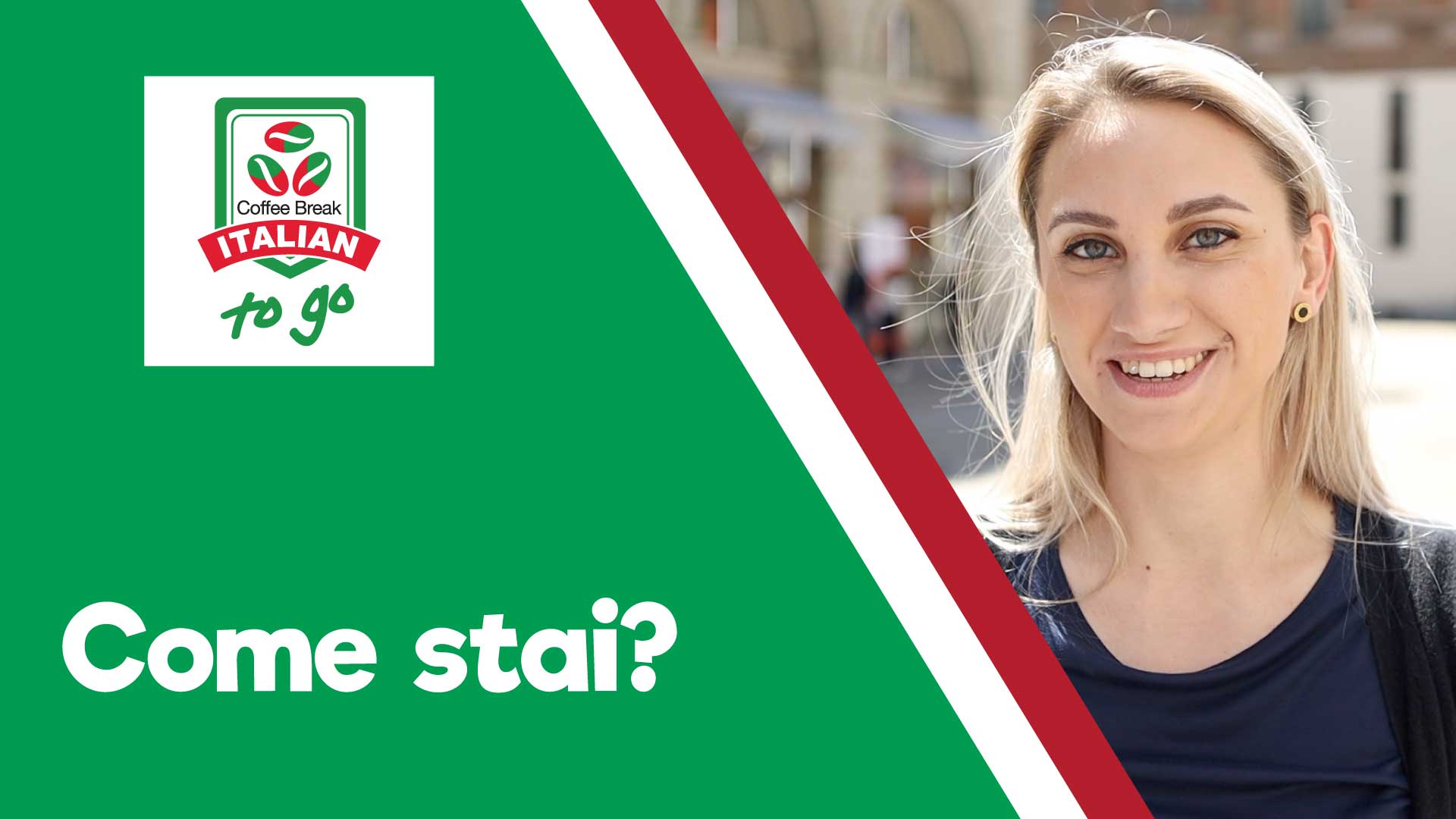
Come stai? / Come sta? – “How are you?” – Coffee Break Italian To Go Episode 1

To ask “how are you?” in Italian you can say come stai?, or in a more formal situation, come sta? In this episode of Coffee Break Italian To Go, Francesca asks this question to passers-by in the streets of Milan. You can use the answers of our interviewees to help you learn to introduce yourself in Italian.

In the first part of the video, watch the interviews without subtitles and try to understand. In the second part of the video, we’ve provided subtitles in Italian at the top of the screen. You can choose to turn on subtitles in English using the Subtitles/CC button.

In this first series of Coffee Break Italian To Go, Francesca is in the town of Milan, in the north of Italy, and in each episode she’ll ask passers-by one question. Of course, that one question will result in many answers, and it’s through these answers that you can practise your Italian and build your vocabulary.

Coffee Break Italian To Go will be published every two weeks here on YouTube, and each Season will be filmed in a different part of the Italian-speaking world.

If you’d prefer not to wait for all 10 lessons of Season 1 to be published, you can access downloadable versions of the videos along with audio versions and lesson notes / transcripts in the Coffee Break Academy.

Coffee Break Italian To Go is based on the popular podcast series and online course Coffee Break Italian. For access to the free podcasts, please click here.

To purchase our full online courses on the Coffee Break Academy, click here.

TFT: C’est écrit

Do you already know any songs by Francis Cabrel? The iconic sound of his acoustic guitar in his songs such as Petite Marie, La corrida and Je l’aime à mourir has made them well-loved by many across the French-speaking world, and he is generally considered to have been an extremely influential figure in the development of popular music in France. After winning a competition for French singer-songwriters in 1974, at the age of 21, he released his first album, Les murs de poussière in 1977. His music is usually described as folk, occasionally with blues and country influences. As today’s Tune for Tuesday, we’ve chosen his beautiful 1989 single, C’est écrit.

If you’re a Coffee Break French learner, listen out for the many examples of different verbs in the future tense within the lyrics. We hope they will also help you to remember some irregular future stems: listen out for “Elle te fera changer…” and “Elle voudra que…” and note the irregular stems of faire and vouloir. To help you, we recommend reading the lyrics as you listen to the song another time. You can find them online by clicking here. Or, if you’d like to hear the song played more slowly, we recommend watching the YouTube video below and selecting a slower playback speed by clicking on the settings symbol.

We hope you enjoy listening to C’est écrit and would love to hear what you think of it, or of any other Francis Cabrel songs that you know, in the comments.

Unser Tag in Potsdam – Coffee Break German Travels with Julia and Mark

Join Coffee Break German Cultural Correspondent Julia and learner Mark for a trip to the beautiful town of Potsdam where Julia grew up. Mark puts his German into practice with Julia’s help and together they visit various parts of Potsdam including the Russische Kolonie Alexandrowka, the Holländisches Viertel, and Park Sanssouci.

We’ve provided English captions for the whole video, and all German used in the video has both German and English subtitles. Click on the Subtitles/Closed Captions (CC) button.

New Coffee Break Languages and much more

Here’s a roundup of all the news from our special event held on Friday 8th November. If you’ve not yet watched the live video, you can do so here:

The Coffee Break Spanish Magazine

We’re adding a new Coffee Break Spanish Magazine series to the podcast feed and the Coffee Break Academy. In each episode join Mark and Fernanda for a lively discussion of an aspect of Hispanic culture. You’ll hear a variety of Spanish accents: Fernanda is from Chile and we’ll be joined by our cultural correspondents Sofía from Panama and Anabel from Spain. There are also questions from our listeners in each episode. Listen to the preview episode

Learning languages with music

Every week we bring you a Tune for Tuesday, and we’re developing the area of using music in your language learning with a new series of blog articles in which we make some recommendations on great songs for language learners. There’s even a Spotify playlist to help you! This week it’s Italian: read the article.

Coffee Break Conversations

Our Meet the CoffeeBreakers is a popular area of the website where we tell the stories of language learners like you. We’ve decided to develop this further and are going to be launching a new podcast called Coffee Break Conversations. Each episode will feature an interview with a learner and we’ll share the successes and challenges of learning a language, along with tips and tricks to help you in your own learning. Would you like to take part? Tell us your story!

A new German video

For German learners, we’ve just posted a special video on our YouTube channel which features our cultural correspondent Julia. In Unser Tag in Potsdam, Julia takes Mark on a trip to her hometown of Potsdam and you can go along for the ride! Watch the video.

Coffee Break To Go

Our Coffee Break To Go videos feature interviews with native speakers and help you practise your listening with a range of different accents and styles of speaking. Coffee Break Italian To Go will be broadcast on Tuesdays and Coffee Break French To Go will be broadcast on Wednesdays starting next week. You can watch our promos for a sneak preview: Italian | French

Introducing Coffee Break English

We receive requests for new Coffee Break language courses almost every day and one of the most popular requests is for a course in English. This is why we’ve decided to start working on Coffee Break English. Our first course in this whole new area will be for Spanish speakers. Share this with your Spanish-speaking friends! Find out more about Coffee Break English here.

Introducing Coffee Break Swedish

We’re launching not only a 6th Coffee Break language, but a 7th one too! Starting in January 2020 you can learn Swedish with Coffee Break Swedish. Join teacher Hanna, cultural correspondent Emma and learner Mark in each lesson and build your understanding of this fascinating language and culture. Find out more and sign up to be notified when Swedish goes live!

Announcing Coffee Break French Season 5

Voulez-vous encore un peu de Coffee Break French ? We’re delighted to announce that Coffee Break French Season 5 is now in production and it will be launching in early 2020. There’s a sneak preview in our event video.

And how was our event linked to ABBA?

Finally, if you’ve been wondering why all our marketing and social posts this week have been linked to ABBA lyrics and are curious to see if you spotted them all, check out this article on our site. We’re all ABBA fans at Coffee Break Languages and we couldn’t resist a few references throughout the event.

A peak behind the scenes of our ABBA-inspired campaign

It’s no secret that here at Coffee Break Languages we’re all ABBA fans, so when we were planning our special event which included the announcement of Coffee Break Swedish, we felt it was only appropriate to include a few references to ABBA. Some of these were fairly obvious, taken from the most popular ABBA songs, but there were a few more obscure references hidden in the various social posts, email messages and the script of the event itself. In response to requests from the Coffee Break community, we’ve decided to reveal all here.

Why ABBA?

First of all, why ABBA? Well, I’ve loved the music of ABBA since I was a child. There was something special about the melodies, the clipped pronunciation of the Scandinavian voices singing pop songs which, at the time, were not seen as particularly “cool”, but that didn’t matter to me.

There was also something exotic and “foreign” about songs like Voulez-vous, Fernando , Mamma Mia and Hasta Mañana, and the Gracias por la música album was probably among the first music in a language other than English I’d ever heard. When I discovered that the early music of Björn, Benny, Agnetha and Frida was predominantly in Swedish, I was desperate to find recordings of their early albums and built an extensive collection of CDs of pre- and eventually post-ABBA music recorded in Swedish. ABBA has been part of my life, so it was only natural to include some references as we announced Coffee Break Swedish to the world.

Our Marketing Campaign

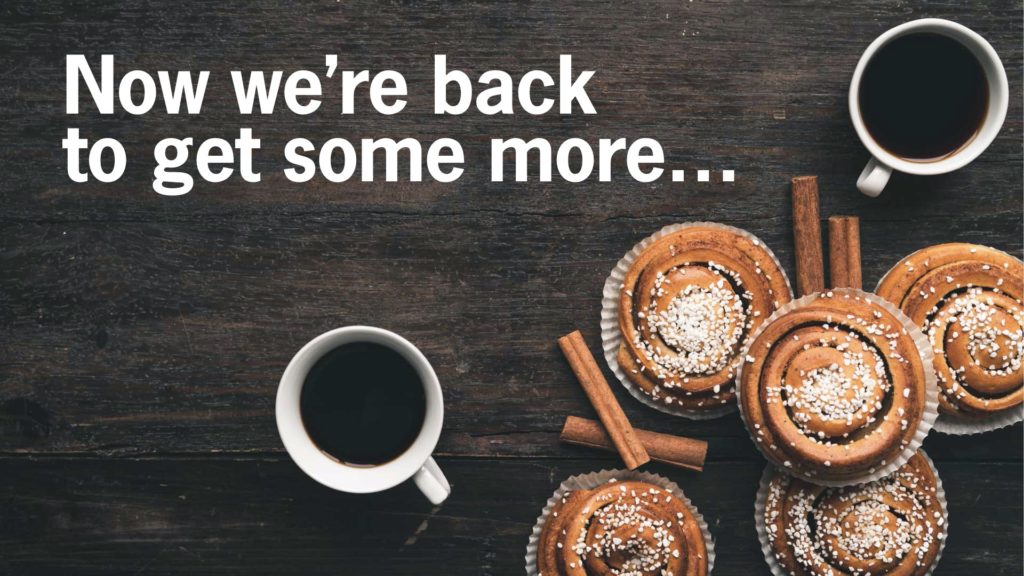
It all began with our initial invitation on Instagram last week: “We’ve done it all before and now we’re back to get some more”. This first line was hopefully cryptic enough not to spoil the surprise, but we deliberately chose an image including strong coffee and kannelbullar, the traditional cinnamon buns which are a staple part of any real Swedish coffee break or fika. The lyrics come from the first verse of the ABBA classic, Voulez-vous:

And here we go again, we know the start, we know the end,
masters of the scene.
We’ve done it all before, and now we’re back to get some more.
You know what I mean.”

Voulez-Vous
Voulez-Vous, 1979


Every Monday we post a #mondaymotivation image on all our social media networks, providing some motivation for language learners. The focus is normally about opening your mind and thinking about the opportunities language-learning provides, and this week’s image focused on travel. For this reason we chose a lyric from the song Move On (which is highly underrated in my opinion): “I’ve travelled every country, I’ve travelled in my mind”.

I’ve travelled every country
I’ve travelled in my mind;
it seems we’re on a journey,
a trip through space and time.”

Move On
The Album, 1977


In the caption which accompanied this image we also quoted I Have a Dream, mentioning that having a “destination makes it worth the while”.

And my destination makes it worth the while
Pushing through the darkness, still another mile.”

I Have A Dream
Voulez-Vous, 1979

We’re adding to our range of Coffee Break Magazine podcasts this week with the introduction of the Coffee Break Spanish Magazine, and our suggestion was that using these podcasts on your commute may be the perfect way of keeping up your language skills, just like reading “the morning paper going into town”. This was exactly what Agnetha sang about in one of ABBA’s last singles, The Day Before You Came. It’s also worth mentioning that many lines in this song start with “I must have…” which for any language-lover throws up all sorts of tense challenges when translating into other languages!

I must have read the morning paper going into town
And having gotten through the editorial no doubt I must have frowned”

The Day Before You Came
Single, 1982


On the day of our launch it was exactly a week since we first announced the event and therefore the perfect opportunity to include the line from The Name of the Game: “only a week since we started” in our Instagram post.

I’ve seen you twice in a short time, only a week since we started.
It seems to me for every time, I’m getting more open-hearted.”

The Name of the Game
The Album, 1977


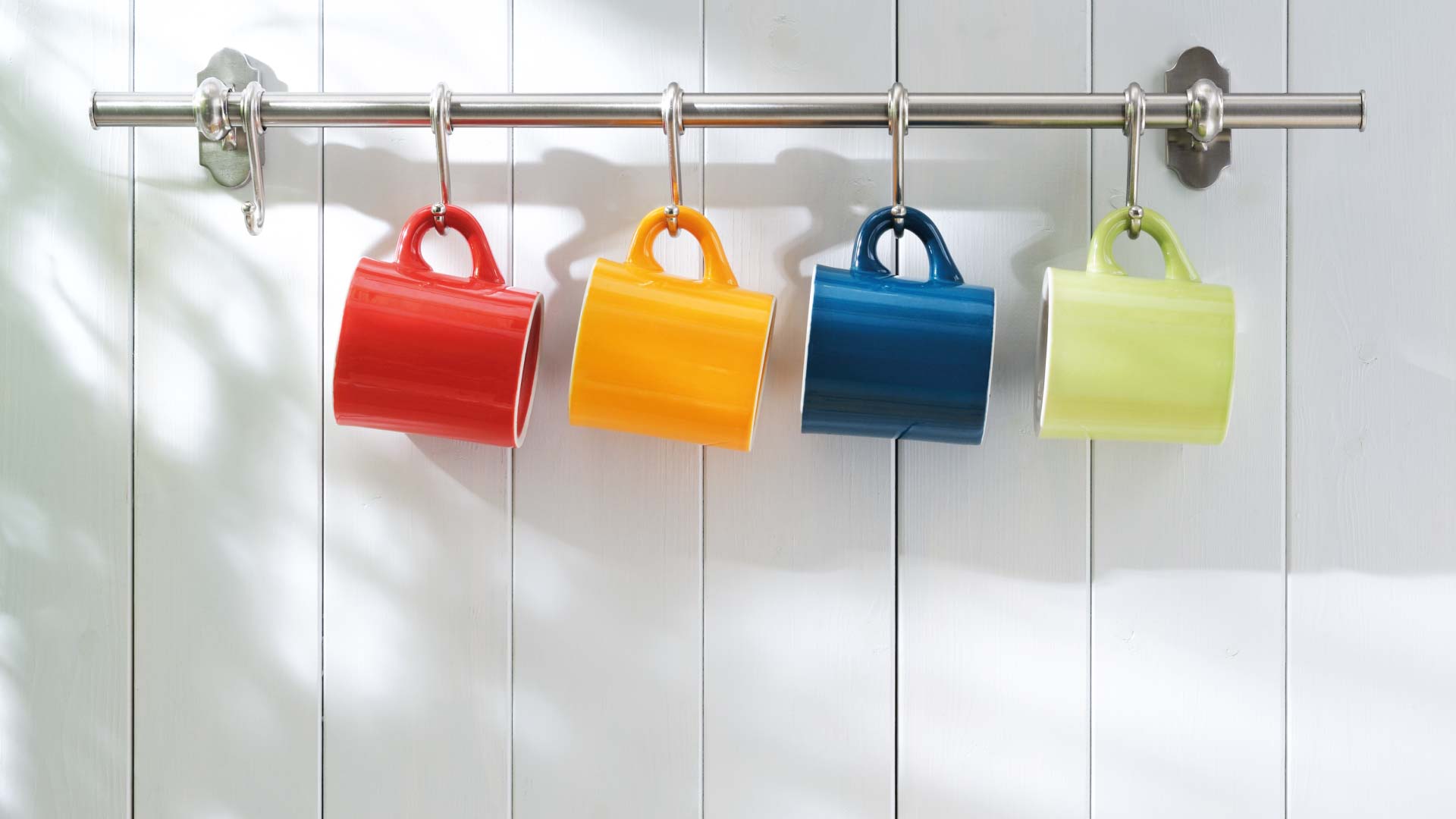
We then revisited Voulez-Vous and mentioned that there was definitely “a sense of expectation hanging in the air”, and featured the main strap line of our campaign: “Here we go again”. We chose the graphic shown above which featured four cups on a white wooden background. The additional empty hook pointed to the idea that there was a cup missing. In our case the missing cup was the new language that we were about to reveal, Swedish. The fact that the image felt a bit Greek in style also seemed to work, linking to the Mamma Mia movies, although we were concerned that some viewers may guess that we were going to launch Coffee Break Greek. Not yet, at least!

This line is also from Voulez-vous, although it’s also recognisable from the title of the second Mamma Mia film. It features in the song Mamma Mia, albeit in a slightly different form:

Mamma Mia, here I go again
My, my, how can I resist you”

Mamma Mia
ABBA, 1975


There’s one final point about this image which I have to mention and which ties up the Swedish link even further: I’m 99% certain that the cup hooks and rack are the Fintorp cup rail and hooks from Ikea, because we have exactly the same in our video studio, as shown here!

Our “one more thing” announcement was that we’ve been working on the fifth season of Coffee Break French, so we couldn’t resist the final ABBA reference which simply used the title of Voulez-Vous, but we made sure to use the exact colours of the text on the Voulez-Vous album for extra authenticity!

Other references

  • Our feature on using music in your language learning quoted the lyrics of Take a Chance on me, as we suggested that you “listen to some music; maybe just talking…” about the lyrics would help!
  • In our YouTube feature, we asked if you were “tired of TV” or if you’d had enough of Netflix and if so, why not check out our YouTube channel which is full of videos for language learners. The “tired of TV” reference of course came from the first line of Gimme! Gimme! Gimme!
  • As we introduced Coffee Break English, a whole new area of development for us, we referred to this as “taking on a new dimension”, quoting from As Good As New: “As good as new, and growing too, yes I think it’s taking on a new dimension”.

The font

When designing any marketing campaign, one of the most important elements to ensure consistency throughout the graphics is the choice of font, and for anything involving ABBA, there’s only one font that can be considered: News Gothic. This was the font chosen by Rune Söderqvist who designed the ABBA logo with the familiar reversed “B” and which became the logo of the group from 1976. Interestingly it was also used in the Star Wars “opening crawl” and for the closing credits of all the films in the series.

Although the original ABBA designs used mostly the bold variety of News Gothic, we included some light versions of the font in some of our graphics for our video content in the presentation. Of course, we made sure to reduce the kerning by about 2% to make sure that the wording on all our images looked as close as possible to the original ABBA designs!

Conclusion

We’re probably a bit mad. Or at the very least ABBA-obsessed. But that’s part of the fun of designing this whole campaign! I hope that it was all subtle enough to not be too obvious, but when you look back at the whole campaign it all makes sense. And it was fun to create these graphics and pay homage to my favourite group! I hope this outline of this campaign gives you a peak behind the scenes and that it explains the thought process behind creating the marketing materials for it.

One more thing

If you’ve not already seen our previous testimony to our favourite group, then do make sure you watch the video we made: a highlight of “our last summer” ???? involved various members of the Coffee Break team performing our own parody version of Mamma Mia, the story of a language learner.

Introducing Coffee Break Swedish

We’re delighted to introduce our 7th Coffee Break language course. From January 2020 you can learn Swedish with Hanna, our native-speaker teacher and Emma our Swedish cultural correspondent. The Coffee Break Swedish course will follow the same structure as our previous language courses, and you’ll develop your confidence in the language and learn to communicate in various situations when travelling in Sweden and interacting with native speakers.

If you’d like to find out more about Coffee Break Swedish and be notified when we’re launching the show, complete the form below:

[formlift id=”23198″]

Coming soon: the Coffee Break Spanish Magazine

Launching on 15 November 2019, the new series of the Coffee Break Spanish Magazine will help intermediate learners of Spanish build their understanding of the language and improve their listening skills. Each episode focuses on a text on a topic related to the cultures of Spanish-speaking countries around the world. In each episode there’s also a phone-in question from a listener. If you would like to record a question for a future episode of the show, you can do so here.

CBG Mag 1.06 | Die unendlichen Geschichten von Michael Ende

In this latest episode of the Coffee Break German Magazine we’re focusing on the author Michael Ende who wrote one of the most famous works of fiction for younger readers, the Neverending Story, among other books. Find out more about Ende and his work in this edition of the Magazine, and you can also learn about word order with the help of our question from listener Soumaya.

Introducing Coffee Break Italian To Go

Welcome to our new series, Coffee Break Italian To Go! If you’ve been working through the lessons of Season 1 or Season 2 of our podcast or online course, then you’re ready to “take your Italian on the road”, and you can do exactly that with the help of Francesca.

In our first series, Francesca is in the city of Milan, in the north of Italy, and in each episode she’ll ask passers-by one question. Of course, that one question will result in many answers, and it’s through these answers that you can practise your Italian and build your vocabulary.

Coffee Break Italian To Go will be published every week here on YouTube, and each Season will be filmed in a different part of the Italian-speaking world.

If you’d prefer not to wait for all 10 lessons of Season 1 to be published, you can access downloadable versions of the videos along with audio versions and lesson notes / transcripts in the Coffee Break Academy.

Coffee Break Italian To Go is based on the popular podcast series and online course Coffee Break Italian. For access to the free podcasts, please click here.

To purchase our full online courses on the Coffee Break Academy, click here.

Introducing Coffee Break French To Go

Welcome to our new series, Coffee Break French To Go! If you’ve been working through the lessons of Season 1 or Season 2 of our podcast or online course, then you’re ready to “take your French on the road”, and you can do exactly that with the help of Pierre-Benoît.

In our first series, Pierre-Benoît is in his hometown of Pornic, in the west of France, and in each episode he’ll ask passers-by one question. Of course, that one question will result in many answers, and it’s through these answers that you can practise your French and build your vocabulary.

Coffee Break French To Go will be published every week here on YouTube, and each Season will be filmed in a different part of the French-speaking world.

If you’d prefer not to wait for all 10 lessons of Season 1 to be published, you can access downloadable versions of the videos along with audio versions and lesson notes / transcripts in the Coffee Break Academy.

Coffee Break French To Go is based on the popular podcast series and online course Coffee Break French. For access to the free podcasts, please click here.

To purchase our full online courses on the Coffee Break Academy, click here.

Coffee Break Language courses are produced by Radio Lingua Ltd, based in Glasgow, Scotland.

10 best songs to learn Italian

A book with white over-ear headphones resting on top, next to a cup of coffee with foam on a dark textured surface

Integrating music into your Italian study routine can make it an enjoyable and effective process. Songs provide a rich resource of vocabulary, grammar, and cultural context, making them an excellent tool for language learners. With that in mind, we prepared this article with some of the best songs to learn Italian!

So, grab your headphones, turn up the volume and get ready to listen to some amazing tunes!

1. Piove (Ciao, ciao bambina) – Domenico Modugno, 1959

Being able to use your favourite songs to learn a new language is amazing, isn’t it? The first tune to make the list of best songs to learn Italian is by a very important figure in Italian music. 

Originally from Puglia in Southern Italy, Domenico Modugno is often considered the first Italian cantautore (singer-songwriter). Later in his life, he suffered a severe stroke and was forced to abandon his musical career. 

He devoted himself to politics and became a member of the Italian Parliament before returning to the music scene for the final few years of his life. Piove (Ciao, ciao bambina) won first prize in the 1959 Festival della Canzone Italiana di Sanremo (Italy’s most popular song contest) and was chosen as Italy’s entry for the Eurovision Song Contest in the same year.

Piove (Ciao, ciao bambina) is a love ballad in which he is saying goodbye to his lover as their relationship comes to an end. After listening to the song a few times without reading the lyrics, we recommend checking the lyrics and finally looking for the English translation.  

In this song, there are many interesting language points to listen out for within the lyrics. For example, there are many different tenses used throughout the song, including one phrase which uses c’è, both in the imperfect and the present: “c’era una volta poi non c’è più”. Why not read through the lyrics and try to spot all the tenses you know?

LINKS: Lyrics | English translation

2. Ma il cielo è sempre più blu – Rino Gaetano, 1975

The next piece of music on the best songs to learn Italian list is by another well-known cantautore, Rino Gaetano, who is often remembered for his satirical songs and ironic humour. Ma il cielo è sempre più blu was one of his most successful songs.

In this one, Gaetano satirically describes Italian society, concluding that despite the diverse ways of life of different social groups and the inequality which exists between them, the sky is always the same for everyone. The lyrics follow the same structure throughout the whole song: chi + verb in the third-person singular (lui/lei) form. 

We’d recommend trying to figure out the infinitive of each of these verbs and looking up those you don’t know. To learn more about how to use the word chi, listen to Coffee Break Italian Season 2 Episode 25.

LINKS: Lyrics | English translation

3. L’isola che non c’è – Edoardo Bennato, 1980

L’isola che non c’è translates literally into English as ‘the island that isn’t there’, but is known amongst Italian speakers as the name of the home of Peter Pan – known by English speakers as Neverland. Edoardo Bennato’s song of this name comes from his very successful 1980 concept album, Sono solo canzonette, based on the world of J. M. Barrie’s Peter Pan

Bennato is a very popular and influential Italian singer-songwriter whose music is often considered a creative fusion of various genres – including folk, rock, blues and sometimes even opera elements. While Bennato is well known for his songs with satirical, ironic lyrics, he has also written several concept albums, including one based on the world of Pinocchio and another based on the Pied Piper of Hamelin.

L’isola che non c’è is about believing in a better world without wars or violence. This tune has interesting lyrics, which makes it a perfect addition to the list of Italian songs for beginners, as it has many language points to listen out for. There are a couple of examples of the use of the pronoun ci with the verbs pensare and credere: “E a pensarci” would translate as “And thinking about it” and “Se ci credi” would translate as “If you believe it”. 

If you’d like to learn more about the pronoun ci you can listen to Coffee Break Italian Season 2 Episode 36, where it is discussed in more detail. 

LINKS: Lyrics | English translation

4. La cura – Franco Battiato, 1996

La cura is another song which is a great addition to the list of best songs to learn Italian, as the lyrics are sung very clearly. The song was a collaboration between Sicilian philosopher Manlio Sgalambro, who wrote the lyrics, and Sicilian musician, filmmaker and painter, Franco Battiato. 

Battiato’s experimental musical style – a fusion of various genres – and his collaboration with Sgalambro on numerous albums made him one of Italy’s most popular artists from the 1970s until today. In 1984, he represented Italy in the Eurovision Song Contest, performing with Italian singer, Alice.

La cura is one of Coffee Break Italian Francesca’s favourite songs because of the beautiful poetry of the lyrics. They also contain many different examples to help you remember how to use the verb proteggere with the structure proteggere qualcuno di qualcosa

Also note how di is combined with each definite article: for example, in the first line, Battiato sings “Ti proteggerò dalle paure delle ipocondrie”. If you’d like to revise this language point, listen to Coffee Break Italian Season 2 Episode 14.

LINKS: Lyrics | English translation

5. A me piace lei – Dente, 2009

Fifth on the list of best songs to learn Italian is A me piace lei. It is great music for any Italian learners who find the verb piacere a bit tricky to use, as it contains some great examples to help you. 

A me piace lei is a song by the ‘Italian king of indie rock’, as he is sometimes called. Giuseppe Peveri, known by his stage name, Dente (Italian for ‘tooth’) started his solo career in 2006 and has since become one of Italy’s most popular independent artists.

Why not use some of Dente’s lyrics to help you remember how to use the verb piacere? Notice how the verb changes depending on whether what he likes is singular (eg. “mi piace anche la pausa pranzo”) or plural (eg. “mi piacciono le risate e le stelle filanti”), or whether he’s talking about what the girl he’s singing about likes (eg. “le piace cucinare”). 

For help with the verb piacere, listen to Coffee Break Italian Season 1 Episode 13.

LINKS: Lyrics | English translation 

6. E più ti penso – Andrea Bocelli and Ariana Grande, 2015

Next on our list of best songs to learn Italian is E più ti penso, a beautiful duet by the renowned Italian tenor Andrea Bocelli and pop sensation Ariana Grande. Released in 2015, this song combines the talents of both artists to create a powerful and emotional piece.

The tune was originally written by Ennio Morricone for the movie ‘Once Upon a Time in America’. The song’s lyrics speak of longing and love, making it a perfect choice for language learners who want to dive deep into Italian expressions of emotion.

For example, the line E più ti penso e più mi manchi The more I think of you, the more I miss you showcases the use of comparative structures and reflexive verbs. Another beautiful line to note is In questo cuore non c’è niente di nuovo In this heart, there is nothing new, which helps learners understand negation and simple sentence structure in Italian.

LINKS: Lyrics | English translation

7. Sinceramente – Annalisa, 2023

Sinceramente by Annalisa is a perfect addition to the list of best songs to learn Italian, especially for those looking to grasp contemporary Italian expressions. Annalisa, a well-known figure in the Italian music scene, brings pop lyrics to her music, making it accessible and relatable for learners.

Listening to Sinceramente multiple times and reading along with the lyrics will help reinforce your understanding and pronunciation of many key expressions.

LINKS: Lyrics | English translation

8. Domenica – Coez, 2019

This song is another excellent choice for learners wanting to know more about modern Italian music. The duo is known for their unique blend of hip-hop and pop, delivering relatable and engaging lyrics that are perfect for expanding your Italian vocabulary.

Domenica, which translates to Sunday, is a song that captures the essence of a lazy day. Pay special attention to the colloquial phrases and everyday vocabulary used throughout the song. For example, listen for phrases like Vorrei fosse domenica I wish it were Sunday where the structure can be used for expressing wishes. 

LINKS: Lyrics | English translation

9. La prima cosa bella – Malika Ayane, 2010

The title of this song translates to The First Beautiful Thing and the lyrics are filled with sentimental reflections. You can pay attention to the use of adjectives and phrases that describe emotions and memories. 

For instance, phrases like La prima cosa bella che ho avuto dalla vita The first good thing I had in life provide excellent examples of how to structure sentences with a more descriptive language.

LINKS: Lyrics | English translation

10. Soldi – Mahmood, 2019

This tune deserves a place on the list of best songs to learn Italian as it was part of the 2019 finals at the Eurovision Song Contest. In this song, Mahmood addresses complex themes such as family dynamics and the influence of money on relationships, providing an interesting context for learners to explore new vocabulary. 

Mahmood’s unique blend of pop and urban music, combined with his distinct vocal style, makes Soldi an engaging track. The song is filled with colloquialisms and idiomatic expressions that are essential for understanding contemporary Italian.

LINKS: Lyrics | English translation 


We hope this article has given you a useful introduction to the best songs to learn Italian. Two of the songs we have chosen, La cura and A me piace lei, are already included in our Spotify

What songs in Italian do you already know and love? Feel free to share some of your favourites with us in the comments to help other Italian learners discover them! And if you would like to get access to more content like this, subscribe to our Coffee Break Italian newsletter!

Introducing Coffee Break English

For over 10 years we’ve helped English speakers learn Spanish and now it’s time to help Spanish speakers learn English! With Coffee Break English for Spanish speakers we’ll be teaching the absolute basics of the English language. If you’re interested in finding out more about Coffee Break English, enter your details below.

Con nuestros podcasts y cursos en línea, ¡Estarás hablando inglés en un dos por tres! Acompaña a nuestro maestro Mark y a la estudiante María y aprende inglés con nuestras lecciones de 15 minutos. ¡Perfectas para tu Coffee Break! El podcast sale al aire en enero 2020, y si te gustaría saber más, por favor escribe tu correo electrónico aquí y te haremos saber una vez ya esté disponible.

[formlift id=”23150″]

TFT: Il cielo in una stanza

Ciao a tutti! Have you heard of Mina, also known as La tigre di Cremona (the tiger from Cremona)? Her combination of traditional Italian melodies, swing and other styles, as well as her impressive vocal range of three octaves made her an important figure in Italian 1960s and 70s pop music, and between 1958 and 2003, she released an album every single year! This week, we’re listening to her evergreen song Il cielo in una stanza. We think this is a beautiful song, whose slow rhythm will allow you to savour all the words, making it a fantastic learning experience for you.

One of the language points to listen out for in the lyrics is the repeated use of the structure non + verb + più (‘no longer’). See how many examples of this you can find and think about how you would translate them. To help you, you can find the lyrics online by clicking here, or if you’d like to hear the song played more slowly, we recommend watching the YouTube video below and selecting a slower playback speed by clicking on the settings symbol.

Whether you’re learning Italian or another language, we hope you enjoy listening to this song and we’d love to hear what you think of it in the comments. Remember you can find our full Tune for Tuesday playlist on YouTube and Spotify to help you keep practising your language skills while discovering new songs from across the world.


CBI Mag 1.10 | Adesso pedala!

Often described as “the other Italian national pastime” (in addition to il calcio, football) cycling is huge in Italy. In this final episode of this season of the Coffee Break Italian Magazine, we take a closer look at the sport which is one of the most practised and watched in the country. In response to listener Nicole’s question, Francesca explains the interesting word infatti and how, in fact, it isn’t always the correct choice for translating “in fact”!

TFT: Lieblingsmensch

Hallo zusammen! Today we’re bringing you a Tune for Tuesday from a singer and rapper who is fairly new to the German hip hop music scene. Namika, whose real name is Hanan Hamdi, released her first single Lieblingsmensch in 2015, making her an overnight success and reaching Number 1 in the German Singles Chart. She has now released two albums, Nador and Que Walou, which have both been a success in Germany, Austria and Switzerland. 

Already just from the song’s title you can learn a lovely new word, Lieblingsmensch, which means “favourite human”. We hope you enjoy practising your German comprehension with the rest of this song. To give you a hand, you can find the lyrics online by clicking here, or if you’d like to hear the song played more slowly, we recommend watching the YouTube video below and selecting a slower playback speed by clicking on the settings symbol.

Remember to check out our full Tune for Tuesday playlist below to find other songs in German or in other languages you may be learning. Happy listening!


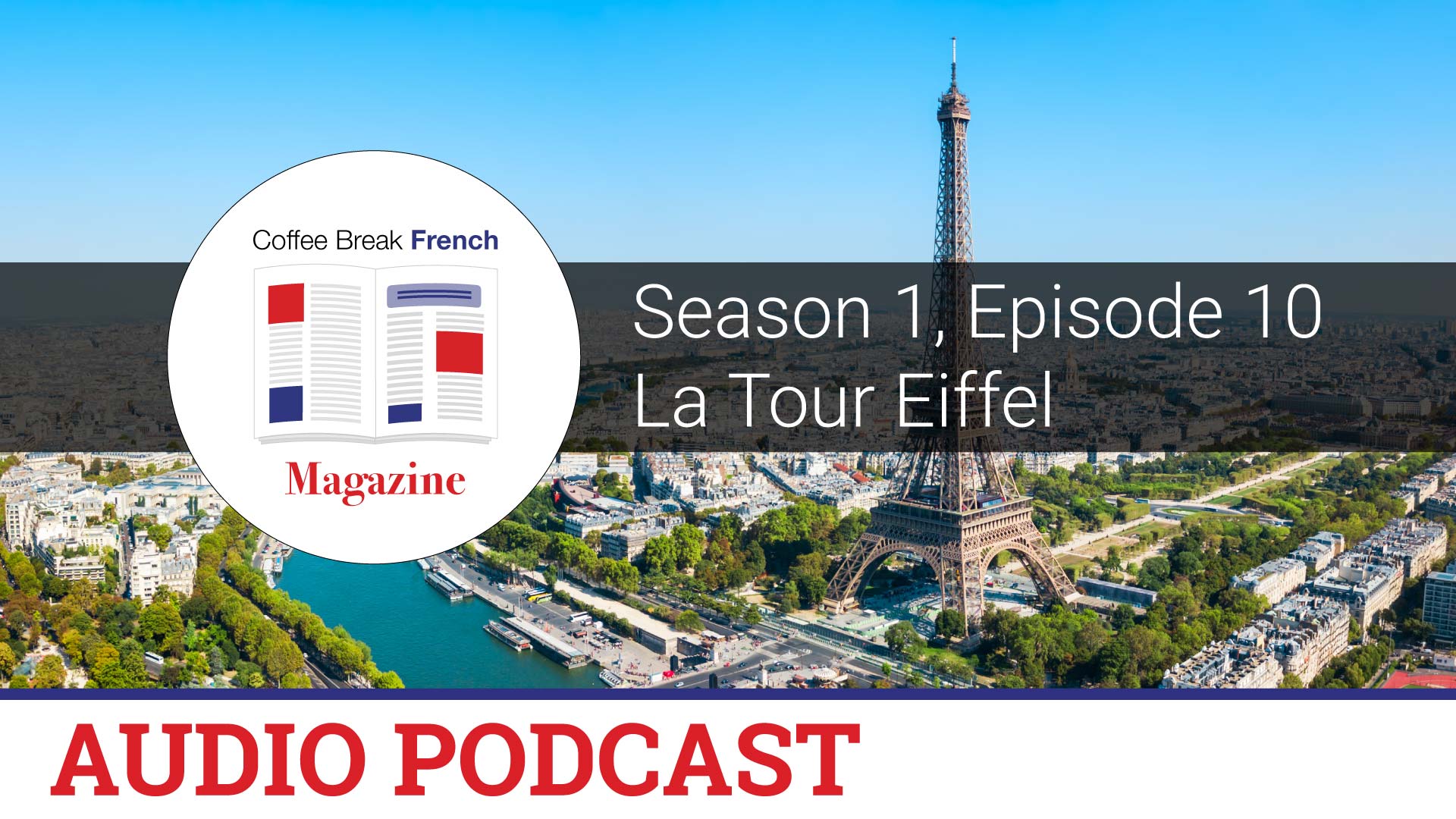
CBF Mag 1.10 | La Tour Eiffel

It’s the most visited monument in the world and at the time of its construction it was the tallest building in the world. Standing in the heart of the French capital, it is undeniably the global symbol of France. We’re talking, of course, about the Eiffel Tower, and in this episode Mark and Pierre-Benoît talk about this famous monument. There’s also a phone-in question from listener Freya who wants to know when to put prochain before and after the noun.

In the final section of this episode Susie mentioned the Charles Trenet song Y’a de la Joie. You can listen to this song on YouTube.

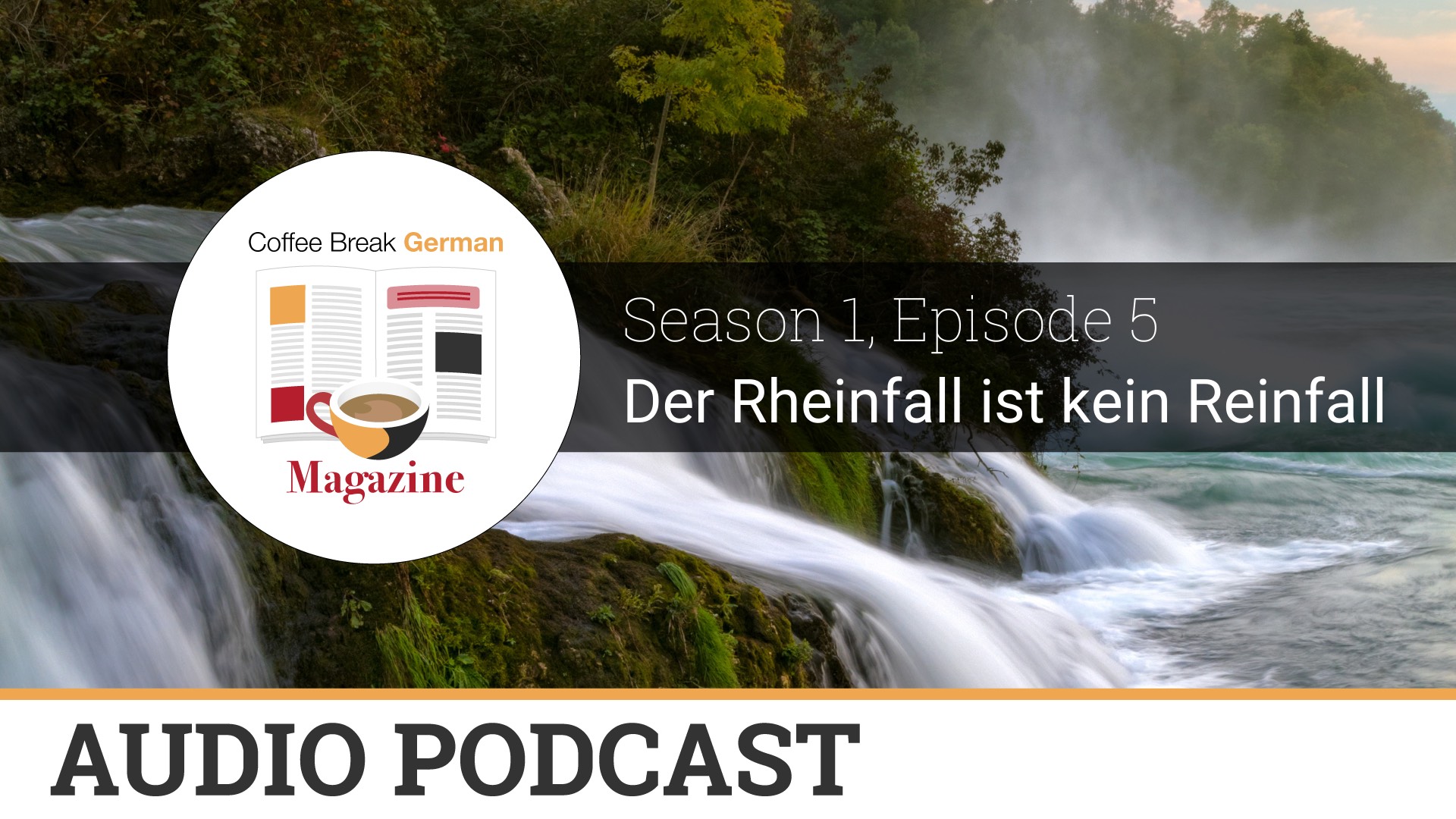
CBG Mag 1.05 | Der Rheinfall ist kein Reinfall

For this episode we’re heading to northern Switzerland, the location of the impressive Rheinfall waterfall. You’ll learn all about this natural wonder and practise your German at the same time. Andrea also answers a question from listener Adebajo which concerns two very similar words: Zeichen and zeichnen.

The Coffee Break Catch-Up: 24 October 2019

It’s time for our weekly live broadcast in which we update you on all things Coffee Break, from our latest podcast episodes and videos to what’s been happening on our social profiles. This week our Talking Point is TV series for language learners: if you have a favourite Netflix show, let us know in the comments! Coming up in this edition:

  • the latest episodes of our Coffee Break French, German and Italian Magazines;
  • Tune for Tuesday;
  • One Minute Languages on our YouTube channel;
  • news of a special event coming on the 8th of November.

If you’d like to access all the links for this episode and practise your reading skills in the language you’re learning, click here to sign up for our weekly language and culture newsletter.

TFT: Livin’ la vida loca

This Tuesday we’re listening to a song which we’re sure almost all of you know already, Livin’ la vida loca – the full Spanish version, of course! It was written by Desmond Child and Draco Rosa and performed by Enrique Martín Morales, better known as Ricky Martin or the ‘King of Latin Pop’. It was a huge international success when it was released in 1999, receiving several Grammy nominations, and is often thought of as the song which paved the way for the many other Spanish-speaking artists who became successful worldwide shortly after, including Enrique Iglesias and Shakira. Growing up in Puerto Rico, Ricky Martin began his life as a performer when he was 9 years old, when he began to appear in adverts for various products, including soft drinks and toothpaste! He then embarked on his career as a singer at the age of 12, with Puerto Rican boy band, Menudo.

Luckily for us, Livin’ la vida loca is full of memorable examples of the future tense. Listen out for the yo form of poder in the future tense in the first verse: “Yo no podré salvarme” and various examples of verbs in the future tense in the third-person singular form, including “Ella que será” and “Ella te dirá”. 

We recommend taking the time to spot any other language points you have been learning about in the lyrics, as the well-known tune may make them nice and easy to remember. You can find the lyrics online by clicking here, or if you’d like to hear the song played more slowly, we recommend watching the YouTube video below and selecting a slower playback speed by clicking on the settings symbol. 

We’d love to hear what you think of Livin’ la vida loca in the comments below, and don’t hesitate to share some of your favourite songs in Spanish with us.

CBI Mag 1.09 | La Ricetta di Francesca

By the time you’ve listened to this episode you’ll have l’acquolina in bocca – your mouth will be watering! Francesca shares a recipe for the rice dish panissa which involves beans, onion, Italian sausage and Arborio rice, and there’s a question from listener Donna who is confused about the difference between the verbs potere and riuscire.