Introducing High Five Spanish


We launched our Spanish course for children earlier this year for schools and today we’re delighted to announce that High Five Spanish is going to be available to the public, and it will also in the new Coffee Break Academy. We’re publishing the series in packs of 10 lessons, and pack 1 is already available. This fantastic resource for younger learners features native English speaker Sophie who is learning Spanish with her friends Marina and Miguel. I’ll hand you over to Sophie who will tell you more.

Each lesson of High Five Spanish features a short video, the High Five Spanish radio show, notes for parents to help your child learn Spanish, and activity sheets for children. There will be four packs in total, and packs 2, 3 and 4 will be added to the Academy over the next few months. Needless to say, High Five Spanish has been created by experienced teachers of the language and learners will build their knowledge as they progress through the progressive lessons, along with Sophie.

So, if you have a child – or a grandchild – who would like to learn Spanish, there’s no better way to help them than High Five Spanish. Head over to HighFiveSpanish.com and click on the Family Edition button for more information.

And that’s not all – we’ve also started moving High Five French into the new Academy, so Pack 1 is available there too featuring lessons 1-10. You can join native English speaker Emma who is learning French with her friend Mathilde.

One Minute Languages on the New Academy


The Coffee Break Academy goes live today as we’ve already moved all our One Minute courses over to the new system. This means that you can learn any one of 26 languages with our “espresso shots”. From Arabic to Zulu, choose your language, and enjoy our high quality video versions and lesson notes in these ten-lesson introductions to the language. To celebrate, we’re even adding in two brand new courses: you can now learn the basics of Galician, a regional language spoken in the north of Spain, and as we’re heading into the festive season, you can learn the basics of Finnish and say “hello, how are you?” to Santa Claus himself.

To access the Coffee Break Academy, please click here.

The New Coffee Break Academy


It’s graduation time!

As you know, most of our courses feature free lessons, available on our website and on iTunes, Soundcloud and so on, but we also have premium courses which feature additional materials to help you take your learning further. We’ve been looking at ways in which we can improve how we deliver these courses and today we’re delighted to announce the new Coffee Break Academy. Moving forward, this will be where all our premium courses will be hosted.

We’ve been reworking our existing content into new courses which feature the usual downloadable audio and pdf materials, but we’re also introducing video to seasons 1 and 2 for all languages, and making the whole process a smooth and enjoyable experience. Of course, with a huge back catalogue featuring hundreds of language lessons, this is a gradual process. We’ll be moving our Coffee Break series over to the new Academy in the next few weeks, and we’ll be offering everyone who has purchased a course in 2016 a complementary account in the new Academy. Equally, anyone who purchases a course between now and when we move over will be swapped into the new Academy when it’s ready.

The Coffee Break Academy will be a one-stop shop for all our premium content and we believe it will offer learners an easy and smooth process from purchase to language mastery!

Ready to try out the new Coffee Break Academy? Click here. You’ll notice that not all our courses are active on the Academy quite yet – we’ll be adding to these in the coming weeks.

Just a quick word about our current Masterclass members who have been using the Academy to access this system. We’ll also be moving the Masterclass into the new Academy, but we’ll be in touch with you to guide you through that process when the courses are fully set up on the new site.

Introducing Coffee Break Spanish To Go


¿Cuál es la pregunta de hoy?

We’ve been asking our beginner and intermediate students what you would find most useful to help you in the earlier stages of the language. While many of you feel that you’re able to say things in the language, the number one difficulty for learners is understanding what native speakers say in response. For example: if you are asked ¿cómo estás? -“how are you feeling?” – you can reply estoy bien. You may well hear that answer from a native speaker too, but it’s quite likely that you’ll hear something a bit more complicated:

Estoy muy bien, aquí por Málaga, dándome una vuelta, y hoy no hace demasiado calor, así que estoy estupendo.

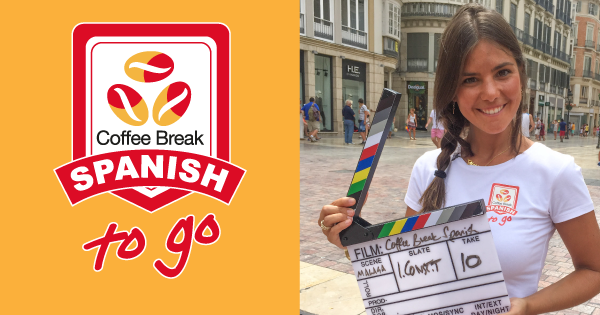
And if you’re fairly new to the language, that’s quite a tricky answer! So… in order to respond to this learner need, we’ve put together a brand new course. It’s time to take what you’ve learned in the early stages of the language, and move further with it. We’ve headed out onto the streets of Spain with our camera and asked native Spanish speakers some questions. We’re calling this Coffee Break Spanish – To Go.

Coffee Break Spanish To Go is a short course featuring 10 videos, each video asking a different question. While the questions in this series may be quite easy to begin with, the answers range from a few words, to complex sentences spoken quickly in local accents – and this is exactly what our learners have been asking for. We’ve provided subtitles in Spanish so that you can see exactly what each interviewee says, and there are, of course, language notes with explanations of the grammatical and cultural elements covered.

Coffee Break Spanish To Go launches on Monday, the 7th of November. This season is aimed at learners working on Season 1 and Season 2 of Coffee Break Spanish, but we hope to add more series featuring more complex questions and answers in the future.

Announcing Coffee Break Italian Season 2

Pronti per un altro caffè?

Coffee Break Italian Season 1 finished in the summer, and we get daily emails, tweets and messages asking us when Season 2 is starting… So, we’re delighted to report that your new year resolutions for 2017 can also include improving your Italian! Season 2 begins in January and we’ve been busy recording the first batch of lessons already.

Season 2 will give you the chance to increase your understanding and build your range of expression in Italian and we’re really looking forward to launching this next stage. To be kept up to date with the developments and the definitive launch date, click here and fill in your details.

Announcing Coffee Break German Season 2


Lust auf noch mehr Deutsch?

We’re delighted to announce that we’ve been working on the long-awaited second season of Coffee Break German. In this season you’ll take your German to the next level, building on what you learned in Season 1. There will be more situations, you’ll learn to talk about the past and the future, you’ll learn more about how the German language works, and you’ll also learn some tricks to help you avoid the most difficult aspects of German grammar. We’ll also be looking more at Austrian, Swiss and German culture with the help of Julia.

So, when will CBG2 be available? We’re launching the new season in January 2017, so you can start planning your new year’s resolutions to include improving your German! There will be more information coming soon, and we’ll be introducing our new CBG teacher next month. For now, click here and fill in your details to be notified as soon as we know the launch date – and you may even get access to a sneak preview!

Our 10th Birthday Announcements

Join our Founder and CEO Mark Pentleton for our 10th birthday announcements:

  1. Coffee Break French Season 5 coming in 2017
  2. Coffee Break German Season 2 launches January 2017
  3. Coffee Break Italian Season 2 launches January 2017
  4. Coffee Break Spanish To Go – new video show launching 7th Nov 2016
  5. Brand new Coffee Break Academy where our premium courses will be hosted
  6. 26 One Minute Languages courses already in Coffee Break Academy – including new courses in Galician and Finnish
  7. High Five Spanish launching on Coffee Break Academy – help your child learn Spanish
  8. Coffee Break Merchandise now available
  9. Coffee Break Conversations – new behind-the-scenes video series
  10. The Coffee Break App coming soon
  11. Announcing Coffee Break Chinese, launching early 2017

Follow the links above to find out more.

Episode 37 – Season 4 – Coffee Break Spanish

It’s time for another episode of Coffee Break Spanish and this time we’re reading Rory’s email to Alejandro in which he updates his friend on the recent happenings in Mallorca, including the reception held in their honour in Palma. This episode gives us an opportunity to take a closer look at a range of interesting language points including the use of pedir que + subjunctive.

Join us for some special announcements

Radio Lingua is 10 years old!

We’re celebrating this milestone with some special announcements! Join us on Thursday 3rd November at 8:00pm UK time (3:00pm Eastern) for a live broadcast in which we’ll be sharing some highlights of the past 10 years, and looking forward to the next ten! The broadcast will be on the Radio Lingua Facebook page. This event has been rescheduled from the original date of 18th October which unfortunately coincided with DNS problems on the site.

What’s your Coffee Break Story?

As part of the event, we’re planning to share some “Coffee Break” stories, and we’d love you to join in. All you need to do is record a 30-second video telling us your Coffee Break story. Tell us what you enjoy about Coffee Break languages, or about a situation you’ve experienced as a result of learning a language with Coffee Break. You could even tell us where you like listening to Coffee Break. Once you’ve recorded your video, you should send it to us either by email to birthday@radiolingua.com, or send it to us on via our Facebook page. If you’re not sure how to do that, Mark has created a short video with instructions.

A couple of important things: firstly, please make sure your video is no longer than 30 seconds. Well, 32 or 33 seconds is fine, but anything above 40 is too long! Secondly, please film your video in landscape format – across the way, rather than “up and down” portrait mode. Please note that by sending us your video you are giving permission for us to include your video in our compilation of Coffee Break stories during the live event on 3rd November. Please also only include your first name when introducing yourself. We need to receive your video no later than 11:59pm UK time on 31st October 2016 in order for us to be able to include the video in the compilation.

Don’t miss our event!

If you’d like to be part of our biggest announcements for years, don’t miss our event on 3rd November! Join us at 8:00pm UK time live on Facebook.

Problems sending us your video?

If you’re having any probles sending your video from an iPhone or an Android device because the video is too large (over 20mb), then we have a solution. Simply search for the WeTransfer app in the App Store / Google Play Store and then send your recorded video through this app. Here’s a video which may help:

Radio Lingua Update

Update, 20 October 2016

Planned maintenance: in an attempt to avoid further problems with the Radio Lingua website, we’re going to be doing some updates overnight on the site. This is likely to involve around 2 hours of downtime between 12:00 midnight and 8:00am UK time (7pm-3am Eastern). Sorry for any inconvenience caused.

Original message, 18 October 2016

Over the past few days we’ve been experiencing major problems with the Radio Lingua website. We’d like to apologise to the Coffee Break learning community for any inconvenience you’ve experienced. The problems were a result of a change made by our domain registration company which blocked access to the website for users and indeed to the site admin for us.

As of Tuesday 18th October at 8pm UK time, the site is gradually becoming available again to users around the world as the DNS propagation takes place. If you are seeing this article, it means that the the DNS propagation has taken place for your ISP. Basically, your ISP has picked up the new IP address of our site and you should be able to access everything once again. However, we will be closely monitoring the site and now that we have access to the admin of the site, we’ll be looking into any further problems and taking cautionary measures.

We had originally planned to make some announcements this evening to celebrate our 10th birthday, but we had to deal with the site issues. As soon as everything is working again as it should, we’ll announce the new date for our special event.

Thank you for your patience and understanding throughout this time. We’ll hopefully be back very soon doing what we do best, helping you learn languages in your coffee break!

Mark and the Radio Lingua Team

Episode 36 – Season 4 – Coffee Break Spanish

In this episode of our advanced Spanish course we’re joining María for a diary entry in which she’s thinking about the possibilities of living and working in Argentina with Rory. Of course, with Alejandro already in Argentina, he would be able to help them get settled. From a language point of view, Mark and Carmen discuss various aspects of grammar and idiomatic expressions including the use of “una vez” with the imperfect subjunctive.

Coffee Break French Live – 19 septembre 2016

Join us for Coffee Break French Live – Q&A with Mark and Pierre-Benoît

Questions featured in this episode:

  1. When do you pronounce the ‘s’ at the end of the word plus?
  2. How do you know whether ‘ll’ is pronounced as an L or a Y sound?
  3. Can you give me some phrases to use when I’m not sure about my opinion about something?
  4. What does the ‘ce’ in est-ce que and qu’est-ce qui really mean?
  5. How do you when to pronounce the ‘-re’ at the end of a word like être or quatre?
  6. What other uses are there for the verb arriver other than ‘to arrive’?

Make sure you’re following us on Facebook to find out exactly when we’re broadcasting our live shows.

Episode 35 – Season 4 – Coffee Break Spanish

Rory and María take a trip to the village of Valldemossa and, while enjoying an ice cream, they talk about the possibilities open to them for their future plans which will undoubtedly involve a trip to Argentina where Rory hopes to continue his studies. Of course, Mark and Carmen are on hand to discuss the language used in their conversation. This episode includes a focus on the first person plural imperative form, meaning “let’s do something”.

Episode 34 – Season 4 – Coffee Break Spanish

In this episode we’re listening to Alejandro’s email. He’s continuing his travels around northern Europe before returning to Argentina, and he’s desperate to hear about all the updates from Rory and María in Mallorca. The episode contains a range of useful and interesting expressions, along with some tricky language including dudar que + subjunctive, the expression “eso de”, and the phrase “no dar tiempo”.

Coffee Break French Live – 24 août 2016

Join us Coffee Break French Live

In this episode:

  • feedback for our Facebook community
  • the expression tenir quelqu’un au courant / au jus
  • the idiom faire la grasse matinée
  • news about Coffee Break French on Instagram

Make sure you’re following us on Facebook to find out exactly when we’re broadcasting our live shows.

Coffee Break Spanish Live – 25 de agosto 2016

Join us for Coffee Break Spanish Live.

In this episode:

  • feedback for our Facebook community
  • the expression echar una cabezadita
  • answering the question ¿qué llevas a la playa?
  • news about Coffee Break Spanish on Instagram

Make sure you’re following us on Facebook to find out exactly when we’re broadcasting our live shows.

Episode 33 – Season 4 – Coffee Break Spanish

Alejandro has left for London and in this episode we’re reading an email from Rory with the latest updates on the story. Rory is thinking about the future and his plans for his PhD which perhaps will take him to Argentina. As usual, there is a huge range of complex grammar and advanced vocabulary covered, and Mark and Carmen are on hand to discuss the text in detail.

Episode 32 – Season 4 – Coffee Break Spanish

In this latest episode of Coffee Break Spanish Season 4 we join María for another diary entry in which she recounts the latest happenings in the story of finding the treasure and the aftermath. She’s now told her parents about the events, and she’s delighted to report that Rory is going to be rewarded for his part in finding the treasure. As usual, there is a huge range of complex grammar and advanced vocabulary covered, and Mark and Carmen are on hand to discuss the text in detail.

Episode 31 – Season 4 – Coffee Break Spanish

In the latest lesson of Coffee Break Spanish, Rory and María are discussing their next steps. Rory has had good news from both the Spanish and Scottish governments which will have a role to play in his future studies. This episode provides another opportunity to consider advanced grammar and vocabulary, including the difference between dondequiera and donde quiera, and lots more!

Past tense in Italian: a friendly guide for beginners

If you’re on a mission to improve your Italian, then you’ll quickly find that being able to talk about things in the past is very important. After all, how else will you be able to tell your friends about what you did on holiday or share the story of how you ordered that perfect plate of pasta in Florence? That is why you need to learn the past tense in Italian! 

In this blog post, we’re going to dive into the basics of it — but don’t worry, it’s not as scary as it sounds! We’ll focus on some of the most common ways to talk about the past using il passato prossimo

This tense will help you express most of what you need when discussing past actions and experiences. Ready? Let’s get started. Don’t forget to listen to the episode to gain more insight into pronunciation and vocabulary.

Past tense in Italian: What is il passato prossimo and when to use it?

Il passato prossimo is similar to the simple past in English. This is the past tense in Italian you’ll use when talking about actions that happened at a specific moment — things you’ve done, events that occurred, or changes that happened.

It is one of the most common forms of past tenses used in the language. 

Forming the passato prossimo

Now, let’s talk about how to actually build this past tense in Italian. Don’t worry! It’s not complicated once you get the hang of it! You’ll need two parts:

  • an auxiliary verb, either essere to be or avere to have;
  • the past participle of the main verb.

Most verbs use avere, but some verbs — mainly those that describe movement or change of state use essere. The second piece of this past tense in Italian is the past participle. This is the form of the main verb that represents the action itself.

For most verbs, it’s pretty easy to form: 

  • -are verbs, like mangiare, you replace -are with -ato
    • mangiare → mangiato 
  • -ire verbs, like dormire, you replace -ire with -ito
    • dormire → dormito slept
  • -ere verbs, like ricevere, you replace the -ere with -uto 
    • ricevere  → ricrvuto received 

Most verbs regularly form the past participle, like the ones we just saw. But, of course, Italian wouldn’t be Italian without a few irregular verbs to keep us on our toes! Especially for verbs ending in -ere.

Here are a few common irregular past participles you’ll likely come across:

  • fare to do/makefatto
  • essere to bestato
  • vedere to see visto
  • dire to saydetto

You’ll pick these up as you go along, and with practice, they’ll become second nature!

Past tense in Italian practice time

Now that you understand the passato prossimo a little better, how about checking examples? For the verb imparare to learn we use avere as the auxiliary verb:

  • Abbiamo imparato molto! We learned a lot!
  • Ho letto quel libro. I read that book.

Now, let’s focus on the verb essere as the auxiliary: 

  • Sono andato/a al cinema. I went to the cinema.
  • Siete tornati/e tardi? Did you all return late?

Easy, right? Keep in mind that with essere, the past participle has to agree in gender and number with the subject. So if you’re talking about yourself (and you’re female), you’d say sono andata instead of sono andato.

Try forming a few sentences using this past tense in Italian, starting with simple actions like ho mangiato or sono andato/a.

And there you have it! A beginner’s guide to using the passato prossimo in Italian. Whether you’re talking about your day, your favourite holiday, or what you ate for lunch, this tense will be your go-to for expressing what you’ve done. Keep practising, and soon enough, you will use it with your eyes closed.

To continue learning Italian, don’t miss out on Coffee Break Italian Season 2. In the lessons, you will expand your beginner-level knowledge, learning more about irregular verbs, demonstrative adjectives and useful vocabulary for daily conversations!