
 Hej! I have to admit that this week I have left writing this article a little late – something which Swedes, with their sense of punctuality which could rival the Swiss or Germans, would seriously frown upon! Several Swedish friends told me separately that they grew up with the motto from their parents, that if one is going to be anything more than 3 minutes late, it probably is not worth showing up at all. But in this case, my being late is what led me to the idea for this week’s article, namely, tid (time). Telling time and phrases around it are, I find, always one of the most difficult things when learning a new language, and so I would like to dedicate a little of my time today to talking about it.
Before going to Sweden, I had been told that like in most European countries, that in Sweden I should use the 24-hour clock (and had been dreading saying “sjutton” (17), for 5pm, as the “sj” sound, a rushing of air out of your mouth like you’re blowing but haven’t closed your lips enough, is nigh-on impossible and non-Swedes in general can only manage at best a half-decent impression). However on arriving in Uppsala, in conversation at least, I learnt that using 24-hours is deemed unnecessary. It’s pretty obvious when you say, “Jag ska till skolan klockan 10” (I’m going to school (here, ‘university’, at 10) that you mean in the morning, and you aren’t planning on heading to classes at 10pm. “Klockan”, meaning “the clock” and “o’clock” and in writing is usually shortened to kl., is used to preface any time, for example, “Jag vaknade kl. 8” (I woke up at 8), “han äter lunch kl. kvart över 12” (he eats lunch at quarter past 12), “Vi ses kl. halv 10” (See you at half 9).
This last example throws up one thing which I constantly found difficult! In English, saying for example “half 10”, means of course, 10.30. In Swedish, like in German, the system is to “minus” the half from the following hour – so, halv 10 (lit. “half 10) actually means 9.30. I imagine it this way, in English we think of “half past 10”, in Swedish “half before 10”. One last phrase, to round of this lesson in time (and a personal favourite of mine”: att tappa tid, meaning to waste or lose time. “att tappa” can also be used to mean “to drop”, and so for me “tappa tid” has this image of time slowly dropping away from one’s grasp. And on that, somewhat philosophical, note;
Jag tappar ingen tid och säger ”hej då” till just nu!
I’ll waste no time and say “bye” for now!
 Buongiorno a tutti and welcome to On Location Italian. It has been a busy old week here in Verona. To start off with there was the famous Carnevale di Venezia (“Carnival of Venice”), an annual festival held in Venice that attracts visitors from all over. I was fortunate enough to spend the day there, taking in the electric atmosphere and witnessing all the weird and wonderful masks at the contest for “La Maschera più bella” (“the most beautiful mask”) held in Venice’s main square, Piazza San Marco. The effort and detail that went into these masks was incredible! Verona also held its own Carnevale, not quite on the grand scale of the one taking place in Venice but one nonetheless impressive.
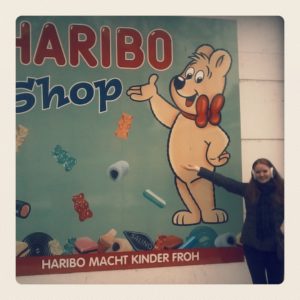 Hi everyone! It’s Holly here with another blog post from Germany and after having been back in Scotland for a couple of weeks for the Christmas holidays, I am looking forward to getting back into the German way of life.
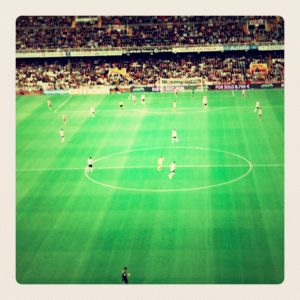 Bienvenido a todo el mundo to Grace’s first On Location Spanish update of 2013! I hope the New Year has gotten off to a great start for you all, and without further ado I’d like to tell you about my first months back in Valencia.
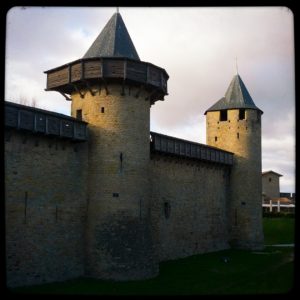 Bonjour à tous et à toutes et bienvenue à ma première entrée de blog de l’année 2013! Since we last spoke, I flew back home to Scotland to spend the festive period with all my family and friends; I travelled to places like Paris and Barcelona to visit friends; and I recommenced my studies and my life in Toulouse. Whilst I am thoroughly enjoying my time here in France, it was great to be able to return, albeit rather briefly, to all the old faces and familiar climes; the fact always remains that on n’est nulle part mieux que chez soi – there’s no place like home!
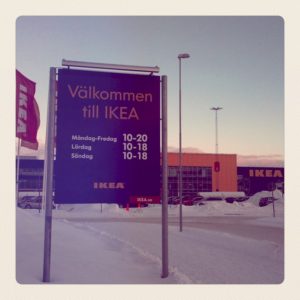 Hej allihopa! Och välkommen tillbaka! I hope you all had a great Christmas and New Year, and have entered 2013 feel refreshed, revitalised and (hopefully!) with a resolution to learn some more Swedish! To ease back into January I thought it could be interesting to look at some Swedish stereotypes and phrases associated with them, as it was not until I returned home for Christmas that I realised just how well some of these stereotypes really fit reality (although not always, of course!).
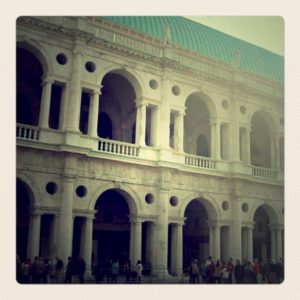 Buongiorno a tutti and welcome back to On Location Italian. After having a great Christmas and New Year at home with all the family, I am ready to jump straight back into my life as an Erasmus student in Verona. Unfortunately my first week back was consumed by exams. Once they were done and dusted, however, I had some free time to explore some more of the beautiful cities surrounding Verona. First stop, Vicenza. I was fortunate enough to have a friend from this elegant city. He pointed out the work of Andrea Palladio and his style of architecture known as Palladian, often characterised by the use of pillars, which was influenced by the formal classical styles of the temples of ancient Greece and Rome and which has had an influence on architecture in many other countries.
 ¡Hola a todos! It’s Iain here from Salamanca, and it gives me great pleasure to welcome you back to On Location Spanish to follow my second term here on Erasmus exchange in Spain.