CBF-ER 1.07 | Nissa La Bella

Our destination for episode 7 of En Route avec Coffee Break French is “Nice the beautiful”, as the city is referred to in the unofficial anthem which is in the local dialect, Niçard. In this episode Mark visits Nice, takes a ride on a vélotaxi and has a Coffee Break with a friend from Scotland who now lives and works in the area.

Listen to the lesson

The audio lesson is free, as are all the main audio lessons of En Route avec Coffee Break French. Use the audio player above to listen to the lesson, or subscribe in Apple Podcasts to receive this lesson and all future lessons automatically. If you can’t see the player above, click here to access the lesson.

Accessing the Premium Version

thumb-cbf-enroute-season1
In the full course of En Route you’ll get access to every episode as it’s released. The premium version includes additional materials which will help you move forward more effectively with your French studies:

  • transcripts: read every word of French included in the conversations;
  • vocabulary lists: in addition to the transcripts, we’ll provide vocabulary lists to help you understand everything that’s said;
  • bonus audio materials: where an edited version of an interview is included in the main lesson, we’ll provide the full recording in the course to allow you to develop your comprehension skills further;
  • exclusive video content: in addition to recording interviews in the south of France, the Coffee Break Team also filmed some video content and this video material is included in the course. Please note that these are not video versions of the interviews.

The En Route course can be accessed on the Coffee Break Academy.

Subscribe links

Subscribe on Apple Podcasts | RSS Feed | Purchase full course

How to say “Cheers” in Irish … and much more!

Here at Coffee Break Languages we want to help share our love of languages with a worldwide community of language learners, and that’s why we’re celebrating St Patrick’s Day by making our course in Irish Gaelic available for free on YouTube. In this course you’ll learn to introduce yourself, make conversation with other Irish speakers, and crucially learn to say “cheers” as you toast your friends on Lá fhéile Pádraig, St Patrick’s Day.

So how do you say “Cheers”?

“Cheers” in Irish is sláinte which is pronounced a bit like “slawn-che”. Sláinte means “health”, and if you’re feeling brave, you can say sláinte is táinte (“slawn-che iss toin-che”), meaning “health and wealth”. “Cheers” is one of the words included in lesson 10 of our course. Also included in lesson 10 is “I love you”, which you may also need this St Patrick’s Day weekend!

What is Irish Gaelic?

Irish Gaelic is spoken by around 75,000 people in the Republic of Ireland and in Northern Ireland and it’s also an official language of the European Union. In the Republic of Ireland, Irish enjoys official status and the Irish words for a number of public titles and organisations have been adopted into Irish English, e.g. Garda (police), Dail (parliament), and Taoiseach (Prime Minister).

Irish is a member of the Celtic language group which includes Scots Gaelic, Welsh, Breton, Cornish and Manx. It’s closely related to Scots Gaelic and Manx, and an Irish speaker may understand a fair amount of written Scots Gaelic or Manx, though there is more variation in the spoken language, making it less mutually intelligible.

One important thing: make sure you know how to pronounce the word Gaelic properly: for Irish Gaelic, “Gael-” rhymes with the English word “sail”, while for Scottish Gaelic, “Gael-” rhymes with the English word “shall”!

What’s One Minute Irish?

Our One Minute Languages courses feature ten lessons and cover the absolute basics of the language. You’ll learn basic greetings and useful words, numbers 1-10, asking people “how are you?” and answering the question yourself and you’ll learn to say that you can speak a little Irish. You can access the full 10-lesson course in the video playlist below, or head over to our YouTube channel.

How do you say “Happy St Patrick’s Day” in Irish?

One final thing: since we’re making this course available for free to celebrate St Patrick’s Day, it’s only right that you learn how to say “Happy St Patrick’s Day” in Irish! Here’s a list of useful expressions:

  • Lá fhéile Pádraig sona dhuit! – Happy St Patrick’s Day to you (singular)
  • Lá fhéile Pádraig sona dhaoibh! – Happy St Patrick’s Day to you (plural)
  • Beannachtaí na Féile Pádraig dhuit! – St Patrick’s Day blessings to you (singular)
  • Beannachtaí na Féile Pádraig oraibh! – St Patrick’s Day blessings to you (plural)
We hope you enjoy learning some Irish with One Minute Languages. There will be more free courses on YouTube soon!

CBI 2.25 | Chi è quella persona che lavora in biblioteca?

In this episode you’ll learn everything you need to know about asking questions in Italian. We’ll cover come, dove, quando, chi, perché, quale, quali, quanto/a/e/i and, of course, che, che cosa and cosa! By the time you’ve completed this lesson you’ll be able to satisfy your curiosity in Italian by asking any question.

CBG 2.25 | Ich habe mich sehr gut entspannt

It’s time to look at reflexive verbs in the past. In this lesson you’ll learn to say what you enjoyed, what you complained about and what you looked forward to, and much more besides! Julia is back with a cultural correspondent segment on an area in Italy where German is spoken, Südtirol.

CBF-ER 1.06 | Les Villes Frontalières

In this episode we’re investigating an interesting aspect of life in this part of France: what it’s like to live and work in a border town. Mark travels north to the town of Breil-sur-Roya, and to do so he has to cross the border between France and Italy a number of times. Through the conversations featured in this extended audio episode you’ll learn about life in les villes frontalières.

Listen to the lesson

The audio lesson is free, as are all the main audio lessons of En Route avec Coffee Break French. Use the audio player above to listen to the lesson, or subscribe in Apple Podcasts to receive this lesson and all future lessons automatically. If you can’t see the player above, click here to access the lesson.

Accessing the Premium Version

thumb-cbf-enroute-season1
In the full course of En Route you’ll get access to every episode as it’s released. The premium version includes additional materials which will help you move forward more effectively with your French studies:

  • transcripts: read every word of French included in the conversations;
  • vocabulary lists: in addition to the transcripts, we’ll provide vocabulary lists to help you understand everything that’s said;
  • bonus audio materials: where an edited version of an interview is included in the main lesson, we’ll provide the full recording in the course to allow you to develop your comprehension skills further;
  • exclusive video content: in addition to recording interviews in the south of France, the Coffee Break Team also filmed some video content and this video material is included in the course. Please note that these are not video versions of the interviews.

The En Route course can be accessed on the Coffee Break Academy.

Subscribe links

Subscribe on Apple Podcasts | RSS Feed | Purchase full course

CBI 2.24 | Chi va a Roma perde la poltrona

In this lesson we’re focusing on combining the Perfect and the Imperfect which together allow us to tell stories in the past. You’ll consolidate what you already know about each of the tenses and you’ll recognise certain words and expressions which trigger the Perfect or the Imperfect. Francesca also has some mystery Italian personalities for us to identify in the Caffè Culturale.

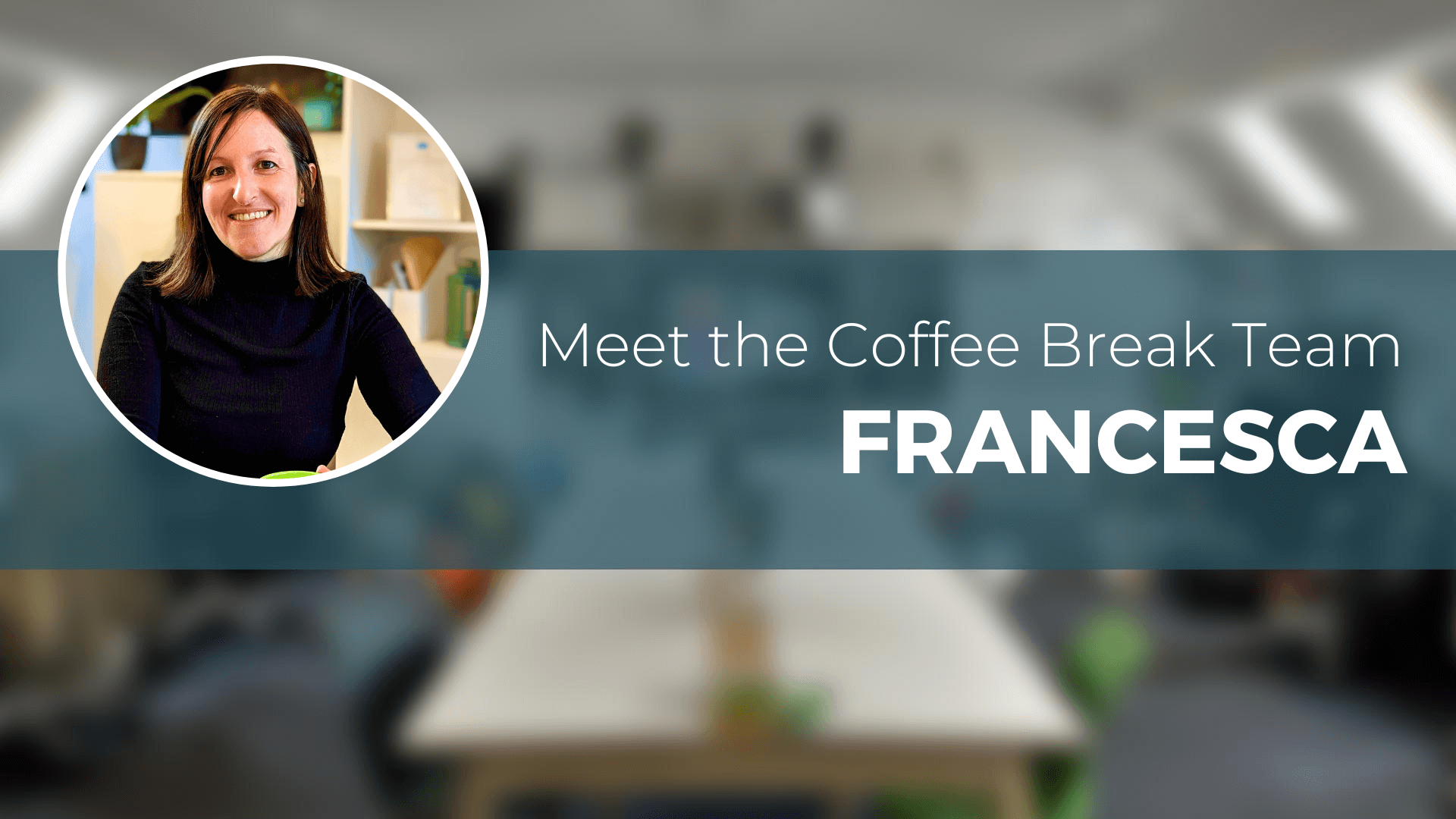
Meet the team: Francesca

Francesca imageCiao, I’m Francesca and I’m one of the Coffee Break Italian podcast co-hosts. I joined Radio Lingua in 2014 when I witnessed the birth of Coffee Break Italian and since then I have been involved in so many other exciting projects! I have also been teaching Italian for more than a decade at university in beautiful Scotland. I’m so lucky to have jobs I’m very passionate about!

What is your role in Coffee Break?

My role is varied as I am not only the Italian voice you hear in the podcast, but I also deal with the design of course outlines and content. In other words, I’m responsible for deciding which grammar points, vocabulary and communicative aspects are included in each episode of Coffee Break Italian. I also contribute to the creation of all Italian content for CBTV and, when possible, join the Coffee Break team at events where we get to know our listeners in person.

Francesca and Pierre-Benoît at the Language Show in London

What experience have you had speaking and learning other languages?

I started learning English in Italy when I was about 11 and it was love at first sight! I think it provided me with a different way of looking at the world, so I decided that I would never abandon it! When it came to choosing my secondary school, I opted for Liceo Linguistico where, amongst other subjects and English, I learned French, German and Latin. I then studied English and Russian at the University of Trieste, where I specialised in Translation and Interpreting. As part of my degree I was lucky enough to have the opportunity to spend some time abroad: I did my Erasmus year near London and I took part in an exchange programme at the Moscow State Linguistic University. I must say that my love for foreign languages includes my own beautiful native Italian which I have been teaching for years after obtaining a Masters in Teaching Italian as a Foreign Language (DITALS) from the University of Siena. I taught Italian in Kyiv for a year and I have been teaching Italian in Scotland since 2009. I never tire of learning new things about languages and I try to keep actively using the languages I know, including the recently added Spanish and my dialect, Piedmontese!

Francesca in Ukraine

What are your favourite memories of working with Coffee Break?

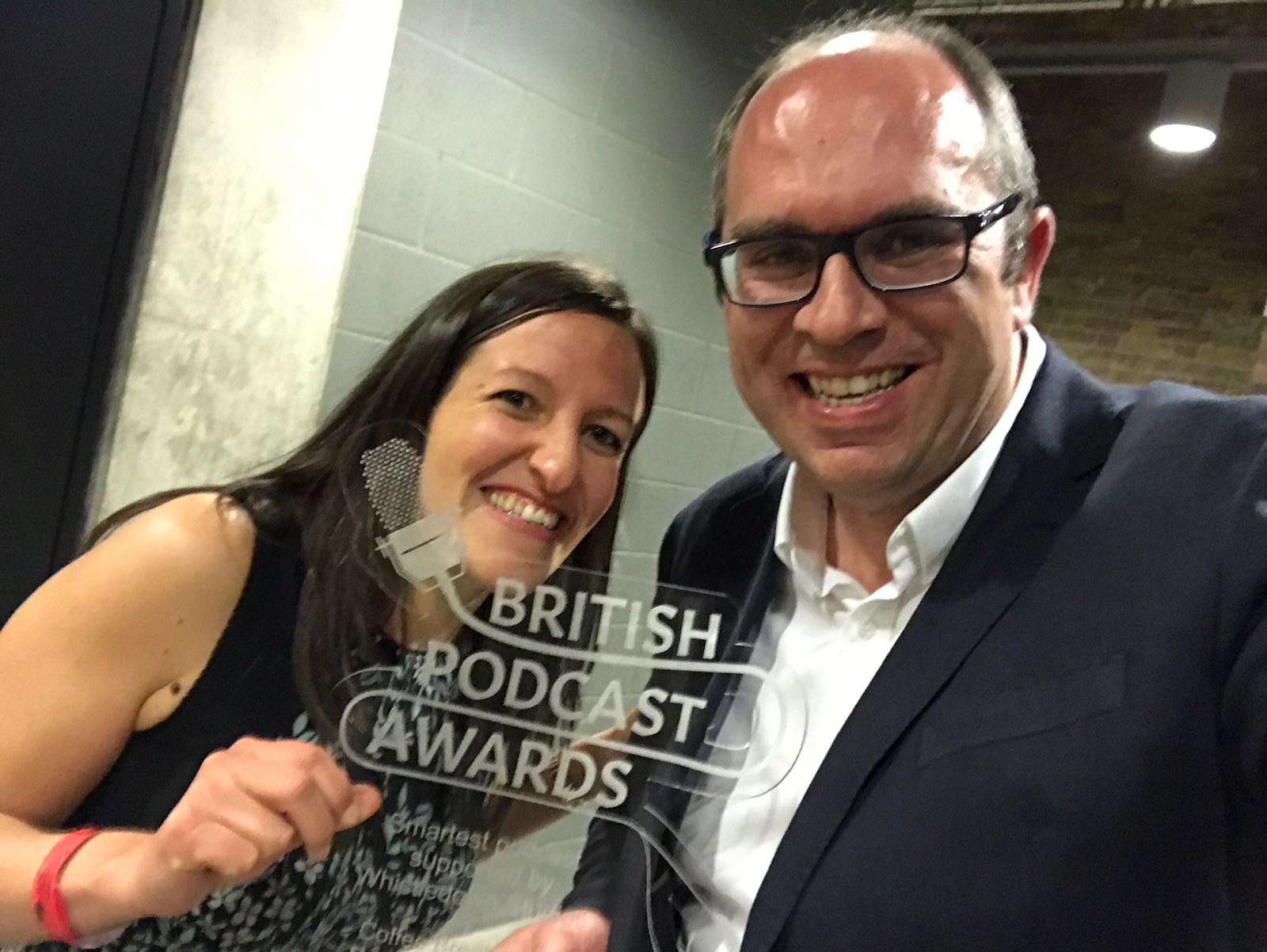
I have so many nice memories with the lovely people at Coffee Break Languages, but two in particular are very dear to me. The first one dates back to April 2016 when Mark, Katie and I were at Lake Maggiore filming and recording the last ten episodes of Season 1 of Coffee Break Italian. One day we decided to visit Pettinengo, the mountain village where I grew up and where all my family still live. We went around interviewing the locals (the pharmacist, the barista, the owner of the only grocery shop), chatting with familiar faces and visiting my parents. It was very emotional being back home and listening to the tales from the past that everyone had to tell. Despite being away from Pettinengo for so long, on that occasion I felt I belonged there and I could never thank Mark enough for giving me such a privileged way to rediscover my roots! The other special memory is in 2017 when Coffee Break Italian won the British Podcast Award for the category ‘Smartest podcast’! Mark and I attended the event in London and I still remember those never ending seconds prior to the announcement being made! Che emozione!

Interviewing native speakers on the shores of Lake Orta

Where would your ideal coffee break be, and with whom?

My ideal coffee break is very simple but very special to me. It’s sitting under the wisteria tree on the terrace back at home in Italy chatting with family and friends in the long summer evenings.

What’s your best language-learning tip?

Language learning must be a pleasure and it only happens when you are enjoying it and you are highly motivated. My tip is try not to be afraid of making mistakes and accept them as part of the learning process. Once you have overcome that barrier, things will get easier. Grab every single opportunity to speak and do something with that language. Don’t leave it in the grammar book! Learning by doing is the best way to put all those hours of study into practice.

Francesca and Mark winning the British Podcast Award for Coffee Break Italian

Quick-fire round

  • Favourite language: English
  • Favourite word/phrases in that language: I have a full list of words and phrases which I love in English. Here are three of my favourite ones:
    • Bob’s your uncle!
    • Whatever!
    • Glaikit (in Scottish!)
  • Favourite film: Pane e Tulipani
  • Favourite TV show: any cooking programme!
  • Favourite book: La casa de los espíritus by Isabel Allende
  • Favourite singer: Belle and Sebastian
  • Favourite destination: I don’t have a favourite destination, but that magic of abandoning mainland to reach Venice by train is unbeatable

Do you have a message for the Coffee Break community?

If you are reading this page it’s because, like me, you are also a language enthusiast. It’s great to see that the world is not monolingual and hopefully more multilingual people will contribute to making this planet a better place where we can all learn from one another and understand each other better!

CBG 2.24 | Wovor fürchtest du dich?

In this episode you’ll learn to use reflexive verbs in German. In addition to being able to talk about “washing yourself” and “scratching yourself” (among other things!), you’ll also learn to talk about looking forward to things, relaxing, deciding, catching a cold, getting annoyed, remembering things and complaining! Reflexive verbs are hugely important and this lesson will equip you with everything you need to know!

Practice makes perfect: 1-on-1 lessons with italki

Since 2006 we’ve been providing language courses for learners around the world and we believe that Coffee Break provides the perfect solution for learners starting out with a language, or building their comprehension skills to take their learning further. Through Coffee Break French, German, Spanish, Italian and Chinese, you can build a solid understanding of the language and learn to use it in a wide variety of situations. However, one area we can’t help you with directly is with your speaking skills, and that’s why we’ve teamed up with italki, a leading provider of 1-on-1 language teachers and native speakers with whom you can practise what you’ve learned on Coffee Break.

italki offers lessons and practise sessions from the comfort of your own home. You can connect with hundreds of teachers and native speakers of your chosen language and schedule a live 1 on 1 session to put into practice the language you’re learning in your Coffee Break course.

How does it work?

Scheduling an italki lesson couldn’t be easier.

  1. Browse the italki profiles of professional teachers and tutors and select a teacher based on their experience and reviews from other learners. Many teachers and tutors offer a trial session so that you can decide if they’re a good match for you.
  2. Choose a time and date which suits you for your live lesson.
  3. Connect with your chosen teacher at the appointed time via Skype or other video chat software.

Watch the video below for more information on italki.


Why do we recommend italki?

Learning a language is about both “receptive skills”, or “input”, where you learn to understand the written and the spoken language. The Coffee Break lessons will help you develop your understanding, your knowledge of grammar and the patterns of the language, and your ability to use the language yourself. It’s also about “productive skills”, or “output”, where you’re “producing” the language by talking and writing it. Through our lessons and particularly our bonus audio materials, we help you to train yourself on knowing the right word or phrase to use at the right time. The missing element is getting the all-important feedback on whether what you are saying is, in fact, right. That’s where a friendly native speaker or teacher comes in, and that’s why we’ve partnered with italki.

A special offer for Coffee Break learners

We’ve also been able to put in place a special offer for Coffee Break learners: when you purchase your first live lesson with a teacher or native speaker on italki, you’ll receive a voucher for $10USD in italki credits. Please note that this offer is only available for new italki users.

Coffee Break language courses provide you with the best language training on the planet, and italki connects you with the best teachers and native speakers to practise what you’ve learned!

CBI 2.23 | Cosa facevi quando ti ho telefonato?

In this lesson we’re focusing on combining the Perfect and the Imperfect which together allow us to tell stories in the past. You’ll consolidate what you already know about each of the tenses and you’ll recognise certain words and expressions which trigger the Perfect or the Imperfect. Francesca also has some mystery Italian personalities for us to identify in the Caffè Culturale.

Introducing the Coffee Break Reading Club

Here at Coffee Break Languages, we’ve been very busy putting together a brand new course in response to the Coffee Break community’s requests for more reading content. We’re delighted to launch the Reading Club today in French, German, Italian and Spanish!

The Coffee Break Reading Club has been designed to help intermediate learners build their vocabulary and comprehension skills, while learning about many aspects of culture of the countries and areas where the languages are spoken. There are texts on sporting activities, cultural events, tourist attractions, customs and traditions, and many more topics.

How does it work?

It couldn’t be easier to take part in this new course: we simply send you an email every week for the next year. If you can put aside 10-15 minutes – the perfect coffee break! – once a week, then you’re well on your way to improving your comprehension skills in the language you’re learning.

The basic version of the Reading Club is absolutely free: you can sign up and we’ll send you the weekly texts. If you prefer, there’s also a premium version of the Reading Club. If you’d like vocabulary lists, a comprehension exercise, and the exclusive audio version of the texts where you can listen to a native speaker reading the text at a normal speaking speed and a slower version, then you can access the premium version of the Reading Club.

Interested? Read on!

It’s really easy to access both the free version and the premium version of the Coffee Break Reading Club. Simply click on the links below:

We’re sure that you’ll enjoy building your reading skills with the Coffee Break Reading Club.

CBF-ER 1.05 | Sur la Moyenne Corniche

In this episode Mark is travelling from Nice to Monaco, along one of Europe’s most impressive roads, la Moyenne Corniche. Clinging to the cliffs with sheer drops to the sparkling waters of the Mediterranean on one side, this road travels through Villefranche-sur-Mer, Èze, Cap d’Ail, Beausoleil and on to Monaco. As you join Mark en route, you’ll listen to a series of informative conversations he has with people visiting the region and working there.

Listen to the lesson

The audio lesson is free, as are all the main audio lessons of En Route avec Coffee Break French. Use the audio player above to listen to the lesson, or subscribe in Apple Podcasts to receive this lesson and all future lessons automatically. If you can’t see the player above, click here to access the lesson.

Accessing the Premium Version

thumb-cbf-enroute-season1
In the full course of En Route you’ll get access to every episode as it’s released. The premium version includes additional materials which will help you move forward more effectively with your French studies:

  • transcripts: read every word of French included in the conversations;
  • vocabulary lists: in addition to the transcripts, we’ll provide vocabulary lists to help you understand everything that’s said;
  • bonus audio materials: where an edited version of an interview is included in the main lesson, we’ll provide the full recording in the course to allow you to develop your comprehension skills further;
  • exclusive video content: in addition to recording interviews in the south of France, the Coffee Break Team also filmed some video content and this video material is included in the course. Please note that these are not video versions of the interviews.

The En Route course can be accessed on the Coffee Break Academy.

Subscribe links

Subscribe on Apple Podcasts | RSS Feed | Purchase full course

CBG 2.23 | Hilfst du deinen Kindern bei ihren Hausaufgaben?

We’ve already covered the topic of family in Coffee Break German, but in this lesson you’ll learn how to talk about your extended family, and deal with possessive pronouns in the nominative, accusative and dative cases. Is it mein, meine, meinen, meinem or meiner? By the end of this lesson, you’ll know!

Is Hungarian a hard language to learn? 5 reasons why learning Hungarian is “csodálatos” (wonderful!)

Hungarian city landscape

Hungarian is spoken by roughly 14 million people in eastern Europe. It’s the official language, of course, in Hungary, and it’s also spoken in parts of Romania, Slovakia and other bordering countries. But is Hungarian a hard language to learn?

You may have heard that Hungarian is one of the toughest languages to tackle. Let’s explore whether that reputation is deserved—and why it’s still worth your time, as even just a little language can go a long way. 

Is Hungarian a hard language to learn?

If the question is whether Hungarian is a hard language to learn or not, some will say that this can be one of the most challenging languages for English speakers to learn. Unlike many European languages, the language isn’t part of the Indo-European family.

Instead, it belongs to the Uralic languages group, which means its grammar, vocabulary, and structure are very different from the Romance and Germanic languages, with which many learners are more familiar. For instance, Hungarian relies heavily on agglutination – a method of forming words and grammatical structures by adding prefixes, suffixes, and infixes to root words, which can make the language feel a bit overwhelming. 

So, yes, Hungarian is a hard language to learn for English speakers due to its differences in grammar and vocabulary. However, it’s also highly logical, phonetic, and rich in culture, making it an incredibly rewarding challenge.

5 reasons learning Hungarian is csodálatos and worth it!

Now you know why Hungarian is a hard language to learn, or at least considered… But are you ready to find out why this unique language offers a rewarding and wonderful challenge for learners?  

Check it out!

1. Beauty from within

Most people will find the sound of Italian or Spanish very melodious, whether they understand the language or not. Hungarian, even though it sounds nice to begin with, is a language that gets increasingly beautiful the more you learn. 

There are countless puns and twists in the Hungarian language, not only in poetry and idioms but also in everyday speech. Very often, these defy translation and are guaranteed to entertain any language learner.

2. A logical language

Every language has its own system, its own “logic”. When you learn a new language, it’s not just about the words, it’s also about understanding that logic. Learning a language based on a different logic helps you better understand how your own language works. 

Hungarian grammar is very different from English grammar. In Hungarian grammar, words are linked together through the way they sound, which also gives the language a great flow and melody. Although Hungarian is a hard language to learn, the grammar itself is mostly logical and once you manage to get your head around it, it becomes second nature.

3. Overcoming the challenge

If you’re the type of person who likes a challenge and to do something entirely new, learning Hungarian is a wonderful option. The great news is, many aspects of the language are easier than you may think. 

For example, the alphabet is mostly phonetic, which means that once you learn how to pronounce each letter, you’re good to go. There’s even more good news: you only have to learn three tenses (past, present, future) and wait for it … there is no gender!

4. A helping hand with the language

It goes without saying that Hungarians are a very friendly and welcoming people, but if they find out you’re learning their language, they will be even more delighted and eager to help you embark on this adventure. While English is spoken in larger cities, a knowledge of Hungarian, even just a few words, can make a great difference, allowing you to meet people, make friends and learn more Hungarian.

5. A cultural wonder

From Aggtelek’s magnificent limestone caves to the lively shores of Lake Balaton, the largest lake in Central Europe, from the fascinating Hortobágy National Park to one of the most beautiful European cities, Hungary’s capital, Budapest, Hungary has countless wonders to see. However, experiencing Hungary is so much more than the tourist attractions. Hungarian culture is one of the richest and most well-preserved in all of Europe. 

Catching a performance and táncház (lit. dance house) of Hungarian folk dances, as well as trying traditional food like the töltött káposzta or a proper pörkölt (stew), are essentials on a trip to Hungary. But most of all, they are going to make you fall in love with Hungary and leave you with a desire to learn Hungarian.

Speaking of which, now that you know why it’s csodálatos learning Hungarian, if you want to take your first steps in getting to know this wonderful language, One Minute Hungarian is the place to start. While it won’t make you fluent in the language, if you follow each lesson and learn all the words and phrases covered, you will be well on your way to interacting with native Hungarian speakers. 

If you’d like to continue discovering the beauty of other languages, why not check out the article we’ve prepared, featuring a few charming words in Italian? Read now!


CBC 1.22 | Parts of the body and dealing with illnesses in Chinese

When you’re travelling things don’t always go according to plan and you may have to visit a doctor or pharmacist. In this lesson you’ll learn the words for various parts of the body in Chinese, and to explain that you’re feeling unwell. By the end of this episode you’ll be able to explain to a doctor or pharmacist which part of your body is sore and if you have any other symptoms.

CBI 2.22 | Preparavo la cena quando Luca è arrivato

We’ve now learned both the Perfect Tense and the Imperfect Tense in Italian, but when do you use which tense? ​In this episode of Coffee Break Italian we’ll be talking about “thtooms” and “dum-de-dum-de-dums”. This is Mark’s method of explaining how you can combine the Perfect Tense and the Imperfect Tense in one sentence to talk about what was happening when something else happened. You’ll also learn an alternative translation of the Imperfect which involves beaches at sunset!

Is Chinese hard to learn? 2 aspects that prove that learning the language is easier than you think!

Chinese landscape showing the Great Wall of China and mountain in the background

Have you ever wished you could speak Chinese but been put off by the difficulty? We often hear people, particularly in the West, say ‘Chinese is the most difficult language in the world’. But is Chinese hard to learn, or is it simply a matter of perspective? 

People are often put off by the seemingly complicated characters, the unfamiliar sounds, and the speed at which native speakers appear to speak. But is it simply the fear of the unknown that is holding you back? We’re going to take a look at what are reported to be the two most daunting aspects of Chinese: characters and pronunciation. You’ll see that, when broken down, these aspects are a lot easier to learn than you might think!

Is Chinese hard to learn? The logic behind Chinese characters

Your first experience with a foreign language may likely be a language such as French, German or Spanish, which uses a Latin script, just like English. Therefore, when you see a phrase like 三个中国人, the unfamiliar appearance of the script itself may initially seem unfathomable! 

How will you know how to pronounce it? How can you learn a language with no alphabet? How can you remember all those characters? Well, let’s see why Chinese is not so hard to learn, as its characters are a lot more logical than they may appear.

Pictograms and Ideograms

Some of the oldest characters, and the first Chinese characters you may learn, are pictograms. In simple terms, this means that you are simply drawing a picture of the thing itself to write the word. Take these words:

  • means tree. Can you visualise it?
  • 林 lín means woods. (represented by 2 trees)
  • 森 sēn means forest. (represented by 3 trees)

By remembering one pictogram, you now have three new words! Compare to French:

  • un arbre  
  • un bois
  • une forêt

You would have to learn these words individually and learn how to spell them. If spelling isn’t your forte, Chinese is the language for you!

Many characters are also ideograms: they represent not something physical like a tree, but an idea. For example, the characters 一 yī, 二 èr, and 三 sān are abstract representations of the numbers one, two and three.

Radicals and compounds

Chinese can be hard to learn, but the good news is that abstract ideas are often represented through radicals. A radical is a small part of the character which tells you something about the meaning of the word. For example, the radical (meaning mouth) is often featured in characters which relate to eating.

Unlike basic characters such as or 一, most characters are compounds. Compound characters are made up of components with different language functions. There are three functions:

  1. Meaning – there are 214 radicals in Chinese, which can tell us something about the meaning of a character, such as: it’s made of wood, it’s related to water, it’s tall. Once you’ve learned some words which contain these radicals, it will get much easier to guess the meaning of a word by looking at the character. For example, most body parts contain the radical , like these: 腰 yāo (waist), 腿 tuĭ (leg), 脚 jiăo (foot).
  2. Pronunciation – Once you know a few characters, you can often guess the pronunciation of a word because the characters have similar elements. For example, take 爸 bā meaning father and 把 bă meaning to hold. Both contain the component, which tells you that it is pronounced ba.
  3. Distinctive particle – A character may also contain an “empty component” which has the sole function of distinguishing it from other characters.

If you are wondering, ‘is Chinese hard to learn?’, you’ll be glad to know that characters are the hardest part! Yet, hopefully, now you can see that it’s not all squiggly lines and pictures: the system is logical when you get used to it.

Remember our phrase from earlier? 三个中国人, perhaps it is a little less daunting now. It actually means three Chinese people.

  • 三 sān is an ideogram; it means three.
  • 个 ge is a measure word, which often follows numbers. This character is really useful. If you see it, you know that something is being counted.
  • 中 zhōng means middle. As you can see, it is a rectangle with a line down the middle, so it is super easy to remember!
  • 国 guó means country. It is a compound character made up of 囗 wéi, a radical indicating enclosure and 玉 yù, a component which represents the Emperor. Therefore, this character represents a country or nation, defined by an enclosed area which is ruled or governed. Pretty cool right? For historical reasons, China is known as 中国 Zhōngguó, the middle kingdom. Most country names contain the character 国 guó e.g. 英国 Yīngguó (United Kingdom), 法国Făguó (France), 美国 Mĕiguó (United States of America).
  • 人 rén means people. Thus, 中国人Zhōngguórén means Chinese person.

In English, you can’t say I am a middle country person. You must use a completely new word, Chinese, to express the concept. 

Understanding radicals and compound characters shows that the system is more logical than you might think. So, is Chinese hard to learn? Once you recognise these patterns, you’ll see it’s not as daunting as it first appears – Chinese is great for minimising the new words you have to learn!

Pronunciation panic

Another key factor in deciding whether ‘Is Chinese hard to learn?’ is its pronunciation. You may have heard that Chinese is a tonal language, and this can put a lot of people off. This just means that two words may have the same pronunciation, but they are spoken at a different pitch. 

While tonal languages may seem intimidating at first, this feature actually simplifies communication over time. After all, these pitch patterns can take a while to get used to, but native speakers are often very patient and will mostly understand you even if you don’t get the tones quite right. Thankfully, Mandarin has only 4 tones, compared to several other Asian languages with many more, such as Cantonese or Thai. Compared to several European languages, Chinese has a lot less sound variation.  

Here are two lovely aspects of Chinese pronunciation:

Stress 

You don’t have to stress about stress! Compare these three sentences:

  • English: English isn’t easy.
  • Spanish: Inglés no es fácil.
  • Chinese:      (Yīng wén bù róng yì)

We’ve put the stressed syllables in bold. Did you notice that the Spanish sentence had two accented words? If you’ve studied Spanish, you’ll know that if a word doesn’t follow Spanish stress patterns, it needs an accent. 

Each Chinese syllable is given equal stress, so stress patterns are one less thing to memorise! In fact, most Chinese words have only one syllable anyway – no need to worry about getting tongue-tied pronouncing long words! Each syllable is made up of initials and finals (word beginnings and word endings), and once you learn these sounds, you will be able to pronounce any initial and final combination, proving that Chinese is not that hard to learn!

Spelling 

Throughout this article, we’ve been using Chinese characters combined with words written in the “English” alphabet or, to give it its proper name, the Latin alphabet. This method of writing Chinese in the Latin alphabet is called pinyin. 

Pinyin can help beginners with pronunciation before they have mastered the characters. Pinyin also uses four different “accents” representing the language’s tones, so this helps you know how to pronounce each word. 

And the great news is that once you’ve learned all the sounds of pinyin, there are no pronunciation exceptions!  For example, the words liáng, biáng, jiáng all have the same finals, therefore, they will always be pronounced the same. Compare this to English words like rough, though, and through. Despite appearing to have the same endings, you must learn a different pronunciation for each one!

So, is Chinese hard to learn? Like any other language, Chinese has its challenges. But if characters and pronunciation are the hardest parts, maybe Chinese isn’t the hardest language in the world after all. Chinese is very simple to learn after the initial hurdles. 

The hardest part is getting started! And talking of getting started, we have the perfect method to help you learn Chinese: with Coffee Break Chinese, you can take your first steps in the language. Now you know it’s far from “the most difficult language in the world”, there’s nothing stopping you!

CBG 2.22 | Mein Vater wohnte lange in einem kleinen Dorf

So far in Coffee Break German we’ve learned to use haben, sein and some modal verbs in the Präteritum. In this lesson Andrea and Mark look at other verbs in the Präteritum which are not used commonly in spoken German, but you’ll find them in any story you read. You’ll also learn about some irregular verbs in this tense, including kommen and gehen, and Julia is on hand to tell us about two very famous German writers: Goethe and Schiller.

CBF-ER 1.04 | Aux Halles de Menton

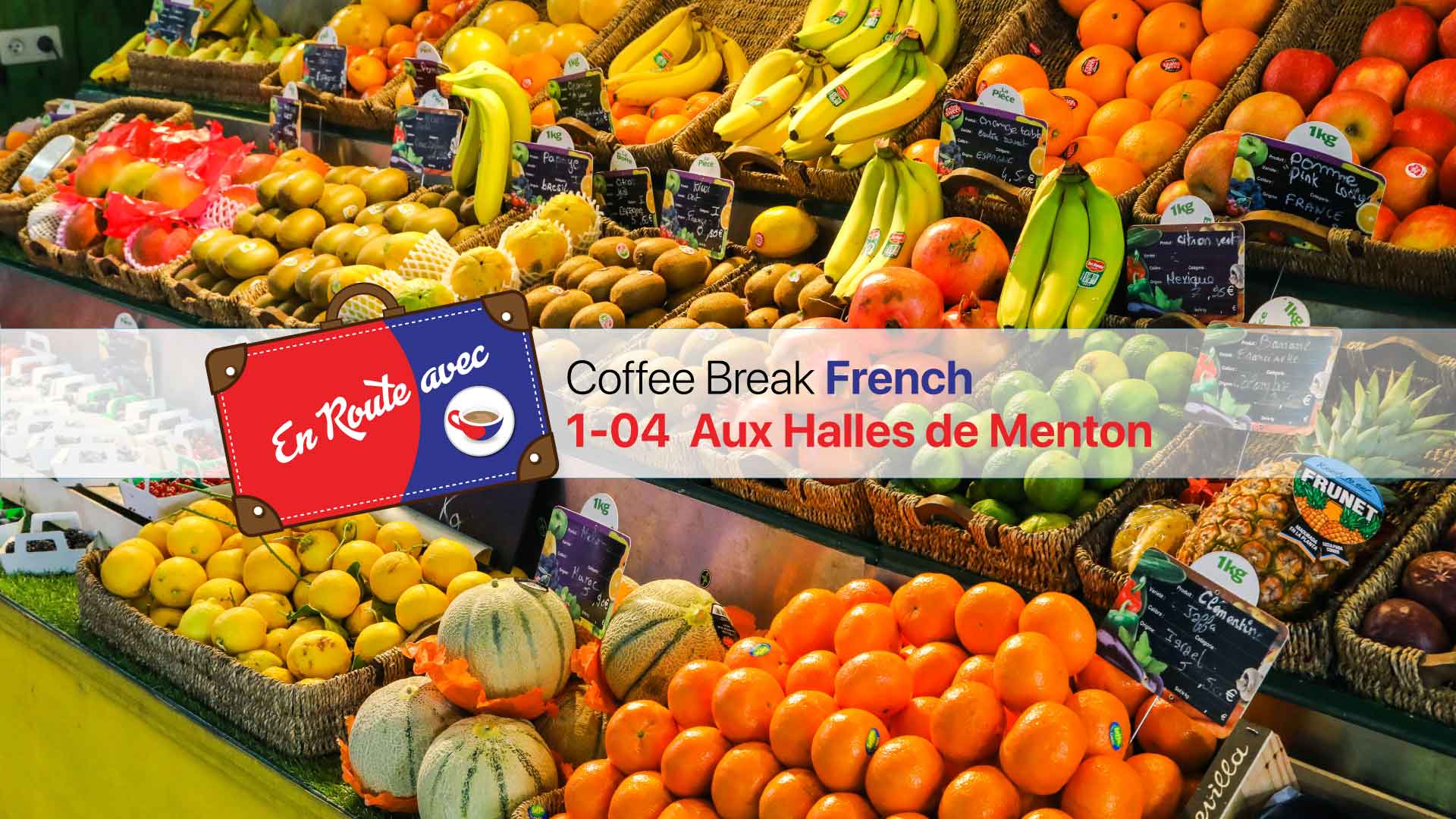
It’s market day in Menton and Mark brings you a fantastic episode, full of new vocabulary, featuring interviews with various stall holders in the covered market in Menton. You’ll hear about fish, spices, olives, fruit and vegetables and much more.

Listen to the lesson

The audio lesson is free, as are all the main audio lessons of En Route avec Coffee Break French. Use the audio player above to listen to the lesson, or subscribe in Apple Podcasts to receive this lesson and all future lessons automatically. If you can’t see the player above, click here to access the lesson.

Accessing the Premium Version

thumb-cbf-enroute-season1
In the full course of En Route you’ll get access to every episode as it’s released. The premium version includes additional materials which will help you move forward more effectively with your French studies:

  • transcripts: read every word of French included in the conversations;
  • vocabulary lists: in addition to the transcripts, we’ll provide vocabulary lists to help you understand everything that’s said;
  • bonus audio materials: where an edited version of an interview is included in the main lesson, we’ll provide the full recording in the course to allow you to develop your comprehension skills further;
  • exclusive video content: in addition to recording interviews in the south of France, the Coffee Break Team also filmed some video content and this video material is included in the course. Please note that these are not video versions of the interviews.

The En Route course can be accessed on the Coffee Break Academy.

Subscribe links

Subscribe on Apple Podcasts | RSS Feed | Purchase full course