

One essential topic to master before going on a holiday to a German-speaking country is how to check into a hotel in German. For this, we first need to learn how to say ‘hotel’ in German and ask for a Einzelzimmer single room or Doppelzimmer double room for example, as well as master some phrases using the verb haben.
In this blog post, we’ll explore the necessary vocabulary and grammatical constructions to make your hotel check-in easier. Don’t forget to press play to listen to the podcast while or after reading the article to improve your pronunciation.
How to say ‘room’ or ‘hotel’ in German
Let’s dive right in and start with some basic vocabulary you need to know when starting your holiday: how to say ‘room’ and ‘hotel’ in German.
- Hotel (n) hotel
- Reservierung (f) reservation
- Zimmer (n) room
Most of these words are straightforward and once we start combining them with the verb haben to have and for example our name, we can start forming sentences to check in to a hotel in German.
- Guten Tag, mein Name ist Samuel Smith und ich habe eine Reservierung. Good day, my name is Samuel Smith and I have a reservation.
Answering questions when checking into a hotel in German
Now that you know how to say ‘hotel’ in German and the words for “room” and “reservation”, you are ready to move forward. Whether you were prepared and booked in advance or just walked into a hotel, once you walk up to reception, there are normally a few questions you will be asked in German.
Let’s have a look at what those might be and how you can answer them.
Guten Tag, kann ich Ihnen helfen? Good day, can I help you? – This question is the first phrase you will hear most likely when walking up to the reception.
- Auf welchen Namen? In what name?
- Haben Sie eine Reservierung? Do you have a reservation? – Here, your answer could be the sentence we saw above, or if your visit is more spontaneous, you could also answer Nein, ich habe keine Reservierung. No, I don’t have a reservation.
How to check in and ask for a room with ….
Now that we have covered the basic vocabulary for checking into a hotel, let’s have a look at some room specifications. To ask for these you can either use the expression we already learned Ich möchte gern(e) I would like, or you can form a question by putting the verb at the start Haben Sie … ? Do you have … ?
Here are some suggestions:
- ein Einzelzimmer / Doppelzimmer … a single room / double room
- mit Bad with a bath
- mit Dusche with a shower
- mit Balkon with a balcony
- mit Meerblick/Bergblick with a sea view / with a mountain view
That’s you! You know all the German you need to check into a hotel during your next stay in a German-speaking country. To finish things off, let’s have a look at a complete hotel conversation. Can you understand everything?
- Rezeptionist: Guten Abend, kann ich Ihnen helfen?
- Frau Siebert: Hallo, mein Name ist Frau Siebert. Ich möchte gerne ein Einzelzimmer
mit Bergblick. - Rezeptionist: Okay, haben Sie eine Reservierung.
- Frau Siebert: Nein, ich habe keine Reservierung.
- Rezeptionist: Okay, ich habe ein Einzelzimmer mit Balkon und Bergblick für 78€.
- Frau Siebert: Das ist perfekt, danke.
Großartig! If you saw the price for the hotel room and weren’t quite sure how you would say that number in German, have a look at our lesson about mastering higher numbers in German.
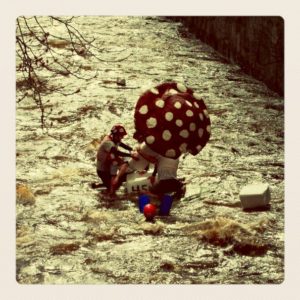 Hej! So, it saddens me to say that as I will be leaving Sweden soon, this will be my last blog post from Uppsala. That said, to not bring the mood down too much, my subject for today is Uppsala’s biggest yearly party, Valborg (also known as Sista April, or ‘last of April’), the anticipation of which literally puts a smile on everyone’s face and a spring in their step. It descends from the celebration of Walpurgis on the 30th April, which to this day remains a day of festivities all across Sweden, with large bonfires being organised up and down the country, reminding everyone of their Viking heritage. It celebrates the arrival of Spring in Sweden, and is accompanied by general merriment and frolicking amongst the student population of Uppsala.