Are you able to use comparative adjectives in English? Do you know the grammar rules?
One thing that can be tricky in English is when you want to make the comparative stronger or weaker. There are different ways we can do this and we just need to practise them to get them right!
The Coffee Break English Show is a podcast series of informal conversations to help you understand some difficult topics in English. In the latest episode, Nick and Mark look at how to use modifiers to strengthen (and weaken) comparative sentences.
Continue reading to find out more and why not listen to the podcast as you go?
So, let’s get started and look at comparative sentences!
A review of comparative adjectives in English
Here is a quick review of the grammar rules for comparative adjectives in English. If you would like more practice with comparative adjectives, check out Episode 1 of Season 3 of Coffee Break English!
One-syllable adjectives
clean >> cleaner than
big >> bigger than
small >> smaller than
Two-syllable adjectives with -y
happy >> happier than
funny >> funnier than
Adjectives with two or more syllables
expensive >> more expensive than
comfortable >> more comfortable than
Exceptions
fun >> more fun than
good >> better than
bad >> worse than
far >> further than
Modifying comparative sentences
We use modifiers to make comparative adjectives stronger or weaker. A modifier is a word that changes the meaning of a sentence, in this case making the sentence stronger or weaker. If you want to make your comparisons stronger you can use intensifiers. Common examples of English adverbs that intensify an idea are much, a lot and way. We can also use far and significantly in more formal situations.

But maybe you want to make your comparison less strong. In that case, you should use weakeners. Some common examples of English adverbs that weaken ideas are a bit, a little and slightly.

Sounding natural when making comparisons
When we use modifiers with comparative adjectives, we often change our intonation to emphasise what we want to say. This means that we often stress the modifier more than the adjective.
When we are making the meaning of the sentence stronger, we can stress the word in a loud and deep way. For example:
My dog is way bigger than yours.
When we want to say that the difference is small, we can still stress the modifier, but the intonation is different. We often make the sound of the word softer and our intonation goes up. Here’s an example:
I’m feeling a little better today.
It’s your turn!
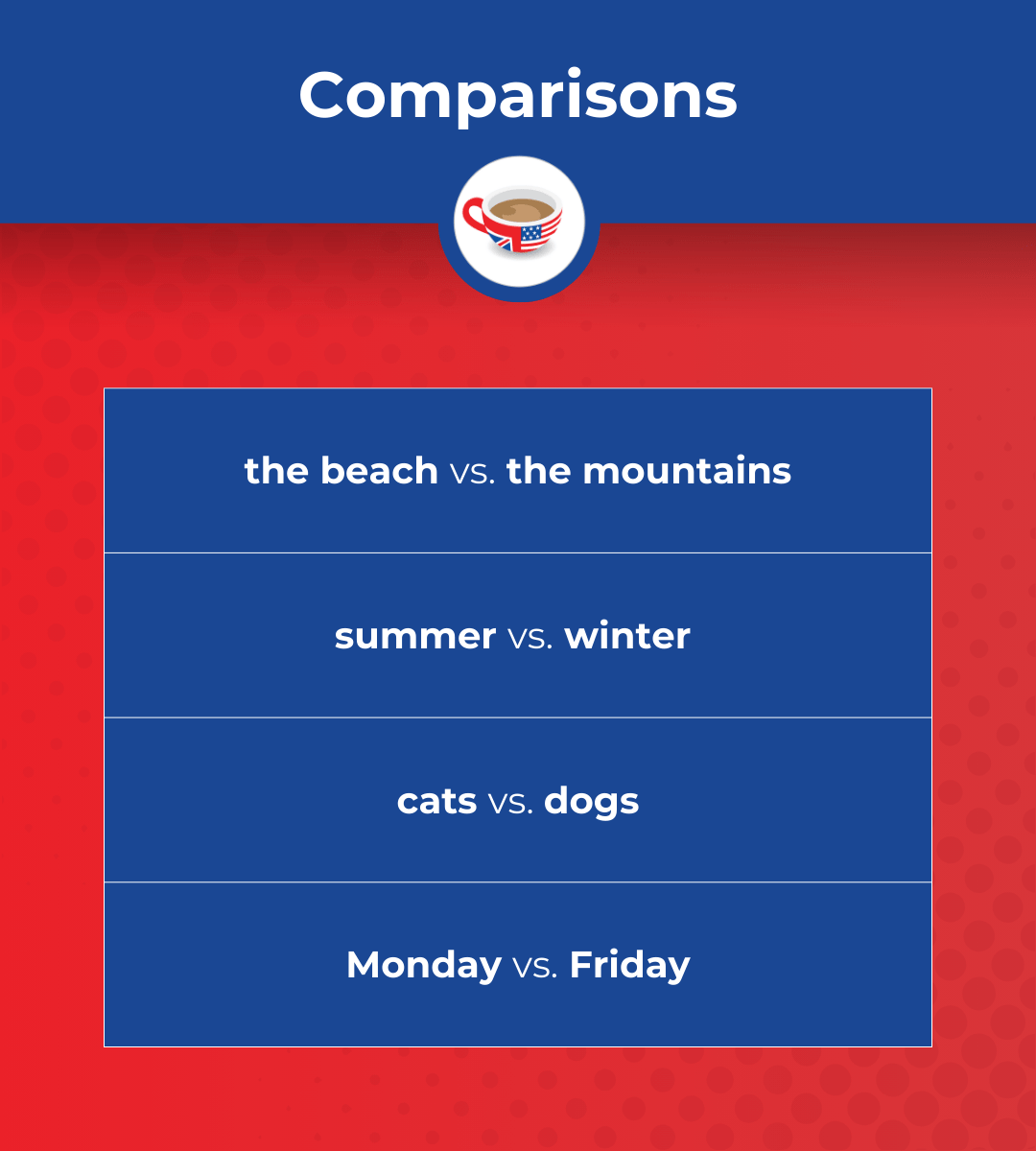
Now, let’s practise! Write down sentences comparing the ideas below and try to modify the comparative adjectives to show big and small differences. You can find some examples at the end of this blog post.
Always try to give as much detail as you can when you use a foreign language. The easy option is to stay in your comfort zone but the best way to learn is to try to be as descriptive as possible which will definitely help you increase your speaking (or writing) level. Be ambitious!
If you found this post interesting, make sure you listen to the full podcast episode with Nick and Mark on The Coffee Break English Show. We will release more episodes soon about some more useful topics! Subscribe to our podcast feed and our channel on YouTube to learn when the next episode is available.
Plus, don’t miss your free worksheet – perfect for extra practice after the lesson! When you sign up, you’ll also receive our short coffee break-sized email lessons, delivered straight to your inbox every week, to help you build your English skills. 💪 You’ll even hear from Mark, the founder of Coffee Break Languages, who shares regular tips and motivation for learners of all levels. Sign up below! 👇
Try modifying your comparative sentences whenever you can. By trying to be as precise and detailed as possible when communicating, you are improving your control of the language. Don’t worry if you make mistakes – it’s about regular and consistent practice and not just taking the easiest way to achieving your communicative goal, but challenging yourself to improve with every practice opportunity.
Happy Coffee Breaking!
P.s. Here are some possible answers to the prompts given above:
- The mountains are much more interesting than the beach.
- Summer is way more fun than winter.
- Dogs are a bit nicer than cats.
- Monday is a lot more difficult than Friday!